
Executive Overview
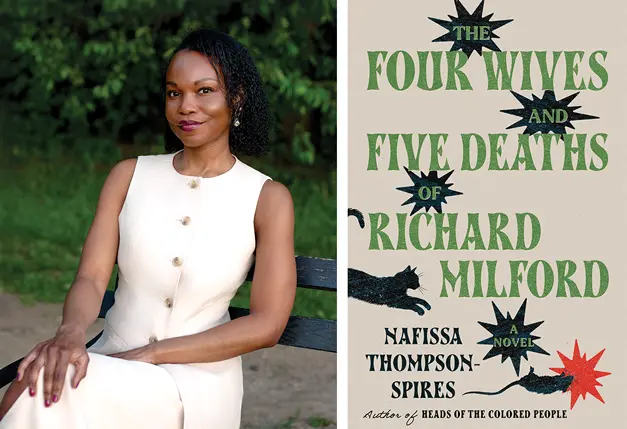
In the literary landscape of historical fiction, few novels dare to dismantle the boundaries between folklore, historical reality, and dark satire quite like The Four Wives and Five Deaths of Richard Milford. Authored by acclaimed writer Nafissa Thompson-Spires, the novel centers on the enigmatic demise of a Black bootlegger whose mysterious death sparks a flurry of tall tales, local lore, and celebratory reckoning in a segregated Oklahoma landscape.
At its core, the novel examines a compelling narrative puzzle: When a universally despised man dies under ambiguous circumstances, who owns the truth? Is there a singular historical record, or is history merely a collage of competing perceptions, personal vendettas, and community survival tactics?
Beyond its gripping mystery and sardonic wit, The Four Wives and Five Deaths of Richard Milford serves as a profound meditation on the legacy of Oklahoma’s historic all-Black towns. Through meticulous world-building and razor-sharp character dynamics, Thompson-Spires resurrects a largely overlooked chapter of American history—one defined by Black nationalism, economic self-determination, and the looming shadows of racial terror. In doing so, the author challenges contemporary readers to reconsider not only who gets to tell history, but how storytelling itself acts as an instrument of power, agency, and liberation.
Read Also
Detailed Chronology: From Family Lore to Literary Genesis
The journey toward The Four Wives and Five Deaths of Richard Milford began not in a dusty archive, but in the realm of oral history and domestic storytelling. Every great historical novel requires a spark, and for Thompson-Spires, that spark originated from a childhood misunderstanding of family lore.
The Misheard Legacy
The genesis of the novel’s eponymous, polygamist protagonist, Richard Milford, traces back to a casual remark made by the author’s mother regarding her great-great-grandfather. As Thompson-Spires recalls, she was initially told that this ancestor had fathered 40 children with three wives and that he routinely subjected them to violence with a riding crop.
In the mind of a young listener, the details morphed into an image of flamboyant, albeit brutal, polygamy. While the historical reality was far more sobering—her ancestor was not a polygamist, but rather a profoundly violent man—the seed had been planted. Thompson-Spires became consumed by a compelling counterfactual question: What would happen if the women in such a tyrant’s life finally joined forces to exact their revenge?
This imaginative leap birthed Richard Milford, a towering figure of corruption and domestic terror whose very existence acts as a lightning rod for the community he exploits.
Finding the Sardonic Voice
Creating a narrative around a deeply loathed historical figure presented distinct stylistic challenges. To prevent the novel from sinking into unrelenting grimness, Thompson-Spires sought a tonal counterweight. She found her inspiration while reading the private diaries of pioneering journalist and activist Alice Dunbar Nelson.
Known for her incisive observations and biting social commentary, Nelson’s diaries provided the exact register Thompson-Spires needed. "Her diaries are sort of snippy in the way that she’s thinking about society and her enemies," the author notes. This sharp, unapologetic perspective directly influenced the voice of Richard’s legal wife, Lally, anchoring the novel’s narrative perspective in a blend of wit and survival.
By adopting a sardonic tone, Thompson-Spires was able to explore the absurdities of small-town dynamics under siege. The book asks a fundamental question: What does it look like when a community unites around the absolute, unadulterated hatred of one man? The answer, as depicted in the novel, is both darkly comedic and cathartic—culminating in scenes where townsfolk are, quite literally, dancing on Richard Milford’s grave.
Supporting Context & Metrics: The Historical Framework of Oklahoma’s All-Black Towns
To fully appreciate the world of The Four Wives and Five Deaths of Richard Milford, one must examine the complex socio-political landscape of turn-of-the-century Oklahoma. Thompson-Spires deliberately chose to set her novel in an all-Black town, a decision rooted in deep historical research regarding the American West.
The Rise and Fall of Oklahoma’s Black Municipalities
Between 1890 and 1950, Oklahoma was a unique crucible of Black autonomy. During this period, the state was home to at least 50 self-governed, all-Black towns. These municipalities were established out of a profound sense of Black nationalism and a desire for economic self-sufficiency. For many African Americans migrating west, these towns offered a rare sanctuary where they could build businesses, establish local governments, and educate their children without the daily humiliation and danger of interacting with hostile white populations.
However, this golden age of self-determination existed against a backdrop of extreme racial violence. Historical records indicate that between 1890 and 1950, there were over 75 reported lynchings in Oklahoma. The shadow of white terror and systemic intimidation was an inescapable reality for residents of these burgeoning enclaves.
Today, the physical and cultural footprint of these communities has drastically diminished. Of the original 50-plus all-Black towns, only 13 survive into the modern era. This stark demographic shift heavily influenced Thompson-Spires’ thematic priorities. She aimed to interrogate what it means for a town’s historical legacy to carry as much weight as its future survival.
Beyond Tulsa: Expanding the Narrative Geography
While cultural awareness of Oklahoma’s Black history often centers on the devastating 1921 Tulsa Race Massacre, Thompson-Spires emphasizes that the region’s history is vast, multifaceted, and populated by countless untold stories.
+-----------------------------------------------------------------+
|          HISTORICAL METRICS: OKLAHOMA (1890–1950)               |
+-----------------------------------+-----------------------------+
| Original All-Black Towns          | At least 50                 |
| Surviving All-Black Towns Today   | 13                          |
| Reported Lynchings (1890–1950)    | Over 75                     |
+-----------------------------------+-----------------------------+
The author’s deliberate choice to spotlight an unnamed, fictionalized all-Black town reinforces the idea that resilience, community organizing, and economic institution-building were happening across dozens of settlements simultaneously. These communities were not historical anomalies; they were active, breathing laboratories of Black identity and institutional power.
Official Statements & Authorial Intent: Dissecting Truth and Storytelling
In various discussions surrounding the release of The Four Wives and Five Deaths of Richard Milford, Thompson-Spires has been vocal about the philosophical underpinnings of her work. Her commentary illuminates a novel that operates on multiple meta-fictional levels.
The Elusiveness of Truth
At its structural heart, the novel tackles a deeply philosophical problem: Can a singular truth exist when an event is viewed through the prism of multiple, competing human perceptions?
By framing Richard Milford’s death through conflicting accounts, tall tales, and shifting perspectives, Thompson-Spires tests the limits of narrative reliability. "The story is kind of meta in that it’s thinking about storytelling more generally," the author explains. "Who gets to tell what stories, and why? Whose story gets the most attention? We compete all the time for the agency to tell our own stories."
This thematic inquiry mirrors the broader historical struggles of marginalized groups. Historically, dominant societal power structures have claimed a monopoly on the "official" record, often erasing or distorting the narratives of Black communities, women, and the working class. By fracturing the narrative of Richard Milford into competing versions, Thompson-Spires mirrors the messy, contested nature of history itself—where truth is frequently negotiated by those who survive to tell the tale.
Preserving Heritage Through Fiction
Ultimately, Thompson-Spires hopes that readers will walk away from the novel with a renewed recognition of Oklahoma’s rich, complex history. She stresses the importance of understanding the immense labor required to organize, build, and sustain communities driven by Black nationalism and self-reliance.
"I would like for people to come away with a recognition of this rich history in Oklahoma… and what economic stability meant for them without having to interact with white people," Thompson-Spires states. By wrapping this historical consciousness in a darkly comedic, high-stakes mystery, the author ensures that the legacy of these towns is not relegated to dry academic texts, but is instead experienced as a vibrant, breathing human drama.
Future Outlook: The Enduring Legacy of the Black Western Narrative
As The Four Wives and Five Deaths of Richard Milford enters the literary ecosystem, its release signals a broader, much-needed shift in historical fiction and American letters. For generations, the literary and cinematic traditions of the American West have been dominated by monolithic, whitewashed narratives. Works like Thompson-Spires’ latest novel actively reclaim this geographic and temporal space, proving that the American frontier was populated by rich, complex Black communities whose stories deserve to be told with nuance, humor, and intellectual rigor.
Looking forward, the novel is expected to spark vital conversations among historians, literary critics, and general readers alike. By marrying the techniques of postmodern metafiction with the historical realities of post-Reconstruction America, Thompson-Spires has crafted a blueprint for how contemporary writers can engage with the past.
The legacy of Richard Milford—and the town that danced on his grave—will undoubtedly linger in the minds of readers, serving as a testament to the enduring power of community, the complexities of justice, and the revolutionary act of seizing control of one’s own story. In an era where the battle over whose history gets taught remains fiercely contested, The Four Wives and Five Deaths of Richard Milford stands as a triumphant reminder that storytelling is not just an art form, but a vital terrain of freedom.





Comments
Facebook App ID not configured. Please add it in the Customizer.