
Executive Overview
The modern literary landscape for young readers is undergoing a seismic shift. In an era dominated by ubiquitous screen time, shrinking attention spans, and the eternal struggle between physical pages and digital dopamine hits, industry stakeholders are forced to rethink how stories are packaged, marketed, and delivered to children. At the epicenter of this evolution are middle grade (MG) readers—typically children aged eight to twelve—who find themselves at a crucial developmental crossroads.
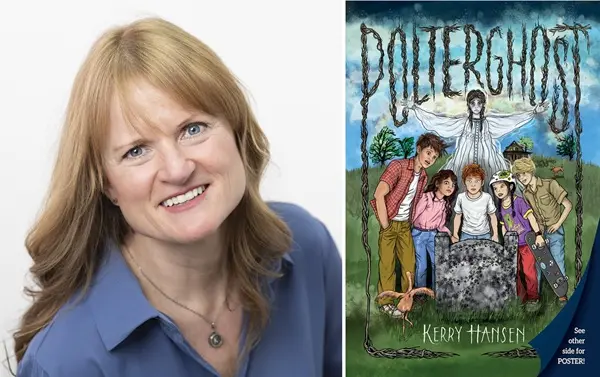
Few people understand this demographic better than Kerry Hansen. After spending more than two decades shaping young minds as a high school and college educator, Hansen pivoted to the independent bookstore sector, currently lending her expertise to Books & Company in Oconomowoc, Wisconsin. Her frontline perspective as a bookseller is uniquely complemented by her impending debut as an author; her middle grade novel, Polterghost—a supernatural tale about a lonely 12-year-old navigating a spirit in his family’s new home—is slated for publication by Charlesbridge Moves in January 2027.
In this deep-dive profile and industry analysis, Hansen shares her firsthand observations on the behavioral trends of today’s youth, the mechanics of combating digital distraction, the delicate art of guiding readers through cross-category transitions, and the timeless appeal of spooky, character-driven storytelling. As publishers search for innovative ways to keep the next generation hooked on reading, voices like Hansen’s offer invaluable roadmaps for the future of children’s literature.
Read Also
Detailed Chronology: From the Classroom to the Bookseller’s Floor and the Writer’s Desk
Decades in Education: Recognizing the Changing Reader
Kerry Hansen’s journey into the heart of middle grade publishing did not begin behind a bookstore counter or at a writer’s desk; it started in the trenches of formal education. For over twenty years, Hansen worked as a high school and college instructor. Day in and day out, she observed firsthand how young people interacted with text, how their reading habits evolved alongside technological advancements, and where traditional educational approaches succeeded—or faltered—in fostering a genuine love for reading.
This extended tenure in classrooms provided Hansen with a clinical, empathetic understanding of youth literacy. She watched as smartphones steadily crept into classrooms, transforming from occasional distractions into formidable adversaries for sustained concentration. Yet, she also witnessed the pure, unadulterated magic of books that managed to pierce through the digital noise, capturing imaginations and sparking lifelong reading habits.
Transitioning to Independent Bookselling at Books & Company
Seeking a new chapter while remaining anchored in her passion for community and literature, Hansen eventually transitioned from formal teaching to independent bookselling. Landing at Books & Company in Oconomowoc, Wisconsin, she found herself on the front lines of the retail literary world.
Independent bookstores function as cultural hubs where booksellers act as literary matchmakers, diagnosticians, and guides. In this role, Hansen interacts daily with parents, educators, and, most importantly, the readers themselves. She hears their frustrations, uncovers their secret literary guilty pleasures, and observes which covers make them sprint toward the display tables and which ones cause them to recoil in intimidation. This retail environment transformed her theoretical understanding of youth literacy into a dynamic, real-time data set.
The Birth of Polterghost: Merging Nostalgia with Modern Sensibilities
Drawing from her rich history with students and her daily interactions with young book buyers, Hansen naturally turned her hand to writing. Her debut middle grade novel, Polterghost, represents the culmination of her career observations.
Scheduled for release by Charlesbridge Moves in January 2027, Polterghost follows a lonely 12-year-old protagonist who encounters an unexpected spirit within his family’s new home. The narrative is carefully calibrated to appeal to modern sensibilities: it balances the eerie, atmospheric tension of a ghost story with the disarming comfort of humor. For Hansen, the book is a direct homage to the media that shaped her own youth—specifically properties like Scooby-Doo, which perfected the formula of wrapping mild frights in accessible, comedic storytelling.
Supporting Context & Metrics: The Battle for Attention in the Middle Grade Segment
The Anatomy of the Modern Attention Span
The primary challenge facing contemporary middle grade publishing is not a lack of interest in stories, but rather an unprecedented crisis of sustained attention. According to Hansen, today’s young readers are sharply polarized. On one end of the spectrum are the voracious, dedicated readers—the children who will steadfastly devour complex, 300-page fantasy worldbuilding epics. For these children, books remain a sanctuary, and the publishing industry already serves their needs exceptionally well.
However, a massive contingent of middle grade readers falls into a more vulnerable category. These are the children who pick up a book, flip through the pages, and experience immediate intimidation.
"Kids are having trouble sustaining their attention and they’re intimidated by walls of text," Hansen explains. "The kids who pick up a book and say, ‘Oh my gosh, these chapters are so long. My phone is so alluring!’ We need to find ways to lure those kids back in."
The existential threat of the smartphone cannot be overstated. Smartphones are engineered with infinite scroll mechanics, rapid-fire dopamine loops, and instant gratification algorithms that make static pages of dense prose feel like an endurance test. To compete, books must evolve structurally.
Design Innovations: Breaking Down the "Wall of Text"
To combat digital attrition, publishers and authors are increasingly relying on structural innovations designed to make texts less intimidating. Hansen points to an expanding stack of advance reader’s copies (ARCs) crossing her desk that utilize modern formatting techniques to welcome reluctant readers.
- Novels-in-Verse: By utilizing poetic structures, white space, and shorter line counts, novels-in-verse naturally reduce the visual density of a page. They offer rapid narrative momentum while delivering emotional resonance.
- Graphic Novels: Widely acknowledged as the definitive "gateway to reading," graphic novels combine visual storytelling with text, making them an indispensable bridge for kids transitioning away from illustrated chapter books toward prose.
- Mixed-Media Elements: Incorporating non-traditional text formats within the manuscript—such as simulated text message threads, email logs, handwritten lists, or diary entries—effectively breaks up intimidating walls of text. These visual waypoints provide micro-goals for the reader, making a chapter feel manageable and fast-paced.
Official Statements & Expert Analysis: Navigating the Transition Years
Bridging the Gap: Middle Grade to Young Adult (YA)
One of the most delicate operational challenges in a bookstore involves guiding readers through developmental milestones. Children do not grow up in a linear, predictable vacuum; their reading tastes evolve rapidly, often outpacing their chronological age. Hansen notes that booksellers receive the highest volume of inquiries from readers caught in the turbulent transition from middle grade to young adult literature—specifically 13-year-olds on the cusp of teenagehood.
[13-Year-Old Reader]
       │
       ├─► Rejects "Babyish" Middle Grade Covers
       │
       └─► Seeks More Mature Themes (YA)
             │
             ▼
[Bookseller Intervention Strategy]
  - Assess past MG favorites (e.g., Alan Gratz)
  - Bridge to sophisticated cross-overs (e.g., Ruta Sepetys)
  - Introduce elevated historical fiction/speculative elements
These transitional readers are often hypersensitive to superficial aesthetics. They reject middle grade covers that they perceive as "babyish," yet they may not possess the emotional maturity or reading stamina required for heavy, explicit young adult titles.
Hansen’s approach to this dilemma is diagnostic rather than prescriptive. When a teenager approaches her expressing dissatisfaction with middle grade branding, she initiates a conversation: "What did you read in middle grade?"
If a young patron responds by naming fast-paced historical adventure authors like Alan Gratz, Hansen uses that data point to curate a gentle upward step. She might suggest transitioning to Ruta Sepetys, introducing historical fiction that handles mature, complex themes with sophisticated prose while remaining accessible. By honoring their past reading preferences, booksellers can construct a personalized literary bridge into young adult literature.
The Sweet Spot of Spooky: Why Horror Appeals to the Young Mind
Horror and paranormal themes have perennially dominated youth fiction, from R.L. Stine’s Goosebumps to modern blockbusters. But why do middle grade readers harbor such an insatiable appetite for things that go bump in the night?
Hansen traces this fascination back to her own childhood desires. She wanted to consume adult horror and Stephen King novels, but found herself stopped dead in her tracks by the opening credits. Salvation came in the form of Hanna-Barbera’s Scooby-Doo—a masterclass in balancing atmospheric spooks with slapstick humor and a reassuring resolution.
"That was my main driving force for Polterghost," Hansen shares. "Kids want a little creepy but then they want some comic relief."
In psychological terms, spooky stories allow middle grade readers to safely test their boundaries. At age 12, children are beginning to grapple with existential anxieties, loss of control, and the vast unknowns of the world. Supernatural fiction provides a metaphorical framework to externalize and conquer these fears. When injected with humor, the terror is rendered manageable, offering children a sense of agency and emotional catharsis.
Future Outlook: The Timeless Constants of Middle Grade Literature
As the publishing industry looks toward 2027 and beyond, formats will continue to shift, distribution models will adapt to digital landscapes, and attention spans will face new technological pressures. However, Hansen is steadfast in her belief that certain core elements of storytelling remain entirely immutable.
The Power of Found Family and Deep Bonds
Regardless of whether a story is delivered via a physical hardcover, an e-reader, a graphic novel, or a novel-in-verse, the beating heart of successful middle grade literature always boils down to character and connection. Hansen points to contemporary touchstones like the streaming phenomenon Stranger Things or the classic cinematic coming-of-age film Stand by Me to illustrate what truly resonates with young audiences.
"I’m passionate about strong characters and friendships," Hansen emphasizes. "Those bonding moments within a story are essential."
Middle grade readers are in the process of forming their identities outside the family unit. Stories that highlight loyalty, teamwork, shared trauma, and fierce friendship validate their real-world social navigation. When characters stand together against monsters, middle school bullies, or supernatural poltergeists, readers see reflections of their own nascent social bonds.
Genre Hybrids and the Need for Speculative Spice
While purely realistic fiction holds an important place in the ecosystem, Hansen advocates for genre hybridization to capture the attention of modern kids. Purely domestic, slice-of-life dramas can sometimes struggle to compete against the high-octane stimulation of video games and social media feeds.
To successfully pull kids in, realistic stories often benefit from an injection of speculative elements, high-stakes mysteries, or relentless humor. By blending genres—such as placing an emotionally grounded family drama within a haunted house framework—authors create layered narratives that satisfy both the craving for relatable character growth and the desire for high-concept entertainment.
Conclusion: A Hopeful Horizon
Kerry Hansen’s unique dual vantage point—as an educator who watched children grapple with text and as a bookseller-turned-author actively engineering solutions—offers a profound source of optimism for the future of middle grade literature. The challenges of screen addiction and fragmented attention spans are real, but the publishing industry is responding with agility. Through structural innovations like shorter chapters, graphic integrations, verse formats, and the timeless alchemy of humor mixed with a healthy dose of the supernatural, stories will continue to find their way into the hands of the next generation of readers.





Comments
Facebook App ID not configured. Please add it in the Customizer.