
The landscape of children’s and middle-grade literature has experienced a transformative shift toward global inclusivity over the past decade. Among the most vibrant regions finding their long-overdue representation on bookstore shelves is Malaysia—a culturally rich Southeast Asian nation defined by its diverse heritage, lush rainforests, and dynamic history. Ten years ago, compiling a reading list centered on Malaysia yielded a sparse collection of barely two titles, leaving educators, parents, and young readers with limited avenues for armchair travel. However, a contemporary literary renaissance has yielded an array of captivating picture books, biographical narratives, and middle-grade fantasy quests that explore Malaysia from multifaceted angles.
This literary expansion offers young readers an authentic window into Malaysian daily life, rich traditions, and historical milestones. From the bustling routines of a Muslim household celebrating familial bonds and the cozy warmth of a shared morning beverage, to high-altitude conservation efforts in ancient rainforests and retold folktales infused with modern resilience, contemporary authors and illustrators are bridging geographic divides. This report provides a comprehensive review of this burgeoning literary genre, examining how these newly surfaced titles foster cross-cultural empathy, historical awareness, and a lifelong love for global literature among children.
Detailed Chronology: The Evolution of Malaysian Children’s Literature
Tracing the trajectory of Malaysian representation in Western children’s publishing highlights a gradual transition from generalized Asian regional settings to specific, culturally immersive narratives.
Read Also
- The Pre-2015 Landscape: For decades, children’s literature translated or exported from Southeast Asia was largely confined to generalized folktale anthologies published by specialized presses. Specific, contemporary depictions of Malaysia in mainstream Western picture books were exceptionally rare, often forcing educators and parents to rely on generic regional overviews rather than authentic, character-driven stories rooted in Malaysian culture.
- The Mid-2010s Awakening: As the demand for diverse children’s books gained momentum globally, independent publishers and specialty houses began to champion authentic voices from Southeast Asia. Collections of regional folktales became more widely available, offering Western audiences insight into indigenous storytelling traditions, localized animal lore, and distinctive moral frameworks.
- The Contemporary Renaissance (2020–Present): The past few years have marked an unprecedented boom in culturally specific literature. Major publishing houses, alongside Disney Press and prominent children’s authors, have introduced works by creators with direct ties to the region. This era has broadened the scope of storytelling to include narrative nonfiction biographies, mindful meditations set in Malaysian landscapes, and complex middle-grade fantasy adventures that weave traditional folklore into modern contexts, such as pandemic lockdowns and technological adaptation.
Supporting Context & Metrics: Cultural Landscapes in Print
Understanding the depth of these literary works requires examining the socio-cultural and demographic fabric of Malaysia as reflected in its modern storytelling.
- Religious Demographics and Representation: A significant portion of contemporary Malaysian children’s literature highlights the nation’s Islamic heritage. According to national census data, more than 63% of the Malaysian population practices the Islamic faith. Picture books that incorporate daily Islamic prayers, familial devotion, and community traditions serve as a vital mirror for Muslim children worldwide while offering educational value to non-Muslim readers.
- Ecological Wealth: Malaysia’s geography is heavily defined by ancient tropical rainforests, some of which are among the oldest in the world. Literature directed at older children frequently incorporates the ecological realities of these environments, including the sacred tualang trees and indigenous communities such as the Orang Asli, whose traditions balance human survival with deep environmental stewardship.
- Global Interconnectedness: Modern biographies and cultural guides demonstrate how Malaysian history intersects with global health, innovation, and trade. Historical milestones—such as the invention of early protective respiratory gear during epidemics—link local ingenuity directly to worldwide public health milestones.
Featured Literary Works: A Curated Review
The newly expanded body of literature covering Malaysia spans multiple genres, offering tailored engagement for varying age groups. Below is an exhaustive review of key titles shaping this literary movement.
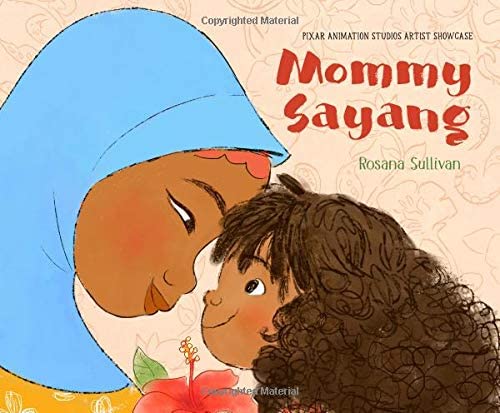
1. Mommy Sayang by Rosana Sullivan
- Target Audience: Picture book, ages 3 and up
- Overview: Published via Disney Press in collaboration with Pixar Animation Studios, Mommy Sayang is a deeply personal celebration of author-illustrator Rosana Sullivan’s childhood in Malaysia. The narrative follows young Aleeya, who seeks reassurance from her mother about their unbreakable bond. Together, they engage in domestic rituals: cooking, doing laundry, watering vibrant red hibiscus flowers, and observing her Muslim mother at prayer.
- Thematic Depth: When the mother falls chronically ill, the emotional dynamic shifts, and Aleeya tenderly waits by her side, ultimately reviving her mother’s spirits with a fresh red hibiscus flower. Sullivan, who worked as an animator on Pixar films such as The Good Dinosaur, Coco, and Incredibles 2, drew inspiration from her own childhood experiences with a long-term maternal illness. The book serves as a poignant reminder of the vibrant Muslim community within Asia, anchoring its narrative in universal themes of familial love, patience, and healing.
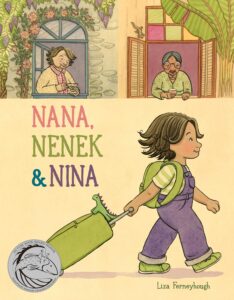
2. Nana, Nenek & Nina by Liza Ferneyhough
- Target Audience: Picture book, ages 4 and up
- Overview: Nina lives in San Francisco, split between two vastly different worlds embodied by her grandmothers: Nana in England and Nenek in Malaysia. Through Nina’s eyes, young readers are taken on a cross-continental journey of comparison and contrast.
- Thematic Depth: Ferneyhough utilizes visual storytelling where text stretches gracefully across double-page spreads, allowing the illustrations to do the "heavy lifting." The book successfully contrasts urban and traditional environments, highlighting how cultural environments differ while underscoring the universal nature of familial love and grandparental bonds.
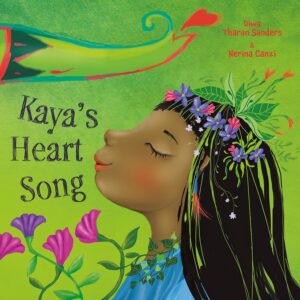
3. Kaya’s Heart Song by Diwa Tharan Sanders, Illustrated by Nerina Canzi
- Target Audience: Picture book, ages 4 and up
- Overview: Set against the lush backdrop of a Malaysian jungle, Kaya’s Heart Song follows a young girl on a quest to discover her inner melody. Navigating familiar paths, she encounters Pak, a guardian of a gated, rundown carousel overgrown with vines.
- Thematic Depth: Rather than relying on immediate gratification, Kaya practices mindfulness and meditation, patiently clearing away the obstacles. As the carousel begins to turn through the combined magic of her hard work and inner peace, her heart’s song is revealed. This gentle adventure serves as an accessible introduction for young children to concepts of emotional regulation, mindfulness, and ecological appreciation.
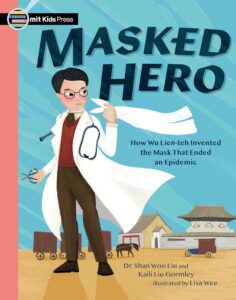
4. Masked Hero: How Wu Lien-Teh Invented the Mask That Ended an Epidemic by Dr. Shan Woo Liu and Kaili Liu Gormley, Illustrated by Lisa Wee
- Target Audience: Picture book biography, ages 4 and up
- Overview: In an era where protective face coverings became a global routine, this picture book biography introduces readers to Dr. Wu Lien-Teh, the visionary who invented the prototype for the modern N95 mask nearly a century ago. Raised in Malaysia, where educational resources were scarce, Lien-Teh’s dedication earned him a scholarship to the University of Cambridge.
- Thematic Depth: Fascinated by germ transmission, his scientific research led to the creation of a layered protective mask that successfully contained a devastating epidemic in China. In 1935, his contributions earned him a Nobel Prize nomination, making him a historic figure of Chinese descent recognized globally. The book offers children an inspiring look at historical perseverance, scientific inquiry, and the overcoming of systemic racism.
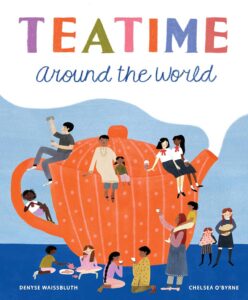
5. Tea Time Around the World by Denyse Waissbluth, Illustrated by Chelsea O’Byrne
- Target Audience: Picture book, ages 3 and up
- Overview: Highlighting international beverage traditions, this global picture book prominently features Malaysia’s iconic Teh tarik, or "pulled tea."
- Thematic Depth: Explaining the cultural significance of the nation’s informal national drink, the book describes how hot, strong black tea is combined with condensed milk and rendered frothy through theatrical pours spanning arm-length distances. It introduces young readers to culinary arts as a form of cultural expression.
6. Malaysian Children’s Favourite Stories by Kay Lyons, Illustrated by Martin Loh
- Target Audience: Folktale anthology, ages 5 and up
- Overview: Part of Tuttle Publishing’s acclaimed collection of Asian folktales, this volume compiles traditional stories that explain natural phenomena across Malaysia.
- Thematic Depth: The anthology features tales accounting for the formation of Malaysia’s mountain ranges and explaining animal traits—such as why the tapir is black and white, why crocodiles are feared, and how the diminutive mousedeer outsmarts larger predators through cleverness. Crucially, the human and animal heroines in these stories possess realistic flaws and distinct personalities, moving away from passive archetypes toward dynamic characterizations.
7. The Bee Tree by Stephen Buchmann and Diana Cohn, Illustrated by Paul Mirocha
- Target Audience: Narrative nonfiction picture book, ages 7 and up
- Overview: Deep within the Malaysian rainforest near Pedu Lake, tualang trees soar over 200 feet into the air. Upon these sacred giants, wild Giant Honey Bees construct massive hives. The narrative follows young Nizam on his inaugural nocturnal expedition to harvest honey.
- Thematic Depth: Grounded in the traditions of the Orang Asli, Malaysia’s indigenous peoples, the book details the rituals, ecological knowledge, and physical dangers involved in high-altitude honey harvesting. Extensive backmatter provides readers with factual insights into rainforest ecology, bee behavior, and indigenous heritage.
8. Hamra and the Jungle of Memories by Hanna Alkaf
- Target Audience: Middle grade, ages 8 and up
- Overview: Acclaimed author Hanna Alkaf reimagines the classic Little Red Riding Hood trope, infusing it with Malaysian folklore, themes of dementia, the isolation of COVID-19 lockdowns, and high-stakes magical quests reminiscent of modern fantasy epics. The protagonist, Hamra, breaks jungle rules during a moment of frustration, sparking a journey alongside her reluctant best friend, Ilyas.
- Thematic Depth: The duo encounters a trapped weretiger desperate to regain human form. Their adventure ultimately leads them back home with a renewed appreciation for family, memory, and the true value of friendship, cementing its place as a sophisticated read for middle-grade audiences.
Future Outlook
The expansion of Malaysian literature within the global children’s publishing market signals a permanent departure from tokenistic diversity toward genuine cultural representation. As publishers continue to seek authentic narratives from underrepresented geographies, authors and illustrators with direct ties to Malaysia are filling critical gaps in library and classroom collections.
Future developments in this sector are expected to lean further into multimedia storytelling, bilingual texts, and expanded young adult speculative fiction that draws directly upon Southeast Asian mythology and modern socio-political landscapes. By fostering early exposure to these diverse narratives, educators and parents are equipping the next generation with a more expansive, empathetic, and globally connected worldview.




Comments
Facebook App ID not configured. Please add it in the Customizer.