
By Patricia J. Murphy
Special Educational Reporting Series
Executive Overview
As educators nationwide prepare their classrooms and media centers for a new academic year, a quiet yet profound revolution is sweeping through school libraries. The traditional practice of organizing books strictly by the Dewey Decimal System or rigid alphabetical author listings is increasingly taking a back seat to a dynamic, student-centric philosophy known as "genrefying."
By categorizing books according to popular thematic genres—such as graphic novels, dystopian sci-fi, heart-pounding mysteries, and high-interest biographies—librarians and educators are fundamentally transforming how students interact with physical collections. Far from being a mere cosmetic rearrangement of shelves, genrefying represents an intentional pedagogical strategy designed to lower barriers to entry, foster student independence, and turn reluctant readers into lifelong bibliophiles.
Read Also
To understand the scope and impact of this trend, we spoke with three pioneering educators and school librarians on the front lines of literacy: Nicholas Moore of Powder Springs Elementary School in Georgia, Kelsey Dangelo-Worth of Cornish Elementary School in New Hampshire, and Jennifer Sniadecki of the South Bend Community School Corporation in Indiana. Their experiences reveal a universal truth: when libraries are organized around the intuitive ways young minds search for stories, engagement, circulation, and reading comprehension soar.
Detailed Chronology: The Evolution of Library Organization
The movement toward genrefying did not happen overnight. It evolved from decades of educators watching students stare blankly at towering walls of book spines, overwhelmed by the sheer mechanics of traditional library science.
Phase 1: The Initial Recognition of Friction (Early 2010s)
For generations, school libraries mirrored academic and public institutions by prioritizing categorization systems designed for professional archivists rather than children. Books were filed away by author surnames or rigid numerical classifications (such as the Dewey Decimal System). While efficient for storage, this method created a significant psychological barrier for young readers. Students who enjoyed a specific scary story or sports biography often found themselves lost in aisles of unrelated titles, unable to independently replicate their last positive reading experience.
Phase 2: Grassroots Experimentation and High-Interest Seeding (Mid-to-Late 2010s)
Librarians began noticing that certain high-interest sections—such as horror, sports, and science fiction—circulated at disproportionately high rates when informally segregated from the main collection. Educators like Jennifer Sniadecki in South Bend, Indiana, began experimenting out of sheer necessity. Faced with daily floods of middle schoolers asking for scary stories by authors like R.L. Stine or Lindsay Currie, Sniadecki made the pivotal decision to pull those titles together. The immediate spike in student engagement laid the groundwork for broader systemic changes.
Phase 3: District-Wide Adoption and Certification Alignment (Present Day)
Today, genrefying has transitioned from an informal hack into an official district-wide strategy. Educators like Nicholas Moore in Georgia incorporated genrefying plans directly into their library learning certifications, backed by empirical district beliefs that intuitive shelving directly correlates with elevated literacy rates. Armed with modern library management tools like Alexandria and supported by student volunteer task forces, contemporary librarians are systematically auditing, weeding, and reorganizing entire collections to match the modern youth’s reading palette.
Supporting Context & Metrics: Why Genrefying Works
The transition to genre-based shelving is supported by both observable behavioral shifts in the library commons and measurable increases in circulation data.
The Metrics of Engagement
According to educators who have completed the transformation, the data speaks for itself. Circulation statistics invariably climb following a genrefication project. Why? Because accessibility breeds volume. When a student can walk directly to an "Adventure" or "Graphic Novel" section rather than navigating abstract classification numbers, the friction of discovery is virtually eliminated.
- Increased Foot Traffic: Librarians report that students spend less time wandering aimlessly and significantly more time actively browsing and pulling books from shelves.
- Peer-to-Peer Recommendations: Genrefied sections naturally concentrate readers with similar tastes into the same physical space. This layout fosters spontaneous literary communities where students turn to one another to ask, "You like that book, too?"
- Curriculum Alignment: By organizing nonfiction and resource materials around specific cross-curricular themes (such as separating ELA-heavy topics from math-centric instructional reading), librarians make it exponentially easier for teachers to collaborate on cross-disciplinary lesson planning.
The Human Element: Student-Led Classification
One of the most fascinating developments in modern genrefication is the inclusion of students in the sorting process. Rather than imposing top-down administrative categories, librarians are empowering students to co-design their library spaces.
For instance, when Jennifer Sniadecki and her student volunteers at South Bend Community Corporation debated how to shelve the popular Misfits series by Lisa Yee and Dan Santat, a lively debate ensued. While the technical cataloging leaned toward mystery, the students argued that the protagonists’ journeys felt far more aligned with high-stakes adventure. The students won, and the books were placed in the adventure section. This level of collaborative ownership ensures that the library reflects the mental models of the children who use it every day.
Official Statements and Educator Perspectives
The true impact of genrefication is best captured in the words of the educators who have lived through the physical labor, administrative hurdles, and ultimate triumphs of reorganizing their collections.
Nicholas Moore (Powder Springs Elementary School, GA):
"The district’s belief is that with genrefying, kids want to read more. They’re more into books, and circulation goes up… At first, many kids didn’t know what genres were, but now they get it, and they can find books more quickly. I’m here to promote reading and learning. Genrefying won’t look the same in every library, but it’ll help kids develop a passion for books."
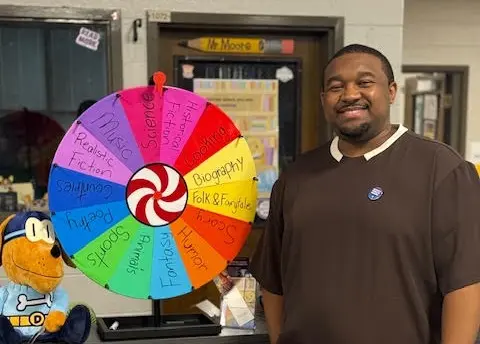
Moore emphasizes that the process is physically demanding—requiring hours of pulling books, adjusting shelving heights, designing eye-catching signage, applying new spine labels, and rescanning items into the digital database. Yet, with the help of student aides, the payoff is immeasurable. Moore utilizes a custom "genre wheel" that he spins with students to encourage them to step outside their comfort zones and sample unfamiliar categories.
Kelsey Dangelo-Worth (Cornish Elementary School, NH):
"As an ELA teacher, I want to teach kids how to read, but I also want to make readers! When I ask, ‘What do you feel like reading right now?’ they can browse our shelves on their own and choose exactly what they want… It’s being able to hook a kid on one book, and then have them look on the shelf and say, ‘Hey, I like this one in this genre. I can read that one, too!’"
Dangelo-Worth, who bridges the gap between classroom instruction and independent media consumption for middle schoolers, highlights how genrefication nurtures independent reading habits. By breaking down novels into intuitive categories—ranging from realistic fiction and humor to fantasy and science fiction—she equips students with the navigational autonomy required to sustain a lifelong reading habit.
Jennifer Sniadecki (South Bend Community Corporation, IN):
"The true purpose of genrefying is to find books in the library. And, because it’s their library, they need to use it the way that makes sense to them… There isn’t always going to be someone there to help. Being a librarian, I’ve taken an oath to find the perfect books and genres for every student so they can grow in their love of reading and knowledge of the world."
Sniadecki’s hybrid approach—maintaining modified Dewey Decimal structures for non-fiction (such as breaking down broad mammal classifications into specific animal sections like lions, tigers, and bears) while fully genrefying fiction—serves as a masterclass in pragmatic library management. It provides students with a foundational bridge between traditional cataloging and modern discoverability.
Future Outlook: The Horizon of School Librarianship
As schools continue to adapt to changing student demographics, shorter attention spans, and the competing demands of digital media, the physical school library must prove its indispensable value. Genrefication is proving to be one of the most effective tools in achieving this mission.
Looking forward, the trend is expected to evolve even further through the integration of hybrid digital-physical advisory tools. Librarians are no longer just custodians of books; they are curators of user experience. By lowering the barrier to entry, removing intimidating classification hurdles, and fostering collaborative, community-driven physical spaces, genrefied libraries are redefining what it means to be a modern educational hub.
Ultimately, the goal of every school librarian remains unchanged: to forge an unbreakable bond between a child and a book. As these pioneering educators have demonstrated, sometimes all it takes to spark that magic is a little bit of reorganization, a lot of student collaboration, and the courage to look past the Dewey Decimal System in favor of how students actually think, explore, and dream.
Are you an educator or librarian currently pondering a genrefication project, or are you knee-deep in reorganizing your school media center? We want to hear your stories, tips, and challenges. Reach out to our editorial team at [email protected] to share your insights for our upcoming follow-up feature.





Comments
Facebook App ID not configured. Please add it in the Customizer.