
Executive Overview
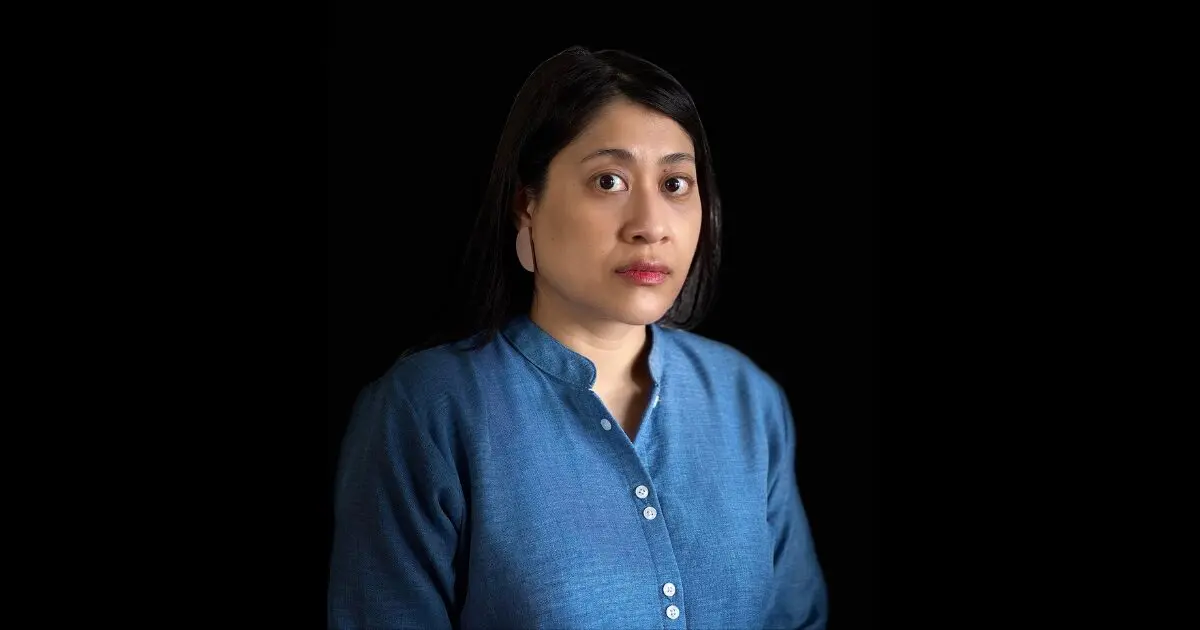
To understand Jakarta is to accept an ongoing initiation into a labyrinth of hypercapitalist contradictions, historical ruptures, and kinetic resilience. As the renowned Indonesian-born artist, writer, and researcher Khairani Barokka observes, invoking Italo Calvino’s Invisible Cities, mastering this urban chessboard is less about knowing every physical coordinate and more about grasping the intricate, invisible rules that govern its sprawl.
Jakarta is a megalopolis caught in perpetual motion. It is a sonic and cultural landscape defined by the juxtaposition of gleaming, hypercapitalist architectural behemoths and unmappable jalan tikus (rat lanes); the rhythmic call to prayer (azan) echoing against the hum of modern sleaze; and the indomitable persistence of the mothers of the disappeared. It is a city that bears the quiet, cumulative blows of political trauma yet continues to forge new slang, host sprawling culinary traditions, and pulse with the sounds of dangdut and hundreds of archipelagic languages.
This expansive feature explores the multifaceted identity of Indonesia’s capital through Barokka’s critical lens. By examining the city’s complex political lineage, its systemic oversights regarding disability justice, its vibrant literary and culinary ecosystems, and the existential threat facing its cultural epicenters, this article provides an authoritative investigative portrait of Jakarta today. It reveals a metropolis where passion is forged in messy emotions, historical defiance, and a profound, paradoxical love for a place that constantly threatens to overwhelm its inhabitants.
Read Also
Detailed Chronology: Trauma, Resistance, and the Evolution of a Capital
The psychological and physical architecture of modern Jakarta cannot be separated from its turbulent twentieth-century history—a trajectory marked by Western-backed dictatorship, state-sanctioned violence, and the enduring underground currents of artistic resistance.
The Shadow of 1965–1966: A Legacy of Silence and Subterfuge
Growing up as a child in Jakarta during the height of General Soeharto’s Western-backed, capitalist military dictatorship, Barokka experienced firsthand the generational trauma born from the 1965–1966 anti-communist genocide. The massacre devastated families across the archipelago, forcing elders to hold their breath, bury their histories, and practice freedom only in deep subterfuge.
Generations were coerced into a state of collective amnesia, asked to teach their children that mass murder had never occurred—just as their own parents had been forced to deny historical atrocities in their youth. Yet, Barokka emphasizes a crucial corrective to Western-centric narratives of the era: resistance has always existed alongside the oppression. Artists who survived unimaginable horrors have continually created works of profound defiance. Far from being passive victims, these creators are the true chroniclers of the Indonesian conscience and deserve the highest platform.
The Decades of Transit and Metamorphosis
Jakarta’s history is equally a history of transit. For decades, before the advent of the MRT and modern light rail systems, the city’s narrative was written on the go. Generations of Jakartans spent countless hours trapped in vehicles, watching the urban layout shift across days, weeks, and years.
This mobile cityscape—inhabited aboard buses, bajaj, bemo, motorcycles (ojek), and historical cycle-rickshaws (becak, which were later banned from central thoroughfares)—served as an accidental crucible for community formation. These enclosed, moving spaces forced strangers into prolonged proximity, sparking friction, humor, and collective resilience. Traversing the changing landscape in motion allowed citizens to document urban evolution in real-time, cementing unique forms of nostalgia that outlasted the physical buildings lining the asphalt.
The Fight for Taman Ismail Marzuki (TIM)
In contemporary terms, Jakarta’s temporal battlegrounds have shifted to its cultural institutions. Over recent years, artists, writers, and intellectuals have mobilized in sustained protest against controversial plans for the "commercial revitalization" of the Taman Ismail Marzuki (TIM) cultural complex.
TIM has served as a cornerstone of memory-making for innumerable Jakartans across generations, hosting experimental plays, literary readings, independent films, art exhibitions, and pivotal post-show conversations in its food courts. Housing both the Jakarta Arts Institute (IKJ) and the historic Jakarta Planetarium, TIM represents a unique intersection of cosmic contemplation and earthly reality. The ongoing resistance against its commercialization highlights a desperate, high-stakes struggle to protect a historic sanctuary from destructive corporate development.
Supporting Context & Metrics: Cultural Ecosystems and Social Realities
Beneath the veneer of Jakarta’s rapid economic expansion lies a complex web of social realities, architectural inequities, and vibrant counter-cultures that define daily life.
Disability Justice and the Invisible Metropolis
One of the most profound oversights in Jakarta’s rapid modernization is its treatment of D/deaf and disabled communities. Disabled individuals—encompassing both visible markers and invisible conditions—are ubiquitous throughout the city. Yet, urban infrastructure and institutional attitudes remain woefully inadequate, with systemic shifts occurring at a glacial, bureaucratic pace.
Barokka points to an underlying, indigenous disability justice culture embedded within the city’s spiritual fabric. This framework calls on communities to endure grotesque discrimination while actively supporting one another through mutual aid and resilient solidarity, serving as a moral counterweight to ableist urban planning.
Culinary Cartography: The Padang Restaurant as Sacred Space
Culinary traditions in Jakarta offer a microcosm of the nation’s diverse cultural fabric. For the Minang (Padang) community, visiting traditional Padang restaurants is an essential ritual.
These establishments are much more than eateries; they are living works of art. Under the watchful gaze of illustrated icons shaped like traditional rumah gadang architecture, plates are stacked artfully in glass display windows and laid out in dense, symmetrical formations across the diner’s table. The service staff move with a calculated grace informed by the sanctity of traditional plate dances (tari piring). Furthermore, the distinct economic practice of paying exclusively for the specific dishes consumed from these shared receptacles highlights an ethos of communal trust and practical efficiency unique to the Padang culinary philosophy.
Literary Landscapes: Reading the City in Indonesian and Migrant Voices
Jakarta’s literary scene is vast, multilingual, and constantly mutating. To truly understand the capital through the written word, readers must look beyond Anglophone translations and engage with contemporary Indonesian authors who capture the city’s visceral pulse. Prominent voices include:
- Ziggy Zezsyazeoviennazabrizkie: Known for surreal, incisive explorations of urban psychology and childhood.
- Intan Paramaditha: Master of speculative fiction and dark, feminist examinations of socio-political power.
- Cyntha Hariadi: Celebrated for sharp, evocative poetry and prose that dissects modern domestic and urban alienation.
- Hanna Fransisca: A migrant writer whose work brilliantly captures the wry, comedic undercurrents of the city, injecting vital regional and migrant perspectives into the broader Jakarta literary canon.
Artistic Interventions: Annah, Infinite and Decolonial Praxis
Barokka’s own artistic output serves as a rigorous investigation of Jakarta’s historical and visual politics. Her fourteen-year multidisciplinary project and book, Annah, Infinite, was deeply inspired by her late grandmother’s collection of black-and-white photographs documenting Javanese girlhoods in Jakarta.
The work serves as a direct counter-narrative and reclamation against Paul Gauguin’s vile exoticization in the painting Annah la Javanaise. Within the book, chapters such as "Nightmares of 1965" examine the physical toll of colonial violence and investigate how nervous systems process historical trauma that can no longer be contained internally.
Official Statements and Perspectives
The friction between grassroots cultural preservation and state-backed development has elicited strong responses from artists, curators, and civic organizations across Jakarta.
"Jakarta is a city of living heartbreaks, and the persistence that pours out of them… Resistance has always been there, despite what certain documentaries and books by Westerners on these atrocities will show you. And artists who have experienced unbearable things have always been creating. They are the ones who deserve to be heard the most."
— Dr. Khairani Barokka, Artist, Writer, and Researcher
Cultural advocates have continually raised alarms regarding the erosion of public spaces under the guise of modernization. Regarding the commercialization of the Taman Ismail Marzuki (TIM) complex, arts coalitions have issued repeated warnings that corporate-led revitalization threatens to sever the delicate link between the city’s damp earth, its cosmic ambitions (symbolized by the Planetarium), and its working-class creative communities.
Similarly, disability advocacy networks operating within the Greater Jakarta (Jabodetabek) sprawl have criticized municipal authorities for prioritizing vehicular infrastructure over accessible pedestrian pathways. Officials are routinely urged to integrate disability justice not as an afterthought or regulatory checkbox, but as a foundational anticolonial praxis that honors indigenous communal ethics.
Future Outlook: The Tentacling Sprawl and the Unbounded Archipelago
As Jakarta looks toward the future—navigating infrastructural shifts, environmental pressures, and the broader relocation pressures surrounding Indonesia’s national capital project—the core identity of the metropolis remains fiercely contested.
The Jabodetabek urban agglomeration (Jakarta-Bogor-Depok-Tangerang-Bekasi) continues to expand as a tentacling, hyper-connected sprawl. Yet, as Barokka observes, the boundaries between "inside" and "outside," "insider" and "outsider," are perpetually porous. With over 700 cultures and languages thriving across the Indonesian archipelago—many of them represented within Jakarta’s city limits by native Betawi populations and internal migrants alike—the city cannot be contained by municipal borders.
The Betawi concept of identity ensures that "Jakarta goes wherever Jakartans go." Whether expressed through the explosive rhythms of dangdut, the underground solidarity of D/deaf and disabled networks, or the experimental stages of threatened cultural hubs, the city remains an empire of contradictions. It is a place where passion thrives on messy emotions, historical defiance, and a desperate, beautiful determination to love an urban monster that continually threatens to consume its creators.





Comments
Facebook App ID not configured. Please add it in the Customizer.