
Executive Overview
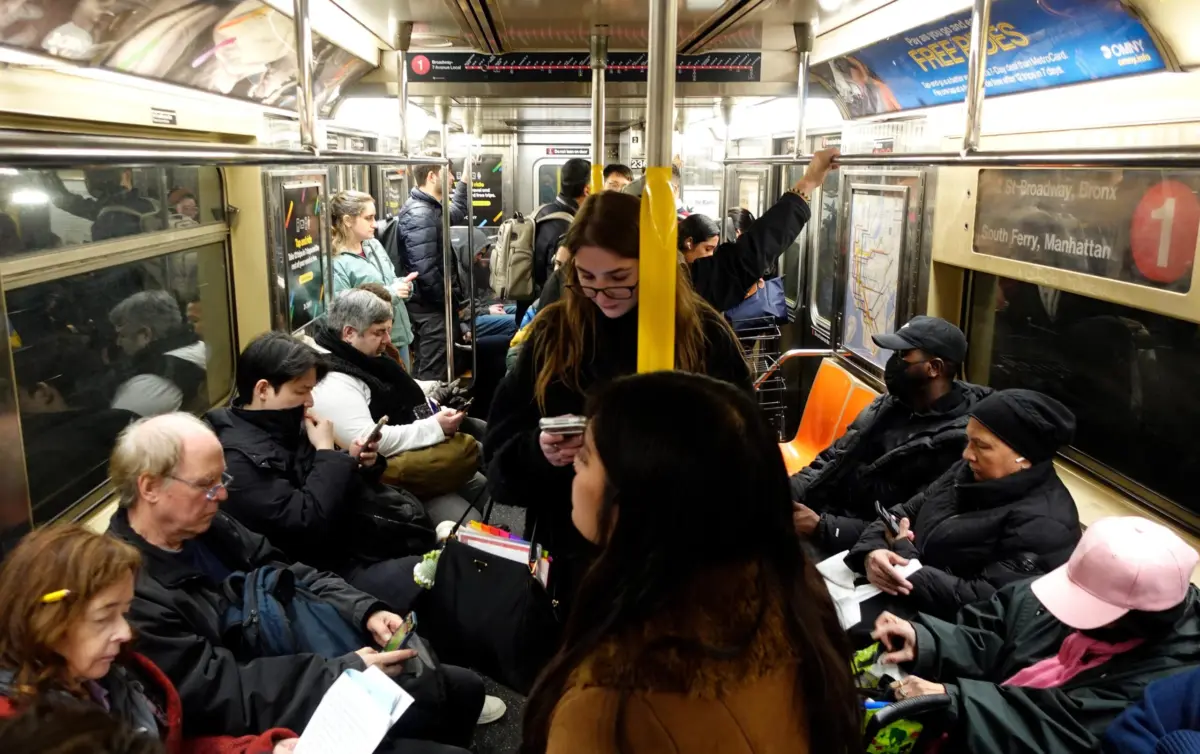
The modern public sphere has become a theater of low-level friction. From the daily indignities of queue-jumping on the morning commute to the jarring intrusion of unfiltered audio cascading from strangers’ cell phones, a pervasive sense of social lawlessness has settled over daily life. What was once considered aberrant, anti-social behavior is increasingly normalized, leaving many to wonder if basic human courtesy survived the profound disruptions of the early 2020s.
According to recent data compiled by the Pew Research Center, nearly half of all Americans report a noticeable, distressing decline in public civility since the onset of the COVID-19 pandemic. Whether manifested as abrasive conduct in airport terminals, aggressive crowding on public transit, or the omnipresent blare of speakerphone conversations in shared spaces, the collective social fabric appears frayed.
To explore this cultural pivot, we examine the shifting landscape of modern manners. Drawing on insights from academic researchers, historical precedents, and contemporary etiquette authorities—including Lizzie Post, co-president of the Emily Post Institute and great-great-granddaughter of the legendary arbiter of decorum—this report investigates why we have grown ruder, how technology has warped our spatial awareness, and whether a conscious return to mindfulness can restore a sense of shared community.
Read Also
Detailed Chronology: The Evolution and Fracture of Modern Civility
The Pre-Pandemic Baseline and the Great Disruption
For generations, public behavior was governed by a largely unspoken, highly stable set of social contracts. These conventions were designed to minimize friction in crowded urban environments and shared public goods. While class-based expectations of formality have steadily dissolved over the past century, foundational rules of thumb—such as waiting one’s turn, respecting personal space, and keeping private interactions contained—remained sturdy pillars of everyday interactions.
Then came the global disruption of 2020. Lockdowns, social distancing mandates, and extended isolation fundamentally altered human interaction. As physical contact was restricted and digital screens became our primary lifelines, the physical spaces we returned to underwent a psychological shift.
When society re-emerged, the muscle memory of shared public consciousness had atrophied. Prolonged isolation fostered an inward-looking hyper-individualism. Out of sight and out of practice, people forgot—or simply stopped caring—how their micro-behaviors impacted the strangers surrounding them. The subway line-cutter described in recent commuter anecdotes is not merely an isolated actor; they are a symptom of a broader cultural malaise where the individual commute is prioritized above the collective peace.
The Rise of Digital Intrusion
As physical spaces grew more contested, technology advanced to fill the silence, creating a new frontier of incivility. The smartphone, once a tool for private communication, has evolved into a portable broadcasting device.
The timeline of phone etiquette over the last two decades tells a story of technological integration outpacing social adaptation. Initially, mobile phones in public were viewed as mild novelties or nuisances handled with hushed apologies. Today, however, the normalization of unshielded audio—from TikTok doom-scrolling and FaceTime video calls to loud speakerphone arguments—has transformed quiet transit cars and waiting rooms into cacophony.
This behavior highlights a cognitive disconnect: users become so accustomed to the private bubble created by holding a device inches from their face that they mentally erase the physical room around them. They treat public environments as private extensions of their living rooms, remaining entirely oblivious to the captive audience forced to share their digital consumption.
Supporting Context & Metrics: Quantifying the Decline in Civility
The anecdotal sense that people have grown increasingly abrasive is supported by hard empirical data.
- The Pew Research Findings: A comprehensive study published by the Pew Research Center indicates that nearly 50% of Americans believe public behavior and interpersonal interactions have become noticeably ruder in the wake of the Covid-19 pandemic.
- The Psychology of Spatial Encroachment: Urban sociologists note that post-pandemic stress has lowered the threshold for frustration. When individuals feel a generalized loss of control over larger societal systems—ranging from economic pressures to institutional instability—they frequently reclaim a sense of agency in micro-interactions, often manifesting as entitlement in queues, traffic, and public transit.
- The Anatomy of the "Captive Audience": Unlike private spaces where social expectations are negotiated among acquaintances, public transit, airplanes, and waiting rooms represent involuntary micro-societies. When rules governing these spaces break down, the psychological toll on bystanders accumulates, turning minor annoyances into chronic stress.
Official Statements and Expert Analysis
Navigating this new era of social friction requires more than passive frustration; it demands structured dialogue about what we expect from shared spaces. Leading voices in sociology and etiquette offer vital frameworks for understanding these challenges.
Kirsty Sedgman on the Purpose of Manners
Dr. Kirsty Sedgman, a professor at the University of Bristol and author of On Being Unreasonable: Breaking the Rules and Making Things Better, emphasizes that manners are not merely tools of bourgeois exclusion. Rather, they serve an essential protective function for public life.
"They encourage us to think about others and to behave in ways that are not antisocial and potentially even dangerous," Sedgman explained in an interview with Vox. "How can we have these conversations so that we figure out what we all want social life and public space to be like in a way that benefits everybody and doesn’t accidentally exclude [anyone]?"
Sedgman acknowledges that etiquette cannot be reduced to a rigid, one-size-fits-all manual. The goal is not to police every minor infraction with authoritarian precision, but to foster an ongoing, empathetic dialogue about mutual respect in shared environments.
Lizzie Post on Adapting Etiquette for the 21st Century
Carrying forward a century-old family legacy, Lizzie Post—great-great-granddaughter of the pioneering socialite Emily Post—manages the delicate balance between timeless courtesy and modern adaptation. Her ancestor published Etiquette in Society, in Business, in Politics and at Home in 1922, guiding society through the roaring twenties, industrial shifts, and two world wars.
Today, Post oversees the evolution of those principles for the digital age. Addressing the intimidating reputation that the word "etiquette" often carries, Post notes:
"Etiquette is a French word—it sounds fancy. I think that it can very easily have these connotations of being something that is about a secret society, or it’s only about formality, or it’s only for people who are very wealthy. It can also start to feel a lot like judgment."
Navigating the Digital Dilemma: Practical Wisdom from the Experts
When questioned about the most glaring manifestations of modern bad behavior—specifically unshielded phone usage—Post draws a distinct line between acceptable and antisocial practices:
- The Speakerphone Fallacy: Blasting audio, video calls, or social media feeds in public spaces is a clear violation of basic courtesy. "It’s this mindful moment where people forget where they are," Post observes. "They’re so used to being in their own world with their phone six inches from their face that they forget that anyone can even hear what it is that they’re doing on their phone at that particular moment."
- When to Speak Up: Confronting a rude stranger is notoriously fraught with risk. Post recommends a pragmatic triage method based on duration and context. "When I am in a space that I’m only going to occupy for a short time, I am telling myself, ‘Mind my own business, don’t worry about it.’ When it’s that train ride that we’re starting, or that four-hour flight that you’re on, I think we start to have to say something and to ask, ‘Hey, could you put some headphones on while you’re enjoying that or watching that or on your call?’"
- The Reality of Conflict: Offering polite corrections carries no guarantee of a polite response. Post offers a sobering caveat: "Here’s the rub: You can’t control other people’s behavior. You cannot control if this person is going to get defensive. If you’re going to ask the question, be prepared for rudeness in return."
- Digital Boundaries at the Dinner Table: Placing a smartphone face-up on a dining table acts as an invitation for constant distraction, signaling to dining companions that their physical presence is secondary to incoming notifications. Stowing the device away remains the gold standard of respectful presence.
- The Text Message Dilemma: While immediate replies are rarely mandatory for everyday life, invitations involving time-sensitive plans—such as dates or social gatherings—demand prompt attention. Respecting someone’s effort to coordinate shared time is, at its core, a modern act of valuation and care.
Future Outlook: Reclaiming the Public Square
As society continues to grapple with the technological and psychological transformations accelerated by the pandemic, the path forward relies neither on hopeless resignation nor aggressive policing. Restoring civility will require a deliberate cultural recalibration.
- Cultivating Spatial Mindfulness: Individuals must actively practice re-engaging with their physical environments. Recognizing that public spaces are shared arenas—not solitary bubbles—is the first step toward reducing ambient friction.
- De-escalating Confrontation: When boundaries are crossed, approaching infractions with polite, low-stakes inquiries ("Could you use headphones?") rather than aggressive reprimands can help reset behavioral expectations without triggering defensive hostility.
- Redefining Etiquette as Inclusion: By shedding the antiquated notion that manners are rigid tools of class exclusion, society can reframe etiquette as what it was always meant to be: a practical, empathetic framework for making communal life safe, comfortable, and accessible for everyone.
Ultimately, the state of our manners reflects the state of our empathy. As we navigate the ongoing aftershocks of a disrupted decade, choosing to wait our turn, silence our screens, and acknowledge the humanity of the strangers beside us is the simplest, most radical step we can take toward healing our public spaces.


Comments
Facebook App ID not configured. Please add it in the Customizer.