
Executive Overview
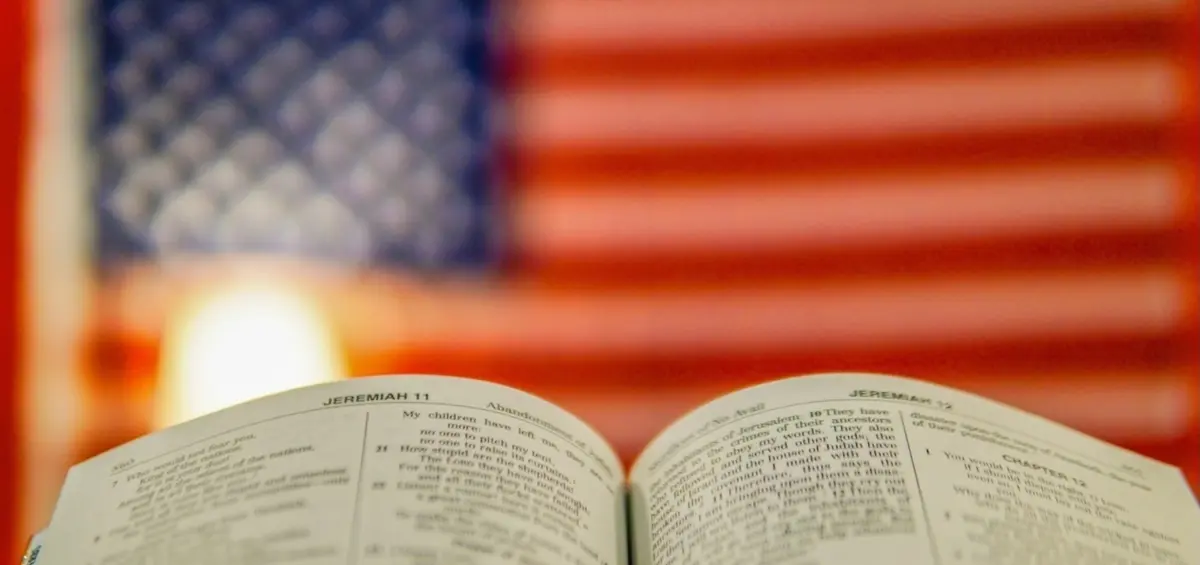
In June, a national media firestorm erupted following a single, electrifying headline in the New York Times: “Texas Public School Students Will Be Required to Read the Bible.”
The decision, handed down by the Texas State Board of Education (SBOE), approved a newly revised, K–12 reading list and an expansive 140-page social studies framework that weaves biblical text directly into the daily education of millions of public school children. Across the country, newsrooms mobilized. Outlets from the Los Angeles Times and the Baltimore Sun to CNN, the BBC, and The Guardian scrambled to cover what many viewed as a seismic shift in the American educational landscape.
To critics, the mandate represents an unconstitutional breach of the separation of church and state—a calculated, aggressive lunge by Christian nationalists to inject sectarian dogma into public classrooms. To supporters, the policy is an overdue course correction, a vital restoration of the foundational texts necessary to understand Western civilization, American history, and literature.
Read Also
Beneath the predictable hyperbole of the modern culture wars lies a deeper, more profound philosophical battleground. This overhaul is not merely a bureaucratic tweak to reading assignments; it is an existential wrestling match over the soul of American civic identity. This report examines the timeline of the Texas curriculum overhaul, evaluates the competing pedagogical and theological justifications for the mandate, analyzes the outcry from civil liberties and historical organizations, and looks ahead to the profound implications this precedent holds for the future of public education in the United States.
Detailed Chronology of the Texas SBOE Decision
The journey toward the controversial curriculum overhaul was marked by months of intense public debate, committee hearings, and political maneuvering within the Texas SBOE.
- Early 2024: Discussions intensified regarding the state’s instructional materials review and adoption cycle. Conservative board members, energized by broader national debates over parental rights, transparency, and traditional values in schools, pushed for a rigorous reassessment of English language arts and social studies curricula.
- Spring 2024: Public testimony opened, drawing fierce crowds of parents, religious leaders, historians, and political activists. Debates before the board laid bare a fractured populace, pitting secular advocacy groups warning against religious indoctrination against conservative communities demanding a return to traditional moral foundations.
- May–June 2024: The SBOE reviewed draft proposals containing specific grade-by-grade literary excerpts and social studies frameworks. Notably, newly elected board members—such as Brandon Hall, a Baptist pastor from west of Dallas—began vocalizing unapologetic justifications for framing education through a explicitly Christian worldview.
- June 2024: The SBOE officially approved the K–12 reading list and the accompanying social studies framework. The decision immediately dominated national headlines, transforming a regional policy debate into a national referendum on religion in public schools.
- Post-Approval Phase (Late 2024–Present): School districts across Texas began evaluating the new guidelines, weighing the operational challenges of implementation against potential legal challenges from civil rights organizations. Meanwhile, educational theorists and cultural commentators across the political spectrum began dissecting the long-term ramifications of "Bible-infused" public education.
The Curriculum Breakdown: What Students Are Actually Reading
To understand the controversy, one must examine the actual structure of the curriculum. The SBOE did not mandate a cover-to-cover reading of the King James Bible as a devotional exercise. Instead, the reading lists and social studies frameworks integrate short, episodic scriptural passages alongside canonical secular works.
The English Language Arts Reading List
In its current form, the K–12 reading list prescribes one or two short biblical passages per grade level. These excerpts are generally narrative and episodic:
- Elementary and Middle Grades: Students encounter foundational stories such as Adam and Eve, the parting of the Red Sea, and Daniel in the lions’ den.
- High School: These biblical snippets are contextualized alongside monumental works of world literature. Twelfth graders read biblical passages alongside Shakespeare’s Hamlet and Jane Austen’s Pride and Prejudice. Tenth graders encounter scriptural texts alongside Shakespeare’s Julius Caesar and Dante’s Inferno. Fifth graders read stories of the burning bush alongside C.S. Lewis’s The Lion, the Witch and the Wardrobe.
The Social Studies Framework
The 140-page social studies framework for grades K–8 explicitly lists “Religious Literature, including the Hebrew Scriptures (Old Testament) and New Testament” alongside mandatory topics like the U.S. Founding documents, free enterprise, and Texas history.
- Third Grade: Students learn about Abraham and Moses. These directives sit immediately alongside historical lessons regarding Mesoamerican influences in the region and ancient Greece and Rome.
- Fourth Grade: Students are required to "identify the Catholic Church and the Pope as important institutions in Europe during the Middle Ages."
- Psychology Courses: Upper-level students examine "the concept of the soul in ancient Scriptures, including the Hebrew Bible." Notably, this comparative approach does not isolate the Bible; students study the concept of the soul across multiple traditions, including the Egyptian Book of the Dead, the Vedas, and Buddhism.
Supporting Context & Metrics: The Scale of the Debate
The implementation of these standards directly impacts a massive demographic.
- The Student Body: Texas public schools serve approximately 5.5 million students across more than 1,200 school districts, making the state’s curriculum decisions uniquely influential in the national textbook market.
- Historical Precedents: The inclusion of religious texts in public discourse is part of a recurring American cycle. Similar national anxieties emerged during Jimmy Carter’s 1976 campaign declaration as a born-again Christian; the rise of "theoconservative" influence during the George W. Bush administration in 2001; and Louisiana’s 2024 legislative mandate requiring the display of the Ten Commandments in every public school and university classroom.
- The Secular Defense (Cultural Literacy): Prominent liberal intellectuals, drawing on E.D. Hirsch’s seminal 1987 work Cultural Literacy, have offered an unexpected defense of the mandate. Hirsch argued that mastering a shared body of background knowledge—including idioms, historical milestones, and religious allusions—is essential for functional literacy and academic success in a knowledge-based economy. Without familiarity with biblical allusions embedded in speeches by Abraham Lincoln (such as "a house divided") or the works of Herman Hawthorne and Melville, students suffer a distinct disadvantage in higher education and civic life.
Official Statements and Institutional Reactions
The policy has drawn sharp, polarized responses from educational institutions, religious leaders, and civil rights advocates.
The Alarm from Civil Liberties and Historical Groups
Mainstream media outlets and educational watchdogs were quick to condemn the move.
- PBS characterized the curriculum as part of "widening conservative efforts to push Christian teachings in U.S. classrooms."
- NewsNation framed the policy through a devotional lens, running the headline: “Texas approves mandatory Bible lessons in K-12 schools.”
- The Houston Chronicle accused the board of "enshrining Christianity as part of classroom instruction for all 5.5 million students."
- The American Historical Association (AHA) issued a scathing formal statement condemning the board’s actions. The AHA accused SBOE members of promoting racist, sexist, and Eurocentric attitudes, ideological distortion, and the suppression of the "diversity of beliefs, denominations, and traditions that have shaped the United States since its founding."
The Ideological Divide Among Supporters
A significant ideological split exists even among those who support the curriculum. On one side are pragmatic reformers who champion the "secular, cultural-literacy" defense—arguing that the Bible should be taught strictly as literature and historical context, devoid of proselytization.
On the other side are figures like Brandon Hall, the newly elected SBOE member and Baptist pastor from west of Dallas. Speaking to the media prior to the vote, Hall rejected sanitized, secularized justifications, boldly declaring:
“We’re going to stop watering down American history. We’re going to teach the truth. Our nation was founded as a Christian nation, and Texas is a Christian state.”
While such rhetoric alarms academic establishments and moderate reformers, proponents of this view argue that it touches upon an undeniable truth: the Bible cannot be entirely domesticated. It is not merely a neutral textbook or an inert artifact; it is a foundational moral and spiritual text that demands a response from every reader.
Future Outlook: What the Texas Mandate Means for American Education
As Texas moves forward with implementing its revised K–12 standards, the long-term ramifications for the rest of the nation will be profound.
- Legal Challenges: Civil liberties groups, including the ACLU and Americans United for Separation of Church and State, are widely expected to mount legal challenges. These lawsuits will test the boundary between permissible teaching about religion for historical and literary literacy and impermissible government establishment of religion.
- The Textbook Market Effect: Because Texas is one of the largest buyers of public school textbooks in the nation, publishers often tailor their educational materials to meet Texas standards. Consequently, curriculum changes adopted in Austin frequently ripple across state lines, influencing what students read in classrooms from California to New York.
- The Re-Examination of Civic Education: Ultimately, the Texas debate forces a reckoning with how American history is framed. As cultural critics note, it is historically dishonest to teach the American founding, the abolition movement, the Civil Rights struggles, and classic American literature while expunging the religious texts and cadences that inspired them.
In the words of T.S. Eliot, reflecting on the decay of modern education in his 1933 lecture Modern Education and the Classics, the survival of a civilization is inextricably bound to the preservation of its foundational texts. Whether the Texas experiment is viewed as a dangerous lunge toward Christian nationalism or a courageous reclamation of cultural memory, one reality remains clear: by restoring the Bible to the classroom, Texas has forced an unavoidable national conversation about what it means to truly teach America.



Comments
Facebook App ID not configured. Please add it in the Customizer.