
Executive Overview
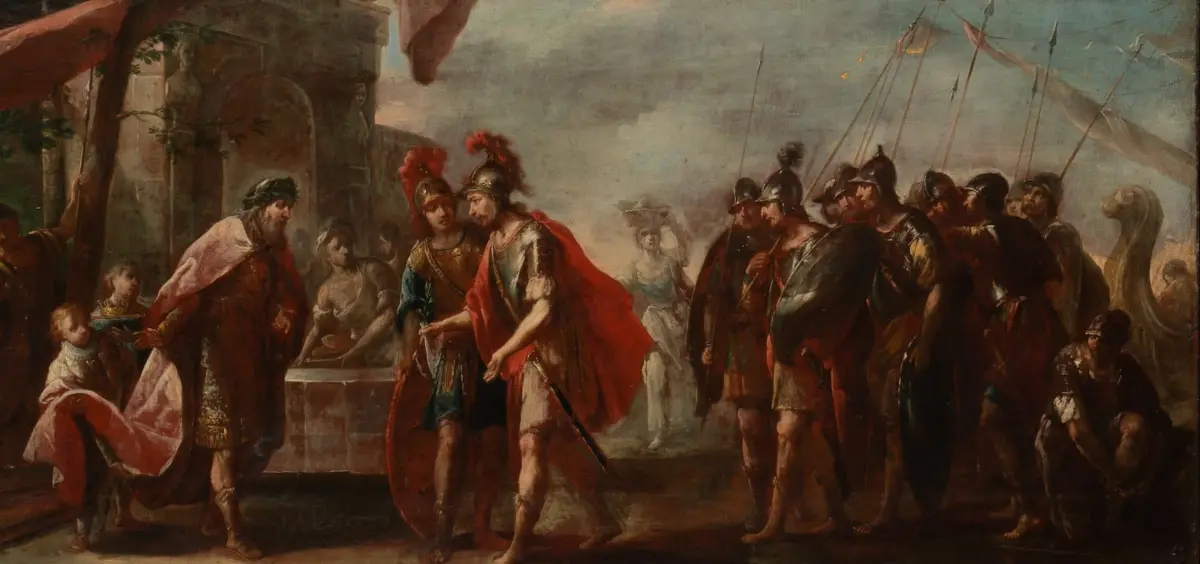
Patrick J. Deneen’s latest contribution to the cultural and political discourse, American Odyssey: What An Ancient Story Reveals About Our Divided Souls (Creed & Culture, 198 pp., $26), arrives at a critical juncture in contemporary American life. Published to coincide with the nation’s semiquincentennial and the cultural reverberations of Christopher Nolan’s recent cinematic takes on the Homeric tradition, Deneen’s book offers a profound, if provocative, meditation on the foundational myths that shape the American psyche.
At the heart of American Odyssey lies a compelling thesis: the yawning cultural chasm in modern American politics—often characterized as the friction between "somewheres" (those rooted to a specific place, community, and tradition) and "anywheres" (those defined by rootless cosmopolitanism and hyper-mobility)—is not merely a sociological division between opposing political factions. Rather, Deneen argues, this tension runs directly through every American heart. Every citizen is a latent Odysseus, torn between an adventurous, restless desire to leave and an aching, fundamental longing for home (nostos).
Yet, as Deneen and cultural critics observe, America has historically chosen the outward path. As a civilization built on the premise of free movement, we have continually prioritized the frontier, the open road, and the escape over the quiet cultivation of our local, civic, and familial foundations. Through a close reading of four cultural touchstones—The Wizard of Oz, Huckleberry Finn, Field of Dreams, and It’s a Wonderful Life—Deneen challenges the national myth of perpetual progress, suggesting that our collective wanderlust has left our cultural and domestic foundations starved and neglected.
Read Also
Detailed Chronology: Tracing the Odyssean Archetype Through American Cinema
To illuminate the Odyssean-American experience, Deneen structures his exploration around a series of binary chapters, juxtaposing Homeric themes with twentieth-century American cinematic artifacts. This framework maps a specific cultural progression from mythical wandering back to the desperate need for domestic reclamation.
[Homeric Roots: The Wanderer & The Gods]
       │
       ▼
[The Wizard of Oz: Dorothy’s Journey & The Myth of Innocence]
       │
       ▼
[Field of Dreams: Dr. Graham & The Renunciation of Ambition]
       │
       ▼
[It's a Wonderful Life: George Bailey & The Tragedy of Suburban Sprawl]
       │
       ▼
[The Alternative Myth: Virgil's Aeneid & Imperial Destiny]
1. The Homeric Foundations and the Nature of the Gods
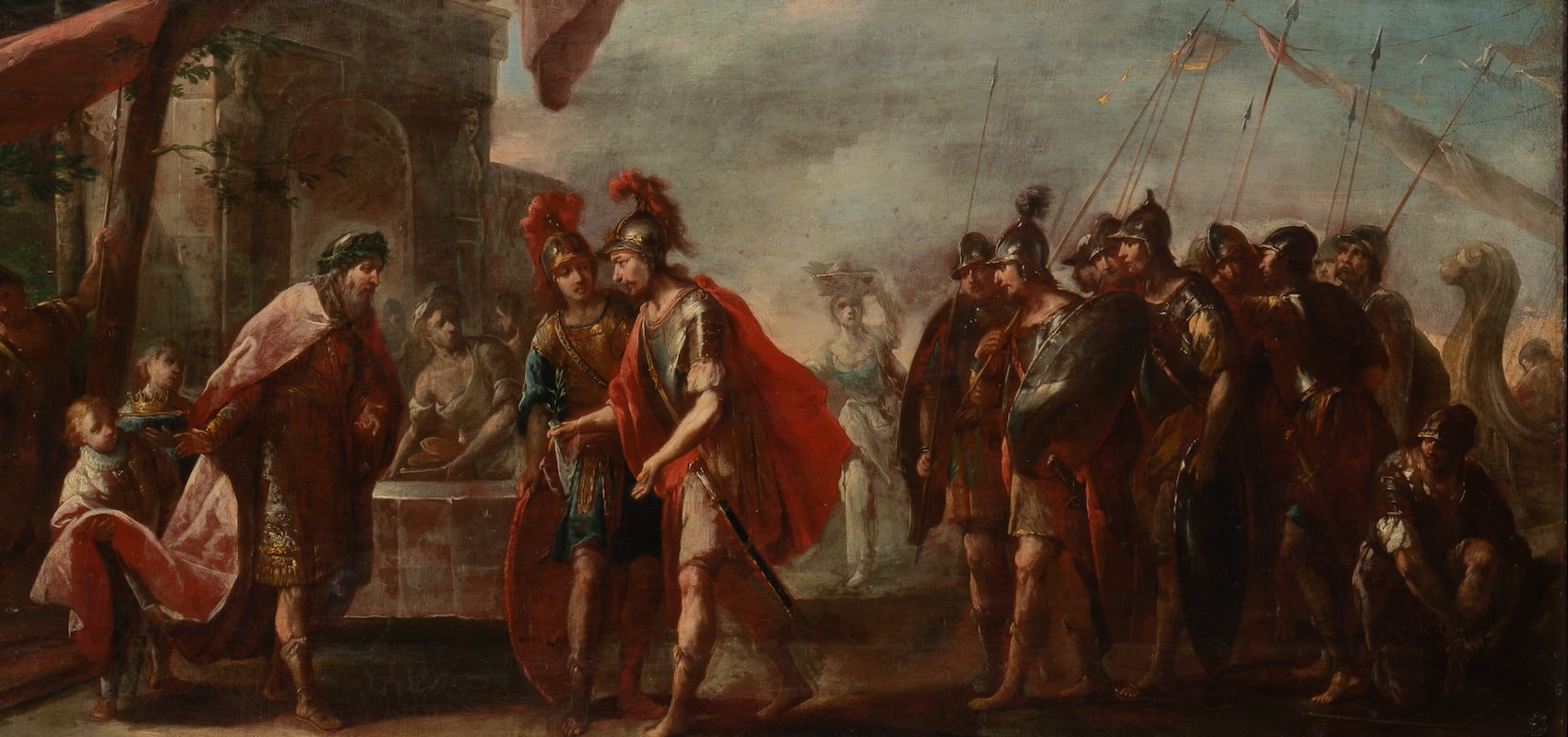
The first half of each chapter explores Homeric verse with academic rigor. Deneen presents a fascinating evaluation of the Greek pantheon through an Aristotelian lens, defining the gods as apolitical—possessing no polis and requiring no governance—and fundamentally oblivious to the long-term consequences of their actions. Unlike the capricious, flesh-seeking gods of Olympus, mortal man is bound by consequence, defined entirely by the political community he inhabits. To be cut off from one’s city is to be reduced to flotsam on the ocean; true humanity is secured only by returning home to the polis.
2. Dorothy’s Kansas and the Mask of American Innocence
Moving from the wine-dark sea to the yellow brick road, Deneen examines The Wizard of Oz as the American equivalent of the Odyssey. Dorothy’s journey is an archetypal quest that ultimately distills into a childlike, poignant prayer: "There’s no place like home."
However, this romantic projection invites critical pushback. While Dorothy serves as an endearing avatar for American innocence, critics argue that she mirrors ourselves as children rather than our actual forebears. The historical American project was forged not by wide-eyed innocents dreaming of rainbows, but by hard-eyed realists navigating a brutal frontier. The rose-cheeked aesthetic of Oz masks an imperial reality: America has often behaved less like a lost child and more like a pragmatic, formidable pirate king.
3. Dr. Graham and the Renunciation of Ambition
In Field of Dreams, Deneen draws a parallel between Odysseus abandoning Calypso’s island to return to Penelope and the character of Dr. Graham, who forsakes a posthumous second chance at baseball stardom to save a child and return to his wife. While Deneen views this as a noble renunciation of worldly ambition, theological critiques note a stark contrast: Odysseus’s departure followed years of martial glory and a protracted respite with a goddess, whereas Dr. Graham embodies a distinctly Christian, self-sacrificial ethos that stands in direct opposition to the pagan, power-driven world of the Homeric hero.
4. George Bailey and the Dilemma of Modern Suburbia
The culmination of Deneen’s book rests on It’s a Wonderful Life. In a surprising twist, Deneen casts George Bailey—a man who never left his hometown—as an Odyssean hero who ultimately sublimates his worldly ambitions into real estate development, giving birth to "Bailey Park."
Deneen laments the architectural uniformity of this postwar suburb, contrasting it with the gentle density of historic downtown Bedford Falls. Yet, this critique runs headlong into material reality. For generations, millions of Americans have chosen these very suburbs. Far from being inimical to community, suburban neighborhoods house the families and provide the attainable housing stock that keeps a property-owning democracy stable.
Supporting Context & Metrics: The Material Realities of Housing and Nostos
The romanticized longing for historic, walkable urbanism (nostos) frequently collides with the obdurate, expensive realities of modern housing economics.
- The Affordability Crisis: Plummeting rates of homeownership are frequently lamented as a symptom of national homelessness. However, this crisis is driven largely by regulatory friction, zoning restrictions, and the prohibitive cost of building traditional, high-density architecture.
- Regulatory Hurdles: Developing new-urbanist projects featuring traditional materials, gridded walkable streets, and front porches often encounters years of bureaucratic opposition. In many jurisdictions, modern environmental and efficiency regulations mandate double-glazed, plastic-framed windows, pricing out the average buyer.
- The Economic Function of Tract Housing: George Bailey’s "ugly little houses" in Bailey Park were not symbols of spiritual decay; they were affordable homes designed to liberate working-class families from predatory landlords. In historical context, neighborhoods that began as austere postwar subdivisions (such as the actual filming location in La Cañada Flintridge, California) have evolved into verdant, tree-lined, multi-million-dollar communities.
Future Outlook: Ithaca or Italy—Which Myth Guides the Empire?
As America navigates its contemporary cultural and political crossroads, the fundamental question remains: Which classical epic truly mirrors the American trajectory?
┌─────────────────────────────────┬──────────────────────────────────┐
│ THE ODYSSEAN MODEL (GREECE)     │ THE AENEAN MODEL (ROME)          │
├─────────────────────────────────┼──────────────────────────────────┤
│ • Focus: Return, rootness,      │ • Focus: Forward movement,       │
│   and local reclamation.        │   imperial destiny, and mission. │
│ • Thematic Core: The tension    │ • Thematic Core: Carrying home   │
│   between leaving and staying.  │   within oneself to build an     │
│ • Outlook: A retrospective,     │   empire without end.            │
│   homeward-bound retreat.       │ • Outlook: Universal, expansive, │
│                                 │   and cosmopolitan hegemony.     │
└─────────────────────────────────┴──────────────────────────────────┘
Deneen and cinematic adapters like Christopher Nolan implicitly suggest that the Odyssean adventure has been a tragic folly—that it would have been better had the hero never sailed at all. Yet, America is not built for a retrospective, homeward-bound retreat. It is a vast, multiethnic, cosmopolitan empire.
If the nation is to find an epic myth suited to its actual historical weight, it may need to look past the insular, squabbling poleis of the Aegean and turn instead to the Latin West. The Aeneid—with its vision of unyielding imperial destiny (imperium sine fine)—captures the restless, forward-moving impulse of a continental superpower. Whether America ultimately sails toward the quiet restoration of Ithaca or embraces the sprawling universality of Rome, it remains adrift on the wine-dark sea of history, where navigating the monsters of modernity requires a clear-eyed reckoning with both our material realities and our foundational myths.





Comments
Facebook App ID not configured. Please add it in the Customizer.