
Executive Overview
For millennia, the concept of the haunted house has captured human imagination, raising the hairs on the backs of our necks and compelling us to peer into the dark. From the earliest recorded ghost stories etched into ancient clay tablets to modern psychological thrillers and Gothic masterpieces, the architectural specter remains one of literature and folklore’s most resilient creations. The enduring appeal of these stories is not merely found in cheap thrills or sudden jumps; rather, it lies in our collective grappling with mortality, grief, generational trauma, and the inescapable weight of history.
As humanity evolved, so too did the vessel of our terror. What began as an ethereal spirit wandering an ancient ruin transformed into the haunted house—a physical structure that serves as a repository for family curses, societal sins, and dark secrets. This comprehensive investigation explores the deep-seated psychological roots of ghost stories, the literary birth of the haunted house novel during the Age of Enlightenment, the evolution of regional Gothic traditions, and how contemporary authors continue to reinvent these age-old tropes for modern audiences, exemplified by works such as D.M. Pulley’s Stone Mad.
Detailed Chronology: From Babylonian Tablets to Modern Manors
The lineage of the ghost story and the haunted dwelling spans thousands of years, tracing a fascinating arc from ancient superstition to institutionalized literary genre.
Read Also
- c. 3500 BCE (Ancient Babylonia): The earliest known written account of a ghost is chiseled onto a clay tablet. Discovered by modern archaeologists, this ancient text provides explicit instructions on how to banish an unwanted, wandering spirit back to the underworld, proving that humanity has sought to manage the restless dead since the dawn of written communication.
- 1st Century CE (Imperial Rome): The classic trope of the rattling phantom makes its historical debut. In the personal letters of Pliny the Younger, we find accounts of a bearded old ghost burdened by chains, haunting a sprawling, creepy house and ultimately driving its inhabitants away.
- 1764 (The Birth of the Gothic Novel): Horace Walpole publishes The Castle of Otranto under the pseudonym William Marshall. Originally presented as a 15th-century Italian translation of a medieval diary to bypass the disdain of Enlightenment-era critics, this 85-page novella establishes the foundational blueprint for all subsequent haunted house and Gothic fiction.
- Late 18th to 19th Century (The Victorian Boom): The Gothic genre explodes across Europe and North America. Writers experiment with psychological terror, atmospheric settings, and uncanny phenomena, laying the groundwork for the classic ghost stories of authors like Henry James, Sheridan Le Fanu, and Edgar Allan Poe.
- 20th Century (Americanization of the Gothic): The European castle is brilliantly adapted to the New World landscape. American writers reimagine haunted spaces not as medieval fortresses, but as crumbling robber-baron estates, brutal plantations, isolated religious orders, psychiatric institutions, and desolate farmlands.
- 21st Century (Deconstruction and Modernization): Contemporary authors subvert traditional tropes, migrating the haunted house from physical architecture into the realms of systemic injustice, racial trauma, generational guilt, and futuristic environments. Works like Toni Morrison’s Beloved, Stephen Graham Jones’s The Only Good Indians, and D.M. Pulley’s Rust Belt thriller Stone Mad demonstrate the infinite adaptability of the genre.
Supporting Context & Metrics: The Psychology of Our Obsession
To understand why humanity remains so deeply enamored with haunted spaces, one must examine the intersection of psychology, anthropology, and human mortality. At its core, the obsession with ghosts boils down to a simple, inescapable fact: every human being will die, and every human being will experience loss.
+-----------------------------------------------------------------+
       THE CYCLE OF GHOSTLY FIXATION ACROSS HUMAN HISTORY
+-----------------------------------------------------------------+
       [ Universal Mortality & Grief ]
                   │
                   ▼
       [ Search for Meaning / Afterlife Theories ]
                   │
                   ▼
       [ Projection onto Architecture (The Haunted House) ]
                   │
                   ▼
       [ Literary Evolution: From Ancient Tablets to Modern Thrillers ]
+-----------------------------------------------------------------+
None of us know with absolute certainty where the dead go, yet virtually every culture has developed religions, theories, and suspicions suggesting that the departed do not vanish entirely—at least not right away. Anthropological studies indicate that belief in lingering spirits acts as a psychological coping mechanism for grief. Whether viewed as comforting spiritual intervention or harmless wishful thinking, the dead are never truly far from the human consciousness.
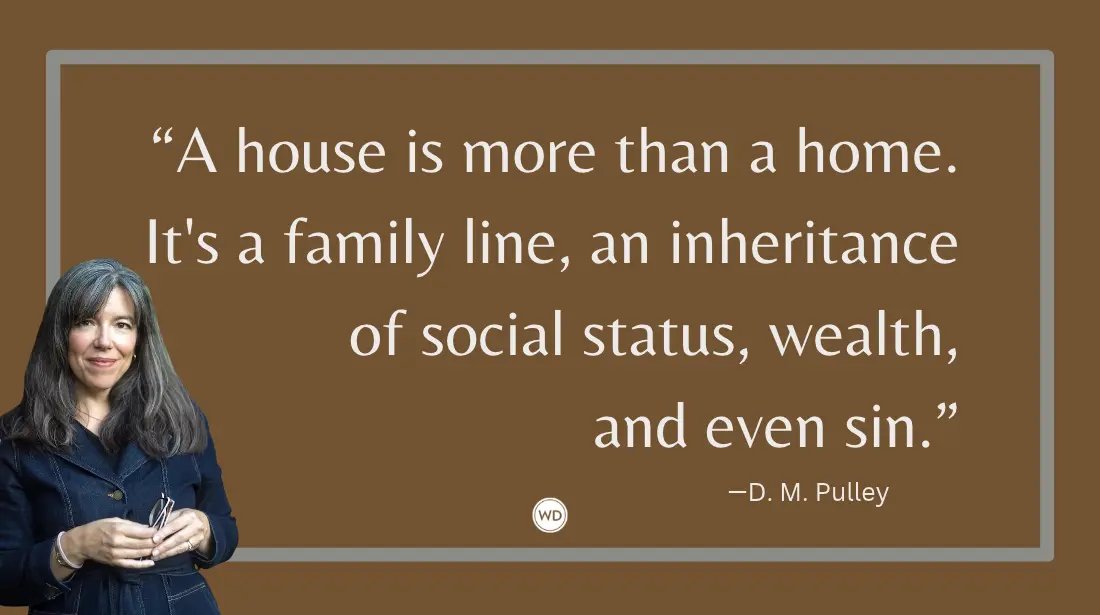
Furthermore, structural environments hold profound psychological significance. A house is rarely just a physical shelter; it is a repository of a family line, an inheritance of social status, wealth, and accumulated sin. When people walk through aging historical buildings, abandoned properties, or dark, quiet forests, a primal survival instinct often triggers the uncanny sensation that they are not alone. This visceral reaction bridges the gap between our evolutionary history as prey animals and our modern, intellectual lives, creating a fertile psychological landscape for horror and suspense.
Official Perspectives: Navigating the Gothic Tradition
Literary historians and working authors have long analyzed the mechanics of what makes a house "go bump in the night." When Horace Walpole published The Castle of Otranto in 1764, he operated under a shroud of anxiety. During the hyper-analytical European Enlightenment, unwashed superstitions concerning ghosts, curses, and divine retribution were widely derided by the intellectual elite as juvenile, barbaric, and backward—a dismissal that birthed the derogatory label "Gothic."
Anticipating rejection from the learned class, Walpole cleverly framed his manuscript as a recovered artifact. By presenting the book as a translation of an authentic medieval Italian diary, he lent the supernatural narrative an academic, authoritative pedigree. The gamble succeeded, proving that society possessed a voracious, secret appetite for the macabre that outstripped its intellectual pretensions.
In the centuries following Walpole’s strategic gambit, authors realized that the haunted house acts as a remarkably flexible literary framework. Just as a conventional murder mystery or romance novel relies on established beats, the Gothic genre provides writers with a structural skeleton upon which they can hang any characters, historical eras, settings, and social commentaries they desire.
Modern writers have heavily leaned into this flexibility. Speaking on the mechanics of the genre, contemporary thriller authors and literary critics emphasize that the true terror of a haunted house does not stem merely from poltergeists or supernatural jump scares. Instead, it arises from the unaddressed secrets, systemic failures, and historical injustices embedded within the very foundations of the property.
Future Outlook: Reinventing the Haunted House for Modern Readers
As we look toward the future of speculative fiction and psychological thrillers, the haunted house continues to transform in remarkable ways. While early Gothic tales romanticized distant eras and foreign lands, today’s haunted houses can materialize anywhere: in the cold expanse of outer space, deep within the digital architecture of the future, or right in our own backyards.
Crucially, contemporary storytellers are redefining who gets haunted and why. No longer restricted to aristocratic lords trapped in European castles, modern hauntings explore deeply personal and cultural traumas. Consider Toni Morrison’s Beloved, which locates the haunting inside the broken, resilient heart of a mother escaping the horrors of chattel slavery. Alternatively, look to Stephen Graham Jones’s The Only Good Indians, which explores the inescapable ghosts of cultural erasure and the guilt of young men navigating systemic pressures.
This evolution is similarly exemplified by D.M. Pulley’s contemporary Gothic thriller, Stone Mad. Set within a crumbling Rust Belt manor in present-day Cleveland, the novel draws heavily upon real-world architectural history and actual historical movements. Drawing from the author’s professional background as a forensic engineer, the narrative follows Mannie Wallace, a single working mother hired to investigate a cursed structure. True to the timeless traditions of the genre, Mannie is forced to confront the literal and figurative horrors of the past and the secrets buried deep within the masonry—or risk becoming the building’s next permanent resident.
Ultimately, the haunted house survives because it serves as a mirror for human nature. As long as buildings hold memories, families pass down generational burdens, and humanity struggles to reconcile its past mistakes, the walls will continue to whisper, the floorboards will creak in the dead of night, and readers will eagerly turn the page to see what is hiding in the dark.





Comments
Facebook App ID not configured. Please add it in the Customizer.