
Executive Overview
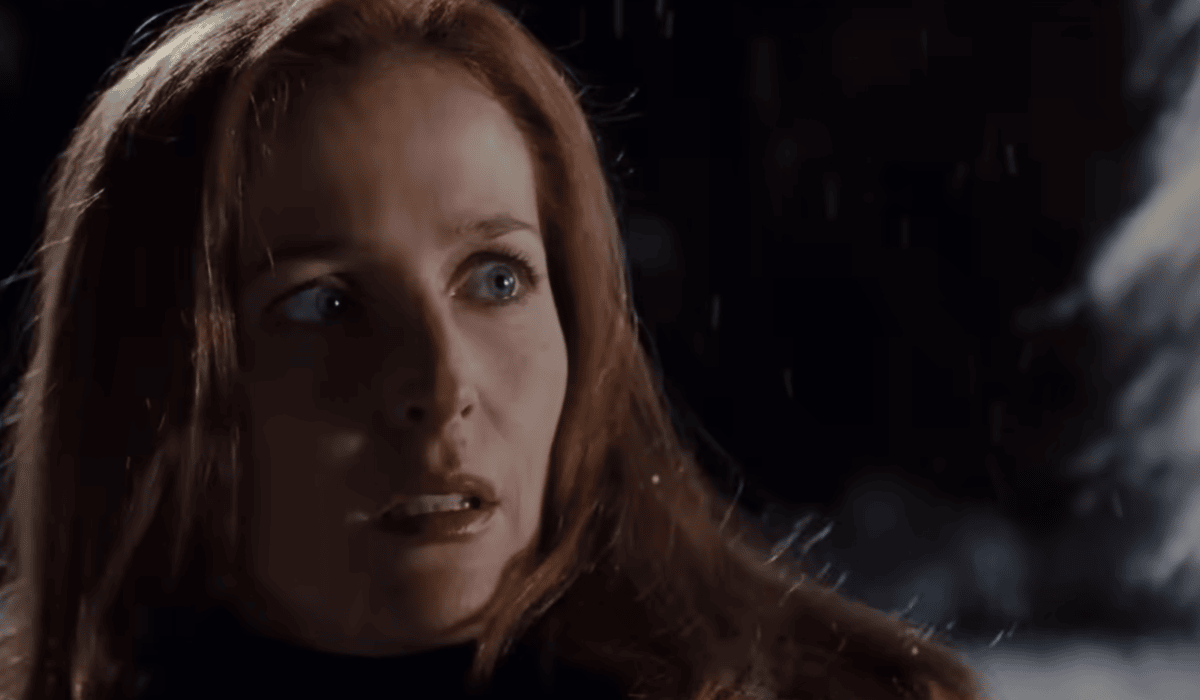
Years of speculative whispered dialogue, fervent internet message board theories, and persistent rumors have finally materialized into tangible reality. Chris Carter’s long-suppressed, radical alternative cut of the 2008 feature film The X-Files: I Want to Believe has officially debuted on Hulu. Formally titled The X-Files: I Want to Believe – Vrach Frankenshteyn, this director-sanctioned revision arrives nearly two decades after the cinematic release of the franchise’s second big-screen outing. For years, the mythology surrounding the film’s original production suggested that studio interference drastically altered Carter’s intended artistic vision, reducing a gritty, intense psychological thriller into a softer, more universally palatable procedural.
Yet, upon its streaming premiere, Vrach Frankenshteyn has provoked a fresh wave of fervent debate among the die-hard "X-Philes" community. Paradoxically, despite being heralded as the ultimate director’s cut that would expose the uncompromised brutality studio executives allegedly refused to handle, this new iteration is noticeably shorter than its theatrical predecessor. Clocking in at a brisk 98 minutes compared to the original 104-minute runtime, the film operates on a principle of aggressive subtraction.
Far from being a simple assembly of deleted scenes that were left on the cutting room floor due to rating concerns, Vrach Frankenshteyn is an extensive re-imagining. Carter has excised major narrative anchors—most notably the foundational romance between Fox Mulder and Dana Scully, alongside key continuity elements regarding their son William and Mulder’s sister Samantha. By stripping away nearly two decades of franchise baggage and romantic fan service, Carter has engineered a hyper-focused, structurally lean monster-of-the-week thriller. This piece investigates the structural mechanics, thematic motivations, and industry pressures that birthed Vrach Frankenshteyn, providing an authoritative autopsy of a director’s cut that defies conventional Hollywood expectations.
Read Also
Detailed Chronology: From 2008 Theatrical Compromise to Streaming Redemption
To fully comprehend the cultural and structural weight of Vrach Frankenshteyn, one must trace the timeline of creative friction that defined The X-Files: I Want to Believe from its inception. When the film hit theaters in the summer of 2008, it carried the immense pressure of reviving a landmark television phenomenon that had concluded its run on Fox five years prior. Fans anticipated a cinematic continuation deeply entrenched in the overarching alien conspiracy mythology that had captivated global audiences for nine seasons. Instead, they received a standalone paranormal procedural dealing with disgraced priests, Russian organ traffickers, and psychic visions in the snow-swept expanse of West Virginia.
Behind the scenes, the journey to theaters was plagued by an escalating war of attrition between Carter’s creative impulses and the commercial anxieties of 20th Century Fox executives. In recent interviews surrounding the Hulu launch, Carter revealed that his initial assembly of the film leaned heavily into visceral, unsettling horror. The studio, terrified of alienating mainstream audiences and alienating lucrative demographic brackets with a hard R-rating, clamped down immediately.
Studio executives famously labeled early cuts of the film as "torture porn," forcing Carter and his editorial team to systematically sand down its sharpest edges. A first pass at re-editing failed to secure the desired PG-13 rating, prompting a second round of forced concessions. Crucially, securing that elusive rating required an artificial re-weighting of the film’s narrative priorities. Scenes that emphasized suspense, body horror, and psychological dread were minimized, while character-driven dramatic beats—particularly the domestic and romantic dynamic between Mulder and Scully—were pushed to the forefront to anchor the film for general audiences.
For nearly eighteen years, the legend of the "Chris Carter Cut" grew in direct proportion to the perceived mediocrity of the theatrical release, which received a lukewarm critical reception and modest box office returns. Fans assumed that unlocking Carter’s vault would reveal an unedited, blood-soaked epic. Instead, the creation of Vrach Frankenshteyn represents a rare instance where a filmmaker used a director’s cut not merely to restore, but to surgically excise the very compromises he was forced to make in 2008, resulting in a leaner, meaner cinematic specimen.
Supporting Context & Metrics: Decoding Vrach Frankenshteyn
| Metric / Attribute | Theatrical Cut (2008) | Vrach Frankenshteyn Cut (Hulu, Modern) |
|---|---|---|
| Runtime | 104 Minutes | 98 Minutes (-6 Minutes) |
| Narrative Focus | Mulder & Scully Relationship / Procedural | Standalone Horror / Frankenstein Metaphor |
| Romance Subplot | Prominent (Kiss, Bedroom & Domestic Scenes) | Severely Trimmed / Downplayed |
| Mythology Ties | References to Samantha and William | Entirely Removed (Standalone Monster-of-the-Week) |
| Key Added Footage | Standard theatrical pacing | Explicit Agent Whitney death; Extended lab sequences |
| Opening Sequence | Standard atmospheric cold open | Patsy Cline’s "I Fall to Pieces" (Irony-driven edit) |
The Etymology of Madness: Why Vrach Frankenshteyn?
The most immediate point of curiosity surrounding the Hulu release is its striking, idiosyncratic subtitle. Vrach Frankenshteyn roughly translates from Russian to "Physician Frankenstein." This linguistic choice is far from a mere stylistic affectation; it serves as the ideological compass for Carter’s true artistic ambitions.
Carter has openly noted that his conception of the 2008 narrative was never fundamentally about domestic bliss or paranormal police work; it was a modern, ethically dubious exploration of the Frankenstein mythos. The project’s thematic genesis lay in Carter’s fascination with real-world medical history, specifically the chilling experiments of Dr. Robert J. White during the 1970s. Dr. White successfully—albeit temporarily—transplanted the head of one rhesus monkey onto the body of another.
This grotesque medical milestone inspired Carter to explore the boundaries of bio-ethics, bodily autonomy, and modern monstrosity. In the theatrical cut, these visceral themes were diluted by the snowy atmospheric trappings and the emotional melodrama of Mulder and Scully’s relationship struggles. By renaming the film Vrach Frankenshteyn, Carter forces the audience to view the narrative through a singular, uncompromised lens: a meditation on the horrific lengths to which modern science will go to conquer mortality, completely divorced from television series continuity.
Official Statements & Creative Autopsy: Breaking Down the Major Changes
The Deconstruction of Mulder and Scully’s Romance
Without question, the most shocking revelation of Vrach Frankenshteyn is the systematic dismantling of the Mulder and Scully romantic subplot. In the theatrical version, the relationship formed the emotional backbone of the film, culminating in a passionate kiss, intimate bedroom banter featuring Scully noting Mulder’s "scratchy beard," and dialogue concerning the comfort of "two people who come home to a home."
In the new cut, these moments are dramatically minimized or scrubbed entirely. When questioned about this radical about-face, Carter offered a multi-layered rationale. First, he points to the passage of time. Following the release of I Want to Believe, David Duchovny and Gillian Anderson returned for Fox’s revival seasons (Seasons 10 and 11), giving fans an abundance of material concerning the duo’s interpersonal dynamics. Carter felt that dwelling on domestic intimacy in a 2008 thriller now felt redundant.
More importantly, Carter admits that the studio-mandated PG-13 trims inadvertently broke the film’s narrative spine. "It became almost like a Mulder and Scully relationship movie than it was the Frankenstein movie we originally intended," Carter explained in recent promotional interviews. By cutting the romance, Carter achieves an unintentional form of addition by subtraction; the narrative regains its pacing, shifting the audience’s attention away from soap-opera melodrama and back toward the chilling medical horror at the core of the plot.
Eradicating Franchise Continuity: Samantha and William
In another surprising creative pivot, Vrach Frankenshteyn actively erases explicit references to Mulder’s long-lost sister, Samantha, and his and Scully’s estranged son, William. While casual observers might assume these cuts were made simply to streamline the runtime or remove emotional baggage, Carter insists the decision runs much deeper.
By excising William and Samantha, Carter consciously strips the film of its heavy historical mythology, transforming I Want to Believe into a purer, self-contained "monster-of-the-week" narrative. While the 1998 feature film Fight the Future was inextricably tethered to the sprawling alien conspiracy arc of the television series, Carter envisioned this cinematic outing as a standalone piece of cinematic pulp. This creative choice suggests that Carter viewed the theatrical format as an ideal sandbox for isolated, high-concept thrillers that did not require a masterclass in X-Files lore for an uninitiated viewer to follow—though it undeniably challenges the expectations of legacy fans invested in the characters’ ongoing emotional history.
Restoring the Horror: Gore, Lab Sequences, and Agent Whitney
While the overall runtime is shorter, Vrach Frankenshteyn does incorporate select pieces of footage that substantiate its director’s cut classification. The most notable additions are concentrated within the grim, surgical heart of the film: the clandestine Frankenstein laboratory.
Sequences showcasing a disembodied head undergoing artificial reanimation and a headless corpse being dragged down a sterile, dimly lit corridor have been extended and rendered with greater brutality. Furthermore, the death of Agent Dakota Whitney is handled with a stark, unflinching explicit nature that was entirely smoothed over in the 2008 cut to appease ratings boards. These restored moments validate the rumor that Carter’s original vision was simply too intense for studio executives seeking a broad demographic reach.
Compounding these tonal adjustments is a striking editorial choice at the very beginning of the film: the integration of Patsy Cline’s melancholic classic, "I Fall to Pieces," as the opening musical cue. According to Carter, editor Eleanor Infante championed the track to introduce a sharp, ironic juxtaposition against the bleak, cold world of the narrative—setting a tone that is decidedly more cynical and unsettling than the theatrical orchestration.
Future Outlook: The Legacy of Vrach Frankenshteyn
The unexpected, quiet arrival of The X-Files: I Want to Believe – Vrach Frankenshteyn on Hulu raises profound questions regarding the future of director-driven streaming restorations and the relationship between creators and legacy properties. For a franchise as meticulously cataloged and intensely guarded as The X-Files, the release of an alternate cut nearly twenty years down the line is an extraordinary anomaly.
As audiences continue to stream, analyze, and debate the merits of Vrach Frankenshteyn, its long-term impact on the cultural legacy of the film will likely be twofold. For purists and horror aficionados, the cut offers a fascinating glimpse into what could have been: a leaner, meaner, uncompromising bio-horror film that prioritized pulse-pounding suspense over comforting romantic closure. Conversely, for fans who viewed the 2008 film primarily as a vital chapter in the emotional evolution of Mulder and Scully, the wholesale erasure of their domestic intimacy may feel like a bridge too far.
Ultimately, Vrach Frankenshteyn stands as a testament to the enduring creative friction that defines Hollywood filmmaking. Chris Carter has finally delivered the film he set out to make in 2008, proving that even within the rigid confines of corporate studio franchises, a creator’s ultimate vision can—given enough time and the right digital distribution landscape—rise from the operating table to haunt the screen once more.

Comments
Facebook App ID not configured. Please add it in the Customizer.