
Executive Overview
For decades, the intersection of religion and popular culture has been fraught with tension. Religious institutions have frequently approached contemporary media—from blockbuster horror films to avant-garde music and anime—with suspicion, viewing secular entertainment either as a moral hazard to be avoided or as a passive canvas upon which to project rudimentary Christian allegories.
However, a paradigm shift is quietly underway within academic and publishing circles. This September, InterVarsity Press (IVP) is launching a provocative new series titled Discovering God in Pop Culture. Spearheaded by Zachary Gordon, associate academic editor at IVP, the series aims to dismantle old paradigms. Instead of asking whether Christians should engage with pop culture, or playing a surface-level game of "spot the religious theme," the series asks a much deeper question: How can the active, critical engagement with popular media actively sharpen, deepen, and challenge Christian faith?
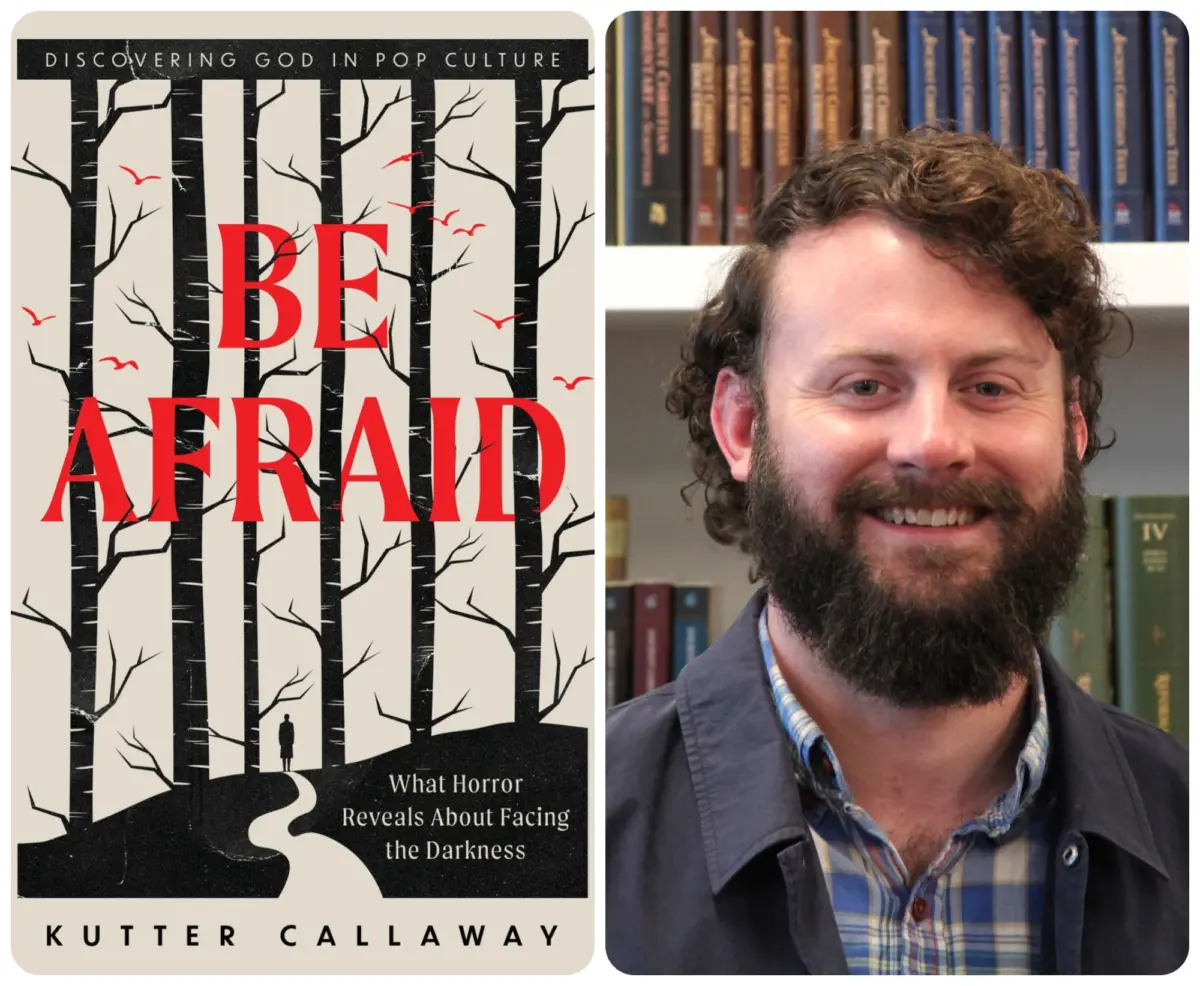
Co-edited by Kutter Callaway, assistant professor of theology and culture at Fuller Theological Seminary, and Matthew William Brake, associate professor of philosophy and religion at Northern Virginia Community College, the project spans diverse mediums, including film, music, literature, and animation. The inaugural release, Callaway’s Be Afraid: What Horror Reveals About Facing the Darkness, directly tackles one of the most polarizing genres in cinema. Far from dismissing scary movies as antithetical to spiritual well-being, the book argues that informed engagement with horror can be profoundly redemptive. Indeed, the series editors suggest a startling premise: that the Bible itself is, in many places, squarely rooted in the horror genre.
Read Also
Beyond the launch of Callaway’s text, the Discovering God in Pop Culture pipeline includes forthcoming titles exploring generational perspectives on contemporary cinema and the profound philosophical weight of anime. This comprehensive report examines the genesis of the series, the theoretical frameworks underpinning its curation, official statements from its key architects, and the broader implications of treating pop culture not as a secular threat, but as a legitimate locus of theological revelation.
Detailed Chronology: The Evolution of Discovering God in Pop Culture
To understand the trajectory of the Discovering God in Pop Culture series, one must examine the timeline of its development, from editorial conception to its impending autumn rollout and multi-year publishing roadmap.
The Genesis of an Editorial Vision (2023–Early 2024)
The conceptual foundations of the series were laid when Zachary Gordon recognized a critical gap in contemporary religious publishing. While niche academic texts had long analyzed the intersections of theology and media, accessible yet intellectually rigorous literature for the general reader remained scarce. Furthermore, the tone of existing Christian media engagement often felt defensive, characterized by reactive moral panic or superficial "redemptive readings" that forced secular stories into overly neat theological boxes.
Gordon envisioned a series that would bypass these tired debates. He approached co-editors Kutter Callaway and Matthew William Brake, both recognized for their interdisciplinary scholarship bridging popular culture, philosophy, and theology. Together, the editorial team established the core thesis of the series: popular culture does not merely mirror society; it actively constructs the existential horizons within which modern individuals—believers and non-believers alike—make sense of existence, suffering, joy, and transcendence.
Securing the Roster and Initial Acquisitions (2024–2025)
With the conceptual framework established, the editorial team set out to commission titles that would defy expectations across various demographics and mediums.
- Fall 2025 Launch: The anchor of the initial rollout is Kutter Callaway’s Be Afraid: What Horror Reveals About Facing the Darkness. By choosing the horror genre for the flagship title, the publishers made an immediate statement of intent: the series would not shy away from the dark, uncomfortable, and visceral aspects of human experience.
- Spring 2027 Expansion: Expanding the scope to include generational and cross-disciplinary insights, IVP signed a collaborative project featuring Soong-Chan Rah, a prominent professor of evangelism at Fuller Theological Seminary, alongside his son, Elijah Rah, an avant-garde recording artist. This father-son duo is set to explore contemporary cinema through a dual-lens perspective, bridging the gap between established theological critique and emerging artistic sensibilities.
- Fall 2028 Horizon: Looking further ahead, Andrea Robinson, a professor at Huntsville Bible College, has been signed to pen a volume on anime. This title will investigate how Japanese animation can serve as a medium for existential reflection, challenging audiences to find purpose in earthly existence rather than treating faith as a mere ticket to the afterlife.
Supporting Context & Metrics: Theology, Horror, and the Modern Psyche
The decision to launch a theological series anchored by a deep dive into the horror genre requires contextualization within broader cultural, psychological, and theological shifts. Why horror? And why now?
The Theodicy of Terror: Confronting the Darkness
For centuries, Western religious discourse has tended to sanitize the human experience, smoothing over the jagged edges of trauma, systemic injustice, and existential dread. In Be Afraid, Callaway diagnoses a profound pastoral failure within contemporary Christian liturgies and sermons. He notes that modern religious formation frequently fast-tracks congregations from the agony of Good Friday straight to the triumphant victory of Easter Sunday, bypassing the agonizing silence of the tomb.
When believers are denied space to sit with the reality of death, grief, and fear, they experience a crisis of faith when real-world trauma inevitably strikes. They feel as though "something has gone wrong with their faith" because they have been conditioned to expect an instantaneous, painless transcendence over darkness.
However, historical and literary analyses of the Bible reveal a starkly different reality. Scripture is saturated with terror: the apocalyptic visions of Revelation, the harrowing existential lamentations of Job, the divine violence of the Old Testament, and the visceral agony of the crucifixion. By recognizing that the Bible itself frequently operates within the horror genre, modern readers can reclaim a faith tradition uniquely equipped to navigate a broken, chaotic, and trauma-filled world. Horror films, when engaged thoughtfully, act as secular liturgies that allow audiences to externalize, confront, and process these very fears.
The Demographics of Pop Culture Theology
The market for popular theology has undergone significant structural changes. According to publishing metrics, modern readers—particularly Millennials and Generation Z—are increasingly skeptical of sanitized, dogmatic formulas that fail to address real-world complexities. They are drawn to media that wrestles authentically with moral ambiguity, psychological fracturing, and existential despair.
| Series Title / Author(s) | Primary Medium | Central Thematic Focus | Scheduled Release |
|---|---|---|---|
| Be Afraid (Kutter Callaway) | Film (Horror) | Confronting darkness, grief, and trauma through scary movies | September 2025 |
| TBD (Soong-Chan & Elijah Rah) | Film (Contemporary) | Generational insights and cultural critiques of modern cinema | Spring 2027 |
| TBD (Andrea Robinson) | Animation (Anime) | Earthly ethics, purpose, and character development in anime | Fall 2028 |
This matrix illustrates the strategic breadth of the series. By moving from cinematic horror to avant-garde generational analysis and finally to Japanese animation, IVP is positioning the series to capture readers across diverse ideological, generational, and aesthetic spectrums.
Official Statements and Editorial Insights
To fully grasp the ambitions of Discovering God in Pop Culture, it is essential to examine the direct words of its editors and contributors. Their statements illuminate the philosophical underpinnings and pastoral urgency of the project.
Zachary Gordon on Shifting the Christian Paradigm
Zachary Gordon, the acquiring editor for the series at InterVarsity, emphasizes that the project represents a maturation of how faith communities interact with the secular world.
"Instead of getting bogged down in questions of whether or not it is okay for Christians to engage with pop culture, or simply identifying religious themes therein, we wanted to focus on how Christian faith can be made better or deepened by engagement with pop culture," Gordon explains.
Regarding the inclusion of horror, Gordon notes that the genre’s redemptive power often catches audiences off guard precisely because it forces a collision with reality. Furthermore, he underscores that later installments, such as Andrea Robinson’s work on anime, will actively challenge internal church dogmas:
"[Robinson’s book will focus] on how anime can help us discover purpose and meaning in this life and about how it can help challenge us to pursue character development and personal ethics in the present time, rather than viewing the Christian hope simply as a ‘get out of jail free’ card for the afterlife."
Kutter Callaway on Honest Relationships with Darkness
As both a co-editor and the author of the series’ inaugural volume, Kutter Callaway articulates a pastoral vision aimed at emotional and spiritual authenticity. His primary objective is to offer readers "a more honest relationship with darkness—their own and the world’s."
Callaway elaborates on the institutional tendency to bypass grief in favor of premature resolution:
"Our liturgies, our sermons, our whole formation tends to rush us from Good Friday to Easter without actually letting us stay in the tomb. And the result is that when people encounter real darkness—grief, fear, trauma, moral complexity—they feel like something has gone wrong with their faith. When actually, the Christian faith was always meant to be a resource for navigating exactly that kind of dark, chaotic, foreboding, and trauma-filled world."
By engaging with horror films—works that explicitly refuse to look away from terror, monstrosity, and victimization—believers can recover a vocabulary of lament and resilience that has been systematically edited out of many modern religious expressions.
Future Outlook: The Horizon of Popular Theology
As Discovering God in Pop Culture prepares for its September launch, its long-term impact on both Christian publishing and cultural discourse remains an open and exciting question. The series signals a broader maturation within evangelical and mainstream theological publishing—one that moves away from culture-war isolationism and toward dialogical engagement.
Expanding the Conversation
The inclusion of diverse voices—ranging from seasoned theologians like Soong-Chan Rah to avant-garde artists like Elijah Rah, and scholars of popular media like Andrea Robinson—ensures that the series will not devolve into a monolithic echo chamber. By examining mediums as distinct as cinematic horror and serialized anime, the project demonstrates that theological reflection is not restricted to sacred texts or stained-glass sanctuaries; it is embedded in the cultural artifacts we consume, fear, and celebrate every day.
Challenges and Opportunities Ahead
Curating popular theology presents inherent challenges. The primary risk lies in either over-intellectualizing accessible art, thereby draining it of its visceral impact, or yielding to the temptation of Christianizing works that were never meant to bear such weight. However, by grounding their methodology in rigorous cultural criticism and psychological honesty—particularly through Callaway’s work on horror—the editors have established a sturdy methodological guardrail.
If the early reception of the series matches its ambitious editorial scope, Discovering God in Pop Culture could well redefine how a new generation of believers interacts with the media landscape. By proving that faith does not need to retreat from darkness, but can instead use the language of pop culture to name and navigate it, InterVarsity Press is opening a vital, much-needed conversation at the intersection of the sacred and the secular.




Comments
Facebook App ID not configured. Please add it in the Customizer.