
Executive Overview
For half a century, British literary titan Ian McEwan has occupied a rare and formidable space in contemporary letters. He is a writer capable of bridging the gap between rigorous moral philosophy and the granular, deeply psychological realism pioneered in the 19th and 20th centuries. Across a prolific career spanning two decades of the 20th century and more than two decades of the 21st, McEwan has continuously interrogated what Knopf executive editor John Freeman aptly describes as "civilization-scale questions."
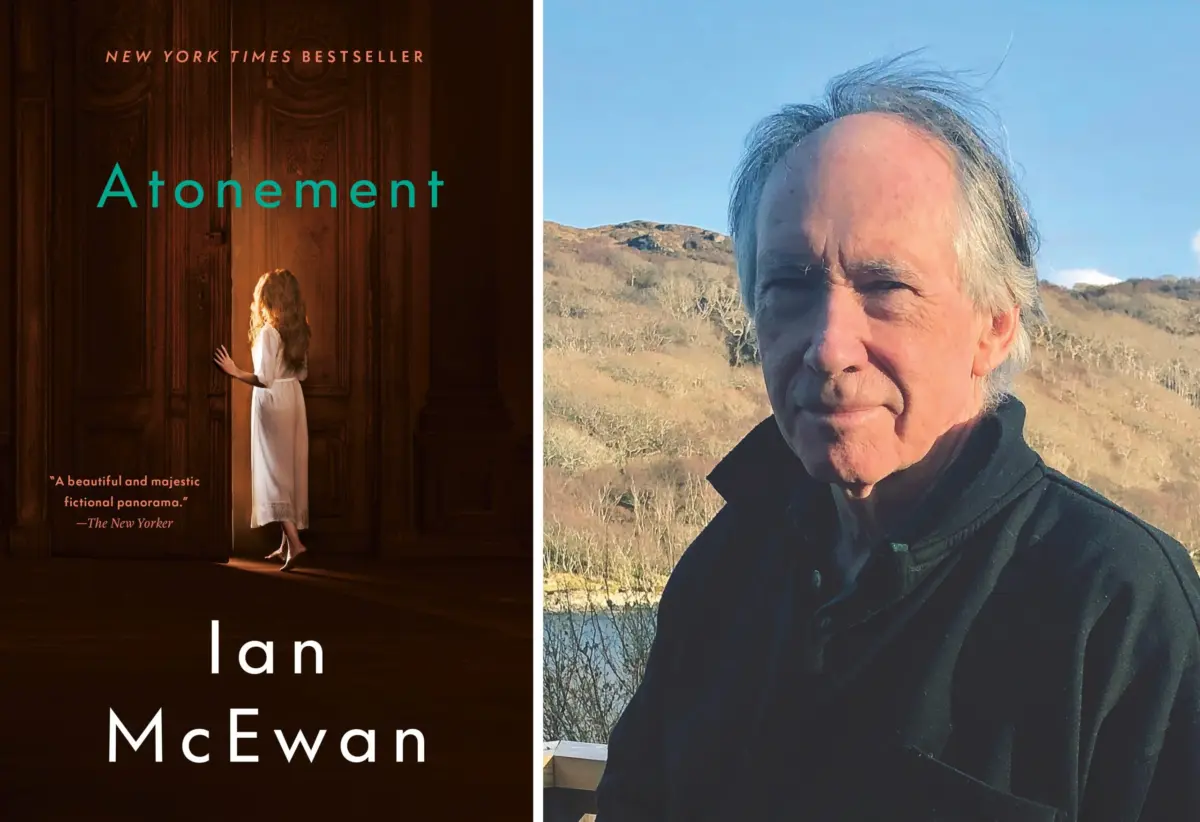
Now, as the literary world prepares to celebrate the 25th anniversary of his Booker Prize–shortlisted masterpiece Atonement this September, McEwan’s vast literary footprint is undergoing a monumental renaissance. Vintage, his longtime U.S. paperback publisher, has embarked on an ambitious, comprehensive reissue campaign. Beginning last fall and rolling out across the coming months, this initiative is methodically repackaging McEwan’s formidable oeuvre with fresh, cohesive, and striking cover designs crafted by Evan Gaffney. Ten seminal novels—including the Booker-winning Amsterdam, Atonement, and Saturday—have already hit shelves, introducing a fresh generation of readers to his razor-sharp prose.
This publishing milestone arrives on the heels of McEwan’s latest speculative triumph, What We Can Know (Knopf), which transports readers into an imagined future destabilized by nuclear devastation and relentless sea-level rise. While much of his early career was spent investigating the long, haunting shadows of the past, McEwan’s recent work demonstrates an undiminished urgency to confront the existential tremors of our present moment.
Read Also
As Vintage rolls out these definitive paperback editions in both the U.S. and the U.K., this retrospective offers an ideal vantage point to assess McEwan’s half-century masterclass in narrative tension, ethical inquiry, and structural brilliance. It is a celebration not merely of books that have defined modern fiction, but of a literary philosophy that demands literature do more than simply mirror the self—it must name, interrogate, and take a bold position on the world at large.
Detailed Chronology: Fifty Years of Mining and Expanding Genre
To understand the breadth of Ian McEwan’s career is to witness a master craftsman systematically dismantle and rebuild the boundaries of modern fiction. Over five decades of publishing, McEwan has consistently refused to settle into a comfortable stylistic holding pattern, instead migrating fluidly across genres—from unsettling psychological horror to sweeping historical tragedy, domestic drama to speculative science fiction.
The Formative Years: Unsettling the Domestic (1970s–1980s)
McEwan first burst onto the literary scene in the mid-1970s with short story collections like First Love, Last Rites (1975) and In Between the Sheets (1978). Earning the early moniker "Ian Macabre," the young author explored the dark, repressed underbellies of human psychology and sexuality with clinical detachment.
His transition to the novel cemented this unsettling reputation. 1981’s The Comfort of Strangers stands as a chilling psychological drama set against a labyrinthine, suffocating Venice. Later adapted into a feature film directed by Paul Schrader, the novel established McEwan’s uncanny ability to track the slow creep of menace within intimate relationships. As John Freeman notes, The Comfort of Strangers remains a personal favorite that deserves renewed critical acclaim in this current wave of reissues.
The Mid-Career Masterpieces: Ethics and History (1990s–2000s)
As his career progressed, McEwan broadened his canvas, wedding his mastery of psychological suspense to grand historical and ethical dilemmas. The 1998 novel Amsterdam, a dark satire about euthanasia, morality, and the media, captured the Booker Prize, firmly establishing him as an international heavyweight.
Just three years later, in 2001, came the publication of Atonement by Cape in the U.K. (followed by Doubleday in the U.S. in 2002). Set on a brilliant dual timeline that transports readers from a suffocating English estate on the brink of World War II to the chaotic medical tents of wartime London and finally to the twilight of the protagonist’s life, Atonement is a structural marvel. It investigates the devastating, irreversible consequences of a child’s falsehood and explores the redemptive, yet ultimately impossible, nature of artistic creation as moral restitution.
McEwan continued this probing of contemporary consciousness with 2005’s Saturday, which chronicles a single day in the life of a neurosurgeon in London against the backdrop of the massive protests preceding the 2003 U.S. invasion of Iraq.
The Speculative Turn and Present Day (2010s–Present)
In his later career, McEwan has increasingly leaned into speculative and philosophical terrain. His 2019 novel, Machines Like Me, introduced readers to an alternate 1980s London where personal computing has advanced exponentially, and consumer-grade androids—complete with synthetic consciousness and mutable personalities—are woven into daily life. Centered on an android named Adam, the novel asks foundational questions about machine sentience, human morality, and the emotional capacity of artificial intelligence.
Most recently, What We Can Know pushes these speculative inquiries to a planetary scale, projecting civilization into a near-future ravaged by ecological collapse and atomic fallout. Across fifty years, McEwan’s trajectory has proved remarkably consistent in its evolution: from the micro-dramas of individual pathology to macro-scale interrogations of human survival.
Supporting Context & Metrics: The Mechanics of the Reissue and the Anatomy of a "Novel of Ideas"
The current Vintage reissue campaign is far more than a routine marketing exercise; it is a meticulously designed bridge connecting a master storyteller with a rapidly shifting demographic of readers.
The Visual and Material Revival
Beginning in the fall, Vintage enlisted designer Evan Gaffney to spearhead a comprehensive visual overhaul of McEwan’s backlist. The new paperbacks feature bold, cohesive, and symbolically rich cover art that unifies titles as disparate as The Comfort of Strangers, Amsterdam, Atonement, and Saturday.
To date, Vintage has successfully repackaged and re-released 10 of McEwan’s seminal works in the U.S., with the remaining titles slated to hit shelves in the coming months. In the U.K., the push is even wider, encompassing Atonement and 17 other companion volumes. This dual-market strategy reflects a profound publishing truth: backlists are the lifeblood of literary longevity, provided they can capture the imagination of new cohorts.
The "Novel of Ideas" in a Fragmented Era
What elevates McEwan above many of his contemporaries is his classification as a writer of ideas who refuses to sacrifice emotional truth for intellectual exercise. As John Freeman observes:
"What distinguishes and unites each of McEwan’s books is that they are ‘novels of ideas’ that simultaneously contain the same depths of character that 20th- and 19th-century novels were built on."
In an era where contemporary fiction often leans toward autofiction, hyper-internalized processing, and endlessly subjective narratives, McEwan’s work stands as a rebuke to insularity. He insists on taking a public stance, wrestling with public institutions, scientific breakthroughs, geopolitical conflicts, and ecological threats.
The metrics of his success are written not just in sales figures or prestigious prizes—such as the Booker Prize, the Shakespeare Prize, and Jerusalem Prize—but in the enduring educational footprint of his work. Atonement, in particular, occupies a foundational role in English literature curricula across the globe, serving as required reading for high school and university students alike.
Official Statements & Insights: Perspectives from the Author and Editor
The cultural weight of this reissue initiative has prompted deep reflection from both Ian McEwan and his longtime editorial collaborators.
John Freeman on the Scope of McEwan’s Oeuvre
Reflecting on the sheer versatility of the author’s career, Knopf executive editor John Freeman emphasizes McEwan’s unique place in the literary ecosystem. Speaking with Publishers Weekly, Freeman highlighted the author’s "uncanny ability" to identify and write through civilization-scale questions without ever losing sight of individual human frailty.
Freeman singles out The Comfort of Strangers as an overlooked gem ripe for rediscovery, while noting that Saturday possesses a haunting contemporary resonance:
"It feels contemporary in what it says about our ability to live in societies that are made from violence."
Ian McEwan on Readerly Encounters and Marginalia
For McEwan, the most profound reward of the Vintage reissue series is the prospect of multi-generational readership. Having his books rediscovered by younger demographics is, in his own words, "deeply gratifying."
He recounts signing paperbacks for 16- and 17-year-old students—books that are physically transformed by their intense engagement:
"Absolutely impacted with marginalia and a little bit of Post-it notes, and scrawls in every corner. I think this is wonderful."
While McEwan admits he initially harbored pedagogical anxieties about students being forced to read his work under academic compulsion, those worries have dissolved in the face of genuine readerly passion. He views the act of re-reading as the ultimate validation for an author:
"Having one’s books re-read is, I think, the most fundamental desire of writers. Because, for most novels over a certain length, you don’t appreciate their structure in a single reading."
Confronting the Subjective Turn in Modern Fiction
Looking outward at the broader landscape of contemporary literature, McEwan does not shy away from critique. He expresses palpable reservations regarding the "endlessly subjective nature" that dominates much of today’s literary fiction.
In McEwan’s view, writers today carry a responsibility to look outward rather than inward. They would do well to:
"Try and name the world and take a position on it, with a view to—not quite persuading—but just opening up the major moral questions of our time."
Future Outlook: The Legacy of a Moral Imagination
As Ian McEwan looks toward the future—bolstered by the sweeping success of What We Can Know and the widespread rediscovery of his backlist—his place in the pantheon of global literature is secure. Yet, his gaze remains characteristically forward-looking.
When asked which of his past works he hopes will experience a major resurgence during this reissue cycle, McEwan points directly to Machines Like Me (2019). He is acutely curious to observe how a generation coming of age alongside generative artificial intelligence, neural networks, and automated reasoning will respond to the book’s exploration of machine consciousness. By anticipating the ethical quandaries of the tech-saturated 2020s years before they dominated daily headlines, McEwan proved once again that his fictional radar is uniquely attuned to tomorrow’s crises.
The convergence of the 25th anniversary of Atonement, the ongoing Vintage reissue campaign, and his relentless engagement with emergent planetary perils underscores a vital truth: Ian McEwan is not merely preserving his literary past; he is actively challenging the future of the novel.
In a cultural moment frequently overwhelmed by noise, fragmentation, and fleeting digital ephemera, McEwan’s body of work stands as an enduring cathedral of conscience. Through meticulously engineered plots, profound moral stakes, and uncompromising prose, he reminds us why we turn to narrative in the first place: not simply to escape our world, but to learn, finally, how to look it in the eye.





Comments
Facebook App ID not configured. Please add it in the Customizer.