
Executive Overview
For decades, the intersection of Christian faith and popular culture has been fraught with anxiety, defensiveness, and moral panic. Believers have frequently approached secular media—from blockbuster films and prestige television to heavy metal, anime, and horror literature—through a hermeneutic of suspicion. They have asked defensive questions: Is this media safe? Does it promote worldly values? Is it permissible for a Christian to engage with this?
This autumn, InterVarsity Press (IVP) is launching a bold, paradigm-shifting publishing initiative designed to flip the script entirely. Titled Discovering God in Pop Culture and debuting in September, the new series refuses to treat secular media merely as a cultural minefield to be navigated or a set of hidden religious allegories to be unlocked. Instead, it posits that popular culture can serve as an active catalyst for spiritual formation, psychological healing, and theological deepening.
Spearheaded by Zachary Gordon, associate academic editor at InterVarsity Press, the series is engineered to bridge generational, ideological, and disciplinary divides. Can an atheist and a theologian, separated by decades, find resonant, moving ideas in the same cinematic frame? Can rigorous theology successfully capture the attention of popular reading audiences without sacrificing academic integrity? Gordon and his editorial team are betting heavily that the answer to both questions is a resounding yes.
Read Also
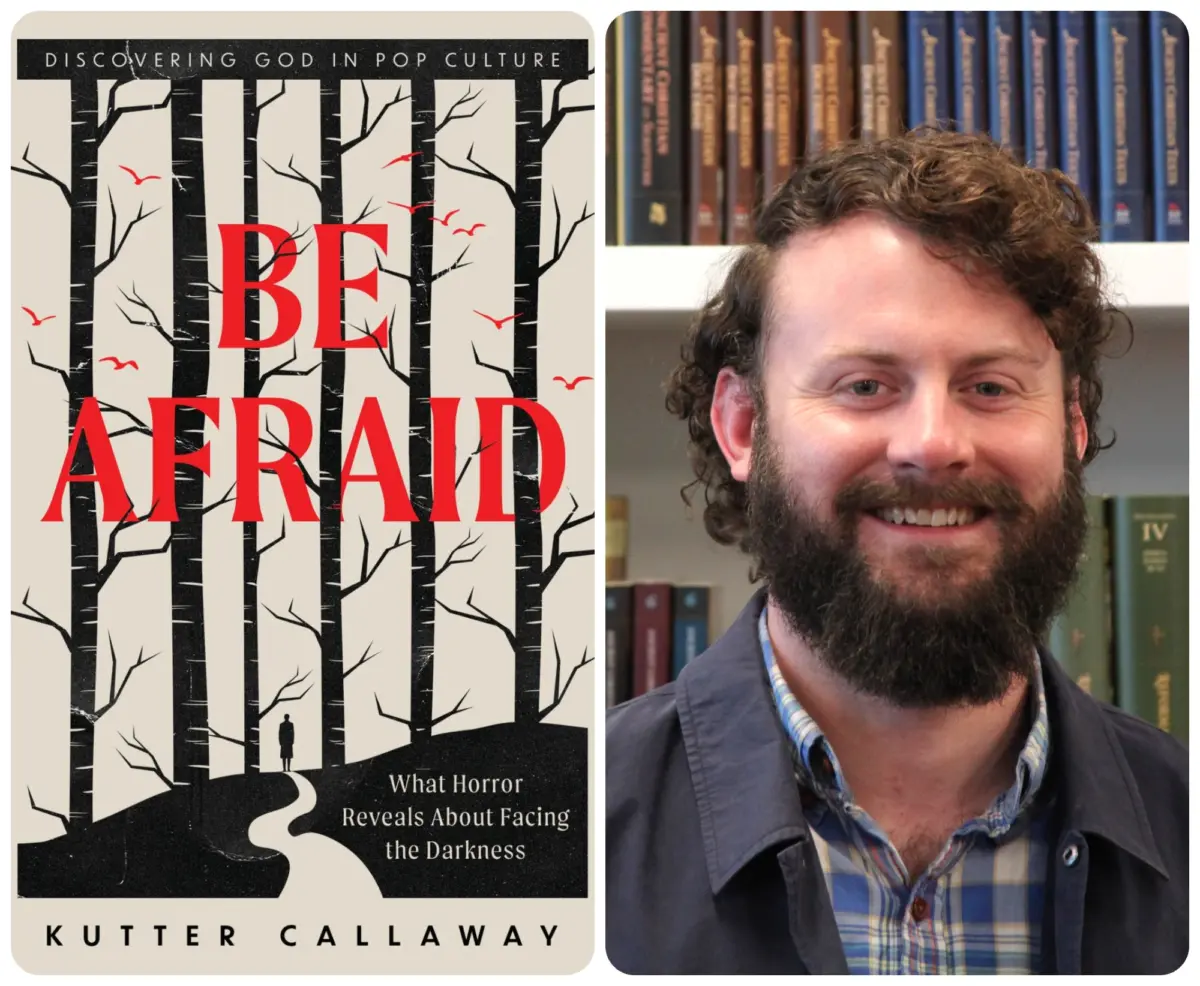
The inaugural volume, Be Afraid: What Horror Reveals About Facing the Darkness (releasing in September), sets the tone for the imprint. Written by Kutter Callaway, assistant professor of theology and culture at Fuller Theological Seminary, the book argues that the horror genre—often dismissed by pious audiences as gratuitously dark or demonic—actually shares a profound structural and thematic DNA with the Biblical canon. Far from leading believers away from God, thoughtful engagement with cinematic terror can teach modern Christians how to stare unflinchingly into the abyss of human suffering, grief, and trauma.
With additional volumes already under contract exploring everything from contemporary cinema through the lens of an intergenerational father-son dialogue to the ethical and existential depths of anime, Discovering God in Pop Culture is poised to challenge stale ecclesiastical assumptions. This comprehensive investigative report examines the theological framework behind the series, details its upcoming editorial pipeline, analyzes the broader cultural contexts driving this publishing venture, and explores what this means for the future of faith-based intellectual engagement.
Detailed Chronology: The Genesis of a Publishing Paradigm Shift
The conceptual roots of Discovering God in Pop Culture stretch back through years of shifting dynamics within evangelical publishing and cultural critique. For generations, Christian engagement with secular entertainment was dominated by the "condemn and consume" model. Believers were either told to boycott mainstream media entirely or encouraged to hunt for simplistic, heavy-handed moral takeaways—a secular movie featuring a heroic self-sacrifice was mined simply as a poor man’s gospel tract.
Moving Beyond the "Content Policing" Model
Zachary Gordon and his editorial team at InterVarsity Press recognized that contemporary readers, particularly Millennials and Generation Z, have grown weary of simplistic cultural gatekeeping. They are not looking for permission slips to watch movies; they are looking for robust, honest frameworks to help them make sense of a complex, increasingly fractured world.
"Instead of getting bogged down in questions of whether or not it is okay for Christians to engage with pop culture, or simply identifying religious themes therein, we wanted to focus on how Christian faith can be made better or deepened by engagement with pop culture," Gordon explained in an interview with Publishers Weekly.
This realization marked the conceptual birth of the series. Gordon began assembling a roster of intellectual architects capable of bridging the gap between high-level theological discourse and accessible, culturally fluent prose. To co-edit the series, he tapped two sharp academic minds:
- Kutter Callaway, an assistant professor of theology and culture at Fuller Theological Seminary, whose interdisciplinary work consistently explores the porous boundaries between cinematic art and religious belief.
- Matthew William Brake, an associate professor of philosophy and religion at Northern Virginia Community College, known for his extensive editorial work examining the philosophical and theological underpinnings of comic books, superhero blockbusters, and speculative fiction.
With the editorial board established throughout late 2023 and 2024, the team began shaping a multi-year publishing roadmap designed to encompass film, music, literature, animation, and beyond.
The Launchpad: Be Afraid
The definitive starting gun for the series sounds this September with the publication of Callaway’s Be Afraid: What Horror Reveals About Facing the Darkness. The book emerged from a shared conviction among the editors that the horror genre is uniquely situated to address the existential dread that plagues modern human existence.
Rather than viewing slasher flicks, psychological thrillers, and supernatural monsters as antithetical to Christian piety, Callaway and Gordon argue that horror taps directly into the visceral, unvarnished realities of a fallen world. For Gordon, editing the manuscript provided a startling revelation: an informed, critically engaged approach to horror can be deeply redemptive because the Bible itself, in numerous places and across multiple genres, belongs squarely in the horror genre.
From the apocalyptic nightmares of Revelation and the visceral violence of the historical books to the existential lament of the Psalms and the terror of divine encounters, Scripture refuses to sanitize the darkness. Callaway’s work asserts that when Christians consume horror responsibly, they are exercising a muscle that the modern church has largely allowed to atrophy: the capacity to look evil in the eye without blinking, trusting that redemption lies on the other side of the nightmare.
Supporting Context & Metrics: The Intersection of Faith, Fear, and Media
To understand why Discovering God in Pop Culture represents such a vital intervention in contemporary publishing, one must examine the socio-religious metrics surrounding how modern believers consume media and process trauma.
The Evangelical Mental Health Crisis and Liturgical Escapism
For decades, sociologists of religion have noted a growing disconnect between institutional church programming and the lived emotional realities of churchgoers. Modern Western liturgies are heavily weighted toward triumph, celebration, and victorious living. Sunday morning services are frequently designed to lift spirits, offer practical life tips, and project an aura of cheerful optimism.
While well-intentioned, this relentless positivity has created an unintended pastoral crisis. When ordinary believers experience catastrophic grief, chronic depression, severe anxiety, structural trauma, or complex moral dilemmas, they often feel profoundly alienated within their own faith communities. They suspect that their pain is a sign of spiritual failure—that if they had enough faith, they wouldn’t feel so utterly destroyed by the darkness.
This is precisely where the cultural critique offered by scholars like Kutter Callaway intersects with urgent pastoral needs. In contemporary society, young adults are turning in record numbers to dark art, horror films, true crime podcasts, and dystopian fiction. Mainstream cultural metrics confirm an explosive, sustained boom in the popularity of horror and psychological thrillers over the last decade, particularly among Gen Z and millennial audiences.
Mainstream box office data consistently proves that horror is one of the most reliable, high-yield investments in Hollywood. Films produced on modest budgets—such as those from A24, Blumhouse, and independent creators—routinely generate massive cultural conversations and commercial returns. Why? Because young people living through economic precarity, political polarization, global pandemics, and ecological crisis do not want sugar-coated optimism. They want art that validates their terror.
By launching a theological series centered on horror, InterVarsity Press is strategically positioning itself at the intersection of cultural reality and pastoral theology. They are offering a bridge for believers who love dark cinematic art but have felt spiritually homeless while consuming it.
Official Statements & Editorial Vision
The overarching philosophy of Discovering God in Pop Culture is best understood through the direct words of its architects and contributors. The editorial team has been remarkably transparent about their desire to demolish the walls separating "sacred" and "secular" spheres.
Zachary Gordon on the Purpose of Engagement
Speaking on the core mission of the imprint, Zachary Gordon emphasizes that the series is designed to move past the tired culture-war paradigms of the late 20th century:
"Instead of getting bogged down in questions of whether or not it is okay for Christians to engage with pop culture, or simply identifying religious themes therein, we wanted to focus on how Christian faith can be made better or deepened by engagement with pop culture."
Gordon’s perspective reframes popular media not as a threat to be managed, but as a conversational partner. When an audience member watches a film or listens to an avant-garde album, they are engaging with deeply human questions about meaning, suffering, morality, and mortality. Christian theology, Gordon argues, possesses the conceptual depth to speak directly to these questions—provided theologians are willing to listen before they preach.
Kutter Callaway on Facing the Darkness
In Be Afraid, Kutter Callaway diagnoses what he views as a systemic failure in contemporary Christian discipleship: its desperate, unyielding rush toward cheap resolution.
"Our liturgies, our sermons, our whole formation tends to rush us from Good Friday to Easter without actually letting us stay in the tomb," Callaway observes.
This refusal to sit with grief has disastrous spiritual consequences, according to the author:
"And the result is that when people encounter real darkness—grief, fear, trauma, moral complexity—they feel like something has gone wrong with their faith. When actually, the Christian faith was always meant to be a resource for navigating exactly that kind of dark, chaotic, foreboding, and trauma-filled world."
By turning to the horror genre, Callaway suggests readers can reclaim a posture of holy lament. Horror forces us to acknowledge that the world is broken, that evil is a tangible reality, and that pretending everything is fine is both psychologically damaging and spiritually dishonest.
Future Outlook: The Expansive Pipeline of Discovering God in Pop Culture
Following the September debut of Be Afraid, InterVarsity Press has already secured and scheduled two high-profile, highly anticipated titles that demonstrate the thematic breadth and creative diversity of the series. These upcoming books push the imprint into fascinating new cultural territories, spanning intergenerational dialogue and international animation.
The Rah Family Project: Cinema, Culture, and Generations (Spring 2027)
Slated for publication in Spring 2027, the second major wave of the series brings together an academic powerhouse and an avant-garde artist in an unprecedented father-son collaboration.
- Soong-Chan Rah, a renowned professor of evangelism, church growth, and ethnic studies at Fuller Theological Seminary, is well-known in theological circles for his piercing critiques of Western individualism and his advocacy for multi-ethnic Christian expressions.
- Elijah Rah, his son, is an avant-garde recording artist operating at the bleeding edge of contemporary musical and visual culture.
Together, the Rahs are under contract to produce a book that explores popular contemporary movies through their distinct, cross-generational lenses. The project promises to provide a fascinating study in contrasts: the seasoned theological framework of an elder scholar intersecting with the raw, deconstructive, and radically modern aesthetic sensibility of a young creative artist. By modeling intergenerational dialogue around secular cinema, the Rahs hope to show families and faith communities how to talk across generational divides about the media that shapes them.
Andrea Robinson on Anime, Ethics, and the Present Life (Fall 2028)
Looking further ahead to Fall 2028, InterVarsity Press has signed Andrea Robinson, a professor at Huntsville Bible College, to pen a groundbreaking volume exploring the spiritual and philosophical depths of Japanese anime.
Anime has exploded into a dominant global cultural force over the past twenty years, captivating millions of young viewers with its sprawling narratives, profound meditations on identity, and uncompromising explorations of ethics, existentialism, and post-apocalyptic survival.
According to Gordon, Robinson’s book will investigate:
"…how anime can help us discover purpose and meaning in this life and about how it can help challenge us to pursue character development and personal ethics in the present time, rather than viewing the Christian hope simply as a ‘get out of jail free’ card for the afterlife."
This volume strikes at the heart of a persistent critique leveled against modern Western Christianity: its tendency to treat earthly existence as merely a waiting room for heaven, thereby devaluing physical embodiment, social justice, character formation, and present-day cultural stewardship. By engaging with the complex moral universes found in anime—where heroes frequently grapple with the heavy cost of choices, systemic corruption, and the redemption of flawed communities—Robinson aims to challenge readers to live more fully, ethically, and courageously in the here and now.
Conclusion: A New Era for Theological Literacy
As the publishing landscape shifts under the weight of digital media, changing demographics, and evolving cultural attitudes, traditional theological publishing faces a stark choice: adapt or become irrelevant. With Discovering God in Pop Culture, InterVarsity Press has chosen adaptation of the highest intellectual and spiritual order.
By treating horror films, avant-garde cinema, and Japanese animation not as secular distractions to be rebuked, but as profound mirrors reflecting the deepest fears, longings, and questions of the human soul, IVP is expanding the boundaries of what Christian literature can achieve.
When Be Afraid hits bookshelves this September, it will do more than simply offer a Christian defense of horror movies. It will invite readers into a courageous, unflinching engagement with reality—reminding believers that the God who met humanity in the terror of the cross and the stillness of the tomb is not afraid of the dark, and neither should His followers be.




Comments
Facebook App ID not configured. Please add it in the Customizer.