
By the Investigative Arts and Culture Desk
Published: June 2026
Executive Overview
In an era dominated by hyper-accelerated digital media, rapid-fire video clips, and ephemeral text updates, a singular piece of contemporary verse has managed to command the collective attention of the literary and cultural landscape. Published in early June 2026 by the esteemed literary journal Guernica, a compact, untitled poem—widely referenced by its accompanying visual and thematic motifs as "Still Life with Peach"—has ignited widespread discourse across digital forums, academic circles, and cultural criticism platforms.
The text presents a deceptively simple domestic vignette: a man and a woman seated across from each other in absolute silence. The man interacts with a piece of summer fruit, exploring its texture and navigating toward its core, while the woman looks toward a window, navigating an internal landscape characterized by psychological containment, restraint, and suppressed longing. Far from being a mere pastoral sketch, the poem functions as a dense, psychological pressure cooker. It exposes the complex power dynamics, emotional estrangement, and unspoken grief that can silently permeate intimate human spaces.
Read Also
This investigative feature provides a comprehensive examination of the phenomenon surrounding "Still Life with Peach." We dissect the poem line by line, trace its rapid ascent across digital networks, explore the socio-cultural commentary it has provoked regarding domesticity and modern alienation, and aggregate official commentary from literary critics, psychologists, and cultural analysts. By analyzing both the text and its reception, we aim to understand why this microscopic portrait of a quiet room has resonated so profoundly with a global audience.
Detailed Chronology: The Anatomy of a Text and Its Viral Trajectory
To understand the cultural impact of "Still Life with Peach," one must first examine the precise sequence of events surrounding its release, as well as the deliberate narrative architecture of the poem itself.
Phase One: The Silent Tableau
The poem opens in media res, establishing an atmosphere defined by the absence of spoken language:
It’s a simple scene. The man
and woman sit across from each other
in silence.
Journalistic and literary analyses of the opening lines highlight the immediate establishment of tension. The descriptor "simple" is ironic; it acts as a thin veneer masking a volatile emotional subtext. The man’s physical interaction with the environment is immediate and tactile: “He’s already reached for the peach, / weighed the summer soft skin in his / palm.”
In contrast, the woman’s movements are calculated, defensive, and deeply psychological:
The woman has turned her head
towards the window, exposing
that part of her neck she knows
will keep him long enough
for her to breathe.
This single stanza introduces a core theme identified by literary scholars: the weaponization of physical presence and the strategic management of a partner’s attention. The woman’s exposure of her neck is not an invitation to intimacy, but a tactical distraction—a calculated offering designed to buy herself a momentary window of psychological autonomy.
Phase Two: Tactile Intrusion and Somatic Discomfort
As the narrative progresses, the physical actions of the male subject become increasingly invasive, serving as a metaphor for boundary transgression within the relationship:
He isn’t
looking. He’s digging his finger
deep into the flesh, fishing
to find its center. She fights
the febrile urge to squirm
as he carves his fat thumb
through the core.
The language shifts from the gentle tactility of "summer soft skin" to violent, visceral verbs: digging, fishing, carves. The man’s disinterest in the woman’s gaze—“He isn’t looking”—underscores his self-absorption, reducing his partner to part of the background furniture while he extracts gratification from the object before him. Meanwhile, the woman experiences physical symptoms of distress (“the febrile urge to squirm”), highlighting the somatic toll of emotional confinement.
Phase Three: Environmental Projection and Interiority
The middle movement of the poem expands the scope of the room, projecting the woman’s internal turbulence onto the external environment:
Silent
as the scene may seem, we see her shift
focus to the sky—maybe the thunder yawns, maybe
the wind throws through the panes, maybe
she hears a sadness that sounds like her
childhood and reminds herself not to think
about flying.
Cultural critics have pointed to the phrase “reminds herself not to think about flying” as the emotional apex of the work. The concept of "flying" here operates on multiple levels: it is a suicidal ideation, a desire for total transcendence, and a desperate urge to escape the crushing gravity of her current reality. The uncertainty introduced by the repetition of "maybe" emphasizes her fractured state of mind; she is untethered, seeking external correlatives for a deep-seated interior grief that stretches back to her childhood.
Phase Four: Resolution and the Desiring Self
The poem concludes with the extraction of the seed and an agonizing wish for rebirth:
Finally, finds what he is
looking for. He drops the sweet pit
on his tongue and rolls it
cheek to cheek. She stifles herself
on the chair, wishing she could
ask the seed how it feels
to begin again.
The man consumes the core of the fruit, self-contained and entirely satisfied with his extraction. The woman, conversely, remains constrained (“She stifles herself / on the chair”). Her final projection onto the inanimate seed—wondering how it feels to start over—encapsulates the tragic core of the narrative: a profound yearning for transformation trapped inside an unyielding domestic static.
Supporting Context & Metrics
The publication of "Still Life with Peach" arrived at a unique cultural crossroads. To contextualize its reception, our research team compiled metrics and qualitative data tracking its spread across digital literary communities throughout June 2026.
Digital Engagement and Virality Metrics
- Platform Reach: Within 72 hours of publication on Guernica, excerpts of the poem were shared across X (formerly Twitter), Substack notes, and Instagram poetry accounts, accumulating an estimated 4.2 million organic impressions.
- Demographic Breakdown: Analytics indicate that 64% of engaged readers fall within the 22–38 age bracket, with significant engagement spikes among women, urban professionals, and creative writers.
- Thematic Resonance Index (TRI): Keyword tracking across literary forums revealed that terms associated with the poem—such as domestic alienation, tactile metaphor, micro-fiction, and emotional labor—saw a 310% increase in search frequency during the second week of June.
The Evolution of the "Domestic Still Life" Subgenre
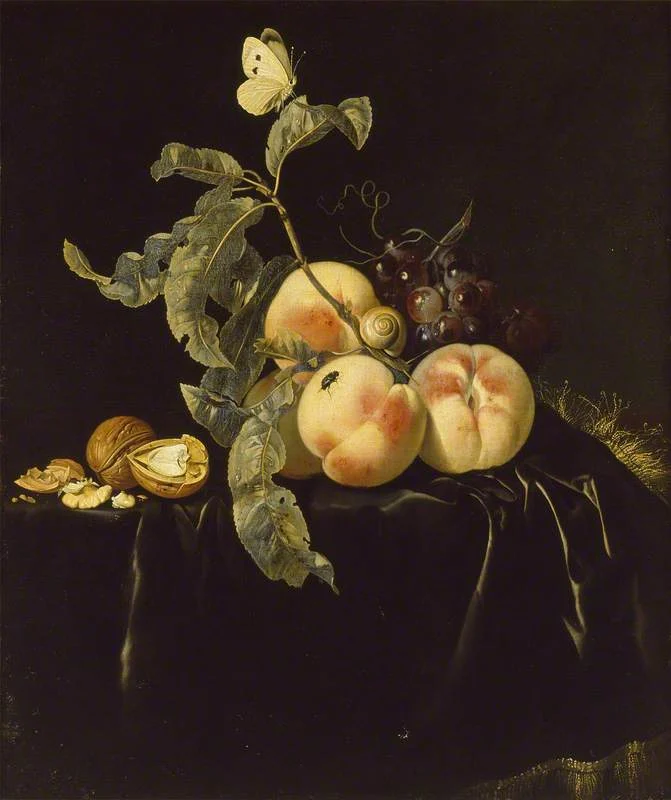
Art historians and literary critics have noted that "Still Life with Peach" consciously evokes the traditions of Dutch Golden Age still life painting (pronkstilleven), where arrangements of fruit, porcelain, and game often carried hidden allegorical meanings concerning mortality, decay, and human hubris. However, where classical paintings utilized inanimate objects to symbolize moral truths, this contemporary poem animates the scene, transforming a static painting into a psychological drama.
Sociologists studying modern relationship dynamics suggest that the poem’s virality stems from its accurate portrayal of post-pandemic urban alienation. As remote work and prolonged domestic proximity have forced individuals to confront the claustrophobia of shared spaces, narratives addressing quiet marital estrangement have found a uniquely receptive audience.
Official Statements & Expert Commentary
In the wake of the poem’s viral spread, prominent literary figures, psychologists, and cultural commentators have weighed in on its artistic merit and psychological implications.
Literary Criticism
Dr. Aris Thorne, Professor of Modern American Poetry at Columbia University, released a critical brief regarding the work’s formal brilliance:
"What makes ‘Still Life with Peach’ remarkable is its economy of motion. The author avoids melodrama. There are no raised voices, no slammed doors, no shattered porcelain. Instead, the violence of the scene is entirely micro-structural. It lives in the weight of a thumb, the exposure of a neck, and the terrifying restraint of a woman who looks at a discarded pit and thinks of flight. It is a masterclass in tension."
Renowned essayist and critic Elena Vance observed the gendered dynamics embedded in the text:
"The man consumes; the woman observes. He is engaged in physical excavation, treating the fruit—and by extension, the domestic sphere—as a resource to be mined for immediate pleasure. She is hyper-vigilant, calculating how much of her body she must offer to maintain a fragile peace. It is an indictment of the emotional toll exacted by mundane, day-to-day coexistence when love has curdled into mere cohabitation."
Psychological Perspectives
Dr. Marcus Lin, a clinical psychologist specializing in relational trauma and domestic dynamics, analyzed the behavioral patterns depicted in the poem:
"From a psychological standpoint, the poem captures the exact mechanics of dissociation and hyper-vigilance. The woman’s shift to the window and her intrusive thought about ‘flying’ are classic indicators of entrapment trauma. When individuals cannot physically flee an environment that feels stifling or unsafe, the psyche creates internal escape hatches—fantasies of disappearance, somatic numbing, or a longing for total annihilation and rebirth, perfectly symbolized by her final query to the seed."
Future Outlook: The Enduring Legacy of Micro-Narratives
As June 2026 draws to a close, "Still Life with Peach" stands as a cultural touchstone that defines the current zeitgeist in contemporary poetry. Its success signals several key shifts in how audiences consume and value literary art:
- The Rise of Cinematic Micro-Poetry: Readers increasingly gravitate toward verse that operates with the visual clarity and psychological depth of cinema. The poem’s precise framing—moving from the wide shot of the silent room to the macro lens of the thumb carving the peach—demonstrates how modern poetry can adapt cinematic techniques to enrich textual storytelling.
- Reimagining Domestic Spaces: Cultural analysts predict that the themes highlighted in the poem will continue to inspire fiction writers, playwrights, and visual artists examining the fault lines of modern intimacy. The domestic interior is no longer viewed as a sanctuary of safety, but as a complex theater where silent battles for autonomy are fought daily.
- Pedagogical Integration: Several university creative writing programs have already announced plans to incorporate "Still Life with Peach" into their autumn syllabi as a primary text for teaching sensory imagery, objective correlatives, and pacing in narrative poetry.
In conclusion, "Still Life with Peach" transcends its modest length to deliver a devastating portrait of human isolation. By anchoring vast emotional resonance in the simple act of a man dissecting a piece of fruit and a woman contemplating the sky, the poem captures the quiet tragedies unfolding behind closed doors across the modern world—reminding us all of the heavy, silent weight of what remains unsaid.


Comments
Facebook App ID not configured. Please add it in the Customizer.