
Executive Overview
In the realm of contemporary cinematic adaptations, few premises present a physical and psychological challenge quite as daunting as Daniel Kraus’s bestselling survival-thriller novel, Whalefall. When 20th Century Studios announced its plans to bring this harrowing story to the big screen, industry insiders and literary fans alike questioned whether the deeply claustrophobic, surreal source material could ever be translated to a visual medium. Today, those doubts are being systematically dismantled. Following an initial teaser that introduced audiences to the catastrophic moment of impact—where protagonist Jay Gardiner is swallowed whole alongside a colossal giant squid by a rampaging sperm whale—a brand-new official trailer has arrived.
This latest promotional rollout pulls back the curtain further, transporting viewers deep INSIDE the leviathan. It offers a terrifying yet mesmerizing glimpse into the visceral interior of the ocean’s apex predator, while hinting at how the guiding memory of Jay’s deceased father, portrayed by Academy Award nominee Josh Brolin, will serve as his psychological lifeline. Directed by Brian Duffield, who co-wrote the adapted screenplay alongside author Daniel Kraus, Whalefall is shaping up to be one of the most mechanically inventive and emotionally resonant survival dramas of the decade. With its theatrical release officially locked in for October 16, 2026, the film promises an uncompromising dive into grief, survival, and the unfathomable depths of the natural world.
Detailed Chronology of Production: Building the Beast in Studio City
Bringing a narrative set almost entirely within the acidic, pitch-black confines of a marine mammal’s stomach required a masterclass in practical filmmaking, resourcefulness, and sheer endurance. Speaking on the meticulous production process, director Brian Duffield shed light on the physical realities of shooting a film where the primary set is organic, shifting, and entirely artificial.
Read Also
“To bring Daniel Kraus’s book to life, our cast and crew spent a summer inside a whale inside a sound stage in Studio City, California,” Duffield revealed in an official statement. This single sentence encapsulates a grueling production schedule that spanned months, trading the natural sunlight of exterior ocean shoots for the controlled, high-pressure environment of a closed soundstage.
The Engineering of a Leviathan
Constructing a realistic sperm whale interior was no small feat for the 20th Century Studios art and special effects departments. The production team had to engineer an enormous, modular set capable of simulating the muscular contractions, gastric textures, and bioluminescent anomalies detailed in Kraus’s novel. Because natural cetacean biology does not accommodate human camera crews, lighting rigs, and sound equipment, the crew relied on a hybrid approach of practical animatronics, prosthetic tissue textures, and innovative lighting techniques.
To solve the inherent problem of filming inside a pitch-black stomach cavity, the filmmakers cleverly utilized the bioluminescent properties of deep-sea creatures. In the narrative, the sperm whale has recently gorged on various abyssal organisms before swallowing Jay Gardiner. On screen, these ingested entities provide an eerie, otherworldly glow—a spectral neon illumination that cuts through the darkness. This allowed cinematographers to cast haunting shadows across Austin Abrams’ face, maintaining visual clarity without sacrificing the crushing, oppressive atmosphere of the whale’s interior.
The Missing "Beaky" and Fan Speculation
Despite the wealth of visual detail packed into the new footage, eagle-eyed readers of Kraus’s novel immediately noticed the absence of one crucial character—or rather, object—in the promotional material: "Beaky."
In the source material, the beak of the giant squid swallowed alongside Jay becomes his ultimate, all-purpose survival tool, serving as a cutting implement, a lever, and a psychological companion during his darkest hours of despair. While the trailer features the initial, violent clash between man, squid, and whale, it conspicuously hides the fate of the squid’s hard keratinous beak. Whether the production is keeping this iconic literary element under wraps as a theatrical surprise or adapting its utility for the screen remains to be seen. Fans will have to wait until the film officially opens in theaters on October 16, 2026, to discover how integral Beaky is to the cinematic survival strategy.
Supporting Context & Metrics: The Anatomy of a Survival Masterpiece
To understand the immense cultural and cinematic weight of Whalefall, one must examine the pedigree of its creators, the thematic architecture of the original novel, and the technical hurdles of translating such an unconventional narrative into a major studio motion picture.
Cast and Creative Forces
- Austin Abrams (Jay Gardiner): Known for his critically acclaimed performances in Euphoria, Dash & Lily, and The Humans, Abrams takes on the physically punishing and emotionally demanding role of Jay Gardiner. Confined to a hyper-restricted physical space for a vast portion of the runtime, Abrams’ performance relies heavily on micro-expressions, vocal strain, and the conveyance of profound grief.
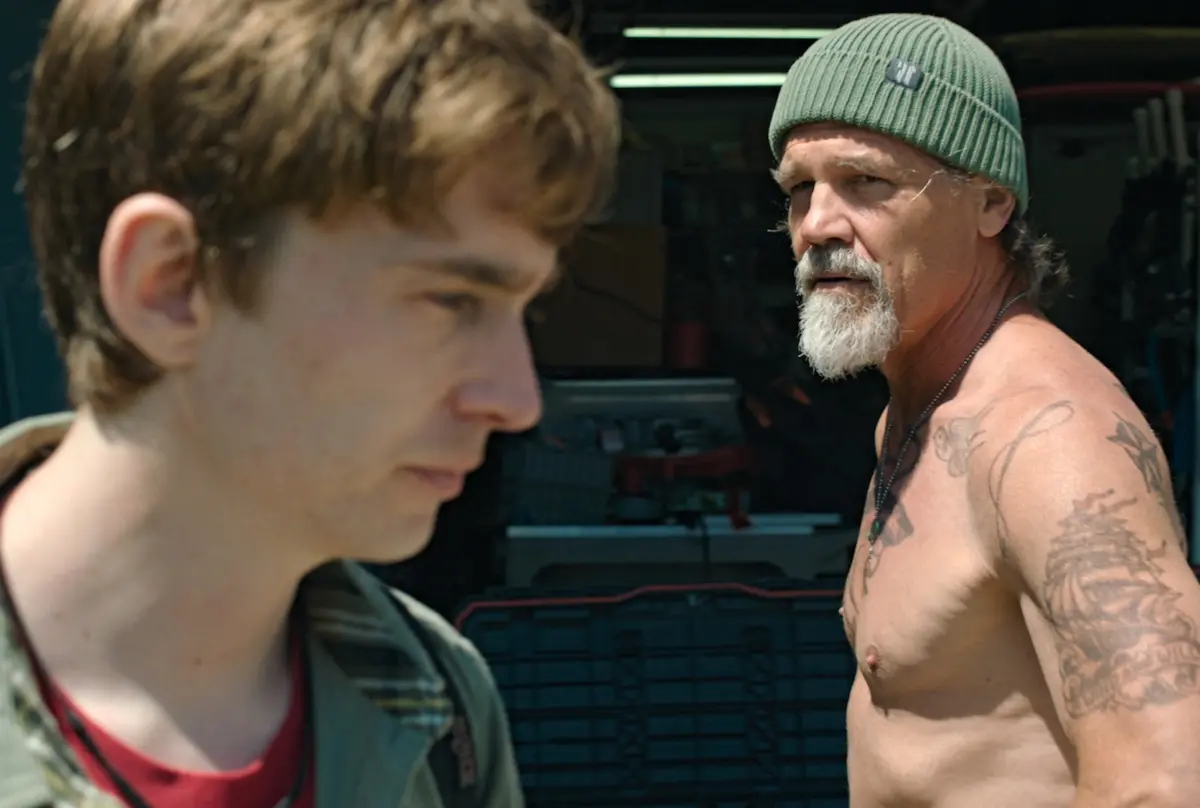
- Josh Brolin (The Deceased Father): Brolin brings his trademark gravitas and authoritative screen presence to the role of Jay’s late father. Though deceased before the primary events of the film, his character manifests through flashbacks, voiceovers, and internal psychological dialogues, driving Jay to fight for a life he once felt alienated from.
- Brian Duffield (Director / Co-Writer): Duffield has carved out a stellar reputation in modern genre cinema. Having written the screenplay for Underwater, directed the critically adored sci-fi romance Spontaneous, and helmed the inventive killer-alien thriller No One Will Save You, Duffield is uniquely qualified to orchestrate a high-concept, high-stakes survival story that marries spectacle with deep psychological trauma.
- Daniel Kraus (Author / Co-Writer): A titan of contemporary dark fiction and co-creator (alongside Guillermo del Toro) of Trollhunters and The Shape of Water, Kraus brings his encyclopedic knowledge of marine biology and visceral storytelling to the adaptation process.
Production and Theatrical Metrics At a Glance
| Metric / Detail | Specification |
|---|---|
| Studio | 20th Century Studios |
| Director | Brian Duffield |
| Writers | Brian Duffield & Daniel Kraus (based on the novel by Kraus) |
| Primary Cast | Austin Abrams, Josh Brolin |
| Primary Set Location | Sound Stage in Studio City, California |
| Theatrical Release Date | October 16, 2026 |
| Central Premise | A young free-diver is swallowed by a sperm whale alongside a giant squid, facing a 60-minute oxygen limit and his unresolved grief. |
Official Statements and Industry Reception
The release of the latest trailer has ignited fierce debate across film enthusiast communities, literary circles, and professional review aggregates. The transition of Whalefall from page to screen represents a major gamble for 20th Century Studios—one that prioritizes a single-actor, high-concept narrative over traditional multi-character blockbuster formulas.
Director Brian Duffield emphasized the collaborative triumph required to pull off such a localized, intense shoot during an exclusive interview surrounding the trailer launch:
"To bring Daniel Kraus’s book to life, our cast and crew spent a summer inside a whale inside a sound stage in Studio City, California. I can’t wait for audiences to see the performances and hard work everyone put in to tell this thrilling and emotional story in a dark, cozy theater this October."
Industry analysts have pointed out that Duffield’s reference to "a dark, cozy theater" is a deliberate nod back to the communal, immersive experience of theatrical distribution. In an era where mid-budget and high-concept original thrillers are frequently relegated to streaming platforms, 20th Century Studios’ commitment to a wide theatrical window for Whalefall highlights a growing confidence in the film’s broad-market appeal and technical wizardry.
Furthermore, author Daniel Kraus has frequently praised the creative partnership he shares with Duffield, noting that the cinematic adaptation retains the unflinching, visceral brutality of the novel while expanding upon the emotional architecture of the father-son relationship that anchors the story’s heart.
Future Outlook: What to Expect Before October 16, 2026
As the entertainment industry marches toward the October 16, 2026 release date, marketing campaigns for Whalefall are expected to ramp up significantly. Fans and critics can anticipate several key developments in the lead-up to the premiere:
- Extended Featurettes on Practical Effects: Given the immense curiosity surrounding the Studio City soundstage builds, 20th Century Studios is expected to release behind-the-scenes featurettes detailing how the internal anatomy of the sperm whale was brought to tactile life without relying solely on computer-generated imagery.
- Character Spotlights: Future promotional materials will likely dive deeper into the fractured relationship between Jay and his father, exploring how Josh Brolin’s character functions as more than just a memory, acting instead as an active psychological anchor in Jay’s fight against asphyxiation and despair.
- The Final Verdict on "Beaky": As release day approaches, the studio will inevitably reveal whether the iconic giant squid beak makes its full literary translation to the screen, answering one of the most persistent questions among the novel’s dedicated fanbase.
Conclusion
Whalefall is shaping up to be a rare cinematic event: a film that combines claustrophobic terror, high-concept survival mechanics, and profound emotional catharsis. By anchoring an impossible, high-stakes premise in the grueling physical reality of a soundstage in Studio City, Brian Duffield and his creative team have crafted a journey into the abyss that demands to be experienced on the biggest screen possible. When the lights go down and the theater plunges into darkness this October, audiences will find themselves holding their breath alongside Jay Gardiner, praying for a way back to the surface.





Comments
Facebook App ID not configured. Please add it in the Customizer.