
Executive Overview
New York City’s perennial contemporary art fair calendar has long been defined by a familiar, high-stakes rhythm of vast convention spaces, exhausting miles of white-walled corridors, and commercial fatigue. Yet, even as mega-fairs sprawl across hundreds of exhibitors, a quieter, more intellectually rigorous transformation is taking place. This year marks a watershed moment for Independent, the art world’s favorite contemporary boutique fair, and its art-historically minded sister event, Independent 20th Century.
Following Independent’s major relocation earlier this year from Spring Studios in Tribeca to the expansive, light-filled Pier 36 on Manhattan’s Lower East Side, its historical counterpart has executed an even more dramatic architectural pivot. Opening its doors to the public today, Independent 20th Century has abandoned its former Lower Manhattan footprint to take up residence inside Marcel Breuer’s iconic 1960s Brutalist masterpiece at Madison Avenue and East 75th Street. Formerly home to the Whitney Museum of American Art and more recently serving as Sotheby’s auction house headquarters, this legendary Upper East Side landmark provides a temple-like gravitas that fundamentally alters the fair-going experience.
This strategic migration has allowed the fair to scale dramatically while preserving its signature curatorial intimacy. Expanding from 31 participating exhibitors to a robust 57 galleries this year, Independent 20th Century now closely approximates a museum-quality retrospective rather than a standard commercial marketplace. Eschewing the conventional labyrinth of trade-show booths, the layout features discrete, architectural "galleries" that invite slow looking and deep engagement.
Read Also

Despite nearly doubling in physical footprint, the fair remains remarkably viewer-friendly—a refreshing antidote to bloated behemoths like the concurrent Armory Show, which demands endurance across an exhausting 230-plus exhibitor roster. By wedding blue-chip historical weight with an aggressive mission to expand the traditional art-historical canon, Independent 20th Century has positioned itself not merely as a marketplace, but as a vital cultural institution shaping the future of how we understand the art of the past century.
Detailed Chronology: From Tribeca to the Brutalist Upper East Side
The trajectory of Independent and its sibling fair over the past twenty-four months represents a masterclass in strategic repositioning within the ultra-competitive global art market. To understand the significance of the move to the Breuer building, one must trace the logistical and conceptual evolution that has defined the brand since its inception.
The Spring Studios Era and the Imperative for Scale
For years, Independent carved out a distinct niche by prioritizing curatorial cohesion over sheer volume. Operating out of Spring Studios in Tribeca, the contemporary iteration gained a loyal following of curators, museum directors, and serious collectors who appreciated its airy, design-forward presentation. However, as the contemporary art market expanded and demand for nuanced, historically grounded presentations grew, the physical limitations of Tribeca became increasingly apparent.

The decision to migrate Independent to Pier 36 on the Lower East Side earlier this year was the first major domino to fall. Offering vast, unobstructed waterfront square footage, Pier 36 allowed the contemporary fair to breathe, accommodating ambitious large-scale installations and larger crowds without sacrificing its trademark aesthetic elegance.
Claiming the Breuer Building: A New Chapter for 20th Century
While the contemporary fair conquered the East River waterfront, the curatorial team set their sights higher for Independent 20th Century. Securing Marcel Breuer’s architectural icon at 945 Madison Avenue was nothing short of a curatorial coup. The building itself—with its inverted ziggurat profile, iconic trapezoidal windows, bluestone floors, and board-formed concrete walls—carries an immense legacy. Having housed the Whitney Museum from 1966 to 2014, and later serving as a temporary home for the Metropolitan Museum of Art (The Met Breuer) before transitioning to Sotheby’s, the structure is practically consecrated ground for modern and contemporary art in New York.
Opening to the public today, the fair utilizes these historic galleries to absolute perfection. The brutalist architecture imposes a natural discipline on exhibitors, discouraging flashy, commercial clutter and demanding installations that engage in a dialogue with Breuer’s monumental interior design. The result is an immersive environment where commercial galleries function almost as independent institutional curators, crafting tightly focused solo and dual-artist presentations that feel entirely at home in a museum-caliber setting.

Supporting Context & Metrics: Challenging the Canon and Redefining the Market
While other prominent New York art fairs—such as TEFAF New York and the Art Dealers Association of America (ADAA) Art Show—frequently deal in historical works, Independent 20th Century occupies a unique, highly specialized ecosystem.
The 1900–2000 Mandate and Canon Expansion
The fair maintains a laser-focused remit: art produced across the one-hundred-year span between 1900 and 2000. Within this broad chronological framework, however, lies an aggressive mission to rewrite and expand the traditional art-historical canon. For decades, the narrative of 20th-century art was dominated by a well-worn, Eurocentric, and male-centric paradigm. Independent 20th Century actively disrupts this narrative.
This curatorial posture mirrors a broader, structural shift across the global art world toward inclusivity and historical redress. Over the past decade, museums, biennales, and major auction houses have intensified their efforts to unearth and celebrate overlooked figures—particularly female artists, outsider artists, queer creators, and visionaries from the Global South. Independent 20th Century serves as a commercial laboratory for this corrective impulse, providing a marketplace where historical reappraisal translates directly into institutional and private acquisitions.

Blurring Boundaries: Historical Meets Contemporary
One of the most intellectually stimulating aspects of the fair is its refusal to treat art history as a stagnant, neatly categorized archive. Instead, Independent 20th Century actively troubles the boundaries separating the historical from the contemporary.
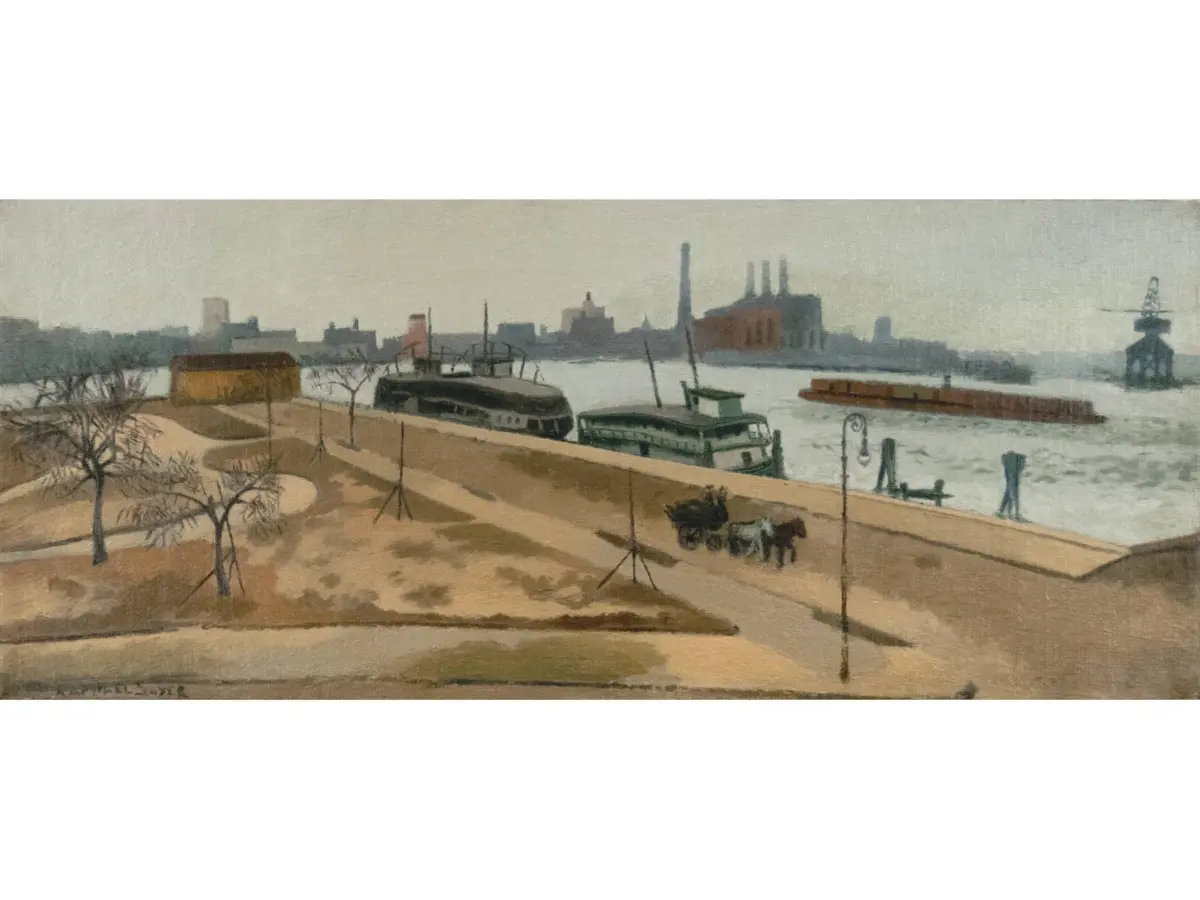
Walking through the Breuer building, visitors encounter a dynamic chronological friction. Booths dedicated to conceptual giants like Jenny Holzer (presented by Sprüth Magers) and pioneers of Relational Aesthetics (at Esther Schipper) sit in close spatial dialogue with foundational masters like Pablo Picasso (at John Szoke) and social realist painter Raphael Soyer (at Forum Gallery). This juxtaposition recalibrates the viewer’s eye, revealing unexpected conceptual lineages between early 20th-century experimentation and late-century avant-garde practices.
Standout Presentations and Museum-Quality Booths
The expansion to 57 exhibitors has unlocked an extraordinary wealth of curatorial ambition across the fair’s multi-story footprint. Among the most anticipated and critically praised presentations is "Black Soho," a museum-grade historical exhibition jointly curated by galleries Ryan Lee and Salon 94. Focusing on the fertile artistic ecosystem of New York City between 1961 and 1984, the presentation gathers monumental works by foundational African-American artists who helped define the cultural topography of downtown Manhattan. Visitors are treated to powerful pieces by Emma Amos, Jean-Michel Basquiat, Camille Billops, Frederick J. Brown, Vivian Browne, Ed Clark, David Hammons, and Norman Lewis—a stunning testament to a vibrant community long marginalized by mainstream institutional histories.

Elsewhere, Berry Campbell delivers a masterclass in historical recovery with a curated selection of works by the pioneering women artists of the legendary Stable Gallery (1953–1970). The presentation highlights the formidable contributions of abstract expressionists and color-field painters such as Elaine de Kooning, Joan Mitchell, Charlotte Park, and Janice Biala. The presence of Joan Mitchell extends further into the fair; a magnificent pairing of her work alongside that of Kimber Smith at Bueno & Co. stands as one of the most visually arresting—and commercially significant—stops in the building, featuring among the highest-priced items on offer.
The solo presentations further elevate the fair’s intellectual rigor:
- Nahmad Contemporary presents a mesmerizing survey of Lucio Fontana’s lesser-known explorations. Featuring punctured, Murano glass-encrusted, and sand-sprinkled surfaces, these works predate the artist’s iconic, radical slashed canvases, offering collectors a rare glimpse into his material experimentation.
- Alison Jacques unveils a surrealistic, dreamlike world through the works of self-taught artist Bona de Mandiargues (1926–2000), celebrating a visionary whose mystical iconography deserves much wider art-historical recognition.
- Mitchell-Innes & Nash curates a biting, darkly humorous, and persistently political grouping of works by the legendary conceptual art collective General Idea, proving that their socio-political critiques remain chillingly relevant today.
Official Statements and Curatorial Vision
The monumental shift to the Upper East Side has prompted widespread reflection from the fair’s leadership, participating gallerists, and cultural critics alike. Elizabeth Dee, founder of Independent, has repeatedly emphasized that the fair’s growth is not driven by mere commercial expansion, but by a desire to redefine the cultural value proposition of the art fair experience.

"When we conceptualized Independent 20th Century, our goal was to create a space that operates with the intellectual depth of a museum exhibition while maintaining the agility of a commercial fair," organizers noted in pre-opening statements. "Moving into Marcel Breuer’s architectural masterpiece allows us to fully realize this vision. The building itself demands a level of quiet contemplation and curatorial rigor that simply cannot be replicated in a standard convention center or temporary tent."
Gallerists participating in the 2025 edition have echoed these sentiments, pointing out that the Breuer building’s distinctive architecture acts as a natural filter, attracting a deeply knowledgeable audience of curators, museum trustees, and serious collectors. Unlike the frenetic, transaction-heavy atmosphere of mega-fairs, exhibitors at Independent 20th Century report an environment conducive to slow, educational engagement, where museum acquisitions and scholarly discussions take precedence over impulse buying.
Future Outlook: The Evolution of Boutique Fairs in a Saturated Market
As the international art fair circuit grapples with fatigue, over-saturation, and changing collector behaviors, the trajectory of Independent and Independent 20th Century offers a compelling blueprint for the future of the industry.

The mega-fair model—characterized by hundreds of booths, overwhelming scale, and a primary emphasis on immediate contemporary production—is increasingly showing cracks under its own weight. Collectors and institutions alike are experiencing fair fatigue, seeking out curated, specialized environments that respect their time and intellectual engagement. By successfully executing dual relocations to Pier 36 and the Breuer building within a single year, Independent has demonstrated a rare institutional nimbleness.
Looking ahead, Independent 20th Century is poised to cement its status as the definitive alternative to traditional historical art fairs. By continuing to champion overlooked figures, re-evaluating the boundaries of the 20th-century canon, and utilizing architectural landmarks to elevate the presentation of art, the fair is setting a new gold standard for the industry.
As the art world looks toward the remainder of the autumn season, the success of this year’s edition at 945 Madison Avenue proves that intimacy, historical depth, and architectural majesty are not relics of the past, but the ultimate currencies of the future.

The Independent 20th Century art fair runs from September 24–27 at 945 Madison Avenue, New York City.


Comments
Facebook App ID not configured. Please add it in the Customizer.