Fifteen years after her tragic passing at the age of 27, the indelible spirit, tragic vulnerability, and towering cultural footprint of British singer-songwriter Amy Winehouse continue to resonate across the global creative landscape. Yet, rather than relying on standard hagiography, authorized concert footage, or archival institutional displays, a striking new exhibition in London approaches the icon’s legacy through an uncanny, forensic lens.
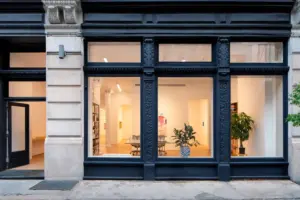
Titled "Nothing Personal" and currently on view across three sprawling rooms at the Nicoletta Fiorucci Foundation through January 23, the exhibition is the brainchild of artist Alex Margo Arden. For this ambitious undertaking, Arden has spent the better part of five years meticulously manufacturing hundreds of simulacra—precise replicas and exact copies of Winehouse’s personal belongings, domestic artifacts, and ephemeral ephemera. From a fan-signed pair of ballet slippers left outside the singer’s Camden home in the immediate aftermath of her death to an unreceived birthday card drafted by music producer Mark Ronson and pop icon Adele, Arden’s exhibition blurs the boundary between homage and hauntology.
The installation is not merely a collection of objects, but a profound psychological study. By reconstructing the physical ecosystem of Winehouse’s private life—including copies of the books that populated her shelves, the makeup and perfumes she wore, and the board games that occupied her quiet hours—Arden forces viewers to confront the uncomfortable intimacy of modern celebrity obsession. At the same time, the exhibition serves as a sharp critique of the predatory media apparatus that plagued Winehouse during her lifetime. Through a delicate choreography of presence and absence, "Nothing Personal" reframes Winehouse not as the tabloid caricature of a reckless party girl, but as an introspective, deeply read, and profoundly vulnerable artist whose life continues to be unspooled, examined, and deeply missed.
Detailed Chronology & Artistic Methodology: A Five-Year Scavenger Hunt
The genesis of "Nothing Personal" dates back to 2021, when Alex Margo Arden first began forensically dissecting low-resolution, pixelated images of Amy Winehouse sourced from online forums, digital auction catalogues, historical newspapers, and vintage print magazines. This digital excavation was the foundational step in a massive, obsessive scavenger hunt designed to reconstruct the material culture of Winehouse’s day-to-day existence.
Arden’s methodology was rooted in extreme precision. During the search for the exact editions of books that once sat on Winehouse’s shelves, the artist frequently accumulated dozens of alternate copies of a single title. By meticulously comparing the spine layouts, typography, and cover art across multiple editions, Arden ensured that every volume introduced into the installation was an exact match to the reading material that surrounded the singer.
This multi-year labor of love culminated in core works such as Library (2026). Displayed across pristine white shelving units, Library houses dozens of literary works and references that span an eclectic intellectual spectrum. Vladimir Nabokov’s memoir Speak Memory sits alongside heavy culinary volumes like The New Classic 1000 Recipes, domestic guides on marriage, and an array of celebrity biographies dedicated to cultural icons such as David Beckham, Bob Dylan, Carole King, Marilyn Monroe, and Audrey Hepburn.
Arden has been careful to warn viewers against hyper-fixating on individual items within the collection, cautioning that isolated artifacts have historically been weaponized by the press. Pointing to a copy of a Weight Watchers book included in the library—an object inevitably tied by tabloids to Winehouse’s highly scrutinized struggles with eating disorders—Arden noted to ARTnews:
"In isolation, these objects can be used to really push specific narratives about her… What I’m proposing in the artwork is that as a collection, this gives us really good insight" into the multifaceted reality of Winehouse’s inner life.
Following the atmospheric depth of the library room, visitors transition into the exhibition’s second major space, which features Same Otherwise (2026). This piece is a painstaking sculptural recreation of the fireplace mantlepiece from Winehouse’s former home at 2 Jeffrey’s Place in Camden—the very location where she composed her Grammy Award–winning, seminal 2006 masterpiece, Back to Black.
In Same Otherwise, Arden meticulously reproduced the exact arrangement of items that once framed Winehouse’s hearth. Framed issues of British Vogue, vintage comic book panels torn from Betty and Veronica, and a decorative mirror adorned with a portrait of Marilyn Monroe are placed precisely where they once stood. However, Arden deliberately withheld certain elements: the frames that once held personal snapshots of Winehouse’s friends and family have been left entirely empty.
"The gaps speak to the feeling of things being present and missing always," Arden explained, encapsulating the pervasive ache that underpins the entire exhibition.
What elevates "Nothing Personal" from a standard archival installation into a deeply visceral experience is its incorporation of multi-sensory storytelling. Walking through the gallery, visitors are frequently enveloped by a distinct olfactory presence. Initially mistaken by many gallery-goers for the artist’s personal scent, this atmospheric element is, in fact, a central artwork titled Perfume said to have belonged to Amy Winehouse [I-IV] (2024–26).
Utilizing a custom-built mechanical dispenser, Arden pumps a continuous, subtle mist of Chanel No.5 through the exhibition spaces. Throughout the run of the show, this fragrance will be systematically swapped out for other perfumes historically attributed to Winehouse through various fashion publications and accounts—including Thierry Mugler’s Alien, Vera Wang Princess, and Givenchy’s Hot Couture. The shifting scent acts as a ghostly, tactile reminder of the singer’s physical body, drifting through the rooms like an echo.
This balance between playfulness and introspection extends to other quiet corners of the exhibition. In the work Jigsaw (2026), Arden presents towering stacks of completed and unboxed jigsaw puzzles featuring pop-culture touchstones such as The Simpsons, The Beatles, and the classic cinematic romance Casablanca. The immense patience required to assemble these puzzles recasts Winehouse in a radically different light—revealing a domestic, introspective woman finding solace in quiet concentration, far removed from the hyper-visible, chaotic persona manufactured by the early-2000s British tabloid press.
Nearby, Sent Otherwise (2026) brings visitors face-to-face with the recreation of an unmailed, undiscovered birthday card sent jointly by producer Mark Ronson and global superstar Adele. The card, which Winehouse never received during her lifetime, serves as a poignant artifact of missed connections and unfulfilled futures, emphasizing that even a decade and a half after her passing, her personal history is still being actively uncovered.
To frame these intensely personal objects, Arden weaves in a conceptual vocabulary drawn from her broader artistic practice. In Display Identification Cubes (2026), the artist scatters one thousand clear acrylic ice cubes throughout the galleries. Sculpted to resemble the small numeric placards traditionally used in museum vitrines to link an artifact to its cataloged label, these objects recall Arden’s earlier 2022 project, All Clear. In that prior exhibition, similar numbers were affixed beside mundane domestic objects like brooms, ladders, and woven baskets, evoking the sterile, detached atmosphere of a crime scene investigation.
In "Nothing Personal," however, these plastic cubes take on a more layered, ambiguous meaning. Acting as placeholders for the facets of Winehouse’s life that remain undiscovered—and perhaps forever unknowable—the numbers trace the contours of memory.
"They draw attention to spaces where things are absent, but they also mark spaces where things have once been," Arden reflects.
Official Statements & Curator Perspectives
The collaboration between Alex Margo Arden and the Nicoletta Fiorucci Foundation has positioned "Nothing Personal" as one of the most intellectually rigorous contemporary art exhibitions of the season. By stepping away from sensationalized biographies and posthumous commercial exploitation, Arden’s work engages in a delicate ethical negotiation with its subject.
In her statements to the press, Arden has emphasized that the exhibition is designed to resist the flattening effect of posthumous myth-making. By manufacturing "parallel objects" rather than leaning exclusively on authentic relics from the Winehouse estate, Arden creates a critical distance that protects the singer’s privacy while inviting viewers to interrogate their own voyeuristic impulses.
The choice of the Nicoletta Fiorucci Foundation as the venue further underscores the institutional gravity of the project. Known for supporting daring, conceptually driven contemporary art that challenges traditional modes of viewing, the foundation provides an ideal incubator for Arden’s forensic approach. The juxtaposition of domestic mundanity—cookbooks, makeup bottles, board games, and perfume dispensers—within a high-art context forces an examination of how society constructs, consumes, and ultimately discards its cultural icons.
Future Outlook & Legacy
As "Nothing Personal" remains open to the public at the Nicoletta Fiorucci Foundation in London through January 23, the exhibition is already sparking crucial conversations regarding the ethics of biographical art and the preservation of celebrity archives in the digital age.
Amy Winehouse’s legacy has frequently been pulled in competing directions: packaged by major media conglomerates for commercial consumption on one hand, and fiercely defended by a devoted global fanbase on the other. Alex Margo Arden’s installation carves out a vital middle ground. By acknowledging the impossibility of fully reconstructing a human life from the outside—signaled so clearly by the empty picture frames and acrylic identification cubes—"Nothing Personal" honors Winehouse’s memory with profound restraint.
Looking ahead, the methodologies pioneered in this exhibition—combining digital forensics, replicative craft, and multi-sensory environmental design—may well influence how contemporary artists approach the curation of historical and biographical legacies. For now, visitors stepping into the quiet, Chanel-scented rooms of the foundation are granted a rare privilege: not a sensationalized spectacle of fame, but a tender, mournful, and clear-eyed meditation on an irreplaceable artist who left us far too soon.





Comments
Facebook App ID not configured. Please add it in the Customizer.