
Executive Overview
For decades, the standard path for an academic psychiatrist was strictly partitioned: clinical evaluations by day, followed by the rigorous, often dry composition of peer-reviewed journals, diagnostic textbooks, and pedagogical guides by night. The unspoken contract of the profession demanded adherence to clinical objectivity, empathy, and the measured, methodical mitigation of human suffering. Yet, beneath the sterile clinical environment of hospitals and consulting rooms lies an inescapable truth: real human lives are frequently shaped by dramatic tension, existential terror, and psychological labyrinths that rival any work of fiction.
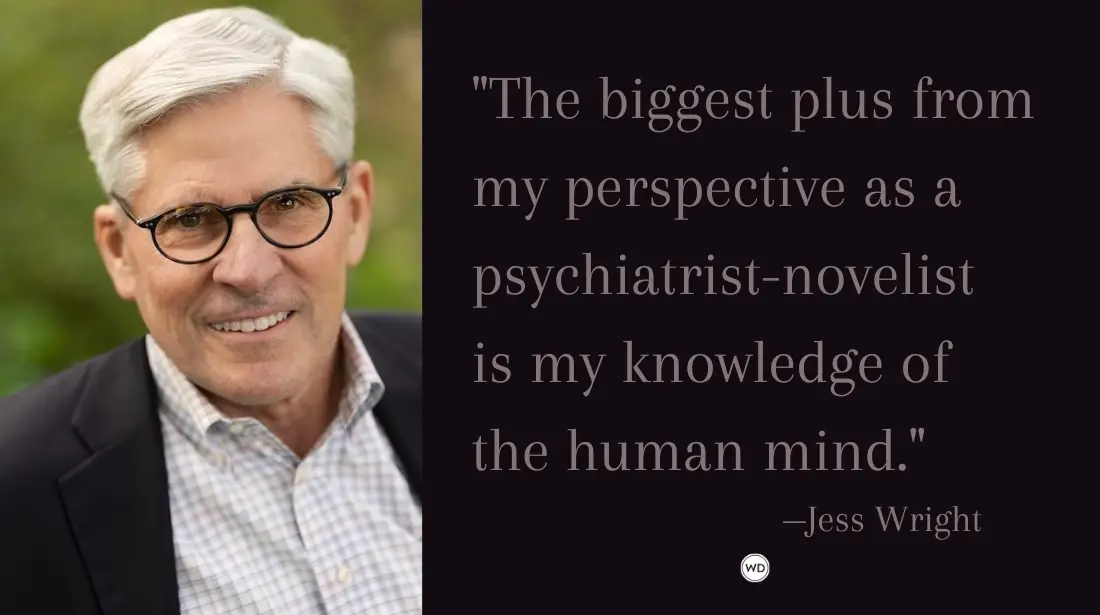
In this comprehensive literary and professional profile, we explore the paradigm shift driving medical professionals—specifically seasoned psychiatrists—into the realm of commercial fiction. Moving beyond traditional academic treatises, these practitioners are leveraging decades of firsthand clinical exposure to human trauma, forensic consulting, and behavioral aberrations to craft high-stakes psychological thrillers. At the epicenter of this trend is Dr. Jess Wright, whose latest novel, Dance in a Madhouse, bridges the chasm between clinical psychiatry and historical suspense.
By analyzing the convergence of medical expertise and narrative craft, this article examines how clinical intuition translates into page-turning suspense, the historical stigmas of mental healthcare that continue to haunt modern society, and the therapeutic paradox of a physician whose daily vocation is to soothe anxiety, yet whose creative outlet is to plunge readers headfirst into the abyss of psychological terror.
Read Also
Detailed Chronology: The Evolution of a Medical Storyteller
To understand how a practicing professor of psychiatry transitions into a novelist of the macabre, one must trace the arc of a medical career forged in the crucible of academic publishing and clinical practice.
Phase I: The Academic Foundation and the "Publish or Perish" Paradigm
For the early portion of any medical academic’s career, survival is dictated by the relentless academic mandate to "publish or perish." Dr. Wright spent decades navigating this rigid landscape, authoring dense scientific articles, securing competitive research grants, and penning authoritative textbooks designed for clinical practitioners and medical students.
While these volumes served a vital educational purpose, they were written out of professional necessity rather than creative fulfillment. Clinicians and students slogged through these medical treatises not for the sheer joy of narrative discovery, but to sharpen their diagnostic acumen and improve therapeutic outcomes. The emotional and intellectual boundaries of academic writing left little room for mystery, ambiguity, or suspense—the very elements that define the human condition in its rawest states.
Phase II: Recognizing the Limits of Clinical Realism
As decades passed and academic tenure was firmly established, the compulsion for routine scientific output began to wane. Having listened to thousands of patient accounts filled with genuine peril, paranoia, and survival, Wright confronted a striking realization: the true narrative richness of human behavior was rarely captured in clinical notes or diagnostic manuals.
Patients routinely navigated the treacherous borderlands between reality and delusion, fear and resilience. Translating these profound, complex psychological journeys into engaging, accessible fiction presented an irresistible creative challenge. The objective shifted from merely documenting psychiatric phenomena to dramatizing them, allowing readers to experience the visceral mechanics of the human mind under extreme duress.
Phase III: The Genesis of Dance in a Madhouse
The catalyst for Wright’s latest novel arrived through an unexpected encounter with poet Margo Taft Stever, who shared a haunting, true-life historical account regarding her great-grandfather. This narrative spark formed the structural backbone of Dance in a Madhouse, set in Philadelphia in the year 1905.
The novel follows Owen Townsend, a promising young doctor who contracts typhoid fever. Placed on experimental, massive doses of medication to combat the infection, Owen’s cognitive stability shatters. Released prematurely from the typhoid ward, he suffers a relapse and commits a violent act driven entirely by drug-induced psychosis.
His politically ambitious father—running for the governorship of New York—swiftly intercedes to protect the family name, consigning Owen to Fairmont Lodge, a notoriously grim mental asylum in Philadelphia. In an era where institutionalization was frequently a one-way ticket, Owen finds himself trapped behind asylum walls, forced to decode whether his sanity has truly returned, or if he is descending permanently into madness.
Supporting Context & Metrics: The Intersection of Psychiatry and Fiction
The transition from clinical practitioner to novelist is statistically rare, yet uniquely advantaged. Writers entering the thriller genre typically undergo years of specialized writing workshops or Master of Fine Arts (MFA) programs. However, psychiatrists possess an unconventional, highly specialized toolkit that bypasses traditional literary preparation.
Clinical Expertise as a Narrative Catalyst
A forensic psychiatrist or clinician specializing in affective disorders commands an intimate fluency with the pathologies of fear. Consider the core competencies developed in clinical practice:
- Decoding Paranoia: Understanding the internal logic of a delusional system allows an author to construct unreliable narrators and labyrinthine plots with authentic psychological weight.
- Resilience Mapping: Having guided countless patients through acute trauma and despair, a psychiatrist recognizes the exact inflection points where human resilience breaks down or successfully rebuilds.
- The Diagnostic Puzzle: Clinical evaluation is, at its core, an exercise in diagnostic detective work—gathering fragmented clues, assessing behavioral history, and identifying underlying motives. This mirrors the structural requirements of a classic mystery thriller.
Historical Context: The Stigma of Institutionalization
Dance in a Madhouse draws its evocative title from George Bellows’ famous 1907 lithograph, Dance in a Madhouse, housed in the Metropolitan Museum of Art. The artwork depicts a "lunatic ball," where institutionalized patients were placed on display to dance for the amusement of gawking, well-dressed townspeople.
This historical reality highlights the egregious marginalization and dehumanization of the mentally ill at the dawn of the 20th century. As Margo Taft Stever captured in her companion poem, The Lunatic Ball:
"Behind a glass wall, well-dressed spectators, riveted, sit amused. Looking at them looking, the patients know they are through."
By anchoring a psychological thriller in this historical framework, the narrative transcends simple entertainment, forcing contemporary readers to confront uncomfortable questions regarding society’s ongoing struggles with mental health stigma, institutional accountability, and ethical psychiatric treatment.
Official Statements and Industry Insights
The intersection of medical science and creative writing has long fascinated both literary critics and healthcare professionals. While traditional psychoanalysts like Sigmund Freud dedicated their lives to dissecting the subconscious roots of art and literature, contemporary practitioners are increasingly stepping across the divide to author the narratives themselves.
Industry analysts note a growing appetite among readers for psychological thrillers that offer intellectual depth alongside visceral suspense. Works such as Alex Michaelides’ The Silent Patient, Sarah Pearse’s The Sanatorium, and Dennis Lehane’s Shutter Island have established a high benchmark for medical and institutional suspense, proving that readers crave narratives where the human mind is both the weapon and the crime scene.
When asked how a professional dedicated to calming human anxiety can justify writing stories specifically designed to induce tension and unease, Dr. Wright offers a pragmatic clinical and creative synthesis:
"The writing provides a stimulating intellectual puzzle. When the words flow, I can immerse myself directly into the psyches of complex characters, raising vital social and psychiatric questions that concern me deeply. More importantly, it offers a realm where I can exert creative control over the narrative arc—a refreshing departure from the inherently messy, unpredictable nature of daily clinical psychiatric practice."
Furthermore, Wright emphasizes that recruiting a multidisciplinary team—including a bestselling author and a seasoned editorial eye—was essential to bridging the gap between clinical authority and commercial storytelling craft. The discipline required to withstand academic peer review and grant rejections provided a resilient psychological armor necessary to weather the notoriously competitive publishing landscape.
Future Outlook: The Expanding Horizon of Medical Thrillers
As the literary market continues to evolve, the boundary lines separating scientific nonfiction from psychological fiction are becoming increasingly porous. Readers are no longer satisfied with superficial genre tropes; they demand authenticity, structural sophistication, and deep psychological realism.
The success of physician-authors signals a broader cultural appreciation for stories that marry technical precision with imaginative suspense. By utilizing fiction as an empathetic vehicle, authors with clinical backgrounds can humanize complex psychiatric conditions, dismantle lingering social stigmas, and challenge audiences to reevaluate historical and contemporary attitudes toward mental health.
Ultimately, whether through academic research, clinical intervention, or gripping historical thrillers, the fundamental mission remains remarkably consistent: to explore the dark corners of human experience, decode the mechanisms of fear, and illuminate the persistent, enduring capacity of the human mind to seek out truth and resilience.





Comments
Facebook App ID not configured. Please add it in the Customizer.