
Executive Overview
In the vibrant, sun-drenched landscape of contemporary Latin American music, a new rhythmic powerhouse has seized the spotlight. Known as reparto—a high-energy, infectious genre born in the working-class neighborhoods and marginal outskirts of Havana—this dynamic sound has broken free of its geographical and socio-economic constraints to conquer Central America, South America, and the global diaspora. What began two decades ago as an underground phenomenon traded quietly on cell phones, peer-to-peer memory cards, and smuggled USB sticks has transformed into a multi-million-dollar cultural export. It now commands the attention of international superstars like Spanish songstress Rosalía and Puerto Rican reggaeton pioneer Daddy Yankee.
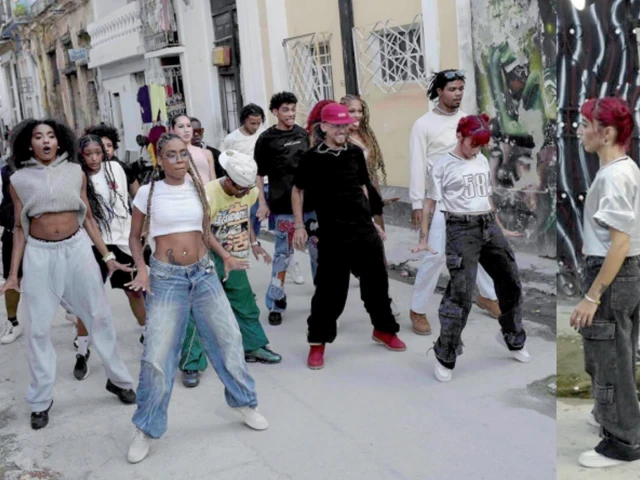
The ascent of reparto represents more than just a passing musical trend; it is a profound cultural realignment. Fusing the syncopated, percussion-heavy foundations of Cuba’s traditional timba with the polished production styles and heavy basslines of global reggaeton, reparto is a reflection of modern Cuban youth culture. It is brash, unapologetic, and saturated with street-level slang that details the daily hustles, economic realities, lavish party lifestyles, and ambitions of a generation navigating severe structural hardships.
Today, driven by the proliferation of mobile internet on the island, the ubiquitous reach of TikTok, and the strategic migration networks connecting Havana to Miami, artists like Bebeshito, Charly & Johayron, Ja Rulay, and Helabusador are rewriting the rules of the Latin music industry. No longer relegated to the shadows or dismissed by cultural purists, reparto has evolved into a lucrative ecosystem supporting producers, videographers, independent bedroom-studio owners, and viral dance troupes. As it continues to branch out into unexpected territories—such as the emerging sub-genre of "Christian reparto"—the genre stands as a testament to the resilience, ingenuity, and undeniable rhythm of Cuban youth, proving that true artistic expression can thrive against all odds.
Read Also
Detailed Chronology: The Evolution of Reparto
To understand the current dominance of reparto, one must trace its roots back to the early 2000s within the peripheral housing blocks known locally as repartos surrounding Havana.
Phase One: The Underground Infancy (Mid-2000s to Late 2010s)
In its earliest iterations, reparto was an isolated subculture. Confined by the strictures of state-controlled media and a lack of broadband infrastructure, young Cuban musicians could not rely on traditional radio broadcasting or digital streaming platforms to launch their careers. Instead, an ingenious system of informal distribution emerged. Producers and artists mastered tracks in makeshift home studios and distributed them via El Paquete Semanal (The Weekly Package)—a terabyte-sized collection of digital entertainment distributed across the island via physical hard drives and USB flash drives.
During this incubation period, the music was defined by raw, unfiltered urgency. It borrowed the complex polyrhythms of timba—a fast-paced, secular evolution of Cuban son—and married them to the electronic beats of imported reggaeton. The lyrical content was raw, capturing the gritty realities of inner-city life in Havana, marked by economic scarcity, neighborhood rivalries, and the constant hustle to survive and thrive.
Phase Two: The Digital Breakthrough and Viral Explosion (2018–2023)
The turning point for reparto arrived with the gradual rollout of 3G and 4G mobile internet data across Cuba in late 2018, followed shortly thereafter by the global explosion of TikTok. Suddenly, Cuban artists had direct access to international social media platforms. The geographical isolation that had constrained them for decades was effectively bypassed by smartphone screens.
Tracks that once took months to circulate locally could now go viral globally within hours. Independent dance groups, such as Los Datway, began choreographing intricate, high-energy routines specifically tailored for short-form video platforms. These dance challenges became the primary engine of international distribution. The infectious rhythms caught fire not only in Miami and Puerto Rico but throughout Central and South America, transforming obscure Havana bedroom projects into cross-continental anthems.
Phase Three: The International Crossing and Commercial Maturation (2024–Present)
By the mid-2020s, reparto had firmly cemented its place on the international stage. The genre’s expansion was significantly accelerated by the wave of Cuban migration flowing into South Florida, transforming Miami into the administrative and commercial springboard for the genre. Artists began partnering with international management teams, navigating digital distribution channels, and walking the red carpets of major industry events, such as the Billboard Latin Music Awards. Today, tracks like "Dichavate"—a collaboration between Helabusador, Rey Tony, and Ya Ice Dilan—routinely rack up hundreds of millions of streams on YouTube, proving that reparto is no longer just a local novelty, but a permanent fixture of the global Latin music economy.
Supporting Context & Metrics: Economics, Migration, and Digital Reach
The phenomenon of reparto cannot be fully understood without examining the socioeconomic and digital infrastructure that powers it. The genre operates within a complex ecosystem defined by economic hardship, international sanctions, and digital ingenuity.
The Economic Engine of Reparto
For many young Cubans living through severe economic contraction, the music industry is viewed as one of the few viable pathways to social mobility and financial stability.
- The Cost of Production: While professional recording studios are often beyond the financial reach of aspiring artists, a thriving underground network of independent, bedroom-based studios has emerged. While a typical recording session might cost upwards of $100—a prohibitive sum for many locals—sympathetic producers often waive fees for exceptionally talented youth, viewing them as high-risk, high-reward investments.
- Streaming and Sanctions: Due to ongoing United States trade sanctions and local banking restrictions, Cuban artists living on the island face immense hurdles in collecting royalties from global digital streaming platforms like Spotify, Apple Music, and YouTube. Consequently, many rely heavily on a network of friends, family members, and collaborative managers based abroad (primarily in Miami, Madrid, and Mexico City) to distribute their music, handle copyright management, and collect monetization revenue.
Key Metrics of Success
- Viewership and Engagement: Top-tier reparto tracks regularly pull in staggering engagement metrics. For instance, viral hits regularly surpass 150 million views on YouTube alone, putting them on par with mainstream reggaeton acts.
- The TikTok Factor: Choreographed dance challenges have proven to be the most effective marketing tool for the genre. A single viral TikTok video can catapult a previously unknown Havana act into international playlists across Colombia, Chile, Argentina, and Spain.
- The Diaspora Network: Miami has become the de facto international headquarters for reparto business operations, providing the financial infrastructure, legal representation, and promotional muscle required to scale the genre globally.
Official Statements and Industry Perspectives
The rapid rise of reparto has elicited a wide range of reactions from artists, producers, cultural analysts, and community members, illustrating the genre’s complex journey from societal rejection to mainstream celebration.
Bridging the Gap: The Artist’s Perspective
For Carlos Eduardo Perez, better known by his stage name Helabusador, the transition from Havana’s streets to the international red carpets of Miami was a monumental learning curve. Speaking to international media at the Billboard Latin Music Awards gala, Perez reflected on the turning point for the genre:
"After we Cuban artists set up shop in Miami and started to understand this [the music industry], that’s when everything happened."
His sentiment is echoed by hundreds of aspiring musicians across the island, including 19-year-old songwriter Alianny Jaime, who views her craft as a dual path of personal salvation and community upliftment:
"If I land a hit, it would be amazing… I could help a lot of people."
Changing Cultural Perceptions
The aesthetic and cultural markers of the repartero—flamboyant nicknames, extravagant streetwear, thick gold chains, gold teeth, and elaborate tattoos—were once heavily stigmatized by traditionalist elements within Cuban society. However, that stigma is rapidly evaporating as the music conquers the mainstream.
Paloma Duarte, a member of the prominent Havana dance group Los Datway, highlighted this profound shift in public perception:
"Being a repartero used to be looked down on. But not anymore. Now everybody dances it, everybody feels it."
Studio owner Roberto Gomez, who operates a vital independent recording hub on the outskirts of the capital, breaks down the formula for breaking into the industry in an environment constrained by limited resources:
"Having money, having talent or having contacts—that is the recipe for success."
Future Outlook: The Next Wave and Sub-Genre Diversification
As reparto solidifies its position as a heavyweight contender in the Latin music market, its future points toward unprecedented diversification and cultural integration. Far from being a static genre, reparto is currently undergoing a process of rapid evolution.
The Rise of "Christian Reparto"
One of the most fascinating developments within the movement is the emergence of "Christian reparto." This unexpected sub-genre adapts the kinetic, bass-heavy rhythms and rapid-fire cadence of secular reparto to deliver explicit Christian and spiritual messaging. Pioneered by artists seeking to reach a disaffected younger demographic, this movement uses the irresistible pull of the genre’s rhythm as a tool for outreach. As pioneer Ayamey Smith aptly noted:
"If the devil is maybe using this genre so that this generation is lost… we’re using it to win over this generation."
International Collaborations and Crossovers
Looking ahead, industry analysts predict that reparto will increasingly integrate with other regional Latin styles, including Mexican regional music, Colombian urban pop, and Puerto Rican trap. Major international Latin artists, having already taken notice of the genre’s infectious energy, are expected to feature Cuban reparto producers and vocalists more frequently on upcoming studio albums.
Conclusion
From its humble, improvised beginnings in the marginalized neighborhoods of Havana to packed clubs in Santiago, Bogotá, Miami, and Madrid, reparto has proven that cultural vitality cannot be stifled by economic hardship or geographic isolation. Driven by digital connectivity, unyielding ambition, and an irrepressible rhythm, Cuban reparto has secured its place not just as the soundtrack of a generation, but as a permanent, pulsing heartbeat of modern global music.





Comments
Facebook App ID not configured. Please add it in the Customizer.