
Executive Overview
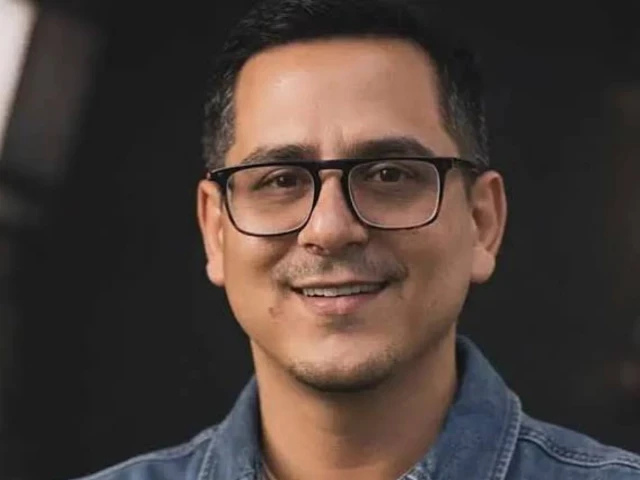
Award-winning Kashmiri filmmaker Arfat Sheikh was released from U.S. Immigration and Customs Enforcement (ICE) custody on bond on Thursday, bringing a temporary halt to a high-profile detention that has sparked widespread concern among international human rights organizations, free speech advocates, and the global independent cinema community. Sheikh, whose critically acclaimed work explores the deep-seated political conflicts and human rights issues in his native India-administered Kashmir, had been held in immigration detention for over two weeks following his sudden apprehension on September 24.
The filmmaker was taken into custody by ICE agents—operating under the umbrella of the Department of Homeland Security (DHS)—as he stepped off a domestic flight from California at Washington Dulles International Airport. According to a legal defense and advocacy campaign organized by his friends, relatives, and supporters, an immigration judge granted Sheikh a bond on Tuesday, leading to his eventual release on Thursday afternoon. However, the legal battle is far from over; legal representatives confirm that the underlying deportation proceedings against him remain active and are set to proceed through the U.S. immigration court system.
Sheikh’s case has quickly become a flashpoint in the broader national discourse surrounding the U.S. government’s aggressive immigration enforcement policies, the processing delays plaguing the American asylum system, and the intersection of artistic expression and political asylum. Residing in Alexandria, Virginia, Sheikh arrived in the United States in 2019 holding a valid student visa to undertake graduate film studies at Georgia State University. He subsequently filed an application for asylum in 2020, citing conditions in his homeland.
Read Also
While his supporters maintain that his pending immigration application afforded him lawful authorization to live and work within the United States, the Department of Homeland Security maintains that Sheikh overstayed the terms of his original temporary admission and lacks formal legal status. This tension highlights the precarious legal limbo faced by thousands of asylum seekers navigating a backlogged immigration bureaucracy, particularly under an administration that has aggressively prioritized sweeping deportation drives and the systematic review of non-immigrant visas.
Detailed Chronology of Events
The sequence of events leading to Arfat Sheikh’s detention, subsequent release, and ongoing legal challenges spans several years of academic and artistic pursuits, culminating in a dramatic interception at a major U.S. transportation hub.
2019–2020: Arrival and the Seeking of Refuge
- August 2019: Arfat Sheikh legally enters the United States on a non-immigrant student visa, taking up residence in the Atlanta area to pursue a graduate degree in film studies at Georgia State University. His academic and creative focus centers on documenting geopolitical conflict, displacement, and the human cost of militarization in India-administered Kashmir.
- 2020: Citing escalating concerns regarding his safety and the political climate in his region of origin, Sheikh files a formal application for asylum with U.S. Citizenship and Immigration Services (USCIS). Under standard federal immigration guidelines, the filing of this affirmative asylum application initiates a multi-year waiting period during which applicants are granted concurrent work authorization and temporary protection from removal while their cases remain pending adjudication.
2024: Artistic Breakthrough and Acclaim
- Throughout 2024: Sheikh completes his debut feature-length film, Saffron Kingdom, an intimate narrative exploring the multi-generational trauma of conflict in Kashmir through the lens of a family’s displacement from Srinagar in the 1990s to their eventual resettlement in Atlanta by 2019.
- Late 2024: The film achieves significant critical success on the international film festival circuit. It secures Best Feature Film accolades at the Chicago Filmmakers Awards, the LA Film and Documentary Awards, the Melbourne Independent Film Festival, and the Wake Forest Film Festival. Additionally, Sheikh is personally honored with the Emerging Filmmaker Activist Award at the Teaneck International Film Festival for his courage in highlighting marginalized narratives.
September 2024: The Detention at Dulles
- September 24: Following a professional trip to California, Sheikh boards a domestic flight back to the Washington, D.C. metropolitan area, where he has established his primary residence in Alexandria, Virginia. Upon disembarking at Washington Dulles International Airport, he is met and detained by agents from U.S. Immigration and Customs Enforcement.
- Late September – Early October: Sheikh is transferred to an ICE detention facility, cutting him off from his ongoing artistic projects and sending shockwaves through the Washington-area immigrant rights and arts communities. Friends and relatives quickly mobilize, launching a coordinated public advocacy and fundraising campaign aimed at securing his legal representation and immediate release.
October 2026: Bond Granted and Release
- October 6 (Tuesday): Following arguments presented by his defense counsel regarding his lack of criminal history, deep community ties, and the merits of his ongoing asylum claim, an immigration judge formally grants Sheikh a bond.
- October 8 (Thursday): Having satisfied the financial conditions of the bond, Sheikh is officially released from ICE custody. Despite his release from physical detention, DHS officials emphasize that the removal proceedings against him remain active, ensuring that his legal battle in immigration court will continue in the months ahead.
Supporting Context & Metrics
To fully understand the weight of Arfat Sheikh’s detention, one must examine the broader socioeconomic, political, and systemic metrics governing U.S. immigration policy and the state of artistic freedom for exiled creators.
The U.S. Asylum Backlog and Legal Limbo
Arfat Sheikh’s case exemplifies a systemic vulnerability affecting hundreds of thousands of individuals within the United States. According to data compiled by the Transactional Records Access Clearinghouse (TRAC) at Syracuse University, the nationwide immigration court backlog has ballooned to historic proportions, frequently exceeding several million pending cases.
- Prolonged Wait Times: Affirmative and defensive asylum seekers routinely wait anywhere from two to seven years for a final determination on their cases due to chronic understaffing within USCIS and the Executive Office for Immigration Review (EOIR).
- The "Pending Status" Grey Area: While federal regulations permit asylum applicants to maintain employment authorization documents (EADs) and live in the country while their claims crawl through the system, the Department of Homeland Security maintains that a pending application does not constitute an affirmative "legal immigration status." This legal distinction leaves applicants vulnerable to shifting administrative priorities, policy interpretations, and sudden enforcement actions—even in the absence of any criminal infractions.
The Geography of Conflict and Cinema
Sheikh’s artistic output is deeply rooted in the geopolitical realities of India-administered Kashmir, a region marked by decades of militarization, insurgency, and civil unrest. By translating the complex diaspora experience of Kashmiri families into cinematic art through Saffron Kingdom, Sheikh joined a legacy of exiled artists who use film as a medium for truth-telling and historical documentation.
Independent film metrics indicate that diasporic cinema originating from South Asia has gained significant traction across North American film festivals over the past decade. However, creators who utilize their platforms to critique state actions or explore historical trauma frequently find themselves navigating precarious geopolitical fault lines, both in their countries of origin and within their host nations.
Official Statements & Institutional Perspectives
The unfolding case has prompted sharply contrasting viewpoints from federal immigration authorities, legal advocates, and civil liberties organizations.
Department of Homeland Security (DHS) and ICE Position
In statements released to the media, representatives for the Department of Homeland Security defended the legality and procedural propriety of Sheikh’s arrest, framing it within the context of strict adherence to immigration statutes.
"Arfat Sheikh legally entered the United States on a temporary basis and illegally overstayed his lawful admittance," a DHS spokesperson stated.
Addressing the status of Sheikh’s pending legal filings, DHS reiterated that the submission of an immigration application does not equate to the conferral of legal status.
"A pending application does not confer legal status in the US," the agency noted, while adding assurances that Sheikh would be afforded standard legal protections through the judicial process. "He will receive due process as his case proceeds through the immigration court system."
The Defense Campaign and Civil Rights Advocates
In stark contrast, the grassroots campaign established by Sheikh’s friends, family, and supporters condemned the detention as an overreach that targets vulnerable artists and undermines constitutional principles of fairness and due process.
Campaign organizers emphasized that Sheikh had complied with all administrative requirements since entering the country in 2019.
"Arfat entered the U.S. lawfully, sought protection through the proper legal channels provided by the U.S. government, and has lived as a contributing member of our community in Virginia," a campaign representative stated. "Detaining an acclaimed artist whose work examines human rights and conflict sends a chilling message to creatives worldwide who seek refuge in the United States."
Civil rights advocates have placed Sheikh’s detention within the framework of broader federal immigration enforcement directives. In August, the current administration announced a concerted policy initiative aimed at identifying and systematically revoking the non-immigrant visas of foreign nationals who enter the United States as short-term visitors or students, but subsequently file for asylum to secure permanent residency.
Human rights organizations have argued that this targeted approach disproportionately impacts ethnic minorities, journalists, academics, and artists from conflict zones, raising serious concerns regarding racial profiling, the erosion of free speech protections, and the systematic erosion of due process safeguards within the American immigration apparatus.
Future Outlook & Legal Implications
As Arfat Sheikh adjusts to his release and returns to his home in Alexandria, Virginia, the long-term trajectory of his life, career, and legal status remains uncertain.
1. The Continuation of Removal Proceedings
While securing a bond allowed Sheikh to leave ICE detention, it represents only the first hurdle in a protracted legal marathon. His defense team will now be required to prepare for substantive hearings before an immigration judge, where they must successfully argue the merits of his asylum claim and defend against the government’s attempts at deportation. Given the immense backlog in the immigration court system, a final resolution could take months or even years, keeping Sheikh in a state of prolonged legal suspense.
2. Implications for Exiled Artists and Scholars
Sheikh’s case serves as a critical bellwether for international artists, academics, and journalists residing in the United States under pending immigration statuses. The aggressive posture adopted by federal authorities toward individuals who transition from temporary visas to asylum applications signals an increasingly hostile regulatory environment for cultural workers whose creative outputs touch upon sensitive geopolitical themes.
Legal scholars note that if the government’s interpretation of "overstaying" a temporary visa despite a pending asylum claim is upheld or aggressively enforced, it could establish a chilling precedent. Such a shift threatens to destabilize the legal protections historically afforded to creative intellectuals seeking safe harbor within Western democracies.
3. Community Mobilization and International Solidarity
The rapid mobilization of the artistic and academic communities in response to Sheikh’s detention underscores the growing network of solidarity supporting vulnerable creators. Independent film guilds, academic departments at institutions like Georgia State University, and human rights watchdogs are expected to closely monitor his upcoming court dates.
As Saffron Kingdom continues to screen at international venues, the intersection of Sheikh’s personal ordeal and his artistic messaging will undoubtedly remain a focal point for discussions on the global protection of freedom of expression, the rights of asylum seekers, and the ethical responsibilities of host nations toward exiled artists.

Comments
Facebook App ID not configured. Please add it in the Customizer.