

Executive Overview
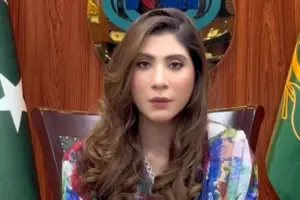
The intersection of international acclaim and domestic media scrutiny in Pakistan’s fashion landscape was brought into sharp, controversial focus following designer Parishae Adnan’s celebrated appearance at New York Fashion Week (NYFW). Fresh off closing the prestigious Flying Solo showcase with her pioneering sustainability collection, Second Skin, Adnan sat down for what was billed as a career-retrospective interview on the 365 News morning program, Rise and Shine, co-hosted by Nadia Khan and Zohaib Hassan.
Instead of an in-depth exploration of Pakistani heritage craftsmanship, the circular economy of fashion, or the intricate mechanics of sustainable design on a global platform, the conversation devolved into a line of questioning heavily criticized as intrusive, reductive, and out of touch. Viewers and cultural critics alike took to social media to condemn the hosts’ fixation on Adnan’s personal life, her gym videos, her wardrobe choices, and parental approval.
Yet, the defining takeaway from the broadcast was not the editorial misstep of the platform, but rather Adnan’s masterclass in composure. By gracefully steering the dialogue back to core philosophies of multi-dimensional self-expression, artistic freedom, and technical mastery, Adnan transformed a potentially damaging media moment into a profound cultural critique. This incident has ignited a broader, much-needed national conversation regarding the state of entertainment journalism in Pakistan, the systemic undervaluation of creative craft, and the relentless policing of women’s autonomy in the public eye.
Read Also
Detailed Chronology
The NYFW Milestone and the Second Skin Collection
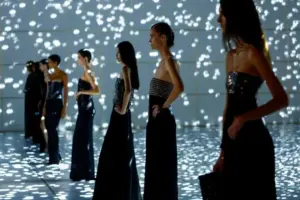
The narrative begins on the international stage. Parishae Adnan, a rising force in modern sustainable design, earned the coveted position of closing the Flying Solo showcase at New York Fashion Week. Her collection, Second Skin, was a conceptual triumph rooted in zero-waste philosophies, the reworking of existing garments, and the translation of traditional Pakistani craftsmanship into a contemporary global vernacular.
This milestone was not an overnight anomaly. Adnan had previously explored these exact technical methodologies in Pakistan as early as 2020—a time when the local market met her conceptual upcycling with hesitation and misunderstanding. By taking these philosophies to Manhattan, Adnan bridged the gap between ancestral heritage techniques and the urgent global demand for circular fashion. The collection served as a physical manifestation of environmental responsibility, asserting that luxury and sustainability are inextricably linked.
The Morning Show Appearance and Editorial Misalignment
Upon her return to Pakistan, Adnan accepted an invitation to appear on Rise and Shine, broadcast on 365 News. Given her recent international footprint, audiences anticipated a segment dedicated to the logistics of showcasing in New York, the business of global fashion export, and the meticulous construction of the Second Skin garments.
Instead, the editorial direction shifted rapidly away from professional achievements. Co-host Nadia Khan steered the conversation toward personal lifestyle choices, questioning Adnan’s signature aesthetic, asking whether she dressed "like a man," demanding she display her physical strength on camera, and pivoting repeatedly to her public fitness routines. The inquiry culminated in a line of questioning concerning whether her parents—prominent designers Amir Adnan and Huma Adnan—objected to her public presentation and social media footprint.
Composure Under Fire and Pivot to Substance
Despite the glaring disparity between her global accomplishment and the trivializing nature of the questions, Adnan maintained absolute equilibrium. Rather than exhibiting defensiveness or terminating the interview, she utilized every conversational detour as an educational bridge.
When questioned about her aesthetic and gym culture, Adnan reframed personal fitness as a form of social accountability and representation. When probed about familial boundaries, she deconstructed the very notion of rigid societal constraints, asserting that art and self-expression are inherently subjective. Furthermore, when the topic turned to her lineage, Adnan successfully dismantled the superficial "nepo-baby" narrative, reframing her upbringing not as a pathway of unearned privilege, but as an old-world apprenticeship grounded in tactile labor and deep-seated technical immersion.
Supporting Context & Metrics
The Socio-Cultural Dynamics of Public Scrutiny in Pakistan
The backlash faced by Nadia Khan and the production team of Rise and Shine underscores a profound generational and cultural disconnect within Pakistani media. While younger demographics increasingly embrace global paradigms of individuality, bodily autonomy, and sustainable living, legacy broadcast media often remains anchored in traditionalist gatekeeping.
Women in the public eye in Pakistan are frequently subjected to a paradoxical set of expectations: they are expected to achieve international success and project modern sophistication, yet simultaneously conform to rigid, localized scripts of femininity and modesty. Adnan’s social media presence—specifically her documentation of her fitness journey—became a lightning rod for this tension.
Representation and the Power of Visibility
To contextualize Adnan’s persistence in sharing her fitness journey, one must examine the scarcity of muscular, health-focused female role models within South Asian media ecosystems. Adnan noted that growing up, she lacked immediate Pakistani figures who embodied physical strength and athletic discipline. By publicizing her regimen, she inadvertently built a support system for countless women and girls navigating patriarchal fitness spaces. Her inbox serves as a metric of this impact, filled daily with messages from women inspired to reclaim their physical health. The inquiry into her gym videos thus overlooked a vital community-building aspect of her digital footprint, reducing a movement of empowerment to a superficial debate over modesty and parental anxiety.
The Economics of Sustainable Fashion Metrics
To fully appreciate the gravity of Second Skin, one must examine the broader metrics of the fashion industry’s environmental footprint. Fashion is historically one of the most polluting industries globally, responsible for approximately 10% of global carbon emissions and vast quantities of textile waste. Adnan’s work directly confronts these metrics by championing upcycling and the circular economy. While international fashion weeks increasingly reward such ecological innovations with critical acclaim, local media structures in developing markets frequently fail to translate these high-level ecological metrics for mass audiences, preferring sensationalized personality-driven narratives over environmental journalism.
Official Statements and Public Reaction
Parishae Adnan’s Philosophical Defense
Adnan’s articulate responses during the broadcast have since been widely shared across digital platforms, transforming her interview into a viral case study on media literacy. Addressing the multifaceted nature of human identity, Adnan remarked:
"It is expressive, whether that is to be in the gym, dressing a certain way, doing your hair or whatever someone does. Humans are multifaceted. You can’t take one thing and run. We are all multidimensional. You might like cooking or running, so I don’t put myself in a label either. What is more important is people don’t define us."
Addressing the assumption that her career was simply handed to her due to her famous lineage, Adnan provided a grounded historical perspective on family enterprises:
"When I was growing up, people used to call me ‘nepo-baby’, but I thought about it in the past 10-15 days. If you look back at the old days, these kids were called ‘apprentices’. So going from one generation to the next is by putting their kids into the business. I feel like this has been my journey too. It was not handed to me, but I grew up in clothes and sewing."
Furthermore, Adnan articulated her frustration regarding the lack of technical discourse within creative industries in her home country:
"We were talking on boundaries. We often talk about art and not these things and we are here on TV discussing boundaries. I wanted to make an interesting point. I believe going to NYFW is a big accomplishment, but the bigger thing was that whatever appreciation you get from there was more technical, but here there is not that kind of technicality discussed."
Family and Public Backlash
The reaction from the wider creative community was swift and uncompromising. Huma Adnan, celebrated designer and mother to Parishae, publicly condemned the line of questioning as entirely "uncalled for." Social media users echoed this sentiment, launching extensive critiques against the interviewers for failing to conduct basic research regarding Second Skin—a concept Parishae had already introduced to the Pakistani public four years prior in 2020.
Critics pointed out the systemic failure of morning show producers who prioritize sensationalism, gossip, and moral policing over intellectual engagement with artists who are actively flying the nation’s flag on international pedestals.
Future Outlook
Elevating Creative Journalism in Pakistan
The Parishae Adnan interview controversy serves as a watershed moment for Pakistani media. It highlights an urgent need for institutional reform within morning show production, shifting away from invasive personal inquisitions toward rigorous, craft-oriented journalism. As Pakistani designers, artists, and filmmakers increasingly break barriers on global platforms—from New York and Paris to Cannes and Venice—the domestic media apparatus must mature in tandem. Audiences are no longer satisfied with reductive tropes; they demand deep dives into technique, philosophy, and the socio-economic impact of creative work.
The Trajectory of Sustainable Pakistani Fashion
For Parishae Adnan, this media storm has ultimately galvanized her platform rather than diminished it. By refusing to be pigeonholed as merely a "nepo-baby," a fitness influencer, or an avant-garde stylist, she has established herself as a holistic intellectual voice within contemporary fashion. As the global shift toward circular economies intensifies, Adnan’s pioneering work with Second Skin positions her at the vanguard of a new generation of designers who refuse to separate aesthetic beauty from ecological responsibility and personal autonomy.
Ultimately, Adnan’s resilience under pressure sends an unmistakable message to the gatekeepers of traditional media: the future of Pakistani fashion is technical, sustainable, multifaceted, and entirely unapologetic.

Comments
Facebook App ID not configured. Please add it in the Customizer.