
Executive Overview
When a group of people is confronted with a complex philosophical question or an intricate moral thought experiment, the immediate outcome is almost invariably disagreement. Some individuals will side with one ethical framework, while others will invoke a completely different line of reasoning. For generations, philosophers, cognitive scientists, and researchers have taken this phenomenon at face value, interpreting it as evidence of inter-individual variation: different people simply possess different foundational intuitions.
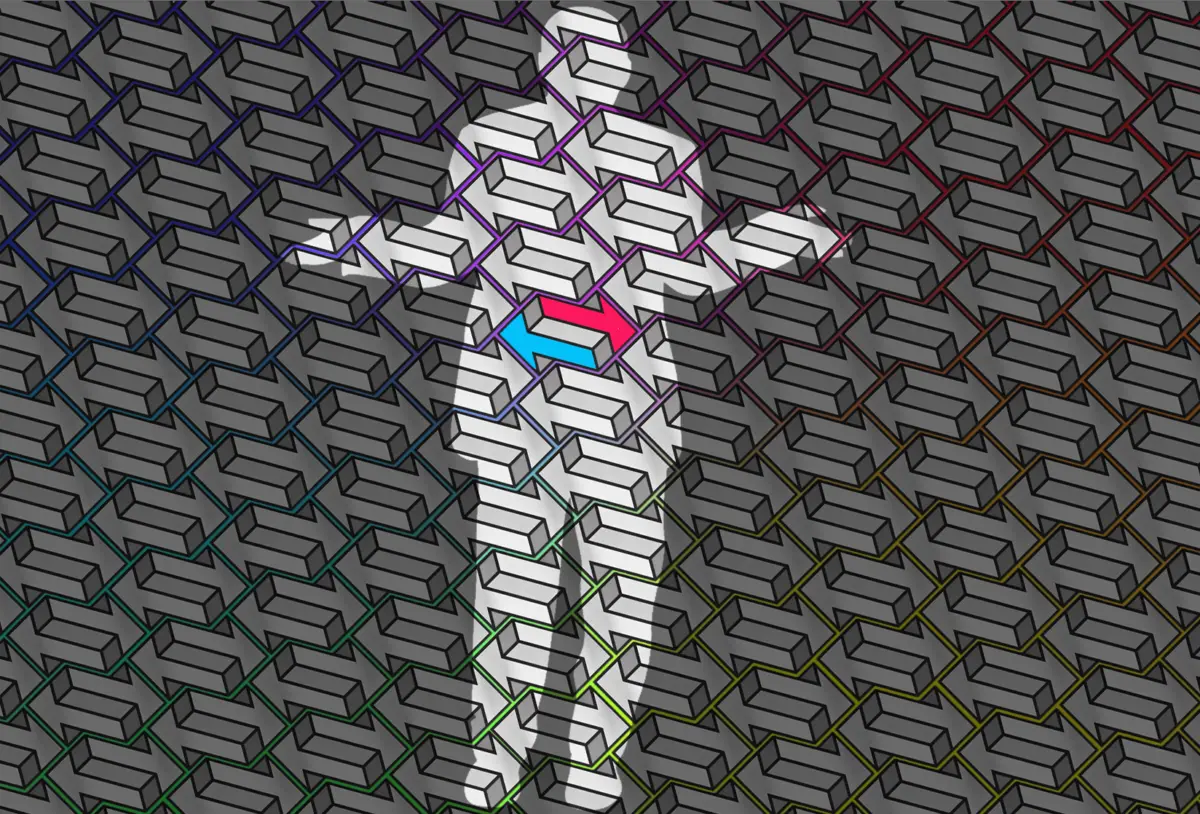
However, a groundbreaking paper published earlier this year in the journal Ergo challenges this foundational assumption. In "Conflicting Intuitions," Yale University professor Joshua Knobe posits that the standard diagnosis of disagreement may be fundamentally flawed. Instead of mapping a clean divide between individuals—where Person A holds one clear intuition and Person B holds its polar opposite—Knobe argues that the true locus of conflict exists within the individual mind.
According to Knobe’s "conflicting intuitions hypothesis," when a person encounters a classic philosophical dilemma, they are rarely operating from a single, unified gut feeling. Rather, they are frequently besieged by competing cognitive pulls, simultaneously experiencing intuitions that drive them in opposite directions. This internal friction, Knobe suggests, has been systematically overlooked by both empirical researchers and theoretical philosophers. If proven correct, this hypothesis demands a profound recalibration of how cognitive science models human reasoning and how philosophical thought experiments are designed, interpreted, and resolved.
Read Also
Detailed Chronology: The Evolution of Experimental Philosophy and the Knobe Thesis
To understand the weight of Knobe’s recent contribution, one must trace the trajectory of experimental philosophy—a movement that sought to bridge armchair philosophy with empirical psychology.
The Traditional Paradigm: Inter-Personal Disagreement
For centuries, philosophical inquiry relied heavily on the "method of cases." Philosophers would invent hypothetical scenarios—such as the Trolley Problem, Gettier cases regarding justified true belief, or dilemmas surrounding free will and determinism—and consult their own intuitions. As the field professionalized and experimental philosophy gained traction in the late 20th and early 21st centuries, researchers began taking these thought experiments out of the armchair and into the laboratory, surveying diverse demographics.
When surveys revealed that demographics split on answers to these vignettes, researchers framed the challenge as an inter-personal problem. For instance, when studying compatibilism (the belief that free will is compatible with determinism), data frequently showed that some participants gave compatibilist responses while others gave incompatibilist responses. The prevailing assumption among researchers was straightforward:
- Group X possesses compatibilist cognitive architecture or cultural conditioning.
- Group Y possesses incompatibilist architecture or conditioning.
Consequently, cognitive models were built to explain why different groups of people diverged in their baseline responses.
The Shift to Intra-Personal Conflict
Knobe’s work marks a sharp pivot away from this inter-personal dichotomy. Drawing on a growing body of experimental data, Knobe began looking past the binary "yes/no" or "compatibilist/incompatibilist" tick-boxes on survey forms to investigate the underlying psychological states of respondents.
Rather than viewing a split vote as a collection of single-minded individuals pointing in opposite directions, Knobe’s hypothesis suggests that individual minds are internally fractured when facing these prompts. A respondent might check a box indicating that an agent acts of their own free will, yet exhibit measurable hesitation, behavioral markers of conflict, or subsequent verbal qualifications revealing a strong, competing intuition that the agent was entirely constrained by deterministic laws.
This conceptual shift moves the philosophical puzzle from a sociological map of distributed opinions to a psychological map of internal ambivalence. The difficulty in resolving philosophical dilemmas, Knobe argues, is not merely that we disagree with one another, but that we are fundamentally conflicted within ourselves.
Supporting Context & Metrics: Empirical and Philosophical Implications
The implications of the conflicting intuitions hypothesis extend far across academic disciplines, creating ripples in both empirical cognitive science and theoretical philosophy.
Empirical Ramifications: Redefining Cognitive Explanations
On the empirical front, Knobe’s hypothesis changes the very nature of what cognitive scientists must set out to explain.
Under the traditional inter-personal assumption, an adequate psychological theory needed only to account for group variance. If 50 percent of an experimental cohort viewed a specific scenario as an instance of direct causation and 50 percent did not, cognitive scientists sought the variables—such as education, personality traits, or cultural background—that drove those distinct groups apart.
However, if Knobe’s hypothesis holds true, the explanatory burden increases exponentially. An adequate cognitive theory can no longer rest content with sorting participants into opposing camps. It must explain:
- Why individual minds generate simultaneous, contradictory intuitions when presented with abstract thought experiments.
- The neurological and psychological mechanisms that allow these conflicting forces to coexist within a single agent.
- How an individual ultimately resolves this internal civil war to output a single definitive judgment on a survey or in a debate.
Philosophical Ramifications: Making Sense of Contradiction
Beyond empirical science, the hypothesis forces a reckoning within core branches of philosophy, including the philosophy of law and personal identity theory.
Consider complex legal cases where ordinary respondents exhibit seemingly contradictory intuitions—simultaneously feeling that an action strictly violates the letter of the law while maintaining an equally strong intuition that punishing the actor would represent a deep miscarriage of justice. Or consider classic thought experiments in personal identity (such as the philosophical evolution of Locke’s Prince and the Cobbler or modern teletransportation paradoxes), where respondents feel pulled to declare that a resulting individual is and is not the original person.
Philosophers must confront a critical question: Can we develop theoretical frameworks that validate these dual intuitions without sliding into outright incoherence?
Knobe points out that for certain philosophical issues, brilliant theoretical work may successfully construct layered frameworks. These theories might legitimately establish that "there is a surface sense in which X is true, but a deeper, structural sense in which X is false." For instance, jurisprudence already wrestles with the tension between strict liability and moral culpability.
Yet, Knobe issues a realistic caveat: for other philosophical problems, no such reconciliation may be possible. We may be forced to admit that two foundational intuitions are mutually exclusive, meaning one—or both—must ultimately be discarded as false. This leaves the broader methodological question: What is the normative and philosophical significance of an intuition if we already know it cannot possibly be true?
Official Insights & Theoretical Frameworks
To fully grasp the architecture of Knobe’s argument, it is valuable to examine the mechanics of his theoretical positioning as outlined in his recent scholarship.
In Conflicting Intuitions, Knobe explicitly frames the transition from inter-personal variance to intra-personal conflict not merely as a minor correction, but as a paradigm shift in how experimental philosophy interprets human cognition:
"I will argue that experimental research has been providing evidence for a very different hypothesis. On this hypothesis, the difficulty is in large part a matter of individual people having conflicting intuitions. Thus, when a person encounters a thought experiment designed to get at one of the traditional questions of philosophy, she will often have an intuition pulling her in one direction but also an intuition pulling her in the exact opposite direction."
This framework challenges the traditional model of human rationality, which often presumes that coherent agents possess ordered, non-contradictory belief systems. By demonstrating that ordinary people routinely harbor deep internal contradictions when pressed on foundational concepts like free will, causation, and identity, Knobe suggests that human cognition is inherently pluralistic and tension-ridden.
Furthermore, Knobe emphasizes that confronting this reality requires absolute analytical rigor when evaluating survey data and qualitative responses:
"If we assume that the difference in responses is due to different people having different intuitions, we would naturally assume that the theory should explain why different people have different intuitions regarding this case… However, if we conclude that the difference in responses is due to each individual person having conflicting intuitions, there is an important sense in which there is more that needs explaining."
This insistence—that researchers must account for intra-personal complexity rather than washing it out in aggregate statistical averages—sets a rigorous new standard for future studies in experimental philosophy.
Future Outlook: Where Do We Go From Here?
As the academic community continues to digest Knobe’s thesis, the landscape of experimental and theoretical philosophy is poised for significant transformation.
Methodological Overhaul in Laboratories
Future psychological and experimental philosophy studies will likely move away from binary choice metrics (e.g., "Choose option A or option B"). To test the conflicting intuitions hypothesis directly, researchers will need to design more nuanced, multi-layered experimental protocols capable of capturing psychological ambivalence, cognitive load, and hesitation in real-time. Techniques such as response-time tracking, neuroimaging during moral decision-making, and qualitative protocol analysis will become essential tools for detecting whether a participant’s singular choice masks a severe internal tug-of-war.
Re-evaluating the Canon of Thought Experiments
Philosophers designing thought experiments will also need to reckon with the likelihood that their scenarios do not merely reveal cleanly delineated conceptual intuitions, but instead trigger complex webs of competing cognitive reflexes. Recognizing this internal friction may humble the field, moving thinkers away from dogmatic assertions that a particular thought experiment delivers an obvious, self-evident verdict on reality.
Navigating Irreconcilable Dilemmas
Ultimately, Knobe’s work forces a sobering philosophical reckoning. If extensive empirical research confirms that individual minds are routinely paralyzed by irreconcilable, mutually exclusive intuitions, the philosophical enterprise cannot simply choose a favorite intuition and ignore the rest. Instead, philosophy must embrace the messiness of human cognition—building sophisticated frameworks that either honor the multiplicity of our internal perspectives or honestly acknowledge the limits of human reason when confronting the deepest mysteries of existence.
As academic discussion surrounding Conflicting Intuitions continues to unfold, one thing is certain: the conversation around what happens when we think about philosophy will never be the same.

Comments
Facebook App ID not configured. Please add it in the Customizer.