
Executive Overview
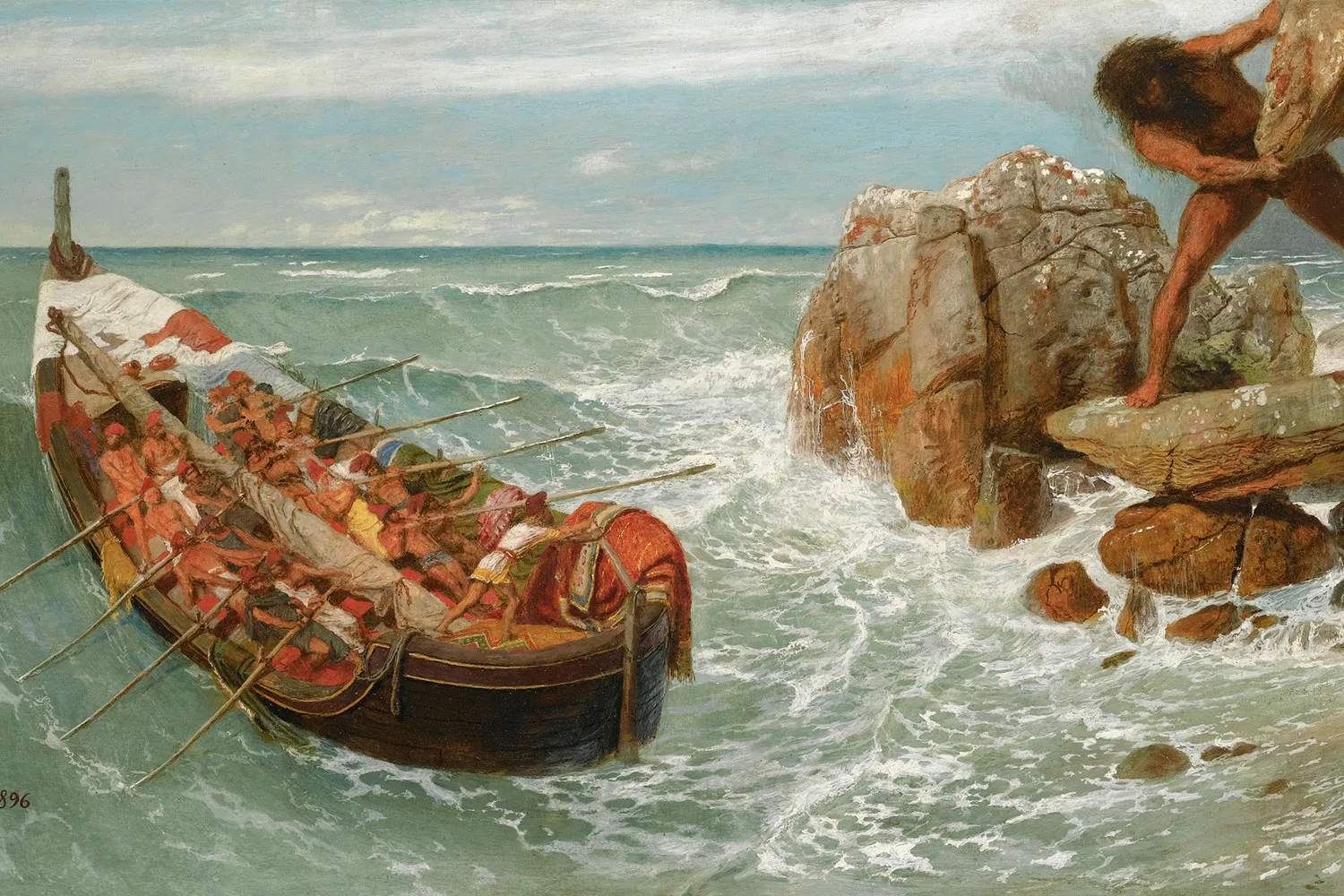
For nearly three millennia, the foundational epic of Western literature—Homer’s The Odyssey—has occupied a singular place in the human imagination. Spanning the tumultuous ten-year voyage of the cunning king of Ithaca, Odysseus, as he struggles to reclaim his home, wife, and kingdom following the fall of Troy, the poem has continually reinvented itself. From its roots in prehistoric oral storytelling and the ancient papyrus fragments unearthed in Egyptian sands to contemporary translations and Christopher Nolan’s blockbuster film adaptation, The Odyssey remains an evolving cultural touchstone.
/https://tf-cmsv2-smithsonianmag-media.s3.amazonaws.com/filer_public/38/b1/38b1449a-6437-4ff8-bb93-d552fa88436d/odyssey.jpg)
Yet, beneath its enduring popularity lies an enduring scholarly puzzle: Was there ever an original, definitive version of The Odyssey? And what would Homer himself—assuming such an individual ever existed—think of how his legendary song has been translated, adapted, and commercialized across the centuries?
/https://tf-cmsv2-smithsonianmag-media.s3.amazonaws.com/accounts/headshot/Ellen_Wexler.png)
Recent cultural conversations, catalyzed by Nolan’s cinematic epic, have reignited debates among classicists, literary historians, and millions of readers. This investigation delves into the origins of the Bronze Age epic, the mechanics of oral poetry, the quest for a stable text, and the ways modern adaptations continue to challenge our understanding of what makes a classic timeless.
Read Also
:focal(750x500:751x501)/https://tf-cmsv2-smithsonianmag-media.s3.amazonaws.com/filer_public/38/b1/38b1449a-6437-4ff8-bb93-d552fa88436d/odyssey.jpg)
Detailed Chronology: From Bronze Age Echoes to the Digital Age
To understand The Odyssey, one must retrace a winding historical trajectory that stretches back thousands of years before the invention of the printing press.
/https://tf-cmsv2-smithsonianmag-media.s3.amazonaws.com/filer_public/3c/ad/3cad558e-d4ae-48eb-ad59-0b98a11268cf/gettyimages-530844208.jpg)
- The Second Millennium B.C.E. (The Bronze Age Setting): The events of The Odyssey and its sister epic, The Iliad, are set against the backdrop of the Late Bronze Age. Material details embedded within the text—such as the boar’s-tusk helmet worn by Odysseus—suggest that foundational narrative elements were already circulating during this era.
- The 8th to 7th Centuries B.C.E. (The Rise of Written Text & Festival Performance): Scholars like Martin West and Richard Janko argue for the composition of the epics during this window. Simultaneously, traditions like the Panionia festival in Ionia helped standardize the performance of these narratives. Seventh-century B.C.E. pottery fragments depicting Odysseus blinding the cyclops Polyphemus provide the earliest visual proofs of the story’s circulation.
- The 6th Century B.C.E. (The Panathenaic Regulations): The Athenian state sponsors official performances of Homeric epics at the Panathenaea festival. Strict rules dictate that performers must recite the epics "in relay," ensuring structural cohesion and stabilizing the narrative arc.
- The 3rd Century B.C.E. (The Library of Alexandria): Scholars at the Library of Alexandria embark on the earliest systematic efforts to establish an authoritative Greek text, encountering significant "multiformity" (or fluidity) across various surviving papyrus fragments.
- The Middle Ages (Preservation via Parchment): The oldest complete versions of the epics emerge as medieval manuscripts written on parchment—most notably the 10th-century Venetus A manuscript of The Iliad—accompanied by extensive scholarly commentary.
- 1615 (First English Translation): George Chapman publishes the first full English translation of The Odyssey, introducing the epic to a wider Anglophone readership and inspiring poets like John Keats centuries later.
- The 1930s (Parry and Lord’s Fieldwork): Harvard classicist Milman Parry and assistant Albert Lord travel to Yugoslavia, recording oral bards like Avdo Međedović. Their breakthrough research proves that Homeric poetry was composed using formulas, themes, and meter rather than static memorization.
- 1999–Present (The Homer Multitext Project): Classicists Casey Dué and Mary Ebbott launch the Homer Multitext project, digitizing ancient manuscripts to present the epics without privileging a single "true" text.
- July 2026 (Nolan’s Cinematic Release): Christopher Nolan’s blockbuster film adaptation premieres in theaters, drawing massive box-office projections and sparking a fresh wave of public debate regarding translation, fidelity, and the narrative boundaries of Homeric art.
Supporting Context & Metrics: The Mechanics of Oral Tradition
For generations, students have been taught to view The Odyssey as the fixed creation of a solitary, brilliant genius named Homer. However, modern classicists largely view the epic as the culmination of a vast, fluid oral tradition shaped by generations of illiterate bards.

The Power of Formulas
In the 1930s, Milman Parry and Albert Lord revolutionized Homeric scholarship by studying living oral traditions in the Balkans. They discovered that bards operating in non-literate societies do not memorize tens of thousands of lines word-for-word. Instead, they rely on a structural toolkit of formulas, meter (specifically dactylic hexameter), and recurring themes.
/https://tf-cmsv2-smithsonianmag-media.s3.amazonaws.com/filer_public/87/c6/87c68ee5-05fb-438a-b562-a4e04a196a22/funerary_proto-attic_amphora_with_a_depiction_of_the_blinding_-6051448e768428fa5f962702cc267bc7.jpg)
- Epithets as Metrical Tools: High school readers frequently encounter formulas like Odysseus "the great tactician" or Proteus the "ancient of the sea." As biographer Robert Kanigel notes, for nearly every hero, god, or goddess, and for every grammatical case within the hexametric line, there was typically a single fixed epithet designed to fit the metrical constraints of the verse.
- Improvisation Under Constraint: Bards could improvise at astonishing speeds—often 10 to 20 ten-syllable lines per minute—by treating traditional scenes (such as an assembly, a wedding, or a hero’s withdrawal) as modular puzzles.
The Question of a Single Author
Despite the dominance of the oral-formulaic theory, scholarly consensus remains divided on whether a single individual eventually committed the poems to writing.
/https://tf-cmsv2-smithsonianmag-media.s3.amazonaws.com/filer_public/44/fa/44fa9e9e-4eb4-407f-9d63-4ec4af904c47/gettyimages-585870020.jpg)
- The Unitarian View: Scholars like the late Martin West and Richard Janko argue that an exceptionally gifted, albeit illiterate, poet composed The Iliad and The Odyssey within a relatively narrow timeframe (the 8th or 7th century B.C.E.), utilizing scribes to fix the texts in writing to match the grand scale of their vision.
- The Pluralist View: Conversely, scholars emphasizing multiformity argue that "our" Odyssey is a composite product of centuries of festival performances, gradually ossifying into stability through institutional sponsorship in places like classical Athens.
Official Statements and Perspectives from the Field
The debate over what constitutes an authentic translation or adaptation of The Odyssey has intensified with every literary generation. The nuances of Homer’s language—most notably the opening adjective polytropos (derived from poly, meaning "many," and tropos, meaning "turn")—illustrate the profound difficulties translators face.
/https://tf-cmsv2-smithsonianmag-media.s3.amazonaws.com/filer_public/f7/89/f7892a5a-f441-4c13-a8c6-025bdd94face/2fk59k8.jpg)
Translation Comparison: The First Line of 'The Odyssey'
-------------------------------------------------------------------------
George Chapman (1615):    "The man, O Muse, inform, that many a way..."
Robert Fitzgerald (1961): "Sing in me, Muse, and through me tell the story /
                           of that man skilled in all ways of contending..."
Robert Fagles (1996):     "Sing to me of the man, Muse, the man of twists and turns..."
Emily Wilson (2017):      "Tell me about a complicated man..."
-------------------------------------------------------------------------
Prominent scholars and creators have offered compelling insights into this perpetual process of reinterpretation:
/https://tf-cmsv2-smithsonianmag-media.s3.amazonaws.com/filer_public/7f/15/7f158ed7-b0a8-4665-8efd-fcaaba723800/gettyimages-588182060.jpg)
- Joel Christensen (CUNY Graduate Center): Emphasizing the absurdity of hunting for a lost original, Christensen notes, "The search for the original and authoritative version is something that permeates old traditions. The Odyssey we have has been accepted as The Odyssey, and as authoritative in its own right, for almost 2,500 years—and so I think it’s far more compelling to ask: Why is this The Odyssey we have rather than something else?"
- Casey Dué (University of Houston): Discussing the impossibility of recovering the historical first telling of Odysseus’s journey home, Dué observes, "There’s obviously a notional first time that someone ever told a story about a warrior named Odysseus trying to get home from the Trojan War. But we could never recover that."
- Emily Wilson (Translator & Classicist): Defending her choice to use iambic pentameter—the meter of Shakespeare and Milton—as the Anglophone equivalent to dactylic hexameter, Wilson has consistently underscored the necessity of capturing the deep textual ambiguities of polytropos rather than flattening Odysseus into a generic hero.
- Christopher Nolan (Filmmaker): Explaining his directorial vision to media outlets upon the release of his cinematic adaptation, Nolan stated that his approach was driven by emotional resonance rather than academic pastiche: "I remember the horse. I remember them tying Odysseus to the mast. It’s in our bones. I didn’t want to do a revisionist version. I wanted to be true to my expectations of it."
Future Outlook: The Digital Frontier and Enduring Appeal
As The Odyssey enters a new era dominated by blockbuster cinema, digital humanities, and contemporary literary retellings, the anxiety surrounding authenticity appears increasingly misplaced. Rather than treating Homer’s work as a pristine artifact locked behind glass, modern classicists are embracing its inherently fluid and adaptive nature.
/https://tf-cmsv2-smithsonianmag-media.s3.amazonaws.com/filer_public/0d/30/0d30bae7-d3d4-4557-bb94-21119e5b63b5/gettyimages-1184363387.jpg)
Projects like the Homer Multitext point the way forward by utilizing digital infrastructure to preserve multiple medieval manuscripts and ancient papyri side-by-side, resisting the urge to crown a single edition as the absolute truth. By refusing to privilege one text at the top of the page, scholars are training a new generation to appreciate the multiplicity that defined ancient oral performance.
/https://tf-cmsv2-smithsonianmag-media.s3.amazonaws.com/filer_public/dc/78/dc78f90d-71a8-41fd-8a2f-b368974ae737/gettyimages-544242162.jpg)
Ultimately, whether experienced through the rhythmic cadence of a Bronze Age bard, the rigorous annotations of Alexandrian scholars, Emily Wilson’s modern verse, or Christopher Nolan’s high-octane cinematic lens, The Odyssey survives because it belongs to everyone and no one. It is a mirror reflecting humanity’s deepest fears of displacement and our most resilient hope for homecoming. As long as travelers seek their way back across treacherous seas, the song of the man of twists and turns will continue to be sung.



Comments
Facebook App ID not configured. Please add it in the Customizer.