On August 23, 1944, a violent mid-morning storm descended upon the quiet English village of Freckleton, transforming a routine wartime afternoon into a scene of unimaginable devastation. A 25-ton United States Army Air Forces (USAAF) B-24H Liberator bomber, executing a local test flight out of a nearby base, lost control in the gale-force winds and careened into the heart of the community. The aircraft slammed directly into the Holy Trinity School, obliterating its infants’ wing, before striking a local café and disintegrating in a massive, high-octane fireball.
The human cost was catastrophic. Sixty-one people lost their lives in the crash and its immediate aftermath, including 38 schoolchildren aged four to six, two teachers, 18 civilians and service members taking shelter or eating nearby, and all three American airmen aboard the aircraft. Of the 41 young students sitting in the infants’ wing at the moment of impact, an astonishing 38 perished, wiping out nearly an entire generation of children in a single village of roughly 1,000 residents.
Today, the Freckleton air disaster stands as the single greatest civilian air tragedy suffered by the Allies during World War II. Yet, despite its staggering scale, the event remains largely forgotten on both sides of the Atlantic. Overshadowed by the monumental global death toll of the broader conflict, the dramatic liberation of Paris dominating contemporary newspaper headlines, and later historical domestic tragedies, the catastrophe slipped into the shadows of collective memory. This retrospective explores the unfolding of that fateful August day, the deep bonds between the village and its wartime American neighbors, the structural and meteorological failures that precipitated the crash, and the enduring mission of survivors to ensure the lost children are never forgotten.
The morning of Wednesday, August 23, 1944, began innocuously enough in the Lancashire village of Freckleton, located on England’s western coast. Meteorological forecasts promised mild early sunshine and light clouds, with rain showers anticipated later in the morning. At the Holy Trinity School, 176 students had returned for only the second day of the new academic term.
Among them were the youngest pupils, aged four to six, housed in the infants’ wing under the supervision of veteran teacher Louisa Hulme—who was eagerly anticipating her retirement the following week—and Jennie Hall, a local twenty-something in her first week on the job. Outside, a sense of safety permeated the rural community, which had long served as a haven for evacuees fleeing the relentless German bombings of London and other major cities.
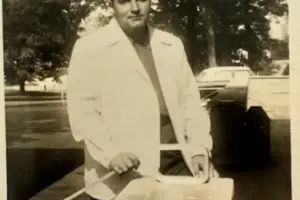
However, less than a mile away lay Base Air Depot 2 (BAD2) in the neighboring village of Warton, a sprawling and vital industrial hub for the U.S. Eighth Air Force. Here, a B-24H Liberator bomber—affectionately nicknamed Classy Chassis II—had been slated for a routine post-maintenance test flight at 8:30 a.m. Delayed by administrative duties, First Lieutenant John Bloemendal, co-pilot Jimmie Parr, and flight engineer Gordon Kinney finally received clearance to take off at 10:30 a.m., accompanied by a second test aircraft piloted by Peter Manassero.
The Decisive Moments
As the two bombers gained altitude, the weather deteriorated with terrifying speed. Manassero later recalled watching a rapidly forming cloud front that looked like an immense thunderhead. By 10:40 a.m., blinding sheets of torrential rain and ferocious winds gusting up to 60 miles per hour swept across Warton and Freckleton. Base operations urgently radioed the test pilots, instructing them to abort their missions and return immediately.
As Classy Chassis II reversed course, it vanished into the roiling squall line. Manassero radioed a warning to Bloemendal: "We had better head north and get out of the storm." Bloemendal acknowledged the transmission, but violent downdrafts had already seized the heavy aircraft. Eyewitnesses on the ground reported seeing the bomber flying dangerously low, while others suspected a lightning strike had compromised its electrical systems and hurled the plane into an unrecoverable downward spiral.
The Impact and the Inferno
At precisely 10:47 a.m., the 25-ton machine struck the village. The plane’s right wingtip clipped a building, shedding momentum before its main wheel and tail turret violently impacted the Sad Sack Snack Bar—a popular local café frequented by British and American servicemen. Simultaneously, the nose turret and roaring engines plowed directly into the Holy Trinity School.
The catastrophic impact ruptured the bomber’s fuel tanks, instantly spraying nearly 2,800 gallons of high-octane aviation fuel across the wreckage. A blinding explosion detonated, engulfing the school and the café in a roaring inferno that reached searing temperatures within seconds.
Inside the infants’ wing, teachers Hulme and Hall had just instructed the children to rest their heads on their desks and listen to a story as the tempest raged outside. When the B-24 hit, desks collapsed and debris rained down. Jacky Nichol, a 13-year-old student tasked with checking school windows during the storm, had just been reprimanded by a teacher for failing to knock on a classroom door. That brief scolding delayed him by precious seconds, keeping him out of the infants’ wing coatroom at the exact moment of impact.
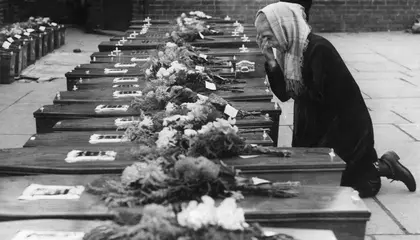
While the older children in other parts of the school managed to escape or were pulled from locked rooms, the infants’ wing became a death trap. Out of 41 small children present, only three survived: Ruby Currell, David Madden, and George Carey. Two teachers and dozens of young lives were extinguished in the flash fire.
Supporting Context & Metrics: "Little America" and the Wartime Landscape
To understand the context of the disaster, one must examine the unique geopolitical and social landscape of Lancashire during World War II. Freckleton had earned the affectionate moniker "Little America" due to its proximity to Base Air Depot 2, a colossal logistics and repair facility where more than 10,400 American service members lived and worked. BAD2 was an engine of Allied air superiority, overhauling and repairing over 10,000 aircraft destined for combat over Nazi-occupied Europe.
+-------------------------------------------------------------------------+
|                  WARTIME METRICS & CASUALTY BREAKDOWN                   |
+-------------------------------------------------------------------------+
| Total Fatalities:                                  61 People            |
| Schoolchildren Killed (Ages 4-6):                  38 Students          |
| Teachers Lost:                                     2 Educators          |
| Civilians & Service Members (Café/Ground):         18 Individuals       |
| American Airmen Aboard Classy Chassis II:          3 Crew Members       |
+-------------------------------------------------------------------------+
| Survivors from Infants' Wing (Hospitalized):       3 Children           |
| Surviving Café/Ground Service Members:             2 Individuals        |
+-------------------------------------------------------------------------+
The relationship between the American servicemen and local villagers was remarkably warm. G.I.s shared chewing gum, chocolate, and sweets with local children, while pubs and eateries like the Sad Sack Snack Bar fostered deep community integration. The presence of these troops, however, brought the inherent dangers of military aviation directly to the doorstep of rural England.
Globally, the U.S. Army Air Forces suffered staggering attrition rates during World War II. While strategic bombing raids over Europe claimed the vast majority of lives, training and testing accidents within the continental United States and Allied bases abroad proved extraordinarily lethal. More than 15,000 American airmen died during training accidents alone. At BAD2, the rapid tempo of operations, combined with meteorological volatility unfamiliar to pilots accustomed to milder southern U.S. climates, created a persistent hazard that culminated in the tragedy at Freckleton.
Official Statements and Investigations
The Military Investigation
In the wake of the disaster, the USAAF launched a formal inquiry to determine how a routine test flight could end in such catastrophic loss of life. Investigators scrutinized flight logs, weather reports, and eyewitness testimonies.
The official investigation placed primary responsibility on First Lieutenant John Bloemendal. The final report concluded that while the exact trigger—whether severe downdraft or lightning strike—remained difficult to verify definitively due to the complete destruction of the aircraft, the disaster "resulted from pilot’s error in the judgment of the violence of the storm."
Historians like James R. Hedtke have since noted that pinning total blame on the pilot oversimplifies a complex command failure. Flight Control Operations at BAD2 possessed the comprehensive meteorological data, radar updates, and storm trajectory maps necessary to understand the life-threatening ferocity of the squall. Critics argue that base command should have grounded all local test flights much earlier.
Diplomatic Reassurances
Recognizing the sensitive timing of the accident—occurring at the height of the war effort and just as Allied forces were successfully advancing toward Paris—military and civilian leaders moved swiftly to preserve Anglo-American solidarity.
General Carl A. Spaatz, commander of U.S. Strategic Air Forces in Europe, transmitted an official message to the Crown’s representative in Lancashire:
"I express the deep regret of myself and the entire American Air Forces for the distressing accident… [We share] in the profound sorrow of the community."
The British representative accepted the condolences, promising to relay them to the grieving families. Rather than allowing the disaster to fracture public morale, both nations muted their public recriminations, framing the tragedy as a shared sacrifice in the global war against fascism.
Future Outlook: Memory, Memorialization, and Legacy
For decades, the Freckleton air disaster remained a localized grief, largely omitted from national history textbooks. The physical wounds healed slowly; survivors such as Ruby Currell and Ray Brooke endured dozens of agonizing reconstructive surgeries for severe burns, while carrying profound psychological scars.
Efforts to memorialize the event took years to solidify. In August 1945, American airmen funded and dedicated a village playground for the surviving children. A communal T-shaped grave was established, holding Louisa Hulme and her students within its arms, while adult victims rested in the vertical trunk. Yet, community divisions over whether to build a replacement school or a public memorial hall delayed comprehensive commemorative efforts for decades.
It was not until 2007, following the release of a BBC documentary and local historical research by librarian Joyce Turner, that wider public awareness began to grow. A permanent plaque was finally installed at the crash site, giving overdue recognition to the victims.
Today, the legacy of Freckleton serves as a poignant reminder of the hidden costs of war far from the front lines. Through the tireless advocacy of aging survivors like Ruby Currell—whose lifelong mission has been simply to ensure that "the children are remembered"—the memory of August 23, 1944, endures. As modern generations look back at the twilight of the Greatest Generation, the tragedy of Holy Trinity School stands as a solemn testament to the resilience of a small English village that lost its youngest generation, yet chose to endure, remember, and forgive.

/https://tf-cmsv2-smithsonianmag-media.s3.amazonaws.com/filer_public/bc/67/bc67e7cd-5e2c-4ce2-89ef-dbe16c632594/freckleton-coffins.png)
/https://tf-cmsv2-smithsonianmag-media.s3.amazonaws.com/accounts/headshot/meilan_headshot2.png)
:focal(750x500:751x501)/https://tf-cmsv2-smithsonianmag-media.s3.amazonaws.com/filer_public/bc/67/bc67e7cd-5e2c-4ce2-89ef-dbe16c632594/freckleton-coffins.png)
/https://tf-cmsv2-smithsonianmag-media.s3.amazonaws.com/filer_public/82/0e/820ee920-d5e6-4ab0-b138-14a183ca3591/fre_011566.jpg)
/https://tf-cmsv2-smithsonianmag-media.s3.amazonaws.com/filer_public/da/ae/daae3ba5-c3a4-4c36-9186-6723e4353095/rescuers_searching_through_demolished_school_after_aberfan_disaster.jpg)
/https://tf-cmsv2-smithsonianmag-media.s3.amazonaws.com/filer_public/1f/7b/1f7b09de-c439-4bc8-b4bc-1938bd1f3425/media-13622.jpeg)
/https://tf-cmsv2-smithsonianmag-media.s3.amazonaws.com/filer_public/08/9c/089c435b-016a-4d93-8de5-52b7d6f6ac24/media-40683.jpeg)
/https://tf-cmsv2-smithsonianmag-media.s3.amazonaws.com/filer_public/9b/d1/9bd1e639-5c8f-4d45-9216-741526848edf/2jxw16g.jpg)



Comments
Facebook App ID not configured. Please add it in the Customizer.