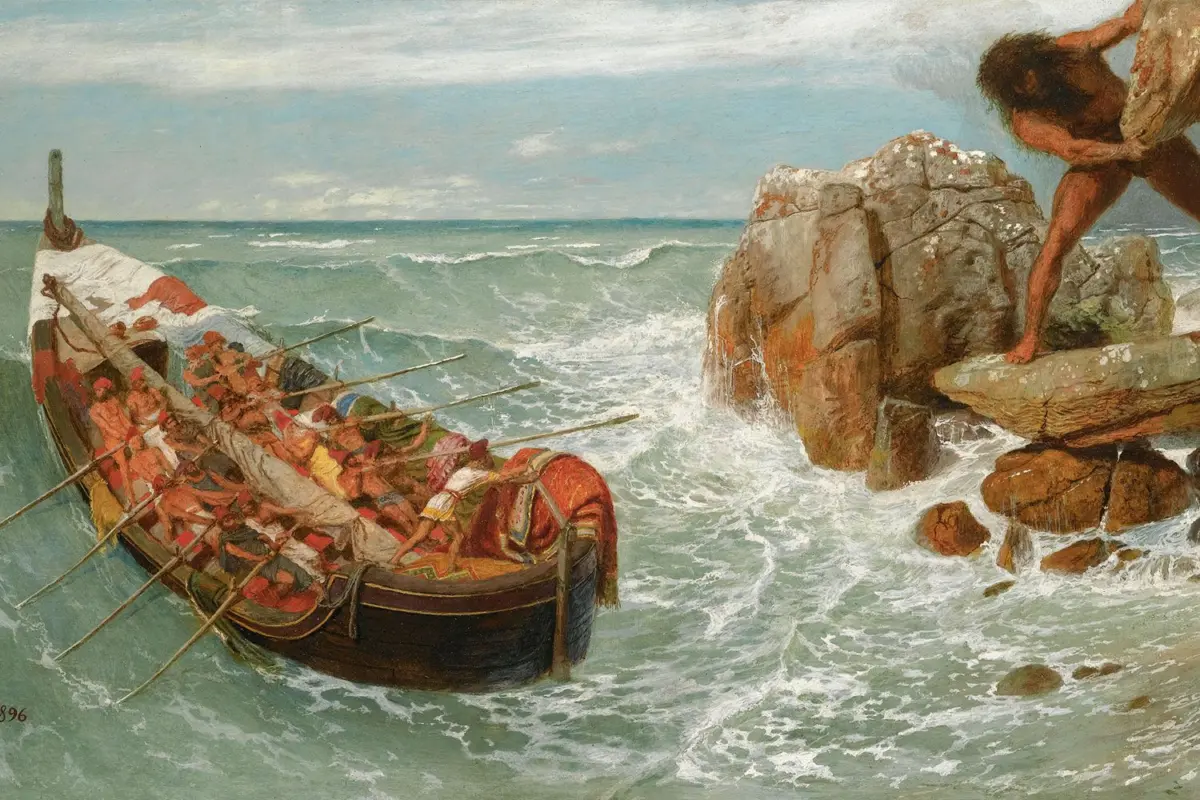
For millennia, humankind has returned to the shores of Ithaca alongside Odysseus, navigating the perilous waters of myth, memory, and translation. As blockbuster auteur Christopher Nolan brings his sweeping, high-profile cinematic adaptation of The Odyssey to theaters worldwide, a familiar cultural debate has been reignited: Was there ever an "original" version of Homer’s epic poem, and should modern audiences care what the ancient poet—or his shadowy oral forebears—would think of contemporary reinterpretations?
Spanning more than 2,000 years of surviving papyrus fragments, centuries of medieval parchment manuscripts, and a vibrant lineage of literary translations ranging from George Chapman in the 17th century to Emily Wilson in the 21st, The Odyssey defies the concept of a single, definitive text. Emerging from a Bronze Age oral storytelling tradition long before the advent of literacy or recorded sound, the epic has always been fluid, shaped and reshaped by the bards who sang it and the audiences who wept for it. Nolan’s star-studded film adaptation is not a radical departure from tradition, but rather the latest installment in a 3,000-year-old conversation about identity, homecoming, and the enduring architecture of human storytelling.
Detailed Chronology: From Bronze Age Echoes to Modern Cinema
To understand the complex textual lineage of The Odyssey, classicists must trace a timeline stretching across millennia, moving from prehistoric oral compositions to digital preservation projects.
The Second Millennium B.C.E. (Bronze Age Roots): Material culture described within the epics—such as the boar’s-tusk helmet worn by Odysseus—suggests that narrative seeds and heroic motifs were already circulating during the Late Bronze Age.
The Eighth to Seventh Centuries B.C.E. (The Homeric Window): Scholars such as Martin West and Richard Janko argue for the composition of The Iliad and The Odyssey during this period, attributing the crystallization of the epics to an individual poet (or poets) whose words were eventually committed to writing by early scribes. Concurrently, regional festivals like the Panionia served as testing grounds for performing and stabilizing the epics.
The Sixth Century B.C.E. (The Panathenaic Regulations): Under the sponsorship of the Athenian state, performance traditions at the Panathenaea festival enforced strict relay recitations, driving the homogenization and structural stabilization of the poems into the versions recognizable today.
The Fourth Century B.C.E. (Plato and the Rhapsodes): Philosophers like Plato documented the cultural mechanics of rhapsodes (performers like Ion) who gauged the emotional efficacy of their recitations by monitoring audience tears and reactions.
The Third Century B.C.E. (The Library of Alexandria): Hellenistic scholars undertook the monumental task of collecting, comparing, and editing disparate papyrus scrolls to establish an authoritative Greek text, encountering significant "multiformity" or fluidity along the way.
The Seventh to Eleventh Centuries C.E. (Papyri to Medieval Manuscripts): The oldest surviving fragments of The Odyssey emerge from Egyptian sands on papyrus, while complete medieval manuscripts—such as the 10th-century Venetus A for The Iliad—preserve the master texts alongside generations of marginal commentary (scholia).
1615 (The First English Translation): George Chapman publishes the inaugural full English translation of The Odyssey, opening the epic to non-Greek-speaking readers and deeply inspiring Romantic poets like John Keats.
The 1930s (The Oral-Formulaic Revolution): Harvard classicists Milman Parry and Albert Lord travel to Yugoslavia, recording traditional bards like Avdo Međedović to prove that Homeric verse was improvised using stock formulas, meters, and themes rather than rote memorization.
2017 (A New Linguistic Lens): Emily Wilson publishes her groundbreaking, highly debated translation of The Odyssey, opting for iambic pentameter and rendering Odysseus as a "complicated man," deliberately preserving the deep ambiguities of the Greek term polytropos.
July 2026 (The Cinematic Milestone): Christopher Nolan’s blockbuster film adaptation premieres in theaters, drawing massive box-office projections, reigniting public discourse on epic translation, and prompting a fresh wave of scholarship.
Supporting Context & Metrics: Decoding the Oral-Formulaic Tradition
The transformation of The Odyssey from a fluid oral performance into a fixed literary monument hinges on the mechanics of early human memory and performance technique. When Harvard’s Milman Parry and Albert Lord journeyed to the Balkans in the 1930s to study illiterate South Slavic bards, they unlocked the secret behind how poems exceeding 12,000 lines could be composed and recited without the aid of writing.
The Mathematics of Improvisation
Oral poets did not memorize vast blocks of text word-for-word. Instead, they relied on a sophisticated toolkit of compositional building blocks:
Formulas: Fixed metrical phrases used repeatedly to express essential ideas (e.g., dactylic hexameter constraints).
Epithets: Metric-driven descriptors attached to characters (e.g., Odysseus as "the great tactician" or Proteus as the "ancient of the sea").
Themes: Modular narrative units—such as assemblies, arming scenes, or sacrificial feasts—that could be expanded or contracted at will depending on the audience’s mood and the performer’s goals.
Research into these traditions revealed that bards operated under strict cognitive constraints, treating each performance as a live puzzle-solving exercise. They could seamlessly generate 10 to 20 ten-syllable lines per minute by routing their narratives through familiar structural pathways.
The release of Christopher Nolan’s cinematic epic has prompted leading classicists and cultural figures to weigh in on the enduring malleability of Homer’s work.
"The search for the original and authoritative version is something that permeates old traditions. The Odyssey we have has been accepted as The Odyssey, and as authoritative in its own right, for almost 2,500 years—and so I think it’s far more compelling to ask: Why is this The Odyssey we have rather than something else?"
— Joel Christensen, Classicist at the CUNY Graduate Center
Scholars emphasize that the obsession with finding a pristine, untouched "original" text misunderstands the very nature of epic poetry.
"There’s obviously a notional first time that someone ever told a story about a warrior named Odysseus trying to get home from the Trojan War, but we could never recover that."
— Casey Dué, Classicist at the University of Houston
Furthermore, the ongoing evolution of literary translations—most notably Emily Wilson’s 2017 rendering—continues to challenge modern assumptions about the text’s tone and rhythm. Wilson’s choice of iambic pentameter serves as an "anglophone equivalent" to the original dactylic hexameter, mirroring the cultural weight that Shakespeare and Milton hold in English literature.
Director Christopher Nolan noted in recent interviews that his cinematic vision was profoundly inspired by Wilson’s linguistic precision, aiming for dialogue that carries immediate emotional resonance for contemporary viewers. Reflecting on his lifelong relationship with the story—having first seen a theatrical production at age five—Nolan remarked:
"I remember the horse. I remember them tying Odysseus to the mast. It’s in our bones. I didn’t want to do a revisionist version. I wanted to be true to my expectations of it."
Future Outlook: Digital Humanities and the Next Generation of Scholarship
As The Odyssey permeates contemporary pop culture once more through high-end cinematic adaptations and renewed global readership, academic projects are transforming how future generations will study these foundational texts.
Initiatives like the Homer Multitext project—pioneered by scholars including Casey Dué and Mary Ebbott—are actively dismantling the illusion of a single, definitive text. By digitizing medieval manuscripts such as the 10th-century Venetus A (the oldest complete Iliad), these digital humanists present primary sources complete with their intricate layers of marginal commentary (scholia). This methodology forces students and researchers to confront the inherent fluidity of ancient storytelling rather than accepting a sanitized, single-version modern book format.
While the Multitext project has largely focused on The Iliad, scholars anticipate that the massive cultural wave generated by Nolan’s film will inspire a new generation of classicists to turn their digital lenses toward The Odyssey. By embracing all surviving papyrus fragments, medieval variants, and eccentric marginalia, modern scholarship proves that The Odyssey was never meant to be locked behind glass as a static artifact. Instead, it remains a living, breathing tradition—an immortal song capable of being reinvented, debated, and deeply felt by every new generation that dares to set sail across its vast and treacherous seas.

/https://tf-cmsv2-smithsonianmag-media.s3.amazonaws.com/filer_public/38/b1/38b1449a-6437-4ff8-bb93-d552fa88436d/odyssey.jpg)
/https://tf-cmsv2-smithsonianmag-media.s3.amazonaws.com/accounts/headshot/Ellen_Wexler.png)
:focal(750x500:751x501)/https://tf-cmsv2-smithsonianmag-media.s3.amazonaws.com/filer_public/38/b1/38b1449a-6437-4ff8-bb93-d552fa88436d/odyssey.jpg)
/https://tf-cmsv2-smithsonianmag-media.s3.amazonaws.com/filer_public/3c/ad/3cad558e-d4ae-48eb-ad59-0b98a11268cf/gettyimages-530844208.jpg)

/https://tf-cmsv2-smithsonianmag-media.s3.amazonaws.com/filer_public/87/c6/87c68ee5-05fb-438a-b562-a4e04a196a22/funerary_proto-attic_amphora_with_a_depiction_of_the_blinding_-6051448e768428fa5f962702cc267bc7.jpg)
/https://tf-cmsv2-smithsonianmag-media.s3.amazonaws.com/filer_public/44/fa/44fa9e9e-4eb4-407f-9d63-4ec4af904c47/gettyimages-585870020.jpg)


Comments
Facebook App ID not configured. Please add it in the Customizer.