
Executive Overview
The independent bookselling landscape is witnessing a profound moment of organizational friction and community-led celebration. On Saturday, August 29, the inaugural Black Bookstore Day—spearheaded by Latasha Eley Kelly, co-owner of Left on Read Bookstore in Topeka, Kansas—makes its official debut. Modeled after the immensely successful Independent Bookstore Day, which frequently surpasses traditional winter holiday retail benchmarks for indie sellers, this newly minted late-August event is designed to honor the vital labor, commercial risks, and cultural visions of Black booksellers across the nation.
However, the launch of Black Bookstore Day arrives against a backdrop of deep-seated industry controversy. Occurring roughly six months after the National Association of Black Bookstores (NABB) declared its own "National Black Bookstore Day" on Tuesday, April 7, Kelly’s initiative highlights a fractured institutional landscape. While NABB maintains that its efforts are unified and mission-driven, numerous independent Black booksellers have opted to bypass the association’s events. These booksellers cite concerns ranging from historical allegations of financial malpractice and sexual abuse leveled against NABB founder Kevin Johnson, to broader grievances regarding institutional overreach and the erasure of grassroots labor performed by independent proprietors.
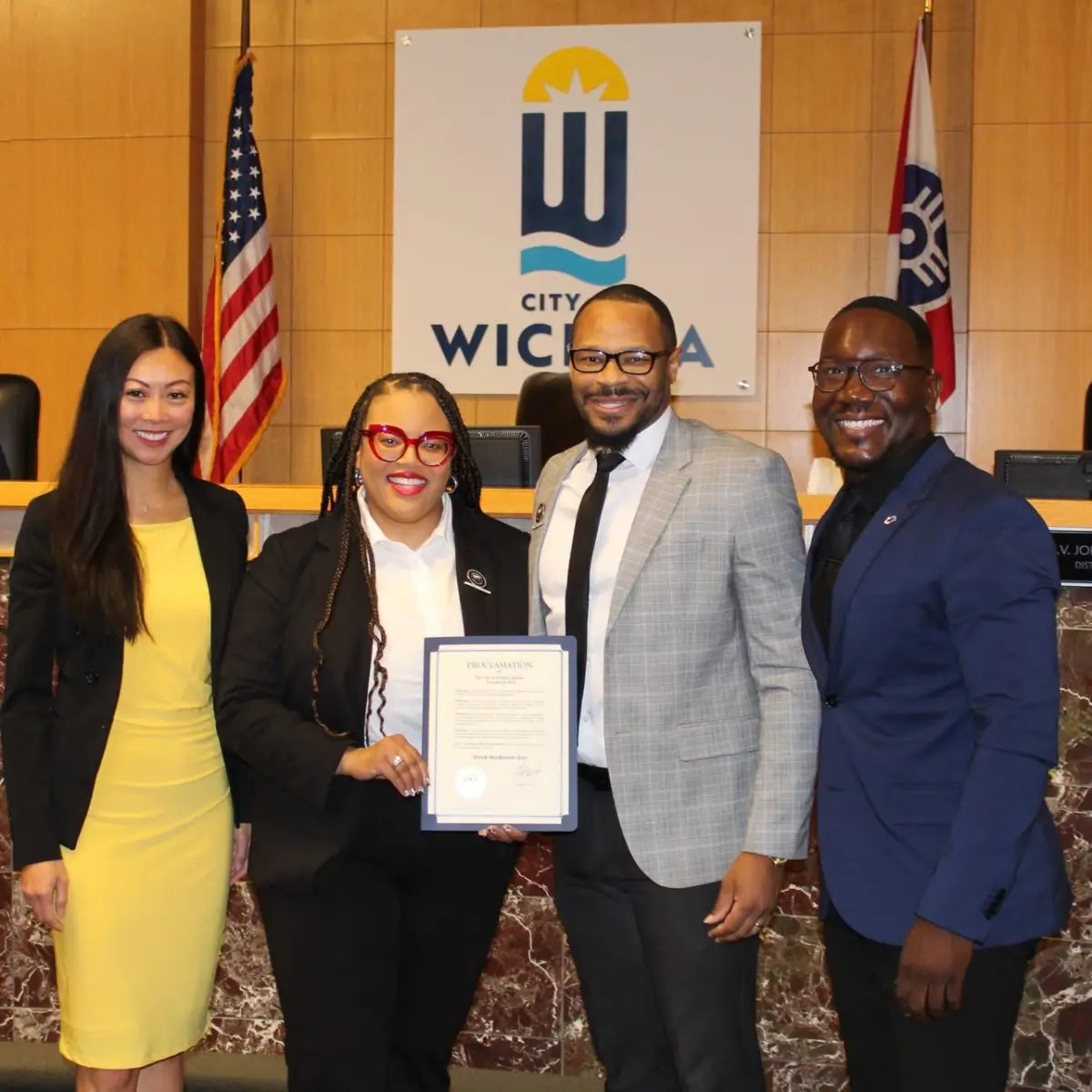
Despite these underlying tensions, Black Bookstore Day has rapidly secured official recognition from civic and state entities, including formal proclamations from the state of Kansas and the city of Topeka. From Washington, D.C., to Maryland, and out to the Midwest, independent stores are utilizing the final Saturday of August to host everything from grand openings and community panels to drag story hours and author activations. This comprehensive report examines the chronological genesis of the event, the structural controversies dividing the sector, the foundational context of Black business and resistance movements, and the future outlook for Black-owned literary spaces.
Read Also
Detailed Chronology: From Grassroots Vision to National Movement
The journey toward the first annual Black Bookstore Day is rooted in a search for community and industry integration by a first-time bookstore owner navigating a historically exclusionary trade.
November 2024: Opening Left on Read
Latasha Eley Kelly, alongside her spouse Corinthian Kelly, officially opened Left on Read Bookstore in Topeka, Kansas. As newcomers to the bookselling ecosystem, Kelly began seeking avenues to plug into regional and national networks of Black booksellers. Expecting to find a pre-existing national day dedicated to celebrating Black-owned bookstores, she quickly realized that no such standardized, widely embraced annual holiday existed in the exact format she envisioned.
August 2025: Conceptualization and Initial Announcements
Motivated by the absence of a dedicated celebration and inspired by the commercial success of Independent Bookstore Day, Kelly formally began laying the groundwork for Black Bookstore Day. She deliberately positioned the event for the final Saturday in August, aiming to capture the momentum of dual historical designations: Black Business Month and Black August. At this time, Kelly publicly announced her organizational efforts—a milestone that predated the establishment of several competing corporate entities within the space.
June to July 2025: The Launch of NABB
In a parallel timeline, the National Association of Black Bookstores was established on Juneteenth 2025 by founder Kevin Johnson. Shortly after its founding, NABB leadership identified the creation of an official celebration as a primary institutional goal. By July 2025, NABB had drafted resolutions for a "National Black Bookstore Day" and began submitting them to various municipal and state jurisdictions.
March 2026: Convergence and Divergence
NABB leadership reportedly first became aware of Kelly’s independent organizing efforts in March 2026. Representatives reached out to Kelly to propose a partnership to avoid "competing efforts." However, structural, historical, and interpersonal friction prevented a unified coalition from forming under the NABB umbrella. Kelly pressed forward with her independent model, emphasizing decentralized, autonomous local celebrations rather than a top-down corporate structure.
April 7, 2026: NABB’s Inaugural Date
The National Association of Black Bookstores hosted its inaugural National Black Bookstore Day on Tuesday, April 7, 2026. While NABB heralded the day as a major victory for Black literary infrastructure, a significant contingent of independent Black booksellers noticeably abstained from participating, citing deep misgivings regarding NABB’s leadership, operational transparency, and historical claims over pre-existing community labor.
August 29, 2026: The First Annual Black Bookstore Day
Marking the culmination of a year’s worth of planning, the independent Black Bookstore Day arrives on the final Saturday of August. The date serves as a dual marker of commercial celebration and historical resistance, highlighted by storefront expansions, grand openings, and collaborative local programming across multiple states.
Supporting Context & Metrics: The Economic and Cultural Engine
To fully understand the necessity of Black Bookstore Day, one must examine the unique socioeconomic role that Black-owned bookstores have historically played in American society. They are not merely retail fronts trading in paper and ink; they are community anchors, archives of diaspora memory, and spaces of political mobilization.
Economic Realities and the Power of Indie Models
Independent Bookstore Day, held annually on the last weekend of April, has evolved into a financial lifeline for indie booksellers. For many stores, the foot traffic and specialized merchandise sales generated during this single weekend outpace their traditional November and December holiday figures. By modeling Black Bookstore Day after this framework—while tailoring it to the specific needs and cultural rhythms of Black proprietors—organizers hope to channel sustained economic support directly into Black-owned businesses.
The timing—the last Saturday in August—is strategically chosen to intersect with two powerful cultural observances:
- Black Business Month: Celebrated throughout August, this month honors Black entrepreneurs, highlights systemic economic disparities, and encourages intentional spending within Black communities.
- Black August: Originating in California prisons in the 1970s to commemorate lives lost during Black liberation struggles (such as George and Jonathan Jackson), Black August honors political prisoners, radical history, and ongoing resistance to racial and systemic oppression.
As Kelly observed, the ethos of Black bookstores aligns seamlessly with the historical imperatives of Black August. These spaces have historically functioned as hubs where communities gather to strategize, educate, and resist discriminatory status quos.
The Myth of Firsts and Historical Continuity
A driving catalyst for Kelly’s dedication to institutional memory occurred shortly after opening Left on Read. Early patrons repeatedly assumed her shop was the absolute first Black-owned bookstore in the region, specifically in Wichita and Topeka, Kansas.
Refusing to allow historical erasure, Kelly utilized her platform to conduct historical research, unearthing at least two previous Black-owned bookstores that had operated in Wichita decades prior. By honoring these forebears during the Black Bookstore Day programming—including inviting former Black bookstore owners to speak at the event—Kelly underscores a foundational rule of the movement: giving credit where it is due, and acknowledging that contemporary success rests entirely on the shoulders of historical labor.
Official Statements and Institutional Perspectives
The ideological divide between grassroots organizers and centralized trade associations has brought conflicting visions of leadership to the forefront of the bookselling community.
The Grassroots Perspective and Coalition Support
Independent booksellers who have chosen to align with Kelly’s movement emphasize autonomy, mutual aid, and respect for independent labor. Hannah Oliver Depp, owner of Loyalty Books in Washington, D.C., and an active participant through the Black Bookstore Coalition (founded in 2020), expressed enthusiastic support for the late-August event.
"We are super excited and fully support and want to put our energy behind Black Bookstore Day this Saturday," Depp stated. "It is not the coalition’s creation, but we are here to help support this incredible bookseller, who has done so much labor this past year, out of her desire to educate people and to celebrate the work that Black bookstores have done."
Depp’s store planned a robust slate of activities for the day, including retail discounts, refreshments, a community journaling workstation, and a drag storytime hour.
Similarly, Ramunda Lark Young, co-owner of Mahogany Books in Oxon Hill, Maryland, found her store’s private milestones serendipitously intersecting with the national day. Mahogany Books utilized the date to officially open its second brick-and-mortar location in Glenarden, Maryland, featuring a ribbon-cutting ceremony, live DJ sets, and curated photo installations.
"I love that our grand opening happened to coincide with Black Bookstore Day," Young remarked. "I really wanted to open in August—Black August, Black Business Month. It’s also the birth and death month of my father, who was an entrepreneur."
The NABB Position
In response to criticisms, omissions of credit, and the bifurcation of the national calendar, Jill Gibson, CEO of the National Association of Black Bookstores, defended the organization’s foundational timeline and mission.
Gibson noted that NABB was formally established on Juneteenth 2025. Following its inception, leadership quickly identified the creation of a celebratory day as a primary objective, submitting draft resolutions to various municipal jurisdictions by July of that year. Addressing the timing of their interaction with Kelly, Gibson stated that NABB first learned of Kelly’s plans in March 2026 and immediately reached out to propose a collaborative partnership "rather than have competing efforts."
Regarding allegations that NABB has co-opted or claimed credit for the historic milestones of independent booksellers who operated long before NABB’s inception, Gibson asserted:
"Such claims are simply false and inconsistent with our mission, which is to support, strengthen and celebrate Black-owned bookstores."
Underlying Controversies
Despite corporate reassurances from NABB, the reluctance of prominent independent booksellers to engage with the association stems from documented historical concerns. Several booksellers who spoke on the condition of anonymity highlighted deep discomfort regarding NABB founder Kevin Johnson. These concerns involve past scrutiny over financial mismanagement during his political career—specifically documented financial malpractice investigations from his tenure as mayor of Sacramento—alongside unresolved community discomfort regarding serious allegations of sexual misconduct and abuse leveled against him more than a decade ago. For many independent proprietors whose ethical frameworks are rooted in community care and safety, these structural affiliations represent an incompatible ideological divide.
Future Outlook: Growth, Amplification, and Institutional Permanence
As the inaugural Black Bookstore Day unfolds across the United States, its architects are already looking toward the horizon. The immediate success of the event is evident not only in the scale of localized programming—ranging from Left on Read’s newly expanded footprint (doubling its original square footage) with prize wheels, signed copies of bestselling novels like James, and local vendor showcases, to grand openings across Maryland—but also in its institutional permanence.
Legislative and Civic Anchoring
The acquisition of official state and municipal proclamations in Kansas and Topeka establishes a vital legal and civic precedent. By securing formal recognition from government bodies, organizers are embedding Black Bookstore Day into the official civic calendar, making it difficult for future administrations or commercial entities to erase or co-opt the labor behind these spaces.
Scaling the Vision
Latasha Eley Kelly remains clear-eyed about the decentralized nature of the celebration. Emphasizing that there is no singular, rigid blueprint for participation, Kelly notes that success is defined by capacity:
"There’s no one way to celebrate. You don’t have to have some huge event. There are some stores that have the capacity only to promote other Black-owned bookstores, and I love that. There are other stores that are having huge events, fairs, festivals, and we love that as well."
The long-term aspiration for the movement is ambitious yet grounded in cultural reality. Just as Black Business Month and Black August have achieved universal cultural resonance and institutional recognition over decades of grassroots organizing, Kelly and her peers envision a future where Black Bookstore Day commands an identical level of mainstream awareness, institutional funding, and consumer loyalty.
Ultimately, Black Bookstore Day serves as a testament to the resilience, autonomy, and enduring necessity of Black literary spaces. By centering community investment, intentional spending, and historical reverence, booksellers across the nation are ensuring that the physical and cultural architecture of Black storytelling continues to thrive against all institutional odds.





Comments
Facebook App ID not configured. Please add it in the Customizer.