One hundred and eight years after the brutal midnight execution of Russia’s final imperial family in a damp Yekaterinburg cellar, the Romanov dynasty continues to exert a powerful, haunting grip on the global imagination. Much of this enduring fascination stems not from state portraits or grand historical chronicles, but from an astonishing archive of personal artifacts: thousands of intimate, casual photographs taken by the royals themselves.
Long before the era of digital cameras and ubiquitous smartphones, Czar Nicholas II, Empress Alexandra, and their five children—Olga, Tatiana, Maria, Anastasia, and Alexei—carried box-shaped Kodak Brownie cameras everywhere. They documented their playful moments, domestic habits, and quiet vacations with a zeal entirely unprecedented among European royal houses. Preserved across state archives, university libraries like Yale’s Beinecke Rare Book & Manuscript Library, and international museums, these private snapshots offer a jarringly normal counter-narrative to the rigid, autocratic majesty of the crumbling Russian Empire.
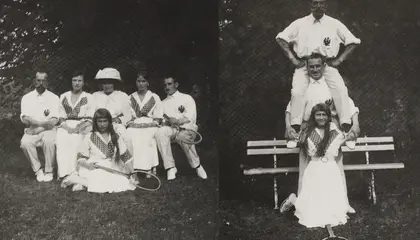
Far from the cold, unsmiling tyrants depicted by hostile contemporary press, the Romanov family photo albums reveal a tight-knit middle-class domesticity. They capture Grand Duchess Anastasia donning false teeth and stealing puffs from her father’s cigarettes, young Tsarevich Alexei shoveling snow, and the sisters laughing aboard the imperial yacht. Yet, these images also possess a profound tragic irony. They preserve the faces of youths whose lives were cut catastrophically short during the Bolshevik revolution, transforming ordinary family memories into haunting relics of a vanished world.
Detailed Chronology: From Absolute Power to the Yekaterinburg Cellar
1894–1904: The Ascension and the Heir
November 1894: Following the death of Alexander III, 26-year-old Nicholas II ascends the Russian throne. Privately confiding to a cousin, the young czar admits, "I am not prepared to be a czar. I never wanted to become one. I know nothing of the business of ruling."
1895–1901: Empress Alexandra gives birth to four daughters in rapid succession: Olga, Tatiana, Maria, and Anastasia. The repeated failure to produce a male heir sparks intense disappointment among the Russian public and the extended imperial family.
August 1904: The birth of Tsarevich Alexei, the long-awaited heir apparent. However, the joy is short-lived; the infant is soon diagnosed with hemophilia, an incurable genetic bleeding disorder passed down through Queen Victoria’s lineage.
1905–1914: The Gathering Storm and Domestic Retreat
January 1905: The "Bloody Sunday" massacre triggers the Russian Revolution of 1905. Nicholas responds by establishing the State Duma, taking the first hesitant steps toward a constitutional monarchy—a concession deeply resented by Alexandra.
1912: Alexei suffers a near-fatal hemorrhage during a family trip to Poland. The diagnosis is publicly disclosed, forcing the imperial family to retreat into a protective cocoon at the Alexander Palace in Tsarskoye Selo, further isolating themselves from ordinary Russian citizens.
1914: The outbreak of World War I plunges Russia into total conflict. Grand Duchesses Olga and Tatiana train as Red Cross nurses, while Nicholas eventually moves to military headquarters in Belarus to assume personal command of the army.
1917–1918: Abdication, Captivity, and Execution
March 1917: Amid severe wartime casualties, bread riots, and political collapse, Nicholas II abdicates the throne on behalf of himself and his ailing son, ending 300 years of Romanov rule. The family is placed under house arrest.
June 1917: Ravaged by a measles outbreak that forces them to shave their heads, the children pose for haunting photographs while planting a vegetable garden at Tsarskoye Selo.
August 1917: The provisional government transfers the family to Tobolsk, Siberia, for their safety.
April–May 1918: The Bolsheviks transfer the Romanovs to the Ipatiev House in Yekaterinburg—dubbed the "House of Special Purpose."
Night of July 16–17, 1918: Bolshevik executioners herd the imperial family and their four remaining attendants into a basement, murdering them in a chaotic, agonizing 20-minute execution.
Supporting Context & Metrics: The Romanovs in Numbers and Images
1/6th of the Earth: The vast expanse of landmass governed by Nicholas II, making him one of the wealthiest and most powerful absolute monarchs in human history.
300 Years: The duration of the Romanov dynasty’s rule over Russia, which collapsed instantly in the wake of the February Revolution.
Thousands of Snapshots: The estimated number of surviving amateur photographs taken by the Romanov children using lightweight Kodak Brownie cameras.
6 Photo Albums: The precious collection of albums smuggled out of revolutionary Russia by Anna Vyrubova, which now reside permanently at Yale University’s Beinecke Library.
20 Minutes: The horrifying duration of the execution in the Yekaterinburg basement, protracted because jewel-studded corsets worn by the grand duchesses initially deflected the bullets and bayonets.
Official Statements & Historical Perspectives
The stark contrast between the Romanovs’ public image and their private reality has driven decades of historical scholarship. Prominent historians and biographers emphasize how photography served both as a protective shield and an unintended indictment of the regime.
Renowned Romanov historian Helen Rappaport, author of The Romanov Sisters and The Last Days of the Romanovs, notes the psychological weight of the visual archive:
"There’s something so very haunting about seeing those four lovely girls whose lives were cut short and that handsome and engaging little boy… The Romanovs really used photography to publicize and promote an image of the family as this beautiful domestic unit. Yet their photo albums humanize a family that fiercely protected their privacy at the cost of intense criticism over their perceived insularity."
Reflecting on the psychological tragedy of the last czar, the late biographer Robert K. Massie observed in his seminal work Nicholas and Alexandra:
"It is one of the supreme ironies of history that the blessed birth of an only son should have proved the mortal blow to the Romanov dynasty… Imperial Russia was toppled by a tiny defect in the body of a little boy."
Curator Natalia Sidlina, reflecting on an exhibition featuring the imperial family’s personal media, remarked on the startling ordinariness of the archives:
"What amazed me was how alike those albums were to any other family albums we have. The Romanovs looked just like any middle-class family."
Future Outlook: Preservation and Historical Memory in the 21st Century
More than a century after the tragedy at Yekaterinburg, the fascination with the Romanov family shows no signs of waning. As physical archives degrade and the events recede deeper into the past, digital preservation initiatives are transforming how historians and the public access these historical artifacts.
Institutions such as Yale University, specialized digital repositories like Romanovs100, and various European museums are actively digitizing thousands of glass-plate negatives, hand-colored prints, and personal diaries. These modern preservation efforts ensure that fragile pieces of history—such as Anastasia’s experimental 1914 mirror selfies and the poignant final images of the family working in their Tobolsk greenhouse—remain accessible to global audiences.
Ultimately, these photographs bridge the chasm between cold political history and raw human tragedy. They remind the modern world that behind the grand titles of czars, grand duchesses, and tsareviches lay real children who loved pets, played practical jokes, and pasted memories into scrapbooks, completely unaware of the historical storm gathering on the horizon.

/https://tf-cmsv2-smithsonianmag-media.s3.amazonaws.com/filer_public/8d/ad/8dad55dd-6089-4211-a179-dc51f45ad2b5/anastasia-tennis.png)
/https://tf-cmsv2-smithsonianmag-media.s3.amazonaws.com/accounts/headshot/meilan_headshot2.png)
:focal(750x500:751x501)/https://tf-cmsv2-smithsonianmag-media.s3.amazonaws.com/filer_public/8d/ad/8dad55dd-6089-4211-a179-dc51f45ad2b5/anastasia-tennis.png)
/https://tf-cmsv2-smithsonianmag-media.s3.amazonaws.com/filer_public/7f/d1/7fd1ff35-08f9-4b88-a2a5-8093673a2cdf/anastasia_nikolaevna_of_russia_fooling_around_original.jpg)
/https://tf-cmsv2-smithsonianmag-media.s3.amazonaws.com/filer_public/23/18/23186e2a-54a3-495b-a7f5-2aa50bdb453c/inside_anastasia_smoking.jpg)
/https://tf-cmsv2-smithsonianmag-media.s3.amazonaws.com/filer_public/30/bf/30bf0f74-b6f2-4950-839e-c4ba627ad751/romanov_cycling_on_bikes_5_of_10.jpg)
/https://tf-cmsv2-smithsonianmag-media.s3.amazonaws.com/filer_public/80/10/8010618b-b792-4a82-accc-a18190e7632b/anastasia_nikolaevna_romanova_in_a_selfie_1915.png)
/https://tf-cmsv2-smithsonianmag-media.s3.amazonaws.com/filer_public/91/8d/918daa7d-bb79-4982-8eae-1a2f78580529/mirror-selfie.png)
/https://tf-cmsv2-smithsonianmag-media.s3.amazonaws.com/filer_public/07/dc/07dcdb3f-e14f-406f-bd57-6a9ffee17e1c/3840px-family_nicholas_ii_of_russia_ca_1914.jpg)
/https://tf-cmsv2-smithsonianmag-media.s3.amazonaws.com/filer_public/35/0c/350c569a-b87e-4b0e-8f74-cdf74eabac7d/royal_family_group.jpg)
/https://tf-cmsv2-smithsonianmag-media.s3.amazonaws.com/filer_public/bb/c5/bbc55b38-df69-4bb9-af94-2e148612ebab/screenshot_2026-07-15_at_123625pm.png)
/https://tf-cmsv2-smithsonianmag-media.s3.amazonaws.com/filer_public/e9/8c/e98c51fb-f4e3-428d-9519-15783945c5a1/nicholas_ii_and_alexei_in_reval_1908.jpg)




Comments
Facebook App ID not configured. Please add it in the Customizer.