In the contemporary literary landscape, few achievements carry the quiet, resonant validation of being selected as a featured publication in prominent literary journals. On October 19, 2026, The Missouri Review spotlighted acclaimed writer W. M. Lobko by naming his evocative piece, "I Was Braver Than I Thought," as its official Poem of the Week.
Lobko, a writer whose work has consistently populated the pages of prestigious literary institutions like the Iowa Review, Kenyon Review, Washington Square, Boston Review, and Guernica, brings a profound sense of architectural precision and emotional excavation to this latest piece. "I Was Braver Than I Thought" navigates the treacherous, delicate terrain of childhood perception, familial fracture, and the makeshift mythologies children construct to survive domestic environments charged with unseen and seen anxieties.
This article explores the anatomy of Lobko’s winning poem, examining its complex web of imagery—from ozone-scented plastic spaceships to the haunting echo of grief. Through a rigorous examination of the text, authorial intent, and Lobko’s broader literary footprint, we unpack why this particular work has captured the critical imagination of editors and readers alike.
Detailed Chronology: The Evolution and Recognition of W. M. Lobko
To understand the weight of Lobko’s latest accolade, it is necessary to trace the trajectory of a career defined by meticulous craft and quiet persistence.
Early Formative Years and Education: Lobko’s development as a writer began during his time studying at the University of Oregon, an institution renowned for fostering deep engagements with language, narrative structures, and poetic traditions. It was here that he honed an ear for cadence and domestic realism.
National Recognition and Pushcart Acclaim: Over the years, Lobko’s poems, critical reviews, and interviews began finding homes in top-tier literary magazines. His distinctive voice earned him a nomination for the coveted Pushcart Prize, alongside recognition as a semi-finalist for the prestigious 92Y/Boston Review Discovery Prize.
The Present Era (October 2026): Based north of New York City, Lobko continues to teach and produce work. The culmination of this ongoing artistic journey arrives with the October 19, 2026 rollout by The Missouri Review, cementing "I Was Braver Than I Thought" as a defining piece of contemporary American poetry.
Supporting Context & Metrics: The World Within "I Was Braver Than I Thought"
To fully appreciate the poem, one must examine its mechanics line by line. The text opens in a posture of physical containment and psychological alertness:
Cave of the crook of my arm. Slick heat of my breath on the desk Lysol would lift away. Only lately having learned the ghosts that would wake me at 2 a.m. could be facts, germs in the chrome of the toy green motorcycle I dropped in the toilet, say, or the high twist in my mother’s voice when she learned her mother was dead. It was like the high E-flat of a bough breaking, song I was then decades from singing.
Here, Lobko establishes an immediate intimacy. The body becomes a shelter ("Cave of the crook of my arm"), while domestic cleanliness ("Lysol") struggles to sanitize deeper, unseen anxieties. The transition from abstract nocturnal terrors to concrete "facts"—microscopic germs on a toy motorcycle or the devastating vocal rupture of a mother learning of her own mother’s passing—demonstrates Lobko’s talent for anchoring colossal emotional states in everyday objects.
As the poem progresses, the speaker reflects on the coping mechanisms of youth:
I was architect of an ice planet. I was a skull hearing itself with every graham cracker’s ashen reverberation. Sounds such as the walls could keep back, at least that’s what I imagined, model spaceships in grey plastic richly smelling of ozone under the armature light I aimed so relentlessly, faithful nothing would melt or erupt.
The juxtaposition of the cold, solitary "ice planet" with the multisensory memory of "grey plastic" and "ozone" under a desk lamp captures the intense focus of a child attempting to control his universe. The miniature spaceships serve as both toys and talismans, shielding the speaker from external volatility.
That volatility, however, pierces the thin veil of childhood imagination. Lobko delivers one of the poem’s most striking domestic vignettes:
The one fight we caught my mother & father having so heinous the sitcom characters stopped to watch, axe through the bucket klieg lights, axe through the snowbound door, axe through the umbilical.
The hyperbole of sitcom characters pausing their scripted lives to witness a real parental dispute highlights the terrifying disruption of domestic reality. The recurring imagery of the "axe" strips away safety, severing the "umbilical" connection to security. Yet, rather than ending in total despair, the poem pivots back to the resilience found in distance and imagination:
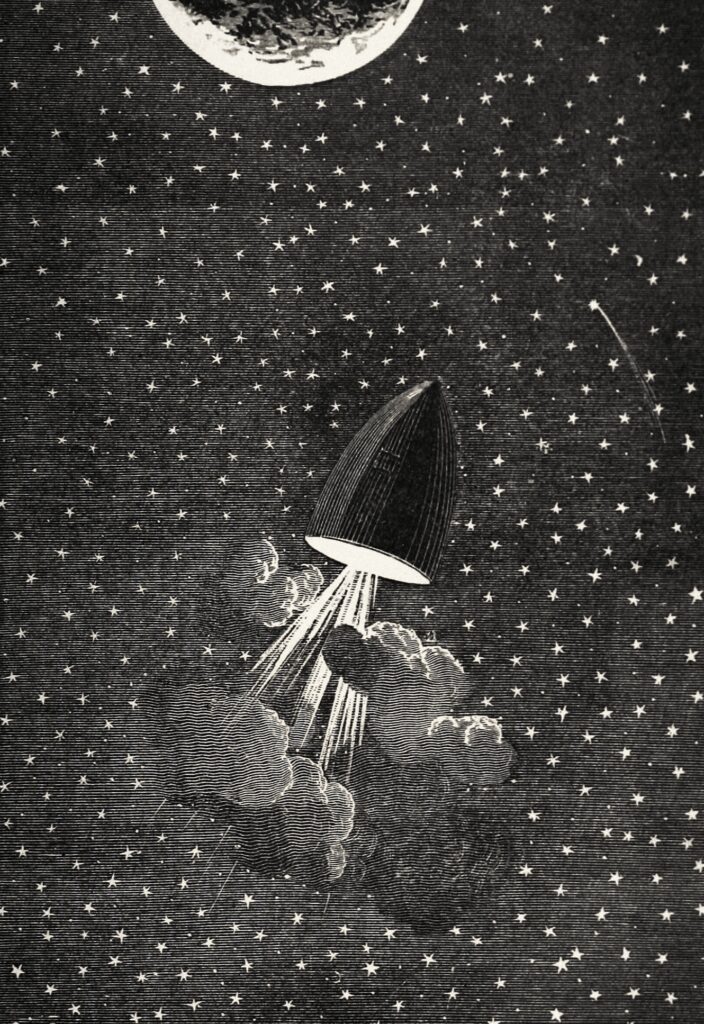
Still, I loved space, how inaccessible it was, its famous silence, how the ships crisscrossing it started out pristine then of a sudden were blast-scored, emphysemic buckets of bolts prayer could hold together.
Official Statements and Authorial Insights
In his accompanying Author’s Note, W. M. Lobko offered a profound reflection on how his relationship with the poem shifted over time, moving away from strict autobiography toward a broader meditation on human survival:
"At first, I thought this poem was about my family, my parents, me—but I’ve come to see it more as a devotional of sorts to the stories & myths that help us make meaning, whatever they might happen to be."
This perspective reframes "I Was Braver Than I Thought." The plastic spaceships, the ice planets, and the tactical focus under the armature light are not merely nostalgic artifacts of a childhood in the American suburbs; they are universal testaments to the human impulse to construct narratives that preserve sanity and foster resilience in the face of chaos.
Editors at The Missouri Review and contemporary critics have frequently praised Lobko for this exact capability: his poems do not merely recount memories; they interrogate the architecture of how memories are built, sustained, and eventually transformed into adult art.
Future Outlook: The Legacy of Lobko’s Poetics
As "I Was Braver Than I Thought" circulates among readers and literary scholars following its October 2026 feature, the conversation surrounding W. M. Lobko’s broader literary footprint continues to expand. Teaching north of New York City, Lobko remains an active voice in modern poetry circles, influencing emerging writers while continuing to push his own aesthetic boundaries.
The recognition by The Missouri Review signals that Lobko’s work is entering a new phase of critical appreciation—one that bridges the gap between deeply personal domestic history and the vast, silent expanses of collective human myth-making. For readers looking to dive deeper into his catalogue, exploring his past contributions to journals like the Kenyon Review and Boston Review reveals a consistent, masterclass dedication to the nuances of voice, image, and emotional truth.
In an era saturated with fast-paced, ephemeral digital media, W. M. Lobko’s poetry invites us to slow down, turn on the armature light of our own introspection, and examine the "buckets of bolts" we use prayer, memory, and art to hold together.







Comments
Facebook App ID not configured. Please add it in the Customizer.