
Executive Overview
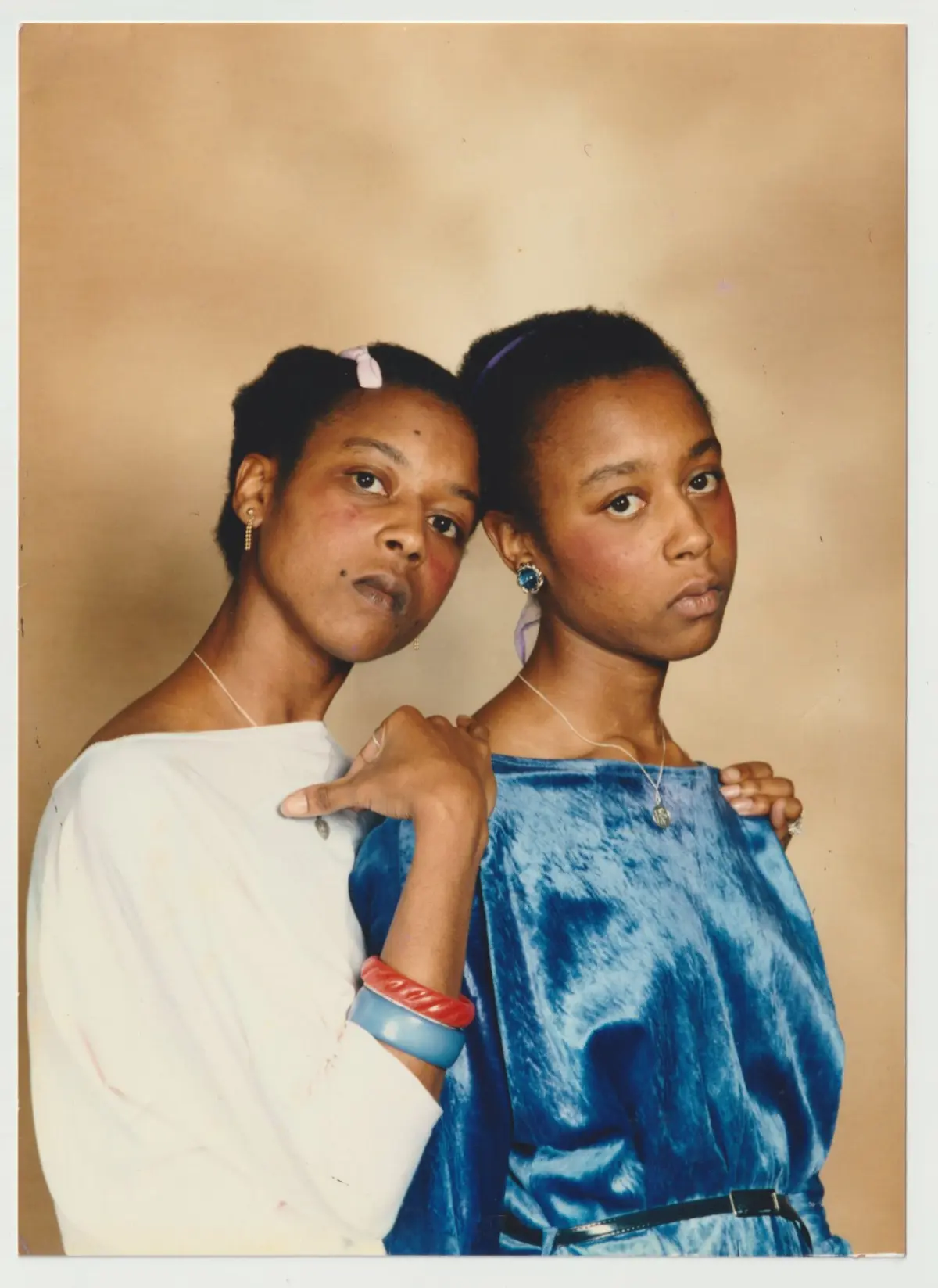
The republication of 1981’s The Pepsi-Cola Addict—originally printed by a vanity press when its author, June-Alison Gibbons, was just sixteen years old—alongside the posthumous release of her twin sister Jennifer’s 1980 novel, Discomania, marks a monumental reckoning in contemporary literature. Long sensationalized by true-crime algorithms, tabloid journalism, and sociological speculation as the infamous "Silent Twins," June-Alison and Jennifer Gibbons are finally being read on their own terms.
For decades, the cultural narrative surrounding the identical twins was overwhelmingly hijacked by their institutionalization at Broadmoor, Britain’s most notorious maximum-security psychiatric hospital, and their refusal to speak to anyone outside their dyad. Yet, beneath the sensationalist veneer of arson, mutism, and mutual psychological martyrdom lies a vast, fiercely imaginative literary archive. This body of work reveals two prolific writers who consumed American pop-culture ephemera through the lens of profound isolation and refracted it into wild, kitschy, and tragic works of outsider literature.
This investigative review examines the mechanics of their newly unearthed prose, the tragic architecture of their shared life, the institutional failures that swallowed their youth, and June-Alison’s ongoing literary resurrection in her sixties.
Read Also
Detailed Chronology: From the British Empire to the Halls of Broadmoor
1. Imperial Disillusionment and Early Silence (1963–1979)
Born in 1963, ten minutes apart, at a British military hospital in Yemen, June-Alison and Jennifer were the daughters of Gloria and Aubrey Gibbons. Aubrey, a technician in the Royal Air Force, had emigrated from Barbados to the United Kingdom chasing the prosperity promised by the British Empire. Instead, the family—including elder siblings Greta and David, and later a younger sister, Rosie—was shuttled through small, unwelcoming British military bases ill-equipped for, and hostile toward, Black families.
In early childhood, the twins were typical, cheerful infants. However, as toddlers, conventional speech eluded them. When they did communicate, it was in rapid, staccato flutters unintelligible to outsiders. As documented in Marjorie Wallace’s definitive 1986 study The Silent Twins, institutional attempts to integrate them into normative speech patterns—involving grunts, tape recorders, and even invasive mouth surgeries—failed completely.
By age eight, the twins forged a permanent pact: "If you can’t hear us now, you can hear us never." They retreated into an exclusive, synchronized physical and psychological existence, walking home in uniform goose-steps and eating soup in agonizingly slow, parallel coordination. At school, subjected to racial slurs, physical harassment, and administrative apathy that pathologized their silence as "zombie-like" vacancy, the twins internalized a profound alienation. By sixteen, both dropped out, retreating into a bedroom-bound universe of radio plays, elaborate doll societies, and vast, imagined landscapes modeled on suburban America.
2. The Literary Explosion and Vanishing Acts (1980–1981)
To realize their writerly ambitions, the twins maintained a voracious reading regimen, devouring Jane Austen, Emily Brontë, and D. H. Lawrence, while compiling lists of complex vocabulary. In January 1980, June-Alison wrote The Pepsi-Cola Addict. Shortly after, Jennifer produced her own short stories, The Pugilist (1980), and her second novel, Discomania, which was rejected by New Horizon press for being "too violent, too sexual and too futuristic."
Frustrated by traditional publishing channels, the sisters pooled their welfare checks to pay New Horizon to print The Pepsi-Cola Addict. Jennifer photographed her sister for the dust jacket, featuring June in various wigs and pouting expressions.
Seeking actual physical experience to match their fictional obsessions, the twins began roaming the Royal Air Force estate in Haverfordwest in 1981. They ultimately fell in with a trio of rebellious local youths dubbed "the Kennedys." Their diaries from this period chronicle the intoxicating, destabilizing reality of opening their insular world to outsiders, capturing a brief, feral summer of glue-sniffing, sexual experimentation, and chaotic rebellion.
3. Arson, Trial, and the Broadmoor Decade (1981–1993)
Emboldened by their exploits, the twins escalated their lawbreaking. Throughout the latter half of 1981, they stole bicycles, scuffled with peers, and engaged in petty vandalism, culminating in the arson of a tractor dealership. Taunting local police with anonymous phone calls, they were finally apprehended after throwing a brick through a technical college window.
Their recovered diaries—rife with confessions of crime and vibrant literary prose—were weaponized by the prosecution at their trial. Counsel advised a plea of guilty to secure hospital treatment over penal incarceration. Diagnosed hastily with schizophrenia and subjected to antipsychotic medication regimens that temporarily eroded their creative output, the twins were committed indefinitely to Broadmoor Hospital under Section 37 of the Mental Health Act.
They spent eleven years incarcerated among violent offenders and high-profile criminals. Despite the bleak conditions, their legendary output persisted through extensive correspondence, journaling, and the publication of Marjorie Wallace’s bestselling 1986 book, which brought international attention to their plight.
4. Liberation, Tragedy, and Rebirth (1993–Present)
On March 11, 1993, the twins were finally transferred from Broadmoor to the medium-security Caswell Clinic in Wales. Hours into the journey, Jennifer—who had complained of feeling physically exhausted and spoke cryptically of her impending death—became unresponsive. Rushed to Princess of Wales Hospital in Bridgend, she was pronounced dead at age 29 from acute myocarditis, a sudden, lethal inflammation of the heart muscle, with no toxicological explanation found.
Following Jennifer’s death, June-Alison experienced a profound spiritual and emotional transition. Reclaiming her voice and re-entering society, she initially expressed reluctance to write in a world where she could finally speak. However, following the recent republication of The Pepsi-Cola Addict and the recovery of Discomania by rare-book collector David Tibet and artist Ania Goszczyńska, June-Alison has resumed writing daily from her home in Pembrokeshire, crafting new short fiction and novels.
Supporting Context & Metrics
To contextualize the scale and historical weight of the Gibbons archive, consider the following structural metrics:
- Duration of Institutionalization: 11 years (1982–1993) at Broadmoor Hospital, preceded by nearly a year of remand at Pucklechurch.
- Literary Output:
- The Pepsi-Cola Addict (June-Alison, published 1981; reissued 2020s).
- The Pugilist (Jennifer, 1980).
- Discomania (Jennifer, written 1980; posthumously recovered and prepared for publication).
- Dozens of unpublished short stories, poetry collections, extensive diaries, and multi-volume correspondence archives.
- Archival Repository: Maintained privately by David Tibet and Ania Goszczyńska in Hastings, serving as the nucleus for ongoing scholarly rehabilitation and textual conservation.
Official Statements and Archival Insights
The rehabilitation of the Gibbons sisters’ literary legacy has been spearheaded through meticulous archival stewardship. David Tibet, reflecting on his initial 2018 encounter with June-Alison while sourcing an original copy of The Pepsi-Cola Addict, noted the profound humanity underscoring texts long dismissed as psychiatric artifacts:
"The popular imagination wanted to categorize them as silent anomalies, biological anomalies, or gothic spectacles. But when you look at the raw manuscripts, the marginalia, the sheer linguistic joy of discovery on every page, you are looking at two extraordinarily gifted literary minds metabolizing the cultural landscape of the late twentieth century."
In correspondence with literary critics via Tibet, June-Alison herself has reflected on the intentionality behind their early aesthetic choices, emphasizing a desire to bypass respectable middle-brow norms to write directly for an unfiltered teenage audience:
"When we first set out to write, we wanted a teenage audience more than anything… We did the exact opposite of what was respectable because we wanted to be true to ourselves and set our own terms."
Marjorie Wallace, whose 1986 book The Silent Twins brought global scrutiny to the case, underscored the mesmerizing cadence of their journals, noting in her introduction:
"Every sentence was written in such a compelling way that it was impossible not to finish reading an entry once it was started. I was sucked into the minutiae of the twins’ daily routine, and absorbed by their thoughts, dreams, reflections, and often startling imagery."
Future Outlook: Restoring Outsider Literature
The recent literary recovery efforts led by Tibet, Goszczyńska, and independent publishers mark a decisive shift in how outsider literature is curated and evaluated. Rather than viewing the Gibbons sisters through the clinical lens of psychopathology or the exploitative prism of true-crime voyeurism, contemporary critics are evaluating their texts alongside modernist traditions of high camp, nihilistic pastiche, and adolescent experimentation—drawing legitimate lineage lines from Jean Cocteau’s Les Enfants Terribles to the breathless, hyper-saturated prose of American pulp cinema.
With June-Alison currently writing new fiction in Pembrokeshire—including a forthcoming novel set in Sacramento—and publishers actively unearthing Jennifer’s lost manuscripts like Discomania, the literary world is witnessing a long-overdue paradigm shift. The "Silent Twins" are no longer spoken for, nor spoken over; their texts, written with the raw, vibrating energy of language freshly discovered, finally stand as independent monuments of late twentieth-century literature.





Comments
Facebook App ID not configured. Please add it in the Customizer.