
Executive Overview
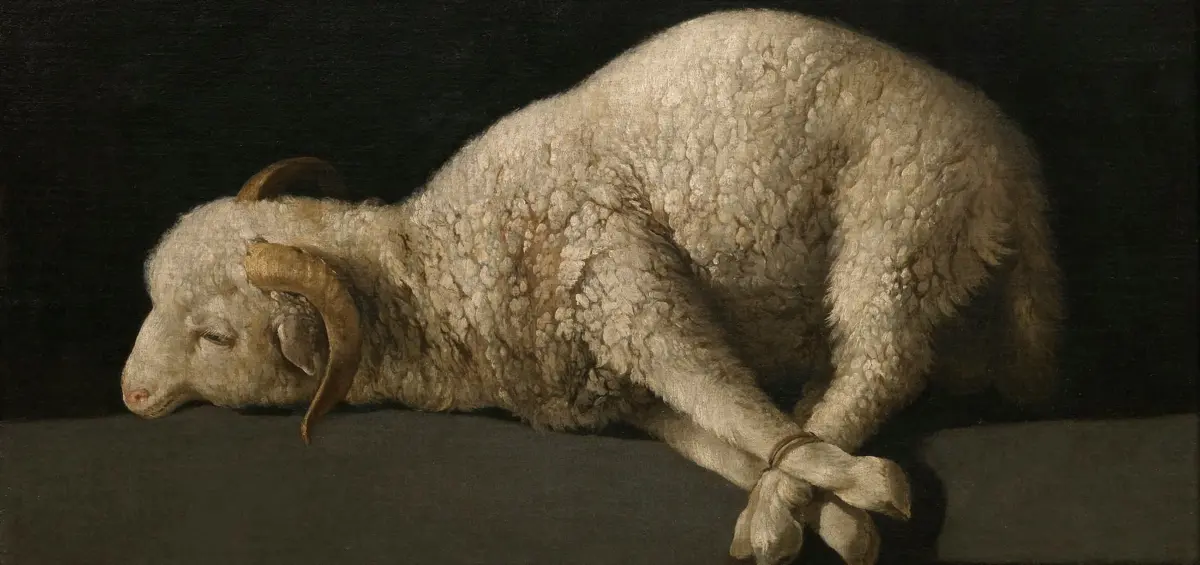
Throughout a single summer, weekly pilgrimages to London’s National Gallery became an unintended routine for one art enthusiast, entirely catalyzed by a singular exhibition dedicated to the Spanish Baroque painter Francisco de Zurbarán (1598–1664). Long after standard visits would have concluded, the exhibition—which shuttered at the close of August—exercised a magnetic, lingering pull.
Zurbarán stands tall as arguably the preeminent religious painter of the seventeenth century. His life’s work was intensely occupied by spiritual warfare, divine dramas, and the interior theater of the soul, which he viewed as vastly superior to any occurrences in the physical world. Yet, this preoccupation with the sacred did not render him a stranger to earthly existence; he fathered at least nine children and possessed a profound appreciation for color and light. However, his life and art never succumbed to immoderate self-indulgence.
This retrospective offers an opportunity to re-examine an artist whose technical flaws are often striking, yet whose visual theology remains utterly compelling. While his contemporaries and successors can be easily appropriated for secular or philosophical ends—as Friedrich Nietzsche famously did with Raphael’s Transfiguration—Zurbarán’s canvases resist secular reframing. His devotional images are direct expressions of uncompromised, sincere faith. This comprehensive examination explores his masterpieces, structural anomalies, personal tragedies, and the enduring power of an oeuvre that translates prayer directly onto the canvas.
Read Also
Detailed Chronology and Artistic Evolution
The Early Mastery of Light and Texture
Born in Extremadura, Spain, in 1598, Zurbarán grew up in a prosperous household and enjoyed early professional success. His initial training set the stage for a career defined by monumental religious commissions for monastic orders across Spain, particularly the Carthusians, Hieronymites, and Mercedarians.
Zurbarán’s early artistic voice was characterized by a tenebrist style heavily influenced by Caravaggio, though distinguished by a uniquely Spanish solemnity. He developed an unmatched genius for painting textiles. Whether rendering the rough, dirty grey sackcloth of a monastic habit or the heavy embroidery and rich damask silk of ecclesiastical vestments, Zurbarán manipulated light to give fabrics a tactile, almost sculptural presence.
Mid-Career Triumphs and Personal Sorrows
By the mid-1630s, Zurbarán was producing some of his most ambitious compositions, such as The Interment of Saint Bonaventure (now in the Louvre). However, this period also inaugurated a cascade of personal tragedies and professional trials. His first two wives passed away prematurely in 1623 and 1639, respectively. Later, his beloved son Juan—a talented still-life painter in his own right—succumbed to the devastating plague of 1649.
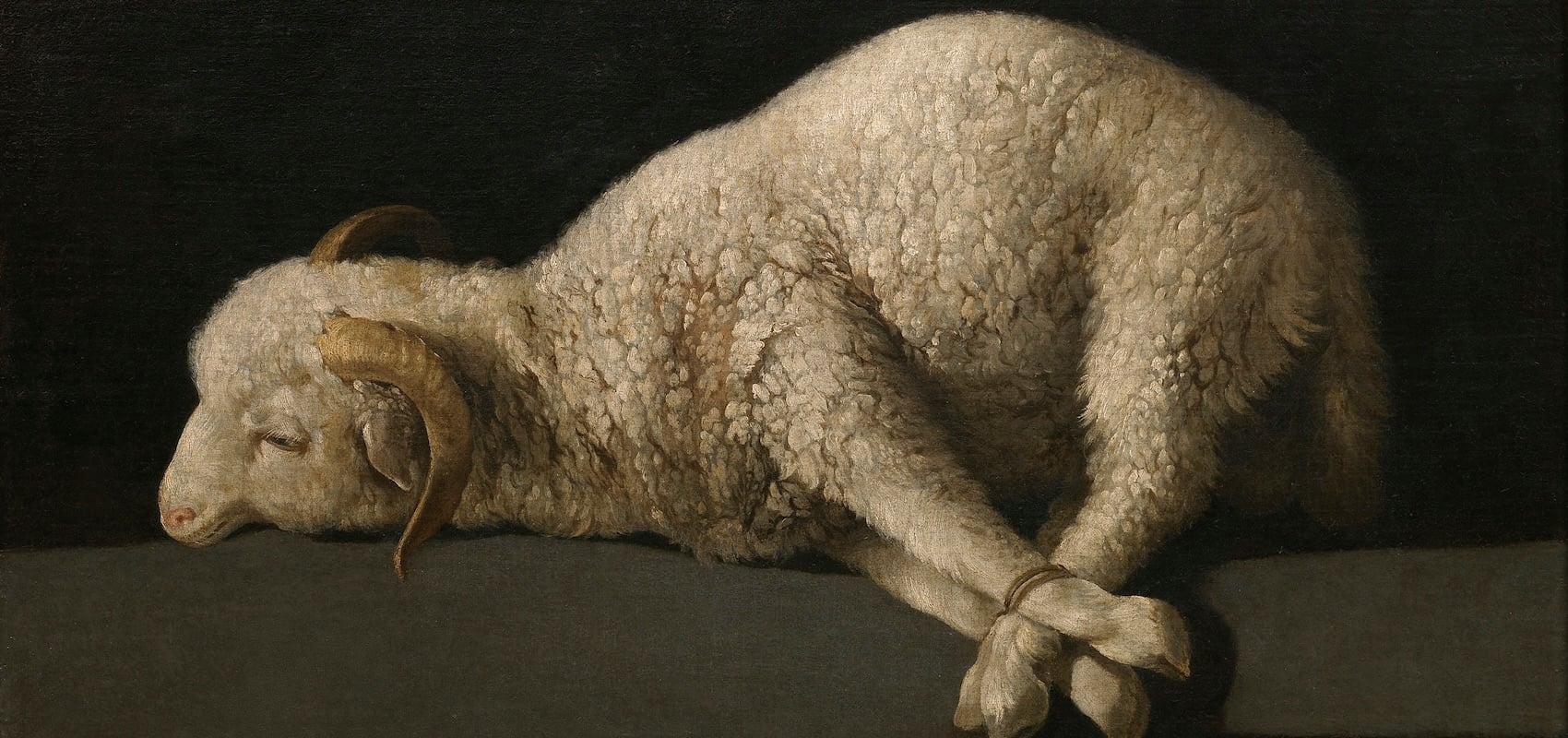
As tastes shifted toward the more dynamic, high-Baroque stylings of artists like Bartolomé Esteban Murillo, Zurbarán faced mounting professional setbacks, financial distress, and obscurity. Yet, these trials seemed to deepen the spiritual gravity of his late work. A small, intimate picture believed to be a self-portrait, painted around 1650 after he had seemingly lost everything, captures a man whose gaze looks beyond earthly deprivation toward an unseen reality. He died in Madrid in 1664, leaving behind a legacy of singular, uncompromising devotional art.
Supporting Context & Metrics: The Paradox of Technique and Transcendence
Anatomical Flaws and Structural Quirks
Evaluating Zurbarán strictly through the lens of academic classicism reveals stark technical limitations. Connoisseurs frequently note his difficulties with human anatomy:
- Foreshortening: Zurbarán consistently struggled to accurately render a foreshortened forearm or construct a convincing torso beneath stiff monastic habits.
- Proportion and Architecture: His sense of architecture was often amateurish, and compositions could occasionally tip into awkwardness. Recurring motifs, such as the heads of cherubs stacked uniformly like cannonballs, can appear jarring to the modern eye.
- Missing Limbs: In magnificent kneeling portraits—such as the National Gallery’s Saint Francis in Meditation—shins and feet are frequently omitted or obscured.
- Lighting Inconsistencies: Despite his mastery over the textural effects of light, Zurbarán frequently failed to determine a logical, consistent source of illumination or cast accurate shadows.
Despite these cataloged imperfections, viewers rarely notice or mind these defects while standing before his canvases. The emotional and spiritual weight of the imagery entirely eclipses academic faults.
Case Studies in Masterpieces
1. Saint Francis of Assisi in His Crypt
Described vividly by the 19th-century art critic J.-K. Huysmans in The Cathedral, Zurbarán’s depictions of Pope Nicholas V’s 1449 vision of St. Francis standing upright in his uncorrupted tomb radiate an uncanny realism. Painted at least three times—most notably in Lyon, with lesser iterations in Boston and Barcelona—these works evoke the visceral terror and awe of a genuine supernatural apparition. Though Huysmans interpreted the piece through the lens of extreme mortification and the mysticism of Saint John of the Cross, the paintings ultimately stand as monuments of breathless, silent adoration.
2. Saint Serapion (1628)
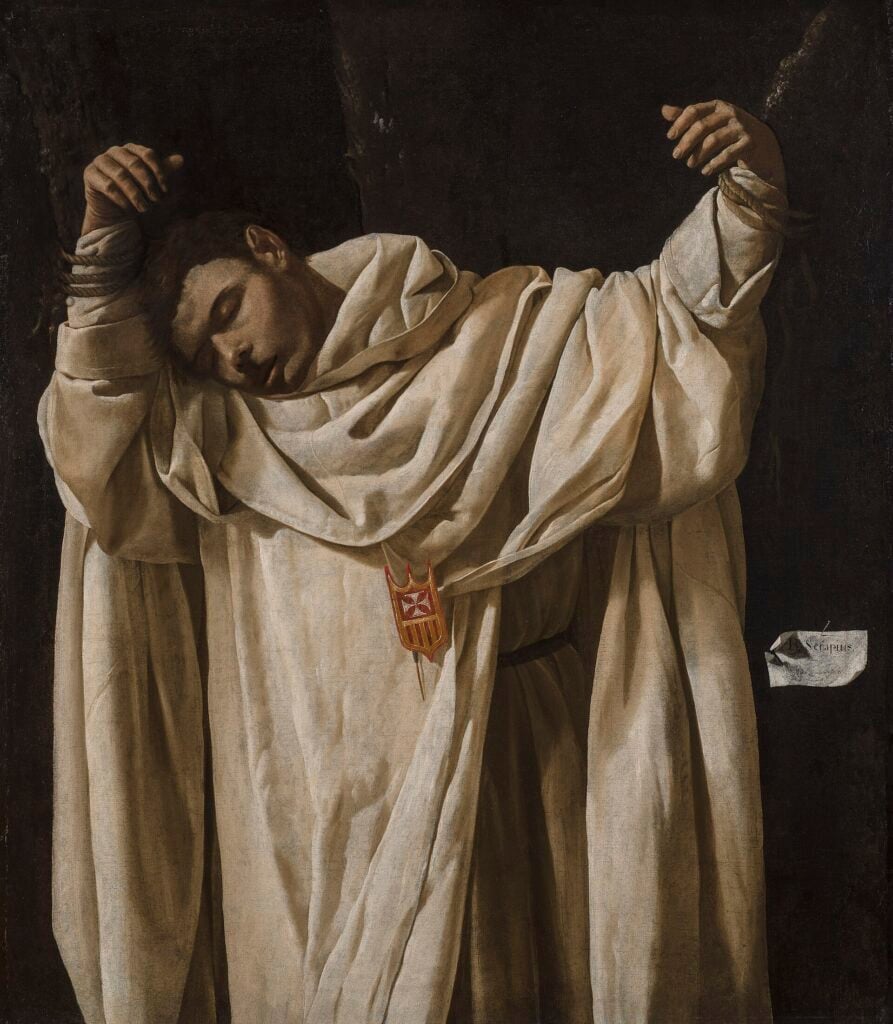
Housed in the Wadsworth Atheneum, this shocking canvas depicts a Mercedarian friar martyred in 1240 while negotiating the release of Christian slaves. Zurbarán portrays Serapion unconscious, his face swollen from beatings, suspended upright by ropes and chains wrapped around his wrists. The canvas encapsulates the paradoxical power of Zurbarán’s best work: an anatomical impossibility executed with such stark, graphic honesty that it forces the viewer into immediate, empathetic confrontation with sacrifice.
3. Christ and the Virgin in the House at Nazareth (1630s)
Found primarily in the Cleveland Museum of Art, this self-invented subject depicts an eleven-year-old Jesus who has pricked his finger on a crown of thorns woven in his lap. The Virgin Mary looks across the table, heavy with sorrow and prophetic grief. Stripped of grandiose theatricality, the scene achieves universal emotional resonance through sheer simplicity of color and composition.
Official Perspectives and Critical Re-evaluation
Art historians and literary critics across centuries have wrestled with Zurbarán’s unique position in art history. Unlike Raphael, whose classical harmony invited secular appropriation by philosophers like Friedrich Nietzsche, Zurbarán’s visual language resists secularization.
In The Birth of Tragedy, Nietzsche co-opted Raphael’s Transfiguration to illustrate Apollonian cultural ordering. Yet, as cultural critics note, no critic—not even Nietzsche—could successfully recast Zurbarán’s canvases as anything other than unfeigned expressions of deep Christian devotion.
Nineteenth-century critic J.-K. Huysmans, writing after his reversion to Catholicism, viewed Zurbarán through a decadent, highly charged spiritual lens, calling his art "the art of the torture chamber, the delirium tremens of divine intoxication here on earth." While Huysmans occasionally misread the specific hagiographical contexts of the paintings, his visceral reaction underscores the psychological intensity that defines Zurbarán’s portfolio.
Modern museum curators emphasize that Zurbarán’s output must be understood within the framework of Counter-Reformation monastic piety. His patrons were friars and monks who sought not decorative luxury, but visual aids for profound, silent contemplation.
Future Outlook: The Enduring Relevance of Devotional Realism
As the contemporary art world increasingly values conceptual novelty, immersive experiences, and digital interactivity, the quiet, uncompromising gravity of Francisco de Zurbarán offers a necessary counterweight. Exhibitions like the recent showcase at the National Gallery in London demonstrate that modern audiences remain intensely hungry for authenticity.
Zurbarán’s legacy challenges the modern obsession with technical perfection. His canvases prove that true artistic power does not reside in faultless perspective or academic precision, but in the artist’s capacity to make visible the unseen dimensions of human existence. For Zurbarán, painting was never merely an intellectual exercise or an aid to meditation; it was, in the truest sense of the word, an act of prayer rendered in pigment, light, and shadow. As long as viewers seek art that pierces the surface of the physical world to touch the eternal, Zurbarán will remain a towering, irreplaceable master of the human soul.



Comments
Facebook App ID not configured. Please add it in the Customizer.