
Executive Overview
The cultural archetype of the "return home" is as old as narrative itself. From the nostalgic yearning found in classic Americana anthems like John Denver’s "Take Me Home, Country Roads" to the comforting, predictable tropes of Hallmark holiday movies—where a fast-paced urban professional must return to a picturesque small town to save a family inn and reconnect with a long-lost flame—society has long romanticized the journey back to our origins.
Yet, for those who have broken away from their hometowns, the reality of returning is rarely so sweet. For anyone who has ever packed up their belongings to escape a suffocating past, the idea of crossing back over the municipal line can feel less like a nostalgic homecoming and more like stepping onto a battlefield.
Nowhere is this complex, visceral dread explored more effectively than in modern horror and suspense fiction. For authors and readers alike, the concept of being forced to sojourn in the landscape of one’s youth—even temporarily—harbors an inherently terrifying premise. This literary subgenre trades on the truth that our pasts are physical places, haunted by the ghosts of who we used to be, the toxic relationships we fled, and the dark secrets we thought we left buried.
Read Also
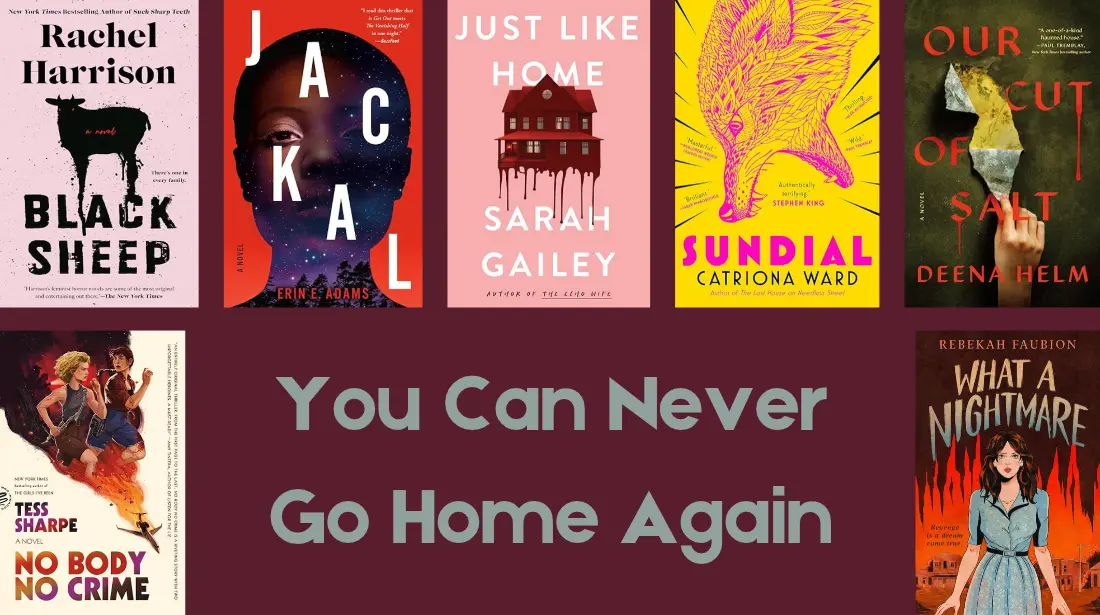
This comprehensive review explores seven chilling novels that subvert the comforting myth of the homecoming. Featuring creepy cults, generational trauma, haunted houses, and cold cases, these stories prove that when it comes to confronting your roots, home is truly where the horror is.
Detailed Chronology: The Anatomy of the Literary Homecoming
To understand why the theme of returning home resonates so deeply within contemporary horror, one must examine how authors structure the descent. The narrative arc typically follows a strict, agonizing chronology:
- The Exile: The protagonist establishes a safe distance between themselves and their origins, carving out a new identity independent of their family or hometown.
- The Summons: An unavoidable catalyst—a wedding, a dying relative, a missing loved one, or an inheritance—forces the protagonist to break their self-imposed exile.
- The Threshold: The physical act of returning. As the familiar landmarks roll by, the protagonist experiences an immediate regression, feeling the armor of their adulthood strip away.
- The Unearthing: Old dynamics resurface immediately. Toxic family members, unaddressed trauma, and suppressed community secrets begin to claw their way to the surface.
- The Reckoning: The climax forces the protagonist to either conquer the literal and metaphorical monsters of their past or be consumed by them forever.
This cyclical journey forms the backbone of some of the most compelling recent additions to the horror genre.
Supporting Context & Metrics: Seven Novels That Redefine the Return
Whether you are looking for atmospheric chills, blood-soaked catharsis, or intricate psychological mysteries, the following curated reading list offers a masterclass in domestic dread.
1. Black Sheep by Rachel Harrison
Anyone who has ever navigated a weird, deeply complicated family dynamic will find an uncomfortable mirror in Vesper, the protagonist of Rachel Harrison’s sharp and eerie novel. Vesper successfully cut ties with her mother and her suffocating religious family—a clean break, save for one crucial casualty: her best friend, who remained trapped within the cult’s clutches.
When that same best friend announces her wedding, the ceremony is scheduled right in the belly of the beast: Vesper’s childhood home. Forced to return for the nuptials, Vesper must reunite with her toxic, controlling mother and confront a trauma-filled past she has spent years trying to outrun. Packed with fabulous twists and delivered with Harrison’s signature wit and dark charm, Black Sheep tackles the horrors of familial obligation with pitch-black humor.
2. No Body No Crime by Tess Sharpe
For readers seeking a gritty, survivalist edge to their hometown dread, Tess Sharpe delivers a masterclass in No Body No Crime. As a teenager, rural private eye Mel helped her best friend Chloe bury a body. Now, over six years after Chloe mysteriously vanished, Chloe’s desperate family hires Mel to track her down.
When Mel finally hunts her down, she discovers a stranger—Chloe is fundamentally altered by the years spent hiding from the world. The two women must quickly reconnect as they find themselves on the run from a relentless past determined to exact final vengeance. Described aptly as "Sapphics in the Canadian wilderness," this novel serves as the ultimate literary palate cleanser for fans eagerly awaiting the final season of Yellowjackets.
3. Jackal by Erin E. Adams
Liz Rocher made a vow never to return to her deeply racist, small hometown after escaping it years prior. However, when her best friend demands her presence as a bridesmaid, Liz has to grit her teeth, pack her bags, and power through the discomfort.
The lone bright spot in an otherwise agonizing string of family and community reunions is Caroline, the bride’s young daughter and Liz’s goddaughter. But joy turns to terror when Caroline vanishes into the infamous local woods—a place the townspeople explicitly warn everyone to avoid. As Liz desperately searches for the child, she unearths the horrifying dark truth behind the forest’s sinister reputation. Voicey, atmospheric, and profoundly powerful, Jackal is a relentless exploration of generational rot and systemic danger.
4. Just Like Home by Sarah Gailey
What happens when your childhood home is literally a house of horrors? Vera grew up in a house that served as a multiple crime scene, though she was entirely oblivious to the reality that her father was a prolific serial killer who committed his atrocities right on their property.
When Vera’s estranged mother calls her back home because she is dying, Vera answers the summons. Their chilly, uncomfortable reunion is made exponentially worse as Vera begins to uncover lingering, dark secrets embedded in the very walls of her childhood bedroom. Just Like Home is an emotional wallop of a novel, featuring a haunting conclusion that lingers in the reader’s mind long after the final page is turned.
5. Sundial by Catriona Ward
Every parent hopes their child will grow up kind and gentle. But for Rob, the nightmare scenario is discovering that her sweet baby girl, Callie, is exhibiting signs of being a deeply disturbed, haunted child—reminding Rob all too intensely of the dark, twisted family she thought she had successfully escaped.
To save themselves from a horrific, impending fate, Rob and Callie flee to Rob’s oppressive childhood home situated deep within the scorching Mojave Desert. Catriona Ward is a master of psychological unease, and Sundial showcases her unique ability to weave maternal terror with gothic isolation. It is an essential read for anyone looking to experience contemporary horror at its absolute finest.
6. Our Cut of Salt by Deena Helm
Home is not always a place of physical violence; sometimes, it is a complex web of history, heritage, and inherited grief. Marina had never visited her grandmother Nuhad’s childhood home in Haifa. Following her grandmother’s passing, Marina decides to travel to the place of her birth to reconnect with her roots.
However, as Marina delves deeper into her family’s past, a strange illness begins to plague her, requiring her mother to rush to her aid. Deena Helm’s lyrical, beautifully crafted debut explores three generations of women, redefining what "home" means, and emphasizing the human need to uncover suppressed truths before they fester and destroy us from the inside out.
7. What a Nightmare by Rebekah Faubion
Growing up, Haven Powers was the boisterous, unapologetic girl that everyone in her small Texas town wished would quiet down. She spent years shrinking herself to appease them, eventually fleeing her hometown—only to realize she couldn’t leave the psychological harm behind.
When Haven experiences a vivid nightmare about her predatory boss that terrifyingly comes true, she realizes she possesses an unchecked, volatile power. Seeking answers, she returns to her powerful family, hoping to find the source of her strange ability. Instead, she is forced to reckon with her past in the most brutal, bloody ways imaginable. Cathartic, fierce, and undeniably thrilling, What a Nightmare offers readers a masterclass in the "good for her" subgenre of dark fiction.
Official Perspectives & Literary Analysis
Literary critics and horror authors alike have long noted that the psychological weight of the hometown stems from a universal loss of control. When we are children, our environments shape us without our consent. Returning as adults represents an attempt to reclaim that power—an attempt that horror fiction frequently weaponizes.
"The scariest monster in literature is rarely a supernatural entity hiding in the closet," notes a leading contemporary horror scholar. "It is the expectation that we owe our allegiance, our silence, and our compliance to the very institutions, families, and towns that broke us in the first place. Horror gives us permission to burn those bridges down."
This sentiment echoes across the titles highlighted above. Whether the antagonist is a literal serial killer father, a repressive religious cult, or the lingering ghosts of bigotry and isolation, the narrative consensus remains clear: growth requires separation, and sometimes, the only way forward is to face the darkness you thought you left behind.
Future Outlook: The Evolution of Domestic Dread
As contemporary horror continues to shift away from traditional, supernatural tropes and toward deeply psychological, character-driven narratives, the "return home" subgenre is poised for continued growth. Readers increasingly crave stories that reflect real-world anxieties—generational trauma, estranged family dynamics, and the struggle to forge personal identity in the face of systemic pressure.
Writers are finding innovative ways to expand these boundaries, blending elements of cozy mystery, psychological suspense, and visceral body horror into the traditional domestic setting. As long as hometowns remain complicated, nostalgic, and occasionally terrifying places, authors will continue to explore the dark side of returning to our roots.
For readers daring enough to take the trip, these seven novels serve as the perfect itinerary. Just remember: when you pack your bags to head back, don’t expect a warm welcome—and keep the deadbolts locked.




Comments
Facebook App ID not configured. Please add it in the Customizer.