
Executive Overview
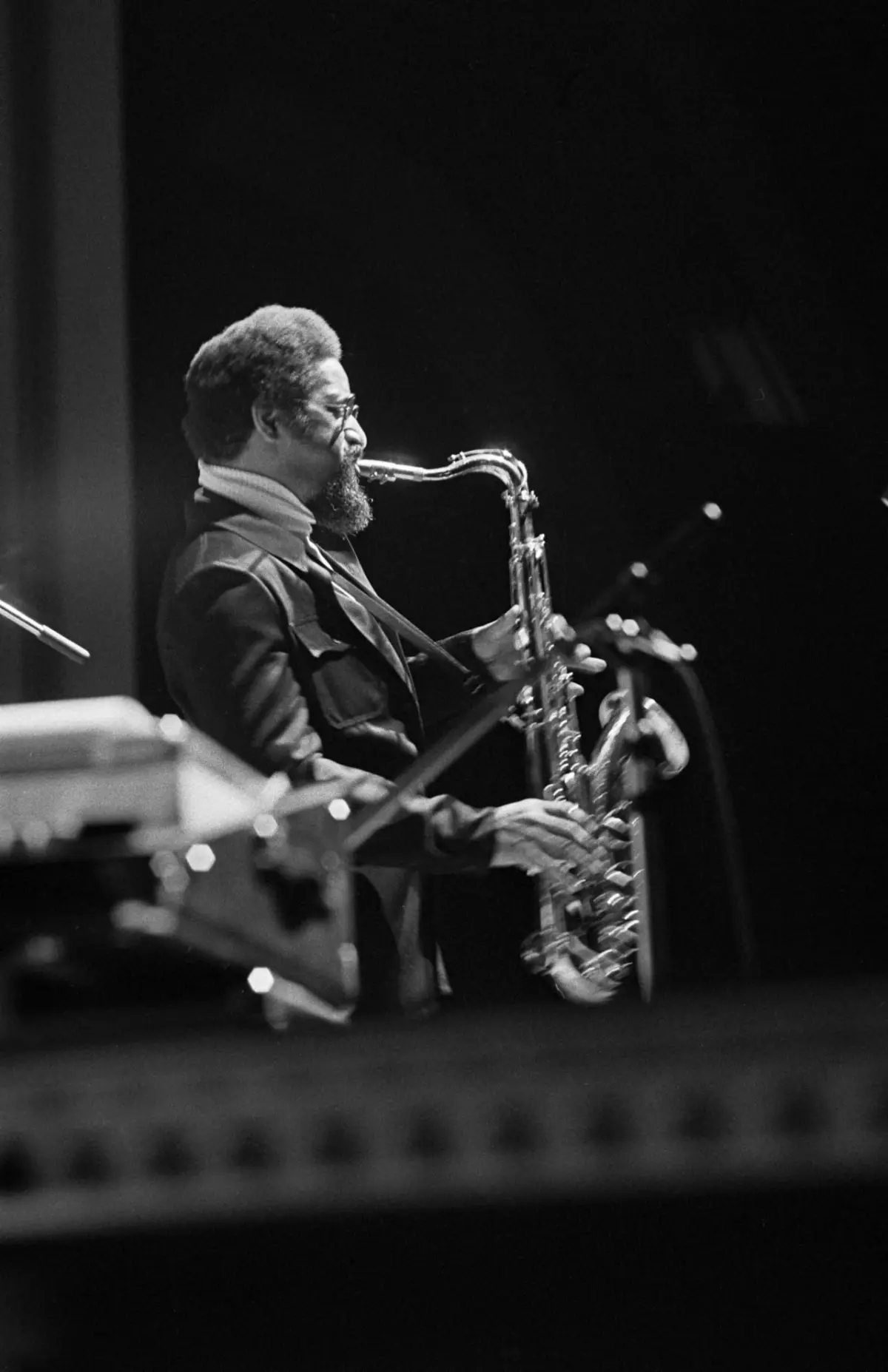
Walter “Sonny” Rollins, the towering tenor saxophonist whose monumental tone, relentless intellect, and fearless reinvention defined the trajectory of American jazz across nearly a century, passed away on May 25 at the age of 95. Rollins’s death marks the absolute end of an era. As the last surviving major figure to have walked alongside jazz’s founding pantheon—spanning the swing era, bebop, hard bop, the avant-garde, and fusion—Rollins was more than a master instrumentalist. He was the final embodiment of jazz’s restless, evolutionary spirit.
His passing leaves a profound vacuum in American culture. In an artistic landscape where jazz has increasingly shifted toward academic preservation and reverent historical recreation, Rollins stood as a feral master of an untamed art form. He was an iconoclast in the truest sense, frequently abandoning commercial peaks to seek deeper artistic truths, famously practicing for hours on the pedestrian walkway of the Williamsburg Bridge, and treating improvisation as a high-stakes tightrope walk where failure was always a real, thrilling possibility. His legacy places him not only alongside jazz immortals like Charlie Parker, John Coltrane, and Miles Davis, but within the highest echelon of American artistic revolutionaries, shoulder-to-shoulder with figures like Jackson Pollock, James Baldwin, and Gertrude Stein.
Detailed Chronology: The Evolution of a Giant
Formative Years and the Crucible of Bebop (1930–1955)
Born in Harlem on September 7, 1930, to immigrant parents from Saint Croix and Saint Thomas, Walter Rollins was largely a self-taught saxophonist whose preternatural dedication propelled him into professional circles while he was still a teenager. By his mid-teens, he was already recording with bebop luminaries such as vocalist Babs Gonzales and trombonist J.J. Johnson.
Read Also
However, the vibrant creative renaissance of post-war jazz was inextricably linked to a devastating drug epidemic. Like many of his contemporaries—including mentors and peers such as Charlie Parker and Miles Davis—Rollins fell into a severe heroin addiction. This battle with substance abuse culminated in a nine-month incarceration at Rikers Island for theft, followed by subsequent parole violations and relapses. Unlike many of his peers, however, Rollins ultimately achieved long-term sobriety in the mid-1950s, a turning point that cleared the runway for a legendary artistic ascent.
The Peak of Hard Bop and the Godzilla of the Saxophone (1955–1959)
In 1955, a newly clean Rollins entered a prolific period that permanently anchored him in the jazz canon. Initially joining a stellar quintet led by drummer Max Roach and trumpeter Clifford Brown, Rollins experienced a devastating emotional blow when Brown and pianist Richie Powell died in a tragic car crash in 1956.
Channeling this grief into an almost manic creative drive, Rollins adopted Brown’s legendary, relentless work ethic. Within months, he emerged as the undisputed heavyweight champion of the tenor saxophone—the "Godzilla" of his instrument. The year 1956 alone yielded masterworks such as Saxophone Colossus and Tenor Madness (featuring John Coltrane). Rollins was at the absolute summit of his creative and commercial powers, yet he remained fundamentally unsatisfied with resting on his laurels.
The Williamsburg Bridge Era and the Quest for a Singular Voice (1959–1961)
At the height of his fame in 1959, Rollins abruptly vanished from public view. Seeking to push his musical boundaries beyond the existing paradigms of jazz, he stopped performing and recording for nearly two years. Instead, he spent his days scaling the Williamsburg Bridge to practice single-mindedly over the roaring waters of the East River.
This unconventional choice provided a sanctuary where neighbors would not complain and where he could systematically deconstruct and rebuild his sound en plein air. When he returned to the studio in late 1961 to record The Bridge, his tone had transformed: it was massive, richly textured, and entirely emancipated from the dominant stylistic blueprints of Charlie Parker.
Free Expression, World Music, and Radical Independence (1960s–1970s)
Throughout the 1960s, as free jazz pioneers like Ornette Coleman and Cecil Taylor systematically dismantled traditional chord changes, Rollins approached "freedom" through a historical lens. Rather than discarding the past, he freely bridged epochs, juxtaposing avant-garde wails with show tunes and Tin Pan Alley novelties.
Following another intentional hiatus in the early 1970s—which included deep immersion in yoga and meditation at an Indian ashram, as well as a transformative trip to the Caribbean—Rollins discovered a vital new kinetic impulse in calypso, the convivial folk music of Trinidad and Tobago. Melding these infectious dance rhythms with soul, funk, and angular phrasing (documented on albums like 1978’s Don’t Stop the Carnival), Rollins continually defied audience expectations. His uncompromising artistic compass guided him through solo saxophone explorations and ambitious orchestral commissions, such as his concerto written for the Yomiuri Nippon Symphony Orchestra.
The Hermit Magus and Final Years (2014–2025)
Declining health forced Rollins to officially retire from live performance in 2014, laying down his horn after a final, triumphant concert. In his retirement, he evolved into a revered elder statesman of American music—a "hermit magus" whose infrequent interviews revealed a perpetually sharp intellect beneath a mane of wild white hair. He remained actively engaged with his legacy, culminating in Aidan Levy’s acclaimed 2023 biography and the publication of Rollins’s own notebooks in 2024, before passing away on May 25, 2025, at the age of 95.
Supporting Context & Metrics: The Anatomy of a Sound
To understand Rollins’s permanent imprint on music, one must examine the physical and psychological mechanics of his playing.
- The Tone: Unlike the emotional, cry-like intensity of John Coltrane or the radiant, avian flutter of Eric Dolphy, Rollins’s sound was structural—often described by critics as a "brick." Every pitch was dense, compact, and saturated with overtones, forged initially by his relentless projection against the acoustics of the East River.
- Rhythmic Elasticity: Rollins approached time as a malleable, elastic dimension. While peers like Coltrane pushed forward on the front edge of the beat with relentless velocity, Rollins tested the absolute parameters of swing, placing notes early, late, or dead-center within the pulse to deliberately keep listeners delightfully off-balance.
- Improvisational Prodigiousness: Across landmark live recordings such as A Night at the Village Vanguard (1957) and the expansive Our Man in Jazz (1962), Rollins displayed an inexhaustible imagination. He routinely performed multiple extended solos on a single theme without repeating a single musical idea, treating standard show tunes as raw clay to be molded in real-time.
- The Ultimate Iconoclasm: Rollins’s career was punctuated by his total indifference to commercial trends. Whether showing up to prestigious Greenwich Village engagements in a bespoke suit and a mohawk or transforming a Bing Crosby novelty tune into a ferocious tenor-sax juggernaut (as on 1957’s Way Out West), Rollins served only the music in his head.
Official Statements & Cultural Impact
Cultural institutions, fellow musicians, and historians have poured forth tributes following the news of Rollins’s passing, underscoring the magnitude of his loss to the global arts community.
"Sonny Rollins was the last titan of a foundational American art form. His horn didn’t just play notes; it reshaped the geometry of time and space. He leaves behind a standard of artistic integrity that few will ever equal and none will ever surpass." — Leading Jazz Historian and Author
"To listen to Sonny was to witness a master walking the tightrope without a net. He didn’t care about comfort or expectation; he cared only about truth. The jazz world is immeasurably emptier without him." — Contemporary Jazz Pianist
Academic and institutional bodies have similarly noted that Rollins’s methodology forms the bedrock of modern jazz pedagogy. Conservatory students worldwide continue to study his technique of dissecting a small melodic cell and exploring it from every conceivable angle until its emotional energy is fully realized. Yet, as cultural commentators point out, while schools can teach the mechanics of his playing, they cannot manufacture the fearless, uncompromising spirit that drove his improvisations.
Future Outlook: Can the Music Survive the Titan?
The departure of Sonny Rollins raises existential questions regarding the future of jazz. As the last bridge to the generation of creators who invented, expanded, and continually destabilized the genre, Rollins’s death forces a reckoning within the community.
Today, jazz occupies a vastly different cultural space than it did during its mid-century golden age. Having achieved institutional validation, the art form has increasingly codified into a tradition of reverent preservation—rewarding technical polish and historical replication over the raw, volatile experimentation that Rollins championed.
Rollins stood as the final representative of a feral, untamed era—an artist whose performances were defined by the genuine risk of failure and the breathtaking triumph of pulling back from the precipice. Whether contemporary and future generations of musicians can muster the courage, imagination, and autonomy to sustain that level of spontaneous power remains the central question facing the genre.
For now, listeners are left with a peerless recorded legacy. As the final notes of The Bridge or Lover Man fade out, the challenge remains: to sit between the speakers, listen closely, and allow the immutable force of Sonny Rollins’s art to change everything all over again.




Comments
Facebook App ID not configured. Please add it in the Customizer.