
Executive Overview
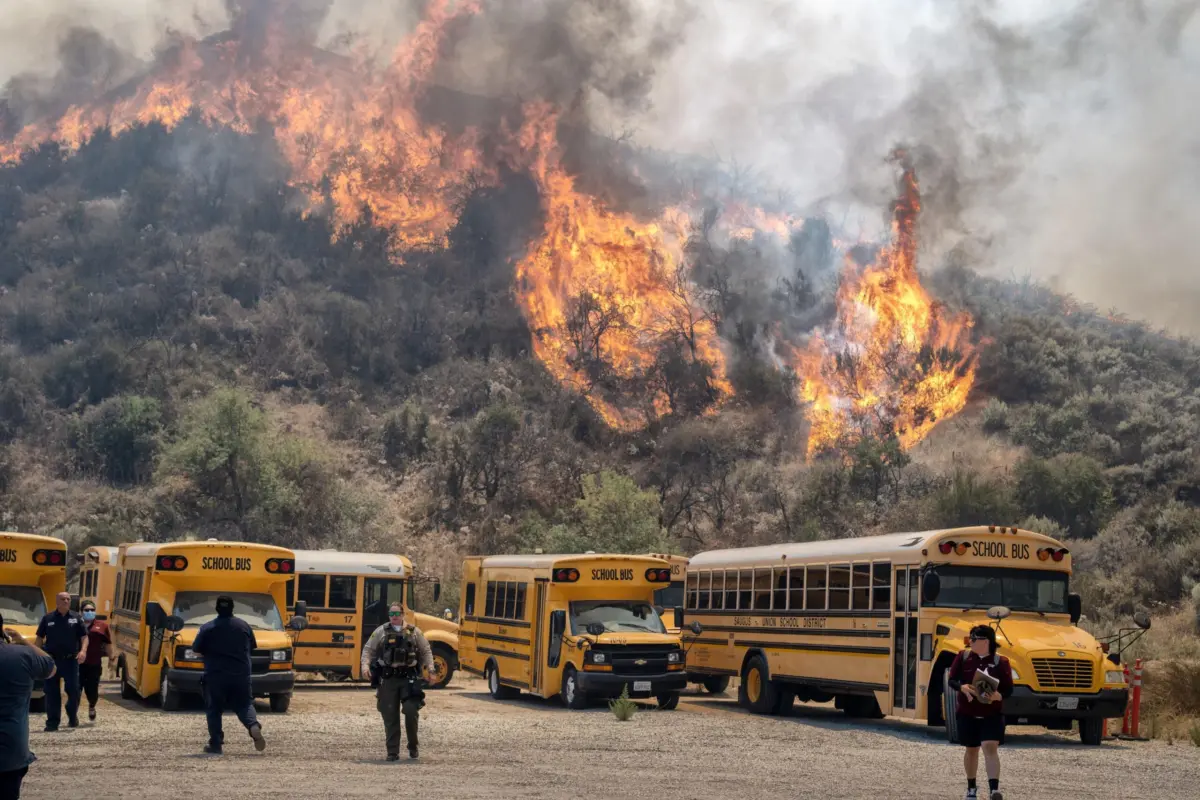
For generations, the cultural myth of the wildfire has remained stubbornly rustic. Popularly perceived as wild, untamable phenomena restricted to the remote wilderness, the edge of distant timberlands, or the arid expanse of the American West, fires were long viewed as an episodic problem for rural communities. But over the past few years, this ecological paradigm has fundamentally fractured. Across the United States, wildfires are becoming markedly less wild and far more urban.
This shifting geography has transformed the fundamental nature of these disasters. When catastrophic blazes consume suburban neighborhoods in Spokane, Washington, engulf the northeastern seaboard in thick Canadian smog, or raze tens of thousands of acres in the foothills of Reno and Los Angeles, they are no longer just burning timber and brush. They are incinerating modern infrastructure.
As a result, the health risks presented by wildfire smoke have undergone a terrifying metamorphosis. While traditional wildland smoke is rich in hazardous particulate matter, the smoke generated by burning suburbs introduces an entirely new class of toxic hazards—a complex chemical slurry of burning plastics, heavy metals, electronic components, and synthetic compounds. With roughly 46 million homes in the continental United States—approximately one-third of all housing stock—situated within the wildland-urban interface (WUI), tens of millions of Americans are increasingly exposed to air quality hazards that extend far beyond simple soot. As researchers peel back the layers of this escalating crisis, public health experts warn that the true toll of these modern mega-fires will unfold slowly over decades, lingering in our lungs, our bloodstreams, and our built environments long after the flames have been extinguished.
Read Also
Detailed Chronology: The Anatomy of Modern Urban-Wildland Disasters
To understand how wildfires became an urban threat, one must look at the tragic trajectory of recent fire seasons, where historical blazes have increasingly collided with densely populated human settlements.
- 2020 (The California Benchmark): The worst California fire season on record scorched an astonishing 4.2 million acres of land, predominantly wild terrain, spewing unprecedented quantities of PM 2.5 into the atmosphere. Emergency rooms—already critically overextended by the global pandemic—buckled immediately under the surge of patients. Northern California’s Stanford Health Care system recorded a 12% jump in hospital admissions in the weeks following the fires, alongside a staggering 43% increase in cardiovascular conditions. In Oregon, 10% of all emergency room visits were directly attributed to smoke-induced asthma and respiratory distress.
- December 2021 (The Marshall Fire, Colorado): Striking Boulder County with terrifying speed in the dead of winter, the Marshall Fire demolished nearly 1,000 suburban homes in a matter of hours. It served as a stark wake-up call that suburban developments surrounded by cured grasslands or fragmented brush are just as vulnerable as deep-forest properties, regardless of the calendar year.
- January 2025 (The Los Angeles County Devastation): The Palisades and Eaton fires ignited on the northern edge of the Los Angeles foothills, where sprawling urban developments press directly against volatile wildlands. These fires served as a harrowing case study for urban-wildland disasters, destroying more than 16,000 buildings, countless household goods, and electric vehicles. The resulting emissions were vastly more complex than traditional vegetation fires, releasing high concentrations of volatile organic compounds (VOCs), heavy metals, and persistent environmental toxins.
- Summer 2025 – Present (A National Footprint): In 2025, a total of 5.2 million acres burned across the United States. That figure escalated dramatically, climbing to 8.5 million acres burned before the winter dry seasons even arrived in the Southwest. During this period, fires in Spokane, Washington, demolished over 800 homes in a single suburban neighborhood, while the Hawk Fire in Nevada razed more than 15,000 acres near Reno, erasing 47 homes and displacing families before containment could be achieved.
Supporting Context & Metrics: The Expansion of the Wildland-Urban Interface
The collision between human civilization and wildfire country is not an accident of nature; it is a product of decades of housing expansion and suburban migration.
For centuries, human development has encroached upon wildfire territory. However, over the last three decades, the zone linking the wild to cities and towns—the wildland-urban interface (WUI)—has expanded exponentially due to rapid suburban construction. Data compiled by the USDA Forest Service reveals a staggering 46% increase in the number of houses situated within the high-risk WUI zone between 1990 and 2020.
The mathematical reality is simple: as suburbia expands into fire-prone regions, the volume of exposed infrastructure grows, amplifying the overall disaster risk. When homes, vehicles, and commercial properties burn, they produce a fundamentally different type of smoke.
The Toxic Alchemy of Modern Homes
When traditional forests burn, they release particulate matter (PM 2.5), carbon monoxide, and various organic compounds. However, when modern residential areas burn, the chemical composition of the smoke shifts dramatically.
According to public health and chemical safety researchers, contemporary homes and vehicles are loaded with synthetic materials. Modern residential structures contain massive quantities of plastics, insulation, metal oxides, and electronic appliances. Furthermore, the proliferation of electric vehicles introduces high-voltage lithium-ion batteries containing rare-earth metals and proprietary chemical compounds whose combustion byproducts remain poorly understood.
As a result, urban-wildland fire emissions contain elevated concentrations of:
- Volatile Organic Compounds (VOCs): Dangerous airborne chemicals that irritate mucous membranes and contribute to long-term systemic illness.
- Heavy Metals: Toxic particulates, including chromium 6—a carcinogenic metal nanoparticle capable of easily crossing cell membranes, which researchers found lingering in Los Angeles cleanup zones and up to nine miles downwind for months following the 2025 fires.
- Per- and Polyfluoroalkyl Substances (PFAS): Commonly known as "forever chemicals," these substances are introduced into the environment via firefighting foams and the degraded protective gear worn by first responders, elevating cancer risks and weakening immune systems.
Furthermore, these toxins do not simply dissipate outdoors. Studies conducted in the aftermath of the Los Angeles fires revealed that post-wildfire VOC levels remained critically elevated inside evacuated homes for months following the disasters. Soft surfaces, such as upholstery, textiles, and pillows, absorbed these chemical slurries, proving that families can suffer health consequences from WUI smoke exposure even if their homes emerge from the blaze structurally undamaged.
Official Statements and Expert Insights
The scientific community has mobilized to understand the multi-layered health crises triggered by these urbanized fires. Researchers are increasingly turning their attention from acute, short-term respiratory distress to the insidious, long-term cellular changes occurring in exposed populations.
Dr. Jackie Goodrich, an epidemiology professor at the University of Michigan, emphasizes the profound shift in the very nature of wildfire emissions:
"What’s burning is now very different," Goodrich notes. "Modern homes have tons of plastic, metals, and all of our electronic appliances, and electric vehicles have these batteries that have a lot of rare metals and other toxic materials we don’t even know about."
By studying vulnerable cohorts—specifically firefighters working in mixed urban-wildland environments—Goodrich and her colleagues have begun mapping the hidden toll of smoke exposure. In blood samples drawn from fire responders, researchers discovered that chronic smoke exposure inhibited the genetic expression of a tumor suppressor known to inhibit gastric cancer cell growth. It also disrupted regulatory expressions associated with tumor proliferation and neurodegenerative diseases.
Dr. Jeff Burgess, a public health professor at the University of Arizona who has conducted extensive research across 33 states with over 9,000 participating firefighters, has observed similar biological markers. His research on new fire recruits found altered DNA methylation—the biological mechanism that controls whether specific genes are turned on or off—at various sites across the genome. Many of these altered sites are directly linked to cancers, neurological disorders, and cardiovascular disease.
While the natural latency period between toxic exposure and the clinical onset of disease makes immediate diagnosis difficult, Burgess expects to see a higher incidence of cancer and chronic illness as these participants age and their cumulative exposure mounts.
Beyond firefighters, public health experts warn that the civilian population living within the WUI faces parallel risks. While children may experience elevated rates of childhood asthma and chronic respiratory deficits, aging populations face heightened cardiovascular vulnerabilities. According to data published by the World Health Organization and recent cardiovascular studies, even moderate exposure to PM 2.5 is associated with premature death, severe respiratory damage, cognitive impairment, and increased hospitalization risks for heart failure and cardiac arrhythmias among older Americans.
Future Outlook: Preparing for the Permanent Orange Haze
As global temperatures rise, drought conditions worsen, and suburban developments continue to push deeper into ecological buffer zones, the convergence of urban infrastructure and wildfires is no longer an anomaly—it is the new normal.
The statistical trajectory is unmistakable. With US land burned climbing from 5.2 million acres in 2025 to 8.5 million acres in the current season, the window for proactive mitigation is rapidly closing. Preparing for this reality requires a fundamental re-engineering of public health infrastructure, building codes, and emergency response protocols.
- Redefining Building and Zoning Standards: Communities in the wildland-urban interface must pivot toward hardened architectural standards, utilizing fire-resistant building materials that reduce the generation of toxic synthetic smoke when ignition occurs.
- Indoor Air Quality Infrastructure: Public health agencies must prioritize residential and commercial indoor air filtration upgrades, recognizing that modern wildfire smoke penetrates deep into homes, depositing persistent carcinogenic compounds on indoor surfaces.
- Long-Term Epidemiological Tracking: The medical community must establish robust, long-term monitoring programs for populations residing in WUI zones and downwind corridors to track the generational health impacts of chronic VOC and heavy metal exposure.
Ultimately, as wildfires break free from the traditional confines of remote forests and chaparral to rage through suburban streets, society must adapt to a sobering reality. The orange haze of fire season is no longer just a seasonal inconvenience for remote mountain towns; it is a nationwide public health crisis. Confronting it will require acknowledging that the dangers of modern fires do not vanish when the flames die down—they persist, quietly and invisibly, within the very fabric of our modern lives.




Comments
Facebook App ID not configured. Please add it in the Customizer.