
Executive Overview
When a group of people is confronted with a profound philosophical thought experiment or a complex ethical dilemma, the resulting debate is rarely uniform. Ask individuals whether an agent possesses free will, whether a corporation can be held morally culpable, or how to resolve the classic trolley problem, and you will almost certainly be met with a tapestry of divergent viewpoints. For generations, philosophers, cognitive scientists, and laypeople alike have interpreted this phenomenon through a straightforward lens: different people simply possess different intuitions.
Under this traditional framework—often referred to as the interpersonal variance model—human beings are conceptualized as walking repositories of fixed baseline beliefs. One person may lean toward compatibilism regarding free will, while another harbors strictly incompatibilist views. The friction of philosophical debate is thus understood as a collision between distinct minds holding incompatible axioms.
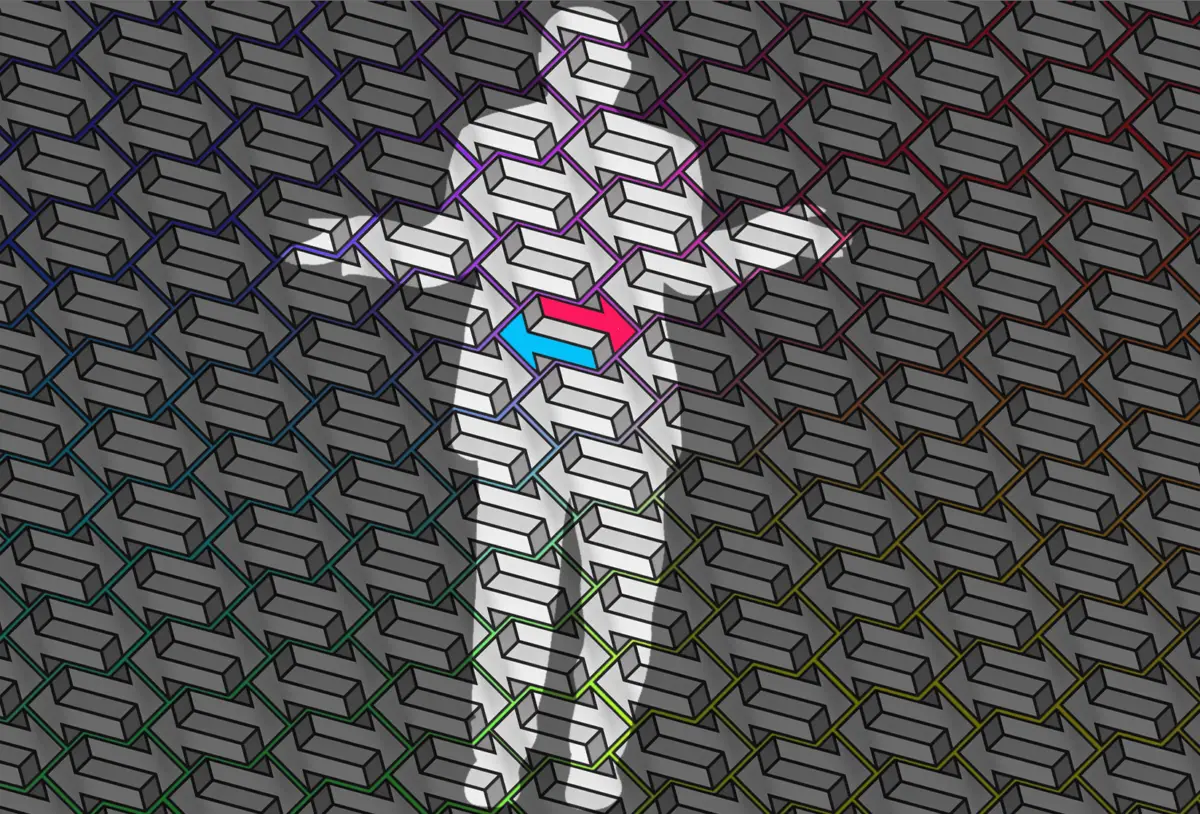
However, a provocative new paper published in the journal Ergo titled “Conflicting Intuitions,” authored by Yale University philosopher and cognitive scientist Joshua Knobe, challenges this foundational assumption. Knobe argues that the traditional diagnosis of philosophical disagreement misses a much stranger and more complex psychological reality. According to his "conflicting intuitions hypothesis," the primary locus of philosophical friction is not necessarily found between different people, but rather within them.
Read Also
When an individual encounters a well-crafted philosophical thought experiment, they do not typically register a single, clean-cut reaction. Instead, Knobe posits, they are frequently besieged by internal discord: one cognitive pathway pulls them in one direction, while an equally compelling intuition tugs them toward the exact opposite conclusion. This realization, while appearing intuitively simple on the surface, carries profound ripples that destabilize standard methodologies across both empirical cognitive science and normative philosophy. If individuals are themselves internally fractured over core conceptual questions, our theories of mind must be radically rewritten, and our philosophical frameworks must account for the coexistence of mutually exclusive impulses.
Detailed Chronology: The Evolution of Experimental Philosophy and the Turn Inward
To understand the magnitude of Knobe’s intervention, it is necessary to trace the historical trajectory of how philosophers have engaged with human intuition over the past quarter-century.
The Rise of Experimental Philosophy (X-Phi)
For centuries, "armchair philosophy" reigned supreme. Thinkers would consult their own intuitions—or posit the hypothetical intuitions of the "folk"—to build intricate towers of metaphysical, ethical, and epistemological theory. However, the late 1990s and early 2000s witnessed the birth of experimental philosophy (often abbreviated as X-Phi). Pioneers in this movement began taking empirical surveys out of the armchair and into the streets, labs, and lecture halls.
Researchers systematically posed thought experiments to diverse demographics, testing whether cultural background, emotional framing, or order effects altered people’s intuitive responses. This empirical turn quickly revealed that demographic groups often diverged wildly in their responses to classic philosophical puzzles. For instance, studies showed that individuals from different cultures or socio-economic backgrounds might evaluate moral responsibility differently under identical circumstances.
The Standard Diagnostic: Interpersonal Variance
As these empirical discrepancies piled up, researchers naturally categorized them as variations between subjects. If Participant A claims an action is free and Participant B claims it is coerced, the standard experimental paradigm assumes that Participant A has a compatibilist intuition and Participant B has an incompatibilist one.
Cognitive models were subsequently built to explain this divergence. Scientists attempted to isolate the psychological variables—such as executive function, empathy scores, or cultural priming—that cause one subset of the population to systematically lean left on an issue while another leans right.
Knobe’s Intervention and the Intra-Personal Turn
In "Conflicting Intuitions," Knobe steps back to interrogate the very premise underlying these experimental paradigms. Drawing on a broader body of accumulating psychological and experimental data, he suggests that researchers have systematically misidentified the source of the variance.
Rather than viewing participants as internally coherent agents who neatly divide into opposing camps, Knobe suggests that individual subjects themselves are conflicted. When exposed to a thought experiment designed to test free will, personal identity, or legal culpability, a single respondent often experiences simultaneous, competing pulls.
Knobe illustrates this by examining how subjects react when pressed to justify their stances. Under deeper questioning, participants frequently reveal that they recognize the force of the counter-argument precisely because they felt its pull internally. The hesitation, the nuance, and the internal backtracking observed in experimental settings are not merely noise in the data; they are the central signal. The human mind, Knobe argues, is inherently multivalent, harboring deep-seated tensions that formal philosophical dilemmas merely expose to the light.
Supporting Context & Metrics: Empirical and Philosophical Implications
The implications of the conflicting intuitions hypothesis ramify across multiple intellectual domains, demanding a rigorous re-evaluation of how we measure human cognition and construct philosophical systems.
Empirical Repercussions: Redefining the Target of Explanation
From a scientific standpoint, adopting the conflicting intuitions hypothesis fundamentally alters what empirical theories of cognition are expected to achieve.
In the traditional interpersonal model, if an experiment reveals that 50% of participants view a scenario as an instance of causation and 50% do not, the explanatory burden on the cognitive scientist is relatively compartmentalized: build a model that explains why Group A processes the stimulus one way, and Group B processes it another way (perhaps due to differences in background beliefs or heuristics).
However, if Knobe’s hypothesis holds, the explanatory challenge deepens exponentially:
- The Intra-Personal Puzzle: An adequate psychological theory can no longer merely sort people into categories. It must explain why the same individual harbors conflicting responses to the exact same stimulus.
- The Architecture of Conflict: Researchers must map out the underlying cognitive mechanisms that generate these competing internal pressures. Are we dealing with dual-process models (where fast, emotional heuristics clash with slow, deliberative reasoning)? Or are there multiple, modular systems within the mind that independently evaluate scenarios through incompatible frameworks (e.g., deontological vs. consequentialist impulses firing simultaneously)?
Philosophical Repercussions: Managing Irreconcilable Realities
On the philosophical side, the discovery—or acknowledgment—of widespread internal conflict forces a reckoning with how we interpret ordinary language and folk concepts.
When ordinary people use expressions that seem to harbor internal contradictions (e.g., "In one sense, he is entirely responsible, but in another, external forces completely dictated his behavior"), philosophers have historically attempted to resolve the tension. They try to show that the folk are either confused, speaking loosely, or secretly aligned with one specific theoretical camp.
Knobe suggests a different path, highlighting cases where respondents maintain that apparently conflicting intuitions are both correct. This raises profound systemic questions within specialized branches of philosophy:
- Philosophy of Law: Can we construct a rigorous legal theory that accommodates deeply ambivalent intuitions? For instance, can a coherent jurisprudence support the notion that an action technically violates the letter of the law while simultaneously honoring a deeper, morally compelling rationale that exempts it—not merely as an exception, but as a dual-layered truth about the act itself?
- Personal Identity: Consider classic thought experiments involving brain transplants, teletransportation, or severe neurotrauma (such as the historical case of Phineas Gage). Respondents often experience a profound tug-of-war: In one sense, this post-accident individual is clearly Phineas (retaining memories, temperament, and legal standing); yet in a deeper, more fundamental psychological sense, he is no longer the same person. Philosophers must ask whether a theory of personal identity can be engineered to make structural sense of this duality, or if such dilemmas ultimately expose an irreconcilable fracture in our concept of selfhood.
Official Statements and Excerpts from the Research
To fully appreciate the nuance of Joshua Knobe’s arguments, it is illuminating to examine his own formulations from "Conflicting Intuitions."
Addressing the standard view of philosophical disagreement, Knobe writes:
“[I]t might be that some people have compatibilist intuitions, while others have incompatibilist intuitions, and similarly for each of the other traditional questions of philosophy. Then the puzzlement we feel regarding these questions might be explained in terms of the conflict between the intuitions of different people.”
Challenging this comfortable paradigm with empirical insights, he introduces the alternative hypothesis:
“I will argue that experimental research has been providing evidence for a very different hypothesis. On this hypothesis, the difficulty is in large part a matter of individual people having conflicting intuitions. Thus, when a person encounters a thought experiment designed to get at one of the traditional questions of philosophy, she will often have an intuition pulling her in one direction but also an intuition pulling her in the exact opposite direction.”
Knobe emphasizes that while this might sound disarmingly simple, its ripples have been vastly underappreciated:
“This might seem like an obvious hypothesis, and perhaps it is. Still, I think that its implications haven’t been fully appreciated. If true, it would have important implications both empirically and philosophically.”
Detailing the theoretical burden this places on empirical researchers, he notes:
“If we assume that the difference in responses is due to different people having different intuitions, we would naturally assume that the theory should explain why different people have different intuitions regarding this case… However, if we conclude that the difference in responses is due to each individual person having conflicting intuitions, there is an important sense in which there is more that needs explaining. An adequate theory would not merely have to explain why half of the participants have the intuition that it is a case of causation; it would have to explain why those people are conflicted…”
Finally, turning to the normative philosophical challenge of constructing theories that mirror these complex linguistic and conceptual states, Knobe asks:
“Independent of anything that could be settled through further empirical work on ordinary intuitions, we need to know whether there is some way of working out a philosophical theory that makes sense of what people seem to be saying in these cases… Here again, I suspect we will arrive at different answers for different philosophical issues. For some, we may find that it is possible to develop such a theory… For others, we will presumably arrive at the opposite conclusion. We will find that there is simply no possible way for both intuitions to be true.”
Future Outlook: Where Do We Go From Here?
As the ripples of "Conflicting Intuitions" spread across the academic landscape, researchers are charting new pathways for both empirical inquiry and philosophical system-building. The dialogue sparked by Knobe’s work points toward several critical trajectories for the future:
1. Methodological Redesign in Experimental Philosophy
Future surveys and cognitive studies will likely move beyond simple binary choices (e.g., "Yes/No" or "Compatibilist/Incompatibilist"). Researchers are already developing more granular scaling techniques designed to capture internal ambivalence, measuring not just a participant’s final verdict, but the degree of internal tension, hesitation, and competing pulls they experience while evaluating a scenario. By treating ambivalence as primary data rather than measurement error, cognitive science will gain a sharper picture of human moral and metaphysical reasoning.
2. The Limits of Coherence in Normative Theory
Philosophers will increasingly have to grapple with the uncomfortable prospect that our most deeply cherished concepts—free will, personal identity, moral responsibility, justice—may not form neat, internally consistent systems. If human intuition is fundamentally fragmented, normative philosophy faces a fork in the road:
- Option A (Revisionism): Purge our conceptual frameworks of internal contradictions, biting the bullet and declaring certain deeply felt intuitions to be systematically mistaken.
- Option B (Pluralism/Complexity): Develop sophisticated, multi-layered philosophical systems that explicitly mirror human ambivalence, accommodating the reality that complex truths often pull us in opposite directions.
3. Interdisciplinary Synergy
Ultimately, Knobe’s work underscores the vital necessity of bridge-building between empirical psychology and analytical philosophy. Armchair philosophy can no longer afford to ignore the messy psychological realities of how human minds actually process dilemmas, just as empirical science cannot interpret survey data without rigorous philosophical frameworks to decode what those responses actually mean.
As this research agenda unfolds, one thing is abundantly clear: the debates that define the human condition—concerning our freedom, our identity, and our moral standing—are far more intricate than we once imagined. The friction is not merely out there in the world, dividing us into opposing camps; it is woven into the very fabric of how each individual mind makes sense of reality.


Comments
Facebook App ID not configured. Please add it in the Customizer.