
Executive Overview
For centuries, the standard operating procedure in Western philosophy has relied on a straightforward assumption: when human beings encounter a profound thought experiment or a thorny moral dilemma, their divergent reactions reflect fundamental differences between individuals. If Alice believes a choice is freely made while Bob insists it is deterministically constrained, philosophers have traditionally treated this as a clash between distinct psychological profiles—a division of perspectives across a population.
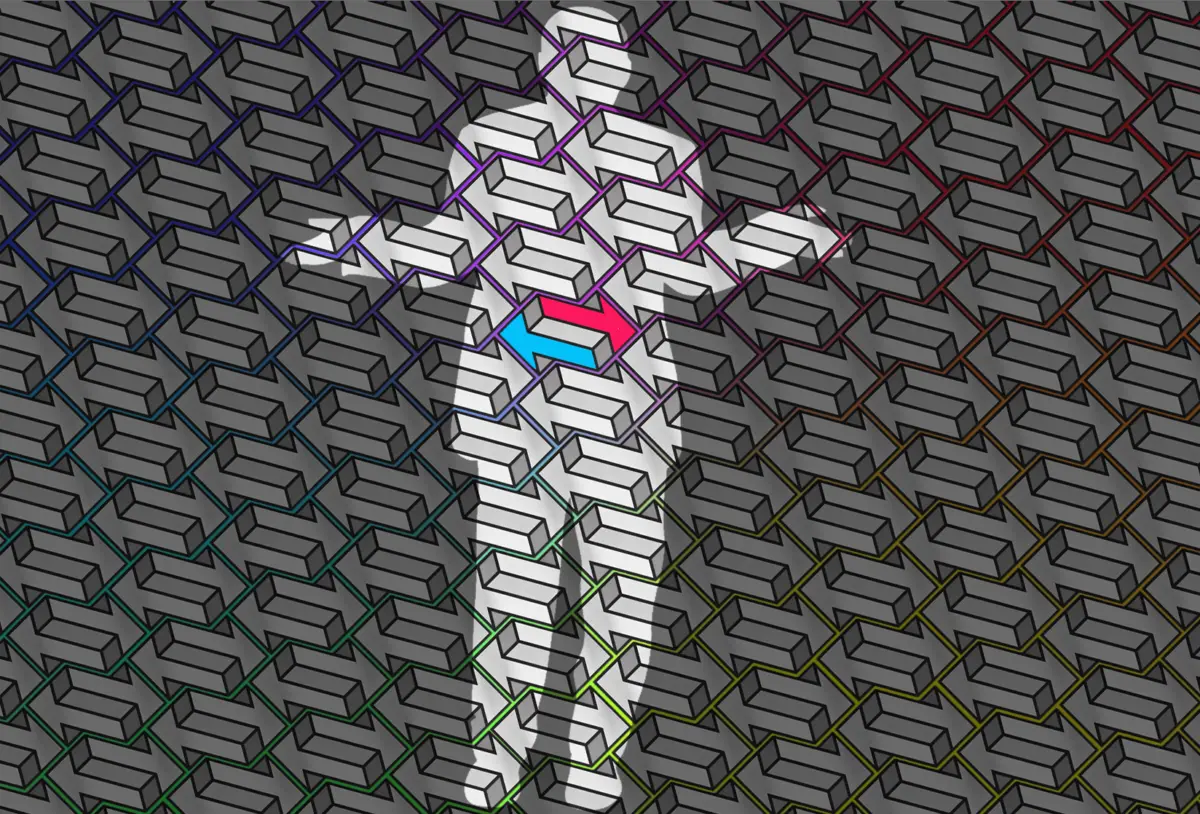
A provocative new paper published in the journal Ergo by Yale University cognitive scientist and philosopher Joshua Knobe threatens to upend this foundational paradigm. In "Conflicting Intuitions," Knobe argues that philosophical disagreement is widely misunderstood. The primary source of puzzlement when people grapple with abstract concepts—ranging from free will and personal identity to legal culpability and physical causation—is not necessarily that different people possess opposing intuitions. Instead, Knobe posits that individual minds are themselves internally divided.
According to this "conflicting intuitions hypothesis," when a single person encounters a complex philosophical puzzle, their cognitive architecture frequently pulls them in two diametrically opposed directions simultaneously. They do not merely stand on opposite sides of a debate; they contain multitudes, harboring internal contradictions that surface the moment they are asked to make a judgment.
Read Also
If validated, Knobe’s thesis carries sweeping implications. Empirically, it forces cognitive scientists and experimental philosophers to overhaul what they expect psychological theories of intuition to explain. Rather than charting demographic or personality-based splits in human populations, researchers must account for the micro-level internal friction experienced by single subjects. Philosophically, the hypothesis raises deep questions about whether seemingly contradictory human impulses can be reconciled within a coherent theoretical framework, or if philosophers must confront the reality that ordinary intuition is fundamentally irreconcilable.
Detailed Chronology & Evolution of the Debate
The Traditional Paradigm: Interpersonal Variance
To understand the radical nature of Knobe’s intervention, one must examine how contemporary philosophy has utilized thought experiments over the past several decades.
With the rise of "experimental philosophy" (X-Phi) in the early 2000s—a movement in which Knobe has been a leading figure—researchers began taking the armchair methods of traditional philosophy out of the seminar room and into the laboratory. Instead of assuming what "the ordinary person" would think about a trolley problem, a Gettier case, or a compatibilist free-will scenario, experimental philosophers ran surveys across diverse demographics.
Consistently, these studies revealed deep divisions. When presented with a deterministic universe, a substantial percentage of participants would judge that an agent could still be held morally responsible (signaling compatibilist intuitions), while another significant cohort would judge the opposite (incompatibilist intuitions).
For years, the standard interpretation of these data sets was straightforwardly interpersonal:
- Person A possesses intuition $X$.
- Person B possesses intuition $Y$.
- Philosophical debate is difficult because human populations are heterogeneous in their baseline cognitive responses.
The Turning Point: Intrapsychic Conflict
Knobe’s paper marks a significant pivot away from this tidy inter-subjective model. Reflecting on classrooms of students or survey respondents who express disagreement, Knobe acknowledges that the natural temptation is to frame the problem as a societal split. As he writes in Conflicting Intuitions:
"[I]t might be that some people have compatibilist intuitions, while others have incompatibilist intuitions, and similarly for each of the traditional questions of philosophy. Then the puzzlement we feel regarding these questions might be explained in terms of the conflict between the intuitions of different people."
However, drawing on recent breakthroughs in experimental research, Knobe exposes the limitations of this view. He articulates the core of his alternative hypothesis:
“I will argue that experimental research has been providing evidence for a very different hypothesis. On this hypothesis, the difficulty is in large part a matter of individual people having conflicting intuitions. Thus, when a person encounters a thought experiment designed to get at one of the traditional questions of philosophy, she will often have an intuition pulling her in one direction but also an intuition pulling her in the exact opposite direction.”
This intrapsychic conflict hypothesis reframes the entire enterprise. The hesitation, the stuttered responses, and the shifting judgments observed in experimental settings are not merely noise or population variance; they are the direct symptom of an internal tug-of-war happening within a single cognitive system.
Supporting Context & Metrics: Empirical and Philosophical Ramifications
Knobe’s hypothesis is not merely a theoretical exercise in semantics; it forces a radical recalibration of both empirical science and normative philosophy.
1. The Empirical Challenge: Redefining Cognitive Explanations
In empirical psychology and experimental philosophy, theories are built to explain data. If researchers observe a 50/50 split in a population’s responses to a philosophical vignette, their explanatory models are constructed to account for why one group leans left and another leans right.
Knobe points out that if the conflicting intuitions hypothesis is true, the explanatory burden changes dramatically:
- Under the old model: An adequate theory must explain why Group A possesses Intuition $X$ and Group B possesses Intuition $Y$ (e.g., looking at differences in education, culture, personality traits, or socio-economic background).
- Under Knobe’s model: An adequate theory must explain why individual human beings simultaneously generate contradictory reactions. It must clarify why a single mind feels the pull of both causation and non-causation, or both moral blameworthiness and determinism.
This shifts the focus from sociology and differential psychology down to neuro-cognitive architecture. It suggests that human judgment is governed by competing processing systems—perhaps fast heuristic evaluations battling against slower, deliberative normative frameworks—both of which leave distinct footprints in a person’s final verbal response.
2. The Philosophical Challenge: Can Contradictions Be Harmonized?
On the philosophical side, Knobe’s hypothesis opens a Pandora’s box of interpretive hurdles, particularly when respondents suggest that apparently conflicting intuitions might both be correct in some sense.
Consider two major domains of philosophical inquiry highlighted in Knobe’s analysis:
Philosophy of Law
Imagine a legal case where an action technically violates the letter of a statute, yet strictly adheres to its spirit or serves a higher moral necessity. Ordinary respondents often express a conflicted state: “There is a sense in which this action clearly violates the law, but there is a deeper sense in which it does not.”
Independent of empirical polling, philosophers of law must ask: Can we construct a systematic legal theory that makes logical sense of this dual intuition? Or is this just sloppy folk-linguistics that a rigorous legal framework must reject?
Personal Identity
Consider thought experiments involving radical physical or psychological alteration (such as the classic Lockean memory-transfer cases or science-fiction teletransportation scenarios). An observer might look at a transformed individual—let us call him Phineas—and feel a deep split: “In one clear sense, this person is Phineas; yet in another, deeper sense, he is no longer him.”
Knobe argues that philosophers will arrive at different conclusions depending on the specific domain:
- For some philosophical problems, diligent theoretical work may reveal that both intuitions can be accommodated within a sophisticated, multi-layered philosophical framework, yielding profound new insights.
- For other problems, rigorous analysis will prove that both intuitions cannot possibly be true simultaneously. One must be discarded as an cognitive illusion.
Official Insights & Theoretical Breakdown
To fully appreciate the weight of Knobe’s contribution, it is essential to look at the structural logic of his arguments regarding the broader significance of false or conflicting intuitions.
Even when philosophy forces us to conclude that two conflicting intuitions cannot both be logically true—since a proposition and its exact negation cannot co-exist in a consistent system—a deeper question remains: Why should we care about an intuition if it is ultimately proven false?
Knobe challenges the dismissive attitude sometimes found in analytic philosophy, where once an intuition is proven logically incoherent or empirically biased, it is tossed aside as useless folk-psychological baggage. He contends that mapping out why we feel internal conflict tells us something indispensable about the structure of human agency, moral psychology, and value systems.
When a person feels torn between two incompatible philosophical responses, that internal friction is a diagnostic tool. It reveals the competing pressures—such as the tension between retributive justice and consequentialist deterrence in ethics, or the clash between mechanistic physics and agentic self-conception in philosophy of mind—that have shaped human cognition over evolutionary and cultural time.
Future Outlook: Where Experimental Philosophy Goes From Here
The publication of "Conflicting Intuitions" in Ergo signals a mature phase in experimental philosophy. No longer content with merely tabulating demographic splits or mapping cultural variations in moral judgment, the field is turning its analytical lenses inward, interrogating the messy, contradictory texture of the individual human mind.
As researchers pick up the thread of Knobe’s arguments, several vital trajectories for future research emerge:
- Micro-Level Response Tracking: Future experimental studies will likely move beyond simple binary choices (e.g., "Yes/No" or "Compatibilist/Incompatibilist") to utilize real-time cognitive tracking methods—such as mouse-tracking, response-latency measurement, and functional neuroimaging. These tools can directly measure the micro-momentary hesitation and competing motor outputs of subjects experiencing intrapsychic conflict.
- Domain-Specific Mapping: Philosophers will need to systematically categorize which traditional debates suffer from interpersonal variance versus those defined primarily by intrapsychic conflict. Is free will uniquely plagued by internal contradiction, or is this a universal feature of all deep normative concepts?
- Normative Reconstruction: Theoretical philosophers must rise to the challenge laid down by Knobe: determining whether our best philosophical theories can accommodate the complex, multi-tiered realities of folk intuition, or whether we must forge normative systems that deliberately override the divided impulses of the human brain.
Ultimately, Joshua Knobe’s work reminds us that philosophy is difficult not simply because other people disagree with us, but because we disagree with ourselves. Until we come to terms with the internal fractures of the individual mind, our theories of human nature will remain incomplete.
The complete paper, "Conflicting Intuitions" by Joshua Knobe, is available open-access via the University of Michigan Press Ergo Journal.




Comments
Facebook App ID not configured. Please add it in the Customizer.