
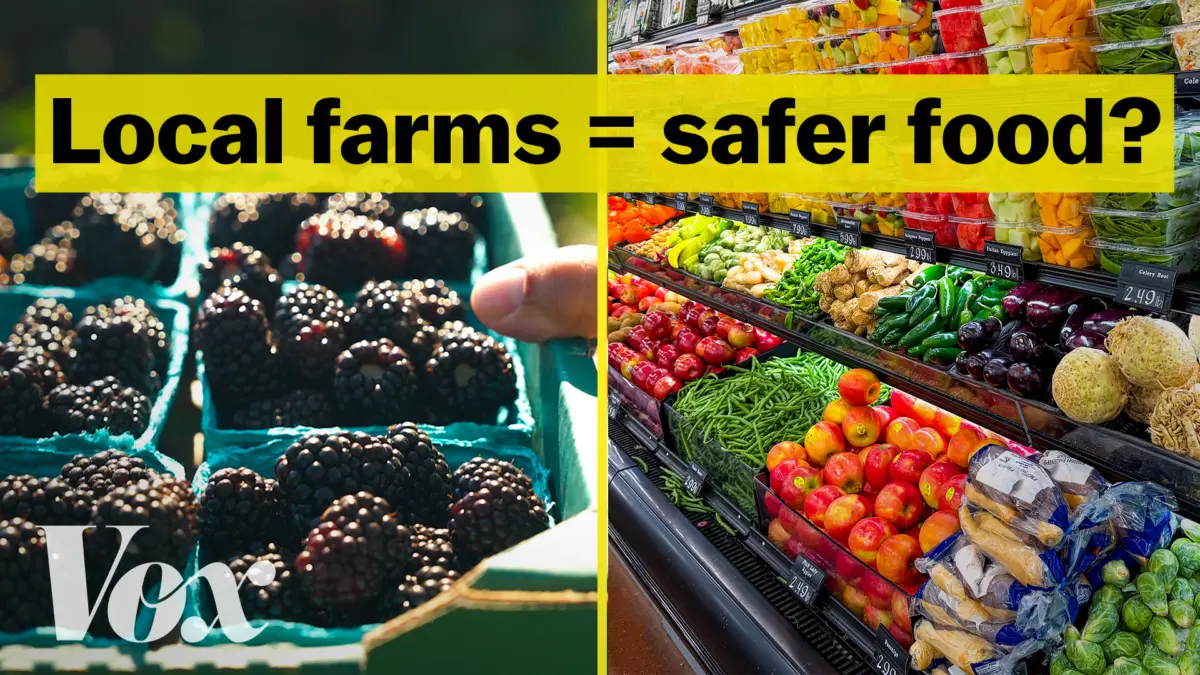
Executive Overview
The relationship between the American consumer and the food on their plate is undergoing a profound structural evolution. For decades, the dominant paradigm of food acquisition relied on centralized, highly industrialized supply chains. Supermarkets offered convenience, out-of-season availability, and heavily consolidated product lines that traversed thousands of miles before reaching store shelves. Today, however, that paradigm is facing unprecedented scrutiny.
According to recent benchmark data from a 2025 consumer survey by the International Food Information Council (IFIC), 59 percent of Americans now consider it critical to know the precise geographic origin of their food, while 54 percent actively prioritize products that are consistently available locally. This shift is not merely a lifestyle choice or an aesthetic preference; it is a risk-mitigation strategy. A relentless wave of high-profile food recalls and foodborne illness outbreaks throughout 2026 has shaken public confidence in the centralized food supply. Consumers are increasingly asking fundamental questions about how their food is handled, processed, and transported.
At the center of this cultural and economic pivot are farmers markets. Across the United States, an estimated 8,700 active farmers markets serve as commercial hubs for roughly 40,000 agricultural producers. These spaces offer an antidote to the opaque, multi-layered industrial supply chain by establishing a direct line of sight between the grower and the consumer.
Read Also
To understand how small-scale family farms are navigating this new landscape—and how they are competing against massive, entrenched grocery conglomerates—we traveled to the agricultural fields of Camarillo, California. There, we examined the operational realities of local farming, the economics of direct-to-consumer sales, and the compelling safety and freshness pitches that are convincing more Americans to bypass the supermarket aisle in favor of the local farm stand.
Detailed Chronology: The Evolution of Modern Food Supply Vulnerabilities
To fully grasp the current momentum behind local agriculture, it is necessary to examine the historical and systemic trajectory that led American consumers to the breaking point with industrial food networks.
Phase I: The Consolidation of the Industrial Food Grid (Late 20th Century to Early 2020s)
For generations, agricultural efficiency in the United States was defined by consolidation. Small, diversified regional farms were steadily replaced by large-scale monoculture operations. Food production became concentrated in specific geographic corridors, requiring intricate logistics networks to distribute perishable goods nationwide.
During this era, efficiency meant economies of scale. Produce was harvested prematurely to withstand long-distance shipping, treated with artificial ripening agents, and routed through multiple distribution centers, processing plants, and cold-storage facilities. While this system successfully fed a rapidly growing population and kept baseline grocery prices relatively stable, it introduced deep systemic vulnerabilities. Each intermediary handling step—from the initial field harvest to the packing house, the long-haul freight carrier, the regional distribution center, and finally the supermarket backroom—multiplied the opportunities for contamination, spoilage, and supply chain bottlenecks.
Phase II: Supply Chain Fractures and Post-Pandemic Realities (2020–2024)
The vulnerabilities of the hyper-extended industrial food model were laid bare during the disruptions of the early 2020s. Labor shortages, fluctuating fuel costs, and logistical gridlocks exposed the fragility of a system that depended on components traveling thousands of miles. Consumers experienced empty supermarket shelves not because food was physically scarce, but because the distribution networks were too rigid to adapt swiftly to localized shocks.
During this period, public consciousness regarding food origins began to shift. Consumers spent more time cooking at home and started questioning the resilience of their food sources. Concurrently, public health agencies noted persistent challenges in tracing outbreaks of foodborne pathogens back to their root sources when produce was pooled from hundreds of different farms into massive commercial processing vats.
Phase III: The 2026 Safety Crisis and the Pivot to Local (2025–Present)
The tipping point arrived in mid-2026. A compounding series of high-profile food safety recalls and widespread foodborne illness outbreaks dominated national headlines. From widespread parasite contaminations to bacterial outbreaks linked to mass-produced convenience foods and pre-packaged salads, consumer trust in federal oversight and industrial food safety protocols plummeted.
As news cycles continuously reported on contaminated supply chains, everyday shoppers began altering their purchasing behaviors. The 2025 IFIC survey data, which captured the early indicators of this trend, quickly translated into real-world foot traffic at agricultural cooperatives, roadside farm stands, and community farmers markets. Rather than gambling on complex supply chains where a single contaminated lot in another state could trigger a nationwide recall, millions of Americans opted for radical transparency: buying food grown within a fifty-mile radius of their homes.
Supporting Context & Metrics: The Numbers Behind the Movement
Quantifying the shift toward local agriculture reveals a robust economic and social ecosystem that extends far beyond trendy weekend markets.
The Scale of Direct-to-Consumer Agriculture
- 8,700+ Farmers Markets: According to academic research published in the Journal of Agriculture, Food Systems, and Community Development, the United States maintains a network of over 8,700 farmers markets. These venues form the backbone of direct-to-consumer (DTC) agricultural commerce.
- 40,000 Agricultural Producers: Approximately 40,000 farmers rely wholly or partially on farmers markets and direct-sales models to maintain operational viability against low-margin wholesale markets.
- The 59/54 Rule: The 2025 IFIC survey underscores a profound psychological shift: 59 percent of consumers deem food origin knowledge critical, and 54 percent prioritize local availability. This represents a double-digit increase in consumer consciousness compared to decade-prior benchmarks.
The Geography of Produce Transit
To understand the safety and freshness value proposition of local farming, one must analyze the physical journey of conventional produce:
- The Industrial Route: Conventional fresh produce frequently travels between 1,500 and 2,500 miles from farm to plate. During this transit, it interacts with an average of four to six distinct intermediate facilities, including washing sheds, waxing facilities, commercial ripening rooms, and consolidation warehouses.
- The Local Route: Conversely, produce sold at a regional farmers market typically travels under 50 miles. In many cases—such as our observations in Camarillo—crops are harvested less than 24 hours before being displayed on market tables.
Economic Pressures on Small Family Farms
Despite growing consumer enthusiasm, small-scale farming remains a high-risk enterprise. Small family farms face immense economic headwinds:
- Input Costs: Unlike massive corporate agricultural conglomerates that secure volume discounts on seeds, fertilizers, and fuel, small farms pay retail or near-retail prices for essential inputs.
- Land and Labor: Navigating state labor regulations, water rights, and skyrocketing real estate values—particularly in prime agricultural states like California—places severe margin pressure on generational farming families.
- The Marketing Disadvantage: Grocery chains possess multimillion-dollar marketing budgets and ubiquitous physical locations. Small farms must compete through relationship-building, educational outreach, and an uncompromising commitment to quality.
Official Statements and Industry Insights
To evaluate the broader implications of this agricultural shift, we turn to perspectives from food safety experts, agricultural economists, and generational growers on the front lines of the local food movement.
The Food Safety Perspective
Public health officials and food safety researchers emphasize that while local food is not inherently immune to contamination, the architectural differences in the supply chain radically alter the risk profile.
"When you aggregate produce from five hundred different independent farms into a single commercial washing facility, you create a single point of failure," notes a prominent food safety epidemiologist who tracks foodborne illness vectors. "If one contaminated crop enters that pool, the entire processing batch becomes a vector for widespread distribution. When a consumer buys directly from a local farmer who harvested the crop yesterday, the traceability is absolute, and the radius of exposure—should an issue ever arise—is contained."
The Economic Reality: Voices from Camarillo
Driving out to the sun-drenched fields of Camarillo, California, provides a vivid illustration of how small family farms are attempting to bridge the gap between traditional agricultural heritage and modern consumer demands.
The Martinez family has operated a diversified 45-acre farm in the region for three generations. Speaking on the challenges of competing with major grocery store chains, farm manager Elena Martinez highlights the core of their business strategy:
"We can never win a price war against a multinational supermarket chain that sources produce from industrial mega-farms operating on razor-thin margins and massive volume," Martinez explains while walking rows of heirloom tomatoes. "So we don’t play that game. Our pitch isn’t about being the cheapest option on the shelf. Our pitch is about integrity, safety, and taste. When a customer walks up to our stand at the weekend market, they are talking to the person who planted the seed, weeded the field, and picked the fruit. You can’t get that kind of accountability down aisle four of a big-box store."
Martinez notes that the recent wave of food safety recalls has fundamentally changed customer inquiries at their farm stand.
"Five years ago, people asked about recipes or how long a vegetable would keep in the fridge," she says. "Today, the first question people ask is: ‘Where exactly was this grown, and who washed it?’ Consumers are nervous. They want to reclaim control over what they put into their bodies. For us, that anxiety has translated into a loyal, growing customer base that values direct relationships over corporate convenience."
Future Outlook: Where the Industry is Heading
As we look toward the remainder of the decade and beyond, the intersection of food safety, consumer demand, and local agriculture points toward several definitive trends.
1. The Institutionalization of "Hyper-Local" Sourcing
The demand for local food is expanding beyond weekend farmers markets. Forward-thinking institutional buyers—including school districts, hospital networks, and corporate cafeterias—are increasingly establishing direct purchasing agreements with regional farmers. By shortening institutional supply chains, these entities can simultaneously reduce food safety risks, support regional economies, and provide fresher meals to students and patients.
2. Technological Integration on Small Farms
To compete effectively and build even deeper consumer trust, small family farms are adopting accessible technology. Traceability tools, such as blockchain-backed QR codes on farm stand packaging, allow consumers to scan a label and instantly view harvest dates, soil management practices, and exact farm coordinates. This blend of traditional farming values with modern digital transparency will likely become a competitive differentiator for small-scale growers.
3. Policy and Legislative Shifts
As public awareness regarding food system vulnerabilities grows, advocacy groups are pushing for legislative reforms that support regional agricultural infrastructure. Investments in local processing facilities, regional cold-storage hubs, and simplified regulatory pathways for small-scale direct sales can lower barriers to entry for new farmers and help stabilize the local food ecosystem.
4. A Permanent Shift in Consumer Consciousness
Ultimately, the current movement toward local food is not a passing consumer fad. Driven by persistent safety concerns within industrial supply chains and an innate desire for connection to the natural world, shoppers are permanently altering their routines. While hyper-extended global supply chains will always retain a place in modern commerce for out-of-season and non-perishable goods, the foundation of daily fresh food consumption is tilting back toward the community level.
As families across America continue to seek out alternatives to the opaque processing plants of industrial agriculture, the humble farmers market and the independent family farm stand are reclaiming their historic role as the most trusted anchors of the nation’s food supply.





Comments
Facebook App ID not configured. Please add it in the Customizer.