
Executive Overview
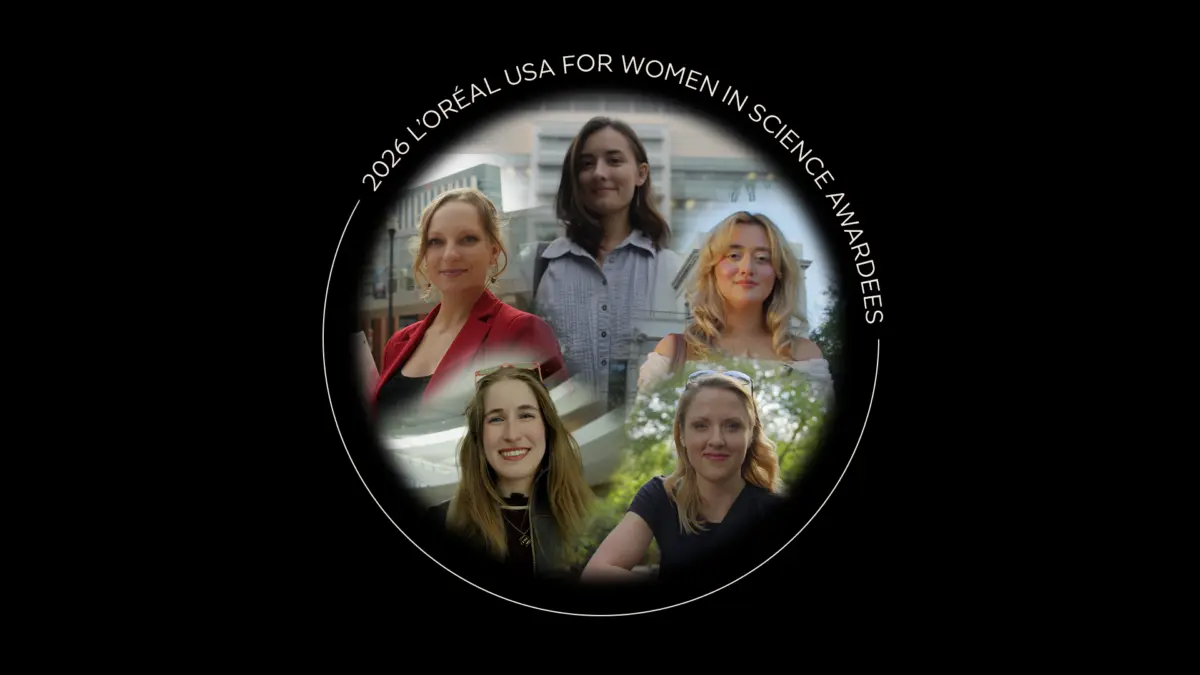
In an era defined by rapid technological disruption, ecological stress, and unprecedented demands on global healthcare and agricultural infrastructure, the vanguard of scientific discovery has never been more vital. On October 22, Vox will co-host an exclusive panel discussion and celebratory reception honoring the recipients of the 2026 L’Oréal-UNESCO For Women in Science Award. Marking the second consecutive year of this high-profile partnership, the event serves as a critical platform to elevate the voices, achievements, and leadership of five extraordinary postdoctoral women whose research spans the most demanding frontiers of modern science.
The overarching initiative—a prominent offshoot of the global L’Oréal-UNESCO For Women in Science program—continues its long-standing mission to bridge the persistent gender gap in STEM (Science, Technology, Engineering, and Mathematics). Despite incremental progress over the past few decades, women remain underrepresented in senior research positions, funded laboratories, and high-impact academic journals. By spotlighting five brilliant early-career scientists whose investigations range from the sub-cellular mechanisms of human immunity to the outer reaches of extrasolar planetary systems, this partnership seeks to rewrite the narrative of who conducts foundational science and how those breakthroughs are communicated to the public.
At the core of the October 22 event is the premiere of five short-form documentaries produced by Vox Media Creative. These cinematic profiles take audiences inside the laboratories, clean rooms, and field sites of the honorees, offering an intimate look at the human stories driving cutting-edge research. Furthermore, as the celebration commences, the scientific community is reminded that the cycle of innovation is continuous: applications for the 2027 L’Oréal-UNESCO For Women in Science grants have officially opened, inviting a new generation of postdoctoral scholars to step forward and claim their place among the world’s leading scientific minds.
Read Also
Detailed Chronology & Event Blueprint
The journey toward the October 22 celebration represents the culmination of a rigorous, multi-month evaluation process managed by a panel of distinguished scientists, academic leaders, and institutional partners.
The Selection and Evaluation Timeline
- Early Winter: The call for applications goes out to postdoctoral researchers across the United States, targeting women whose innovative work demonstrates exceptional promise, societal impact, and academic rigor.
- Spring: A multidisciplinary jury evaluates hundreds of competitive submissions across diverse fields, ranging from quantitative biology and astrophysics to environmental science and neuroimmunology.
- Summer: Finalists are selected, and production begins on the Vox Media Creative documentary shorts. Film crews travel to institutions such as the University of California, Berkeley; the Massachusetts Institute of Technology; Princeton University; the California Institute of Technology; and The Ohio State University.
- Early Fall: Final post-production is wrapped on the documentary series, and preparations are finalized for the hybrid live-streamed and in-person gala event.
- October 22: The official panel and reception take place, featuring live discussions with the laureates, screenings of the documentary shorts, and networking opportunities for leaders in academia, media, and industry.
- Post-Event Launch: National distribution of the documentary shorts across Vox Media platforms, alongside the active intake of applications for the 2027 grant cycle.
This structured timeline ensures that the award is not merely a ceremonial accolade, but a dynamic, year-long campaign designed to amplify the laureates’ research profiles, secure institutional visibility, and inspire young women globally to pursue rigorous scientific careers.
Supporting Context & Metrics: The 2026 Laureates and Their Work
The five recipients of the 2026 L’Oréal-UNESCO For Women in Science Award represent a diverse cross-section of modern scientific inquiry. Their projects do not exist in academic vacuums; rather, they address some of the most urgent existential, environmental, and technological challenges of the 21st century.
1. Dr. Danielle Stevens — Innate Immunity & Computational Biology
- Institution: University of California, Berkeley
- The Challenge: Global agriculture faces unprecedented pressures from climate change, evolving pathogens, and the unsustainable reliance on chemical pesticides, which degrade soil health, pollute waterways, and threaten biodiversity.
- The Innovation: Dr. Stevens is pioneering the intersection of artificial intelligence and plant biology. By leveraging advanced machine learning algorithms, her research accelerates the engineering of disease-resistant crops. Her work hones in on specific plant immune receptors—the molecular sentinels that detect invading pathogens. By fortifying these natural defense systems at the computational level, Dr. Stevens aims to drastically cut global pesticide use while safeguarding vulnerable food supplies against catastrophic crop failures.
2. Dr. Anna Romanov — Bioengineering & Immunology
- Institution: Massachusetts Institute of Technology (MIT)
- The Challenge: Traditional vaccine development and biologic therapies often rely on trial-and-error methodologies that fail to fully capture the dynamic, real-time evolution of the human immune system during infection or vaccination.
- The Innovation: Operating at the cutting edge of bioengineering, synthetic biology, and immunology, Dr. Romanov builds sophisticated molecular technologies designed to illuminate how B-cells—the white blood cells responsible for producing antibodies—evolve within the body. By mapping these complex evolutionary pathways with unprecedented resolution, her work provides the foundational insights required to design next-generation vaccines and targeted biologic therapeutics capable of outsmarting rapidly mutating viruses and autoimmune disorders.
3. Dr. Katherine Lagerstrom — Ecology & Evolutionary Biology
- Institution: Princeton University
- The Challenge: The Anthropocene has ushered in rapid, human-driven environmental transformations. From widespread chemical pollution and ubiquitous antibiotic use to habitat fragmentation and animal captivity, human activity is fundamentally altering natural ecosystems at the microbial level.
- The Innovation: Dr. Lagerstrom investigates the profound consequences of human contact on animal microbiomes. Her research explores how external pressures reshape the symbiotic communities of microorganisms residing within and upon animals. Crucially, her work tracks the alarming spread of antibiotic resistance within gut microbiomes, providing vital ecological data that connects wildlife health directly to the broader One Health framework encompassing human, animal, and environmental well-being.
4. Dr. Clarissa Do Ō — Astronomy & Planetary Sciences
- Institution: California Institute of Technology (Caltech)
- The Challenge: For centuries, humanity has gazed at the stars with limited optical tools, unable to directly image or characterize the atmospheric composition of worlds orbiting distant stars outside our solar system.
- The Innovation: Dr. Do Ō is an observational pioneer building the advanced instrumentation and optical technologies required to directly photograph extrasolar planets. Her engineering breakthroughs lay the groundwork for identifying and analyzing true Earth-like analogues—rocky planets orbiting Sun-like stars. By characterizing these distant worlds, her research seeks to answer profound questions regarding planetary habitability, cosmic rarity, and the ultimate placement of our own solar system within the broader universe.
5. Dr. Tana Pottorf — Neuroimmunology
- Institution: The Ohio State University
- The Challenge: Spinal cord injuries often result in permanent neurological deficits, driven not only by the initial mechanical trauma, but also by destructive, chronic inflammation that impedes neural regeneration and recovery.
- The Innovation: Dr. Pottorf focuses her research on the complex dual role of macrophages—key immune cells that infiltrate the central nervous system following trauma. While these cells are essential for initial tissue cleanup, their prolonged, dysregulated activity fuels chronic inflammation and scar tissue formation. Dr. Pottorf’s work aims to untangle this immune response, designing targeted therapies that preserve the beneficial, restorative effects of macrophages while aggressively curbing chronic neuroinflammation to maximize functional recovery for patients.
Official Statements & Industry Perspectives
The convergence of media influence and scientific philanthropy creates a powerful multiplier effect for gender equity in research. Leadership from both Vox and the L’Oréal USA organization have emphasized the broader cultural and structural implications of the initiative.
"Science is the bedrock of modern progress, yet the systemic barriers holding back brilliant women researchers rob society of its full intellectual potential," noted a representative from the organizing partnership. "By pairing rigorous financial support with high-impact visual storytelling through Vox Media Creative, we are not just funding laboratories—we are transforming cultural archetypes of what a scientist looks like."
Academic institutions housing the laureates have similarly underscored the significance of unrestricted postdoctoral funding. Postdoctoral fellowships represent a notoriously precarious juncture in an academic career—a stage where many talented researchers, particularly women burdened by caregiving responsibilities or systemic biases, choose to exit the pipeline.
Administrators at institutions like MIT and Caltech have praised the L’Oréal-UNESCO program for providing both the financial runway and the national visibility necessary to propel these five scientists into tenured faculty positions and leadership roles within the global scientific enterprise.
Future Outlook: The 2027 Grants and the Path Forward
As the October 22 event draws immense attention to the remarkable achievements of Drs. Stevens, Romanov, Lagerstrom, Do Ō, and Pottorf, the conversation immediately turns toward the future. The systemic transformation of STEM fields requires sustained, long-term investment, mentorship, and policy reform.
Expanding the Pipeline
With applications for the 2027 L’Oréal-UNESCO For Women in Science grants now officially open via the American Association for the Advancement of Science (AAAS) portal, eligible postdoctoral researchers across the nation are encouraged to apply. The program continues to offer crucial financial support—grants that winners can utilize flexibly to advance their research, hire assistants, purchase specialized equipment, or fund travel to critical international collaborations.
The Role of Digital Media in Scientific Literacy
The documentary shorts premiering at the event point toward a broader evolution in science communication. In an era marked by misinformation and skepticism toward empirical research, bridging the gap between complex laboratory breakthroughs and public understanding is paramount. By utilizing Vox’s digital reach to humanize the scientific process, the partnership demonstrates that complex topics like computational immunology, quantum optics, and neuroinflammation can be made accessible, compelling, and deeply relevant to the general public.
Ultimately, the L’Oréal-UNESCO For Women in Science program—bolstered by platforms like Vox—serves as both a mirror of current excellence and a beacon for future possibilities. As these five laureates continue to push the boundaries of human knowledge, they pave a clearer, more inclusive path for the countless women scientists who will follow in their footsteps.


Comments
Facebook App ID not configured. Please add it in the Customizer.