
Executive Overview
Years after the final credits rolled on one of Pakistan’s most celebrated television phenomena, the spirit of Sinf-e-Aahan remains remarkably alive. In an era where digital content is consumed at a breakneck pace and fleetingly discarded, a single, lighthearted piece of archival media has managed to captivate social media audiences all over again. A playful, behind-the-scenes video from the sets of the trailblazing military drama recently resurfaced, spreading rapidly across platforms like Instagram and X (formerly Twitter).
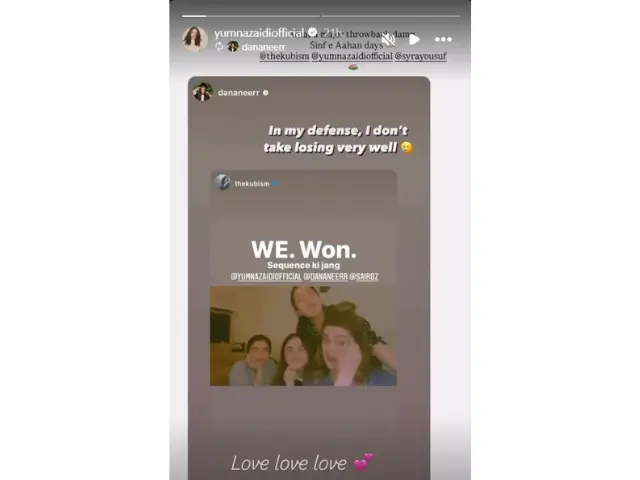
The digital revival was orchestrated organically by the show’s leading stars—Kubra Khan, Yumna Zaidi, and Dananeer Mobeen—who reshared the vintage clip on their respective social media stories. Accompanied by humorous captions, witty disclaimers, and affectionate confessions of competitive streaks, the post instantly transported fans back to the grueling yet joyful days of 2021 and 2022, when the cast was deep into the physical and emotional immersion of playing Pakistan Army cadets.
Beyond the immediate charm of seeing beloved actors engage in harmless on-set rivalry, this digital moment serves as a wider cultural touchstone. It invites both industry analysts and devoted fans to reflect on the enduring legacy of Sinf-e-Aahan. Produced by Humayun Saeed, Shahzad Nasib, Sana Shahnawaz, and Samina Humayun Saeed under the banners of Next Level Entertainment and Six Sigma Plus, in inter-services public relations (ISPR) collaboration, the drama was never merely a fictional television serial. It was a massive cultural undertaking designed to challenge stereotypes, champion female empowerment, and redefine the boundaries of mainstream Pakistani storytelling.
Read Also
This in-depth feature explores the anatomy of the viral throwback, the rich history and production background of Sinf-e-Aahan, the profound societal impact of its all-female ensemble cast, and the enduring bond that continues to unite its actors long after the cameras stopped rolling.
Detailed Chronology: The Anatomy of a Viral Throwback
To understand how a routine archival video captured the collective imagination of South Asian television fandom, one must trace the chronological sequence of events that brought the clip back into the spotlight.
The Genesis on Set (2021–2022)
During the principal photography of Sinf-e-Aahan—which translated to "Women of Steel"—the cast members spent exhaustive weeks filming in rugged environments, including the Pakistan Military Academy (PMA) in Kakul. Between grueling sequences involving obstacle courses, weapon handling drills, and high-intensity tactical training, the ensemble cast relied on humor to maintain morale.
It was during one of these rare downtime moments that a casual, unscripted game broke out among the actors. The stakes were low, but the competitive drive was unmistakably high. A crew member or cast mate captured the ensuing playful confrontation on a smartphone camera, recording a light-hearted sequence where teams squared off in a test of wits and coordination. At the time, the video was stored privately or shared only within closed circles, serving as an intimate reminder of the laughter that sustained the actors through a demanding production schedule.
The Digital Resurgence (August 2026)
The modern trajectory of the clip began when actor Kubra Khan—who portrayed the fiercely independent and articulate Captain Mahjabeen Masti Khan—stumbled upon the forgotten footage. Recognizing the comedic value and the wave of nostalgia it would trigger, Khan posted the video to her official Instagram Stories.
With characteristic wit, Khan captioned the video:
"WE. Won. Sequence war,"
She deliberately tagged her co-stars, including Yumna Zaidi, Dananeer Mobeen, and other members of the ensemble who were captured in the frame.
The Domino Effect: Cast Reactions
Within hours of Khan’s post, the digital ecosystem surrounding Pakistani entertainment reacted in kind. Dananeer Mobeen, known for her breakout role as Syeda Sidra Batool, was the first to accept the challenge, resharing the clip to her own massive following alongside a humorous, self-deprecating disclaimer:
"In my defence, I don’t take losing very well."
The playful banter was soon completed when Yumna Zaidi—who played the deeply spiritual and resilient Shaista Khanzada—shared the video to her feed with a note reflecting the collective sentiment of the cast and audience alike:
"Major throwback damn, Sinf-e-Aahan days."
The footage itself relied on a simple premise: a tense, mock-serious competition where Kubra Khan’s team emerged victorious, contrasted against Dananeer’s comically dramatic reaction to defeat. For millions of viewers scrolling through their feeds, the video offered a refreshing antidote to heavily curated celebrity culture. It revealed authentic chemistry, genuine friendship, and the harmless vanity of competitive actors who refused to lose even a casual on-set game.
Supporting Context & Metrics: The Phenomenon of Sinf-e-Aahan
The viral success of the throwback clip cannot be separated from the historical weight and critical acclaim of the television serial from which it originated. Sinf-e-Aahan was broadcast on ARY Digital from November 2021 to May 2024, commanding prime-time viewership and sparking nationwide conversations.
A Groundbreaking Ensemble Cast
Conceived as a spiritual successor to previous military-themed dramas like Ehd-e-Wafa, Sinf-e-Aahan broke new ground by placing women at the absolute center of the military narrative. The drama followed the rigorous journeys of six distinct female cadets hailing from vastly different socioeconomic, cultural, and geographical backgrounds as they trained to become commissioned officers in the Pakistan Army.
The staggering star power assembled for the project remains a landmark achievement in Pakistani television history:
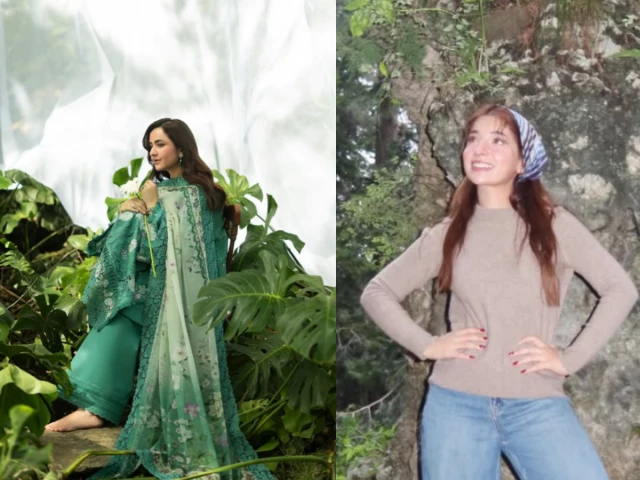
- Yumna Zaidi as Shaista Khanzada (representing traditional values, immense resilience, and intellectual strength).
- Kubra Khan as Mahjabeen Masti Khan (portraying urban privilege evolving into profound personal accountability).
- Sajal Aly as Rabia Safeer (capturing ambition, familial expectations, and elite grit).
- Syra Yousuf as Arzoo Danial (depicting minority representation, quiet grace, and domestic resilience).
- Ramsha Khan as Pariwash (showcasing regional diversity, overcoming systemic marginalization, and fierce determination).
- Dananeer Mobeen as Syeda Sidra Batool (introducing youthful exuberance, innocence, and comedic relief).
Critical Reception and Cultural Impact
The drama was directed by Nadeem Baig, written by Umera Ahmed, and produced by a powerhouse consortium that understood the cultural gravity of depicting women in uniform. Critics lauded the production for avoiding monolithic portrayals of female soldiers. Instead, Sinf-e-Aahan took time to dissect the individual flaws, insecurities, and triumphs of each character, rendering them thoroughly human.
Metrics of its success extended far beyond television rating points (TRPs). The drama generated hundreds of millions of views across digital platforms like YouTube, where individual episodes trended internationally within hours of release. It sparked widespread interest in the Pakistan Military Academy among young women, with recruitment inquiries surging during and immediately after the drama’s broadcast run.
Official Statements and Industry Perspectives
The enduring appeal of Sinf-e-Aahan and its off-screen bonds have frequently been highlighted by the creative minds and performers behind the project.
Speaking on the unique nature of the production, producer Sana Shahnawaz noted during post-release press interactions:
"Bringing six leading women together on one screen was an logistical and creative challenge, but the energy they generated on set was magnetic. They didn’t just act as comrades; they genuinely supported one another through physically punishing routines. That authenticity is precisely why audiences fell in love with them, and why years later, a simple silly video of them arguing over a game still feels so magnetic to the public."
Director Nadeem Baig often praised the dedication of the ensemble, noting that the physical training required for the roles—spanning obstacle courses, firing drills, and endurance exercises—created a literal "boot camp" environment that bonded the actors for life.
"When actors go through mud, sweat, and genuine exhaustion together for months on end, artificial barriers disappear," Baig observed in a retrospective interview. "The camaraderie you see in these throwback clips isn’t manufactured for the cameras. It’s the genuine byproduct of young women sharing a transformative professional and personal experience."
Future Outlook: The Legacy of Women-Centric Narratives in Pakistan
As the Pakistani television industry continues to evolve in a hyper-competitive global media landscape, the legacy of Sinf-e-Aahan serves as both a benchmark and a blueprint. The resurfaced clip and the warm public reception it received demonstrate that audiences are hungry for authentic depictions of female solidarity.
Shifting Industry Paradigms
For decades, prime-time television in South Asia was dominated by domestic melodramas that frequently pitted female characters against one another in toxic tropes of jealousy, familial sabotage, and systemic oppression. While those narratives continue to hold commercial viability, projects like Sinf-e-Aahan proved that stories focusing on female ambition, professional excellence, and mutual empowerment can achieve equal—if not superior—cultural resonance.
The individual trajectories of the cast members post-Sinf-e-Aahan further validate the project’s status as a career-defining launchpad.
- Dananeer Mobeen, who transitioned successfully from viral internet sensation ("Pawri Ho Rahi Hai") to a respected mainstream actor, cemented her acting credentials and secured critical acclaim, culminating in prestigious accolades at the Lux Style Awards.
- Yumna Zaidi and Sajal Aly have continued to push the envelope of artistic excellence, headlining internationally acclaimed projects that elevate the global profile of Pakistani art.
- Kubra Khan and Ramsha Khan remain fixtures of elite television, consistently choosing complex, multifaceted roles that defy traditional casting limitations.
Conclusion: More Than Just a Game
The internet’s affectionate embrace of a minor, unscripted argument over a casual on-set game is proof that the emotional architecture of Sinf-e-Aahan was built to last. It reminds viewers that behind the polished uniforms, the military salutes, and the dramatic screenplays were real women forging genuine friendships under extraordinary circumstances.
As these actors continue to conquer new creative frontiers, moments like this throwback serve as a comforting anchor—a reminder of a time when six women of steel came together to redefine what it meant to lead on Pakistani television, both on screen and behind the scenes.


Comments
Facebook App ID not configured. Please add it in the Customizer.