
Executive Overview
The contemporary landscape of Pakistani television has long been dominated by familiar, comforting tropes: pristine family estates, melodramatic domestic disputes, and the archetypal "chocolate boy" hero whose emotional conflicts rarely breach the surface of middle-class respectability. However, the entertainment industry is undergoing a seismic creative shift, driven by risk-taking directors and actors willing to shed their conventional personas for artistic authenticity.
At the center of this movement is Raja London Ka, a high-stakes serial broadcast on Express Entertainment. Billed as a bold departure from conventional programming, the project deliberately merges romance with visceral action and psychological thriller elements.
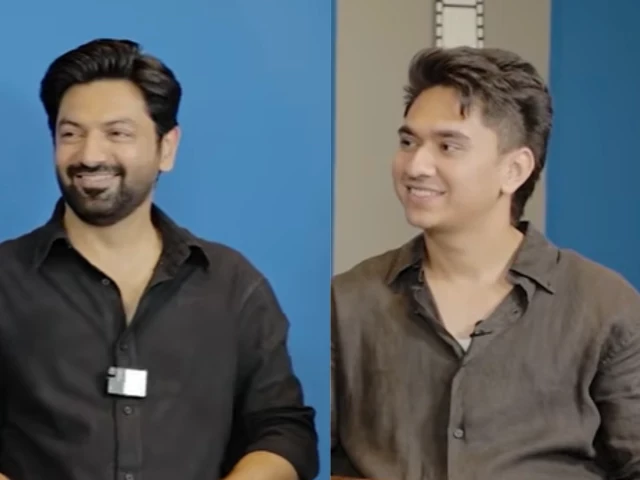
Recently, lead actor Samar Jafri and director Fajr Raza sat down to discuss the monumental physical transformations, uncompromising visual aesthetics, and creative gambles that went into bringing the series to life. Moving far away from polished sets and predictable narratives, the creative duo embraced a gritty, unpolished worldview designed to challenge audience expectations and redefine what a Pakistani television drama can achieve.
Read Also
Detailed Chronology: From Concept to Execution
The journey of Raja London Ka from script to screen represents a meticulous process of deconstruction and reconstruction, demanding immense physical, psychological, and logistical adjustments from its creative team.
Phase 1: Casting Against Type and Breaking the "Chocolate Boy" Mold
For Samar Jafri, stepping into the role of Raja meant violently severing ties with his previous career trajectory. Having spent his early years in the industry establishing himself as a gentle, soft-spoken, family-oriented fixture of television dramas, Jafri was initially viewed through a singular, safe lens.
Director Fajr Raza, however, envisioned something entirely different. Recognizing that the character of Raja originated from the rough-and-tumble environment of a marketplace like Landa Bazaar, Raza knew a traditional leading man would instantly break the illusion.
- "I told Samar that I didn’t want a typical chocolate boy here," Raza explained, detailing the early conceptualization phase.
- To embody a character hardened by harsh socioeconomic realities, Jafri underwent a drastic physical transformation. This required rigorous bulking up and adopting a heavily tanned complexion to simulate someone constantly laboring under the scorching sun.
Phase 2: Psychological Shifts and the Burden of Violence
The transformation extended far beyond cosmetics. Jafri noted that the most arduous aspect of the role was switching off from his real-life persona, which he describes as inherently non-violent. Because Raja’s narrative is propelled by anger, roughness, and street-level confrontations, Jafri first had to internalize the logic of violence before performing it.
Furthermore, executing realistic action sequences without extensive pre-production rehearsal tested the limits of the cast and crew. With little time for traditional choreography sessions, Jafri relied on the real-time ingenuity of action director Azam and Director of Photography (DOP) Imad. Every morning on set, intricate fight sequences were mapped out on the fly.
Jafri emphasized that authenticity was paramount:
"If action looks fake, it ruins the whole scene."
For an actor uncomfortable with physical aggression, the process required deliberate focus to ensure every punch and kick felt earned and weighed down by narrative stakes.
Phase 3: Constructing a Grungy Visual Universe
Director Fajr Raza adopted an equally uncompromising philosophy regarding the show’s physical environment. Refusing to rely on the polished, artificially lit soundstages common to mainstream television, Raza insisted on a "crusty and grungy" aesthetic.
"If we had shot on polished sets, the show would have lost its soul," Raza asserted.
This philosophy dictated everything from set design to costume choices. The cast members were deliberately styled to blend into the earthy brown tones and gritty textures of their surroundings rather than standing out as out-of-place icons of glamour. Through deliberate framing and blocking—such as physically positioning Raja lower than his love interest, Rani, on staircases or relative to vehicles—Raza utilized visual hierarchy to establish complex power dynamics without relying on heavy-handed exposition.
Supporting Context & Metrics: Breaking the Mold on Pakistani Television
To understand the magnitude of Raja London Ka, one must examine the broader economic and cultural metrics of the Pakistani television industry.
| Metric / Parameter | Traditional Pakistani Serial | Raja London Ka (Express Entertainment) |
|---|---|---|
| Primary Genre | Family Drama / Domestic Melodrama | Romance, Action, Psychological Thriller |
| Visual Aesthetic | High-key lighting, polished indoor sets, glamorous styling | Grungy textures, earthy brown tones, unpolished locations |
| Lead Character Archetype | Soft-spoken, affluent, emotionally restrained "family boy" | Sun-tanned, rugged, working-class survivor with raw edges |
| Action & Conflict | Verbal disputes, emotional confrontations | Physical altercations, street fights, dynamic spatial blocking |
| Risk Assessment Model | Safe formulas optimized for predictable ratings | Creative instinct driven by director and actor passion |
For Express Entertainment, greenlighting Raja London Ka represented a calculated gamble. While mainstream television networks historically lean into tried-and-tested family drama formulas to secure predictable advertising revenue, this project actively subverts those expectations. By introducing visceral action sequences, cinematic framing, and an unglamorized depiction of working-class struggle, the network has signaled an appetite for narrative diversification.
However, this departure has not been without controversy. Raza openly acknowledged that the deliberate roughness of the visual tone could invite criticism from viewers accustomed to pristine production values. Yet, both the director and lead actor remain steadfast in their belief that artistic integrity must supersede superficial comfort.
Official Statements and Industry Insights
Reflecting on their collaborative process, both Jafri and Raza offered profound insights into their creative philosophies, industry pressures, and the psychological mechanisms that sustained them through a grueling production schedule.
Fajr Raza on Creative Instinct and Artistic Risk
Addressing the potential pushback against the series’ gritty aesthetic, Raza maintained that storytelling must mirror the complexities of life rather than sanitized ideals:
"People might say it should have looked cleaner or more typical, but real life isn’t always polished. We intentionally chose a grungy tone because that’s what the show demanded."
When asked about his decision-making process, Raza dismissed standard risk-assessment models in favor of gut instinct:
"I don’t select a script based on a risk assessment. I look at whether the story excites me. If I am genuinely excited by it, the audience will feel that excitement too."
Raza also elaborated on the thematic depth of Raja and Rani’s relationship, noting that the narrative consciously avoids easy tropes where a hero simply arrives and wins the heroine’s affection:
"Raja has to become worthy of Rani. The story isn’t just about a hero showing up… he has to build himself up mentally and socially."
Samar Jafri on Evolution, Gratitude, and Trust
Looking back at his career, Jafri reflected on how his relationship with the entertainment industry has matured. Early in his journey, the constant need to prove himself generated significant anxiety. Today, however, he views the set as an extended family environment characterized by creative freedom and mutual respect.
Maintaining equilibrium amidst high-pressure shoots requires a grounding philosophy. Jafri credits his peace of mind to Tawakkul (trust in God):
"I rely heavily on Tawakkul… focusing on gratitude and the process rather than external validation stops industry pressure from becoming overwhelming."
This foundational trust also informed his working relationship with Director Fajr Raza. Even during creative disagreements, Jafri deferred to Raza’s overarching vision, recognizing that a director must orchestrate the entire map of the narrative rather than guarding a single character’s arc.
Future Outlook: A New Horizon for Serialized Drama
The release and reception of Raja London Ka serve as a crucial barometer for the future of Pakistani television. As streaming platforms and digital migration force traditional television networks to rethink their programming strategies, projects that challenge the status quo are no longer mere anomalies—they are necessary evolutions.
The success of Jafri’s physical and psychological transition proves that local audiences are increasingly receptive to multi-dimensional storytelling, gritty realism, and morally complex protagonists. By rejecting the safety of clean sets and predictable character arcs, creators like Fajr Raza are paving the way for a more cinematic, uncompromising era in South Asian television.
Ultimately, Raja London Ka transcends its classification as a standard television serial. It stands as a testament to the power of artistic conviction, proving that when directors and actors step out of their comfort zones, the resulting friction can ignite a powerful cultural conversation.



Comments
Facebook App ID not configured. Please add it in the Customizer.