
Executive Overview
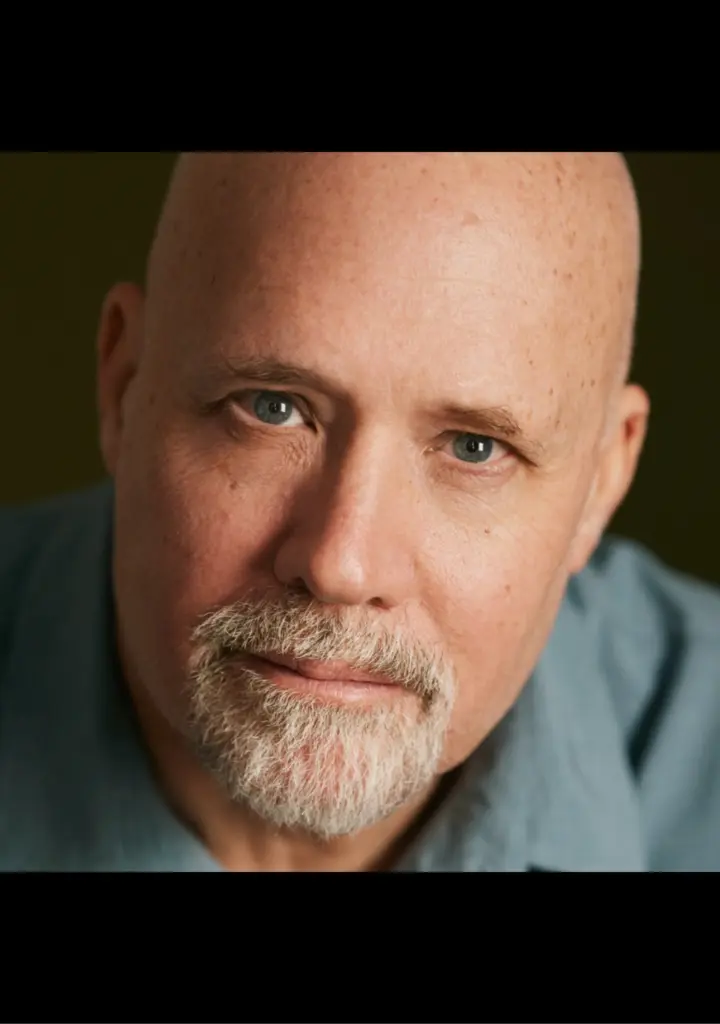
Nearly a decade after its initial publication as a standalone short story in the summer 2015 edition of The Missouri Review, Mitch Wieland’s evocative narrative "Snow Angels" has undergone a monumental metamorphosis. It now stands as The Ghosts of Okuma, Wieland’s eagerly anticipated third novel, which has already earned a coveted starred review from Kirkus Reviews and the distinction of a Best Indie Book for March.
Set against the sobering backdrop of post-Fukushima Japan, the novel follows an American protagonist named Wyatt who travels to Tokyo carrying his late mother’s ashes while searching for his missing sister. There, he crosses paths with Yoshimi, a young Japanese woman shaped by national and personal trauma.
In a wide-ranging, reflective interview conducted by Scout Hudson, Wieland details the arduous, ten-year literary journey required to scale down a massive, 2,000-page drafting process into a taut 275-page novel. Beyond the mechanics of book production, the discussion dives deep into the psychology of writing about foreign and domestic tragedies, the sensory neuroscience of narrative, and Wieland’s enduring legacy as an educator and founder of The Idaho Review and Boise State University’s MFA program. The Ghosts of Okuma is slated for release on November 3, coinciding with the thirtieth anniversary of the publication of Wieland’s debut novel, Willy Slater’s Lane.
Read Also
Detailed Chronology: From Muddy Idaho Fields to the Streets of Tokyo
The long road to The Ghosts of Okuma began far from the neon lights of Shinjuku. Wieland’s relationship with The Missouri Review spans decades, rooting itself in his formative years living in Japan from 1986 to 1991. During a period when Japan’s economy was superheating, Wieland immersed himself in literary short fiction by authors like Raymond Carver and Joy Williams, frequently encountering references to The Missouri Review in the mastheads of premier literary journals. Upon returning to the United States in 1991, it became his very first literary magazine subscription.
The connection deepened years later while Wieland was living on a farm near the Oregon border with his wife, Cindy. During a brutal heatwave with temperatures soaring past one hundred degrees, a windstorm blew open their roadside mailbox, scattering mail across the fields. While flood irrigating in gumboots through thick mud, Wieland discovered a letter from The Missouri Review editor Speer Morgan.
"He said he liked the story and that you guys had talked about it for an hour or so and the vote didn’t go the right way," Wieland recalled. "But he said to send another one. And that one was ‘Snow Angels.’"
The Turning Point: March 2011
Before "Snow Angels" was ever conceived as a novel, Wieland spent years working on a 500-page manuscript centered on Japan, guided by iconic literary agent Wendy Weil, who famously represented Alice Walker. Everything changed in March 2011.
While watching NHK—Japan’s public broadcaster—Wieland witnessed footage of the devastating tsunami rolling ashore. He quickly switched to CNN to grasp the full scale of the earthquake and tsunami.
"I just realized instinctively at that moment that I couldn’t write about Japan without this," he said.
Setting aside his entire 500-page manuscript, Wieland retained only a minor character named Yoshimi, who had previously appeared as a fleeting figure on the street. Bolstered by a National Endowment for the Arts grant and a one-year fellowship from Boise State’s Arts and Humanities Institute, Wieland secured eight uninterrupted weeks of research travel to Japan in 2012. He also traveled to Los Angeles to study plot and structure under renowned narrative gurus Robert McKee and Christopher Vogler.
By 2013–2014, "Snow Angels" was finished and published in The Missouri Review. Yet, the road to book publication remained fraught. After completing the novel by the 2020 pandemic lockdown—a notoriously difficult time to query new representation—Wieland signed with agent Julie Stevenson of Massie and McQuilken in 2021.
The editing process was ruthless. Out of roughly 2,000 generated pages, Wieland and Stevenson cut an additional 70 pages from the opening of the book, shifting the setting away from an initial San Diego prologue while retaining the powerful opening scene from the original short story. The book was officially sold in 2024, capping a roughly ten-year adaptation journey.
Supporting Context & Metrics: Cultural Trauma and Sensory Neuroscience
Wieland’s approach to writing about national disaster is rooted in both personal memory and deep empirical research. Having grown up in rural Ohio during the Three Mile Island nuclear incident, Wieland carried a lifelong anti-nuclear sensibility that informed his perspective on the Fukushima Daiichi disaster.
Parallels of National Grief
Comparing the cultural aftermath of Fukushima to American historic traumas, Wieland reflected on the eerie proximity of radiation leakage to densely populated Japanese urban centers. While post-9/11 America experienced a public, highly polarized grieving process with clear targets for blame and state-sanctioned narratives, Japan’s response to the 2011 triple disaster was complicated by corporate negligence.
Wieland points to investigative texts like Richard Lloyd Parry’s Ghosts of the Tsunami to highlight how public anger swiftly turned toward Tokyo Electric Power Company (TEPCO) after revelations of compromised safety margins and delayed evacuations in towns like Okuma.
The Neuroscience of Sensory Detail
A defining characteristic of The Ghosts of Okuma is its hyper-immersive setting. Drawing on his studies with Southern writer George Garrett, Wieland emphasizes the creation of a "sensuously effective texture."
"He would say, as far as the mind’s eye is concerned, it’s virtually indistinguishable from reality—you want to try to transport the reader into the scene with the characters," Wieland explained.
Modern neuroscience validates this pedagogical advice. Functional MRI studies demonstrate that reading sensory-rich language—such as descriptions of "clove cigarettes and lavender"—activates the brain’s olfactory and sensory processing centers precisely as if the reader were experiencing the stimuli firsthand. Combined with Tokyo’s inherent "sensory overload," Wieland utilizes this technique to anchor the reader firmly in moment-to-moment reality, bypassing passive observation in favor of physical presence.
Official Statements and Author Insights
In his conversation with Scout Hudson, Wieland articulated the central thematic engine of The Ghosts of Okuma:
- On Character Development: "That’s the goal of the writer, right? To try to connect so strongly with their characters that once they’ve got the character created, you can often just put them in the room and see what happens… A writer is often just exploring a scene. You go moment by moment and try to surprise yourself."
- On Interfacing Grief: "On the personal side, with Wyatt and his mother, my father had actually passed away when I was still working on the novel… On the national level, the thing that I tried to use as a guiding light is the fact that Wyatt is an outsider. He’s only there for ten days, and he’s trying to find his sister. He has a clear and visible outer goal. He’s also brought his mother’s [ashes] along. He has this inner need to find a place for her."
- On Real-World Inspiration: Wieland noted that Yoshimi’s distinct, fiery anger was partly inspired by Chim↑Pom, a provocative young Japanese artist collective that donned hazmat suits and tennis shoes one month after the disaster to unfurl a modified Japanese flag bearing the universal radiation symbol outside the smoldering Okuma power plant.
Future Outlook: Legacy, The Idaho Review, and Upcoming Releases
As The Ghosts of Okuma prepares to hit shelves on November 3—marking three decades since the release of Willy Slater’s Lane—Wieland is also approaching a transition point in his storied academic career.
Having co-founded Boise State University’s MFA program and launched The Idaho Review in 1998, Wieland has spent nearly thirty years cultivating a formidable literary legacy in the Pacific Northwest. Under his leadership, The Idaho Review published twenty acclaimed issues featuring literary giants like Joyce Carol Oates and T.C. Boyle, landing multiple selections in The Best American Short Stories and earning numerous Pushcart Prizes. Though leadership of the journal has successfully transitioned to his colleague Anna Caritj, the program continues to thrive under the pedagogical framework Wieland established.
The MFA program’s track record speaks for itself, boasting recent student and alumni publication successes including Mary Pauline Lowry (The Roxy Letters), Ariel Delgado Dixon (Sourland), Jackie Polzin (Brood, winner of the Los Angeles Times Book Prize), and Ayotola Tehingbola (author of the forthcoming story collection Lagos Will Be Hard For You).
For Wieland, seeing former students take the craft-focused lessons of George Garrett—passed down through decades of workshops—and run with them is the ultimate validation. As he approaches retirement from Boise State, the publication of The Ghosts of Okuma serves as both a culmination of a decade-long artistic labor and a brilliant new chapter in an already celebrated literary career.

Comments
Facebook App ID not configured. Please add it in the Customizer.