In the contemporary literary landscape, poetry often serves as a microscopic lens through which the vast, turbulent oceans of personal and collective history are examined. The Missouri Review’s selection of W. M. Lobko’s poem “I Was Braver Than I Thought” as its Poem of the Week for October 19, 2026, brings to the forefront a masterclass in evocative lyricism, childhood psychology, and the coping mechanisms deployed against domestic instability.
Lobko, an acclaimed poet whose work has previously graced the pages of prestigious literary journals such as the Iowa Review, Kenyon Review, Washington Square, Boston Review, and Guernica, constructs a visceral landscape in this piece. The poem navigates the fault lines of memory, counterposing the sterile, clinical smell of Lysol and the ozone-laced glow of plastic model spaceships against the jagged, unpredictable emotional violence of domestic trauma.
This analytical feature explores the depths of Lobko’s latest poetic offering. By contextualizing the work within his broader bibliography—which includes Pushcart Prize nominations and semi-finalist recognition for the 92Y/Boston Review Discovery Prize—this article offers an exhaustive examination of the poem’s text, its underlying psychological architecture, and the broader implications of its thematic concerns regarding myth-making, grief, and survival.
To fully appreciate the weight of “I Was Braver Than I Thought,” one must trace the chronology of experience and emotion embedded within its stanzas. The poem operates not on a linear timeline, but rather through associative leaps—where the physical sensations of childhood serve as portals to adult understandings of mortality, fear, and resilience.
The Standoff with the Unseen: Childhood Terrors
The poem opens with an immediate invocation of physical containment and somatic memory:
Cave of the crook of my arm. Slick heat of my breath on the desk Lysol would lift away.
From the outset, Lobko establishes a dual atmosphere of sanctuary and sterility. The "cave" of the arm offers a fragile shelter, while the breath on the desk evokes intense focus, isolation, and an implicit desire for cleanliness or erasure. The introduction of Lysol acts as a chemical barrier against the invisible world, setting up a profound realization:
Only lately having learned the ghosts that would wake me at 2 a.m. could be facts, germs in the chrome of the toy green motorcycle I dropped in the toilet, say, or the high twist in my mother’s voice when she learned her mother was dead.
Here, Lobko performs a brilliant deflation of supernatural terror. The specters of midnight are not sheeted phantoms, but the cold realities of microbiology and sudden grief. The transition from a contaminated toy motorcycle to the "high twist" in a mother’s voice upon hearing of her own mother’s passing bridges minor domestic anxieties with generational trauma. The striking simile—"like / the high E-flat of a bough breaking, / song I was then decades from singing"—foreshadows a grief that the speaker is not yet equipped to voice, locking an emotional frequency into the vault of memory to be sounded much later in life.
The Architect of Alternate Realities
As the poem progresses, the speaker seeks refuge in imaginative construction:
I was architect of an ice planet. I was a skull hearing itself with every graham cracker’s ashen reverberation.
The juxtaposition of galactic creation ("architect of an ice planet") with the bodily reality of eating a graham cracker (“ashen reverberation”) highlights the claustrophobia of childhood introspection. The imaginative worlds built by the child are designed to withstand pressures that the external environment cannot mitigate:
Sounds such as the walls could keep back, at least that’s what I imagined, model spaceships in grey plastic richly smelling of ozone under the armature light I aimed so relentlessly, faithful nothing would melt or erupt.
The "armature light" and the "model spaceships" become tools of desperate calibration. By controlling the miniature universe under the desk lamp, the child attempts to exert mastery over a household dynamic spiraling out of control.
The Domestic Epicenter and the Cosmic View
The emotional center of the poem erupts with cinematic violence:
The one fight we caught my mother & father having so heinous the sitcom characters stopped to watch, axe through the bucket klieg lights, axe through the snowbound door, axe through the umbilical.
The hyperbole of sitcom characters stopping to watch underscores the surreal horror of parental conflict. The repeated imagery of the axe—cleaving through buckets, doors, and metaphorically "the umbilical"—shatters the illusions of domestic safety.
Yet, the poem does not end in despair. Instead, it pivots toward a profound reconciliation with the vastness and fragility of space:
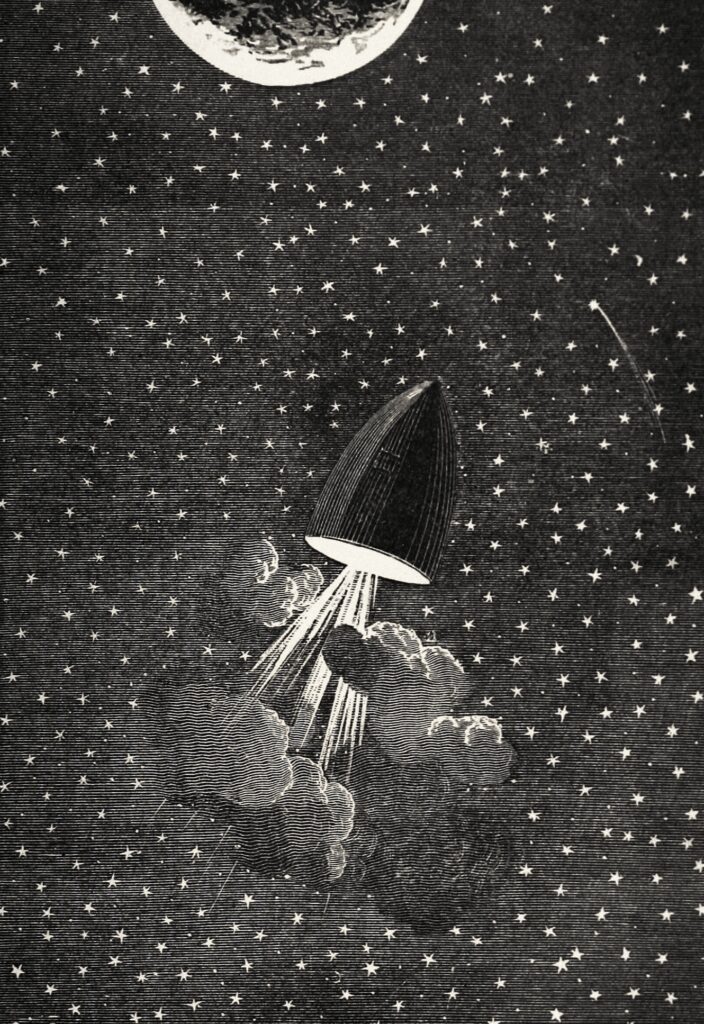
Still, I loved space, how inaccessible it was, its famous silence, how the ships crisscrossing it started out pristine then of a sudden were blast-scored, emphysemic buckets of bolts prayer could hold together.
The final image transforms the battered spaceships into vessels of endurance. They are imperfect, scarred by the journey, yet functional through sheer human will and "prayer." They mirror the speaker, and indeed humanity at large: battered by circumstance, yet enduring against the void.
Supporting Context & Metrics
W. M. Lobko’s literary pedigree provides essential context for the craftsmanship evident in "I Was Braver Than I Thought." Educated at the University of Oregon and currently teaching north of New York City, Lobko has cultivated a distinct voice within contemporary American poetry—one characterized by crisp imagery, emotional precision, and structural rigor.
Publication and Critical Acclaim Metrics
Core Journals: Lobko’s work has appeared in five of the nation’s most selective literary publications:
The Iowa Review
The Kenyon Review
Washington Square Review
Boston Review
Guernica
Awards and Honors:
Nominated multiple times for the Pushcart Prize.
Semi-finalist for the prestigious 92Y/Boston Review Discovery Prize.
Online Presence: Readers and scholars can explore his broader portfolio and upcoming projects via his official author portal at wmlobko.com.
Comparative Analysis of Recent Missouri Review Selections
To understand the literary ecosystem in which Lobko’s poem currently sits, it is instructive to look at the immediate preceding weeks of the Missouri Review’s Poem of the Week feature:
October 12, 2026: Catie Rosemurgy’s “Diorama 1871 (while a pie burns, the schoolteacher’s wife keeps going)” — A piece similarly fixated on domestic dioramas, historical pressure, and female endurance.
October 5, 2026: Trenna Sharpe’s “Hello, Bruce Springsteen” — An exploration of cultural iconography, personal longing, and regional identity.
While Rosemurgy and Sharpe utilize historical and pop-cultural lenses, Lobko turns the lens inward toward the architecture of domestic memory, utilizing science-fiction motifs to process childhood trauma.
Official Statements & Author’s Commentary
In an accompanying author’s note published by the Missouri Review, Lobko reflected on the shifting nature of his relationship with the poem:
"At first, I thought this poem was about my family, my parents, me—but I’ve come to see it more as a devotional of sorts to the stories & myths that help us make meaning, whatever they might happen to be."
This meta-critical observation elevates “I Was Braver Than I Thought” from a purely confessional narrative into a philosophical inquiry. The plastic spaceships, the ice planets, and the midnight germs are not merely autobiographical artifacts; they are the primitive mythologies constructed by the human mind to survive the incomprehensible friction of existence. By reframing the poem as a "devotional," Lobko acknowledges the sacred function of imagination in moments of existential crisis.
Future Outlook
As "I Was Braver Than I Thought" continues to resonate with readers and critics following its October 2026 publication, it signals a vital ongoing trajectory in W. M. Lobko’s literary career. The poem exemplifies a growing trend in contemporary poetry that marries the domestic interior with cosmic scale—using speculative tropes to articulate the emotional realities of growing up amidst volatility.
Literary analysts anticipate that this piece will serve as a cornerstone for Lobko’s forthcoming collections, reinforcing his reputation as a poet capable of turning microscopic childhood observations into universal testaments of human resilience. For scholars, teachers, and poetry enthusiasts alike, Lobko’s latest work offers a rich text for classroom discussion, creative writing workshops, and deep literary critique.



Comments
Facebook App ID not configured. Please add it in the Customizer.