In the contemporary literary landscape, the intersection of domestic trauma, childhood imagination, and the architecture of memory remains a fertile and devastating terrain. On October 19, 2026, The Missouri Review designated W. M. Lobko’s poem “I Was Braver Than I Thought” as its prestigious Poem of the Week. This selection thrusts a powerful, evocative piece of modern verse into the national spotlight, prompting critical conversations about how poetry maps the hidden architecture of youth, grief, and survival.
Lobko, an acclaimed poet whose work has previously graced the pages of premier literary institutions such as the Iowa Review, Kenyon Review, Boston Review, and Guernica, constructs a world in this poem where plastic spaceships under an armature light stand as fragile bulwarks against familial chaos. The poem operates on multiple temporal planes: the immediate sensory claustrophobia of a child’s desk, the expansive and silent void of outer space, and the echoing reverberations of adult grief that ripple backward and forward through a life.
This review-style investigative feature explores the structural mechanics, thematic resonance, biographical context, and literary significance of Lobko’s latest offering. By dissecting the poem’s visceral imagery—from the "slick heat" of breath on a desktop to the shattering "high E-flat of a bough breaking"—we uncover a masterclass in modern elegiac verse. Furthermore, we examine the poet’s own reflections on the work, shifting our perspective from a strict domestic autobiography to a broader, almost devotional exploration of the myths and stories humans construct to survive the unknowable.
The publication of "I Was Braver Than I Thought" arrives at a notable juncture in W. M. Lobko’s literary career. Having established himself as a distinct voice through rigorous craftsmanship, editorial publications, and nominations including a Pushcart Prize consideration alongside a semi-finalist position for the 92Y/Boston Review Discovery Prize, Lobko has built a reputation for tonal precision and psychological depth. His academic grounding at the University of Oregon, coupled with his current life and teaching endeavors just north of New York City, informs a poetic sensibility that balances Western expansive geography with northeastern introspection.
The rollout of the Missouri Review Poem of the Week highlights a curation process that consistently elevates verse capable of bridging the personal and the universal. In "I Was Braver Than I Thought," the chronology of the speaker’s internal awakening is nonlinear. The poem opens not with an action, but with a spatial containment:
Cave of the crook of my arm. Slick heat of my breath on the desk Lysol would lift away.
This striking invocation immediately establishes themes of sanitation, containment, and hidden vulnerability. The speaker recalls learning "only lately" that the phantom terrors of 2 a.m. were not supernatural monsters, but tangible, inescapable facts. These manifestations range from micro-dangers—such as germs residing on the chrome of a toy green motorcycle dropped in a toilet—to macro-tragedies: the sharp, fracturing twist in a mother’s voice upon learning of her own mother’s death.
As the poem progresses through its stanzas, the narrative moves from microscopic domestic anxieties to grand, solitary architectures:
I was architect of an ice planet. I was a skull hearing itself with every graham cracker’s ashen reverberation.
Here, the mundane act of eating a snack becomes an acoustic mirror of mortality and isolation. The child constructs imaginary galaxies using grey plastic model spaceships, suffused with the rich scent of ozone under a desk lamp. The lighting is adjusted "relentlessly, faithful / nothing would melt or erupt"—a poignant metaphor for the child’s desperate, obsessive control over an environment that is, in reality, spinning out of control.
The climax of this domestic theater arrives with the intrusion of parental conflict:
The one fight we caught my mother & father having so heinous the sitcom characters stopped to watch, axe through the bucket klieg lights, axe through the snowbound door, axe through the umbilical.
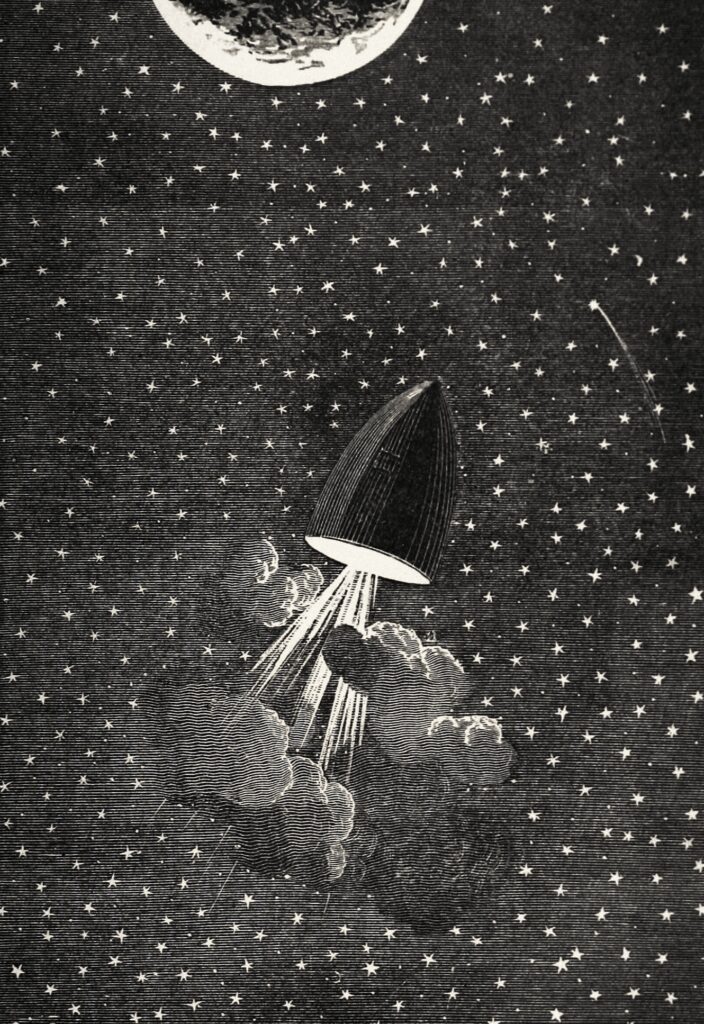
The surreal, cinematic violence of this memory shatters the illusion of safety. Yet, the speaker pivots immediately toward the transcendent: "Still, I loved space, / how inaccessible it was, its famous silence…" The poem concludes with a haunting observation of spaceships crossing that void—vessels that begin pristine before turning into "blast-scored, emphysemic / buckets of bolts / prayer could hold together."
Supporting Context and Metrics: The Anatomy of Modern Verse
To understand the weight of Lobko’s achievement, one must examine the metrics of contemporary poetry distribution and the literary ecosystem that supports works of this caliber. Platforms like The Missouri Review act as vital filtering mechanisms in an era oversaturated with digital content. Weekly poetry features serve as micro-events in the literary calendar, driving critical engagement and offering readers concentrated doses of high-art aesthetics.
Thematic Elements Breakdown
Thematic Motif
Literary Manifestation in the Poem
Psychological/Symbolic Interpretation
Domestic Containment
"Cave of the crook of my arm," "Lysol would lift away"
Attempts to sanitize and control a chaotic, unpredictable domestic sphere.
Micro-Traumas
Germs on a toy motorcycle, the "ashen reverberation" of a graham cracker
Hyper-vigilance; the child’s mind projecting existential dread onto everyday objects.
Architectural Escapism
Model spaceships, "ozone," "ice planet," adjustable armature lights
Creating a controlled secondary universe to cope with unmanageable parental volatility.
The Inevitability of Rupture
"Axe through the umbilical," "high E-flat of a bough breaking"
Sudden, irreversible losses that forever alter the psychological landscape of the speaker.
The linguistic choices within the text demonstrate a sophisticated ear. The use of medicalized or mechanical terminology—such as emphysemic, armature, reverberation, and ozone—clashes deliberately with organic markers of grief and family, like the "bough breaking" or the "crook of my arm." This friction creates a poetic tension that mirrors the speaker’s emotional state: an attempt to systematize and scientifically master feelings that are fundamentally chaotic and overwhelming.
Official Statements and Authorial Insights
In an accompanying author’s note published alongside the poem, W. M. Lobko offered profound insight into the evolving nature of his creation:
"At first, I thought this poem was about my family, my parents, me—but I’ve come to see it more as a devotional of sorts to the stories & myths that help us make meaning, whatever they might happen to be."
This meta-critical shift moves the interpretive framework of "I Was Braver Than I Thought" away from confessional melodrama and positions it within the broader tradition of myth-making. The plastic spaceships and ice planets are not merely childhood toys; they are the primitive theology of a child attempting to script a universe where chaos can be contained by narrative structure.
Literary critics have long noted that trauma often forces individuals—particularly children—into the role of mythographers. By framing the poem as a "devotional," Lobko elevates the coping mechanisms of his youth into sacred acts of faith. The prayer holding together the "blast-scored, emphysemic buckets of bolts" is not necessarily religious in an orthodox sense; rather, it represents the persistent human drive to imbue fractured histories with coherence, beauty, and survival value.
Future Outlook: The Legacy of Lobko’s Work
As "I Was Braver Than I Thought" continues to resonate across digital literary platforms and academic syllabi following its October 2026 feature, its long-term impact on contemporary poetry discourse is becoming increasingly clear.
Expansion of the Memoir-Poetry Hybrid: Lobko’s ability to weave personal history with cosmic metaphors provides a blueprint for contemporary writers seeking to escape the traps of flat confessionalism. By elevating autobiography into myth, the poem demonstrates how personal narratives can achieve universal resonance.
Pedagogical Integration: Given Lobko’s background in teaching north of New York City and his extensive publishing history, this poem is uniquely positioned to become a staple in creative writing classrooms. Instructors studying pacing, enjambment, and metaphoric escalation will find rich material in the transition from the desktop "cave" to the silence of interstellar space.
Anticipation of Future Collections: Readers drawn in by the evocative power of this Poem of the Week will undoubtedly look toward future manuscript developments from Lobko. As a writer who has consistently honed his craft through high-profile journal publications, his trajectory points toward significant upcoming contributions to American letters.
In conclusion, W. M. Lobko’s "I Was Braver Than I Thought" stands as a triumph of contemporary verse. It reminds us that bravery is rarely a cinematic display of fearlessness; rather, it is often found in the quiet, desperate acts of imagination required to survive our earliest environments, holding our broken vessels together with the fragile, enduring thread of prayer and story.








Comments
Facebook App ID not configured. Please add it in the Customizer.