

In the contemporary landscape of American poetry, few works manage to marry the domestic anxieties of childhood with the vast, impersonal terrors of the cosmos quite as arrestingly as W. M. Lobko’s latest piece. Titled “I Was Braver Than I Thought” and selected as the Missouri Review Poem of the Week for October 19, 2026, Lobko’s latest offering dives deep into the vaults of memory, examining how innocence is both preserved and shattered under the weight of early realizations.
The poem serves as a masterclass in tonal juxtaposition, contrasting the comforting, tactile mundanity of childhood rituals—such as the scent of Lysol, the texture of graham crackers, and the plastic smell of model spaceships—with the abrupt, seismic intrusions of adult reality. Through striking imagery, Lobko charts the evolution of fear from the supernatural ghosts of early childhood to the concrete, biological truths of germs, loss, and familial breakdown.
This comprehensive analysis explores the mechanics of Lobko’s poem, contextualizing it within his broader body of work, examining the thematic undercurrents of myth-making and memory, and assessing the broader implications of his poetic vision for contemporary literature.
Read Also
Detailed Chronology & Literary Context
The Trajectory of W. M. Lobko
W. M. Lobko has carved a distinct and respected niche for himself in the contemporary literary ecosystem. An alumnus of the University of Oregon who currently resides and teaches north of New York City, Lobko’s writing has long been celebrated for its psychological acuity and lyrical precision. His poetry, critical reviews, and interviews have graced the pages of some of the nation’s most prestigious literary journals, including the Iowa Review, the Kenyon Review, Washington Square, the Boston Review, and Guernica.
Furthermore, Lobko’s literary merit has been underscored by significant accolades, including a nomination for a Pushcart Prize and recognition as a semi-finalist for the esteemed 92Y/Boston Review Discovery Prize. His work often navigates the intricate intersections of memory, landscape, and personal history, building a bridge between the intimate spaces of domestic life and the broader philosophical questions that dictate human existence.
Anatomy of "I Was Braver Than I Thought"
“I Was Braver Than I Thought” represents a crystallization of Lobko’s thematic preoccupations. The poem opens in a posture of physical and psychological retreat:
“Cave of the crook of my arm. / Slick heat of my breath on the desk / Lysol would lift away.”
Here, the speaker establishes an environment of containment. The desk and the arm function as makeshift bunkers against an awakening consciousness. Lobko articulates a profound developmental shift: the realization that the imagined monsters of the dark are supplanted by cold, hard facts—“germs in the chrome of the toy green motorcycle / I dropped in the toilet, say, / or the high twist in my mother’s voice / when she learned her mother was dead.”
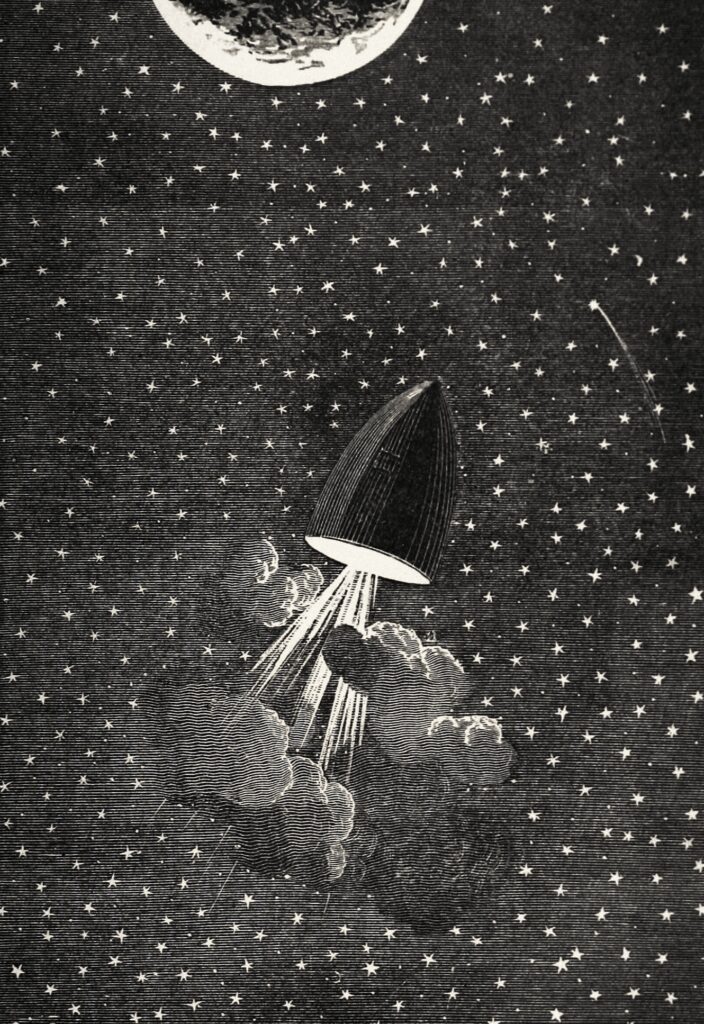
As the poem progresses, the domestic sphere gives way to cosmic metaphors. The speaker casts himself as the “architect of an ice planet,” retreating into a world of gray plastic model spaceships. These objects are rendered with sensory vividness, “richly smelling of ozone under the armature light I aimed so relentlessly, faithful nothing would melt or erupt.”
Yet, this controlled universe of childhood imagination is violently punctured by domestic turbulence. In one of the poem’s most arresting turns, the speaker recalls a parental argument so devastating that “the sitcom characters stopped to watch.” The violence of the memory is rendered through surreal, jagged imagery: “axe through the bucket klieg lights, / axe through the snowbound door, axe through / the umbilical.”
Despite this trauma, the poem pivots toward a paradoxical endurance. The speaker confesses a deep, enduring love for space—not merely for its physical grandeur, but for its “famous silence,” where broken and battered vessels manage to endure through sheer, desperate will: “emphysemic buckets of bolts / prayer could hold together.”
Supporting Context & Thematic Metrics
To fully appreciate the resonance of “I Was Braver Than I Thought,” one must examine the architectural choices Lobko employs. The poem operates on several distinct symbolic and thematic levels:

1. The Domestic versus the Cosmic
Lobko masterfully scales down the infinite universe to fit within the confines of a child’s bedroom, while simultaneously inflating domestic micro-dramas to cosmic proportions. The model spaceship under the armature light is a literal toy, but it functions psychologically as a life-support system. The juxtaposition of household disinfectants (Lysol) with interplanetary exploration highlights the child’s attempt to sanitize and control an unpredictable domestic environment.
2. Auditory Landscapes and Acoustic Memory
Sound plays a pivotal role in the poem’s emotional architecture. The grief of the speaker’s mother is likened to “the high E-flat of a bough breaking, / song I was then decades from singing.” Later, the act of eating a graham cracker becomes an acoustic encounter with mortality: “a skull hearing itself with every graham cracker’s ashen reverberation.” Lobko treats sound not merely as an auditory phenomenon, but as a physical weight that fractures the fragile silence of childhood.
3. The Psychology of Resilience
The title itself—“I Was Braver Than I Thought”—acts as a retrospective umbrella over the entire narrative. The bravery being celebrated is not that of a classical hero slaying dragons, but the quiet, harrowing endurance of a child sitting under an armature light, listening to the fracture of a family, and constructing a fragile universe out of plastic and ozone to keep the chaos at bay.
Official Statements & Authorial Insight
In reflecting upon the genesis and evolution of “I Was Braver Than I Thought,” W. M. Lobko offered a profound authorial note that sheds light on the poem’s broader philosophical ambitions:
"At first, I thought this poem was about my family, my parents, me—but I’ve come to see it more as a devotional of sorts to the stories & myths that help us make meaning, whatever they might happen to be."
This insight shifts the interpretive lens of the text. While the poem is undeniably anchored in deeply personal autobiographical signifiers—parental grief, domestic discord, childhood hobbies—Lobko invites readers to look past the specific narrative details. The model spaceships, the ice planets, and the desperate prayers holding together “emphysemic buckets of bolts” are elevated from childhood nostalgia to universal archetypes. They represent the myriad fictions, routines, and mythologies humanity constructs to navigate the existential vacuum.
By framing the poem as a "devotional," Lobko sanctifies the coping mechanisms of the human psyche. The imagination is not presented as a simple escape from reality, but as a sacred, necessary apparatus for survival.
Future Outlook & Literary Significance
The selection of W. M. Lobko’s “I Was Braver Than I Thought” as the Missouri Review Poem of the Week highlights the enduring power of lyric narrative in contemporary American letters. As readers and critics continue to engage with Lobko’s work online and in print, the poem is poised to become a touchstone for discussions regarding trauma, memory, and the creative act as a therapeutic imperative.
Looking forward, Lobko’s ongoing contributions to literary journals, coupled with his academic and pedagogical endeavors north of New York City, cement his status as a vital voice in modern poetry. Works like “I Was Braver Than I Thought” remind us that poetry retains an unmatched capacity to translate the invisible fractures of childhood into enduring art, proving that even when the domestic door is breached and the universe seems hostile, the human spirit continues to construct vessels capable of traversing the dark.
For readers wishing to explore more of Lobko’s work, his official portfolio and writings remain accessible via wmlobko.com, while the full text of “I Was Braver Than I Thought” and its accompanying archival features can be found directly through the Missouri Review digital platform.





Comments
Facebook App ID not configured. Please add it in the Customizer.