
Executive Overview
KARACHI — The contemporary Pakistani musical landscape continues its rapid evolution with the release of “Shabnam,” the fourth installment in the groundbreaking Coke Studio Nu.WAV series. Dropped on October 18, the track brings together the distinct creative sensibilities of singer-songwriter Maanu, rising vocalist Zoha Waseem, and visionary electronic producer Talal Qureshi.
Far from a standard romantic ballad, “Shabnam” dives headfirst into the murky psychological waters of modern romance. It explores the fragile architecture of love, doubt, and suspicion, mapping out how two individuals can navigate the exact same relationship yet inhabit entirely different emotional realities.
Named after the Persian and Urdu word for morning dew—a poetic metaphor for moisture that evaporates before it can be firmly grasped—the track acts as an auditory exploration of ephemerality and emotional uncertainty. Lyrically and structurally, the song refuses to offer easy resolutions. Instead, it deliberately leaves the tension hanging in the air, echoing the unresolved paranoia that plagues its characters.
Read Also
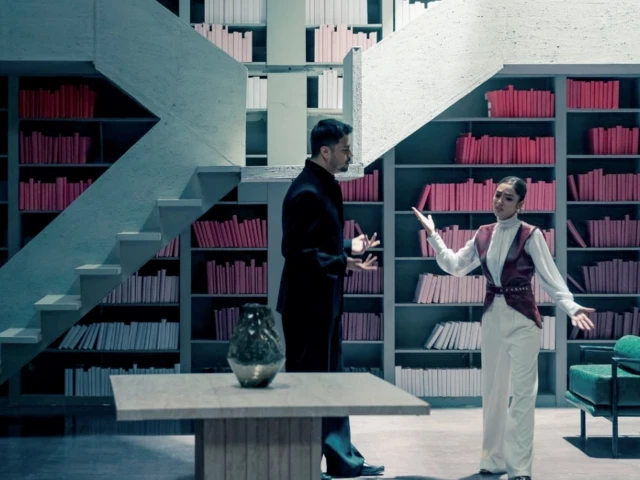
As the fourth track in a scheduled six-part rollout following “Dil,” “Rangeen,” and “Maheya,” “Shabnam” marks a watershed moment for Coke Studio Nu.WAV. By fusing Maanu’s slick pop-indie cadence, Zoha Waseem’s classical-meets-contemporary training, and Talal Qureshi’s razor-sharp electronic production, the release demonstrates the platform’s commitment to pushing Pakistan’s alternative sonic boundaries. Supported by a surreal, high-concept music video directed by Fida Moin and heavily influenced by architectural Brutalism and German Expressionism, “Shabnam” is as much a visual experiment as it is a sonic one, establishing a new benchmark for narrative-driven pop music in South Asia.
Detailed Chronology: The Making and Unfolding of ‘Shabnam’
From an Unfinished Beat to a Collaborative Dialogue
The genesis of “Shabnam” traces back to a creative partnership between producer Talal Qureshi and vocalist Maanu. Initially, the track existed merely as an instrumental skeleton—a moody, atmospheric beat cooked up by Qureshi, over which Maanu laid down early sketches of vocal melodies. However, the song lacked a narrative counterweight. It needed another voice to challenge Maanu’s internal monologue of suspicion, insecurity, and unanswered questions.
Enter Zoha Waseem. With her entry into the writers’ room, the song transformed from a straightforward introspection into a musical dialogue. Rather than harmonizing in traditional pop unison, Maanu and Waseem present competing perspectives. Maanu’s verses drip with doubt and hyper-vigilance, while Waseem’s vocal delivery counters with an opaque, guarded poise.
Written collectively by Maanu and Zoha Waseem, and co-produced by Maanu with arrangements shared between him and Qureshi, the track captures the friction of two minds failing to synchronize. The title, “Shabnam” (morning dew), serves as a guiding metaphor for the entire project. Just as morning dew is fleeting, evaporating under the heat of the sun before it can be held, the relationship depicted in the song slips through the characters’ fingers precisely because they try too hard to pin it down.
Translating Paranoia to Screen: The Music Video Production
The visual accompaniment to “Shabnam,” directed by Fida Moin, elevates the song’s themes of psychological distress into a surreal domestic nightmare. Moin takes the lyrical paranoia and projects it outward, utilizing a surrealist lens where everyday objects and familiar domestic gestures take on exaggerated, menacing proportions through Maanu’s clouded perspective.
The narrative of the video escalates from simmering psychological unease to outright chaos during a seemingly innocuous birthday gathering. Familiar domestic routines dissolve into surreal distortion, mirroring the collapse of trust within the relationship. Talal Qureshi anchors the chaos, making a deadpan cameo as a DJ who arrives at what he assumes is a standard party, only to find himself trapped in the epicenter of a household consumed by suspicion and domestic surrealism.
Architectural Anguish: Brutalism and German Expressionism
To ground this psychological unraveling in a tangible aesthetic, production designer and art director Tanya Mirza constructed a world heavily inspired by architectural Brutalism and German Expressionism.
Abandoning the bright, glossy aesthetics typical of mainstream pop videos, the visual universe of “Shabnam” is defined by:
- Raw Concrete Structures: Monolithic walls and cold, exposed surfaces that symbolize emotional isolation and entrapment.
- Cool Grey Tones: A desaturated color palette that drains warmth from the frame, reinforcing the themes of doubt and alienation.
- Imposing Interiors and Carefully Arranged Objects: Every prop in the frame feels deliberate yet menacing, creating an environment that is simultaneously recognizable and deeply unsettling.
This deliberate artistic choice bridges the gap between the music’s sonic texture and its visual storytelling, ensuring that the listener-viewer is enveloped in the same suffocating atmosphere experienced by the characters.
Supporting Context & Metrics: The Artists and the Platform
The Architectural Blueprint of Coke Studio Nu.WAV
Coke Studio Nu.WAV has rapidly established itself as the experimental vanguard of Pakistan’s most prestigious musical institution. While flagship seasons of Coke Studio focus on grand cultural fusions, heritage preservation, and stadium-sized anthems, the Nu.WAV offshoot operates as a laboratory for modern, genre-bending alternative music.
With “Shabnam” serving as the fourth release out of a planned six-song slate—succeeding “Dil,” “Rangeen,” and “Maheya”—the platform continues to build a distinct curatorial identity. It acts as a bridge, connecting underground subcultures with mainstream visibility, giving artists the creative autonomy to explore dark, complex themes that might otherwise struggle for commercial backing in conventional pop spaces.
Profile of the Creators
1. Maanu
Maanu has carved out a formidable reputation as one of Pakistan’s most versatile contemporary artists. Seamlessly moving across the indie, pop, and hip-hop spectrums, his catalog—highlighted by critically acclaimed projects like Melancholic, Khwaab, and Thikaana—showcases a writer obsessed with the nuances of modern urban existence. However, it was his collaboration with Annural Khalid on “Jhol” for Coke Studio Season 15 that propelled him into mainstream households, cementing his status as a premier melodic architect. In “Shabnam,” Maanu channels his signature conversational lyricism into a darker, more anxious domain.
2. Zoha Waseem
A unique voice in the contemporary Pakistani scene, Zoha Waseem bridges the worlds of classical vocal discipline, traditional ghazals, and contemporary pop. Waseem initially turned heads within cultural circles through her emotive performances honoring the legendary Madam Noor Jehan at Lahore’s historic Alhamra Arts Council. Her ability to translate classical modal nuances into digital-first pop releases, such as her breakout track “Majboor,” has earned her a dedicated following. On “Shabnam,” her vocal delivery provides the cool, detached counter-narrative that anchors the song’s emotional friction.
3. Talal Qureshi
As an undisputed pioneer of Pakistan’s electronic music revolution, Talal Qureshi needs little introduction. Qureshi’s sonic fingerprint is unmistakable, defined by heavy basslines, forward-thinking sound design, and an innate ability to fuse western club aesthetics with South Asian rhythms. Beyond his solo work and collaborations with international acts, Qureshi has heavily shaped the sound of modern Coke Studio, notably producing the viral Season 14 hit “Peechay Hutt,” alongside other forward-facing projects like “AAG” and TURBO. In “Shabnam,” Qureshi’s production acts as the invisible architecture holding the emotional turbulence together.
Official Statements and Industry Insights
The collaborative nature of “Shabnam” required a delicate balancing act between three distinct creative minds. Executive Producer Kamal Khan shed light on the inner workings of the project, highlighting how the song’s central tension was embedded from its earliest draft.
"The tension between the characters was present from the very beginning of the creative process," stated Kamal Khan, Executive Producer of Coke Studio Nu.WAV. "What started as a simple studio idea evolved organically into a fascinating dynamic: two people telling completely different versions of the exact same shared story."
Khan also praised director Fida Moin’s ability to navigate the fine line between psychological thriller and dark comedy.
"Fida’s direction does something remarkable here," Khan continued. "He manages to balance humor and utter strangeness against the underlying current of paranoia, ensuring the visual world feels both grounded in a recognizable domestic reality and completely unhinged."
Industry analysts have noted that “Shabnam” represents a maturation in how Pakistani pop music addresses mental health, relational anxiety, and internal conflict. By refusing to tie up the narrative with a neat, moralistic conclusion, the creative team has trusted their audience to sit with discomfort—a rare artistic risk in a commercially driven market.
Future Outlook: The Evolution of Alternative South Asian Pop
As Coke Studio Nu.WAV moves toward the final phases of its six-song rollout, projects like “Shabnam” signal a profound shift in the regional music industry. The success of this release proves that audiences are increasingly hungry for music that moves beyond traditional tropes of heartbreak and celebration into more nuanced psychological territory.
The fusion of Maanu’s indie-pop sensibility, Zoha Waseem’s classical depth, and Talal Qureshi’s electronic edge provides a blueprint for future collaborations across South Asia. It demonstrates that genre-blending is no longer a novelty, but the default language of a generation of artists who refuse to be boxed into legacy categorizations.
With two more tracks left in the Nu.WAV pipeline, anticipation is at an all-time high. If “Shabnam” is any indication of the platform’s curatorial direction, the remaining releases will continue to push aesthetic boundaries, challenge listener expectations, and solidify Pakistan’s position as a vibrant hub for avant-garde pop and electronic experimentation. The dew may evaporate before it can be held, but the sonic and visual imprint left by “Shabnam” will linger in the cultural consciousness for a long time to come.





Comments
Facebook App ID not configured. Please add it in the Customizer.