
Executive Overview
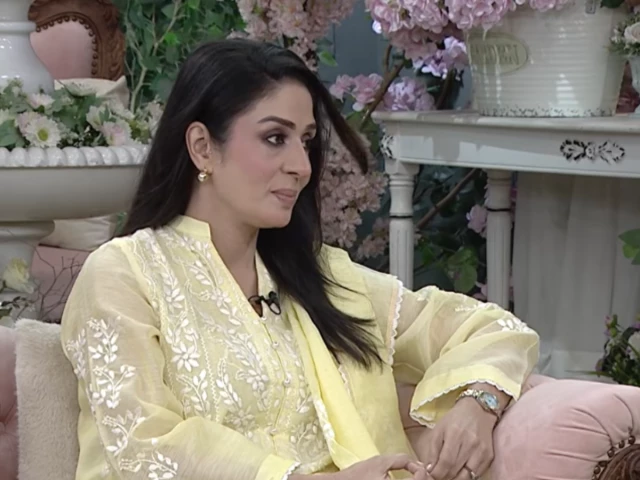
In an era where modern media frequently exploits domestic turbulence for sensationalist ratings, rare is the instance when a public figure utilizes a television platform to dissect the foundational structural cracks of modern family life with absolute candor. Veteran Pakistani television actor Saima Qureshi recently appeared on a prominent private channel’s morning show, delivering a searing, deeply personal, and socially resonant critique of toxic familial hierarchies. Qureshi did not merely touch upon the well-worn tropes of domestic friction; she systematically dismantled the underlying psychologies that perpetuate cyclic abuse within multi-generational households, placing a sharp focus on the psychological burdens carried by daughters-in-law, the generational complicity of mothers-in-law, and the profound, often neglected accountability of husbands.
The discourse, which has since ricocheted across digital platforms and sparked widespread public debate, centers on a radical yet profoundly simple proposition: that trauma should serve as a catalyst for empathy, not a weapon for replication. Qureshi argued that mothers-in-law who survived arduous domestic environments should actively shield their daughters-in-law from similar hardships, rather than enforcing them as a rite of passage. Simultaneously, she placed immense responsibility on modern husbands, urging them to evolve past archaic notions of familial neutrality, educate themselves on physiological and psychological realities such as pregnancy-induced mood swings via contemporary digital tools, and boldly stand as buffers and protectors for their wives. Drawing from her own lived experiences as a former young bride, a single mother of three who navigated a divorce while sustaining a high-profile career, and a beneficiary of an exceptionally compassionate mother-in-law, Qureshi’s insights bridge the chasm between traditional domestic expectations and the urgent necessity for progressive, human-centric relational ethics in South Asian households.
Detailed Chronology and Core Insights of the Discourse
The television appearance began with standard morning show pleasantries, quickly pivoting into unvarnished social commentary as Qureshi addressed the perennial, deeply entrenched friction point of the South Asian domestic structure: the mother-in-law and daughter-in-law relationship.
Read Also
The Psychology of Cycle Replication vs. Empathy
Qureshi directly challenged the psychological inertia that governs many traditional households. Addressing the audience, she highlighted a distressing behavioral paradox observed across generations: women who endured severe subjugation, mistreatment, or emotional isolation early in their married lives frequently turn around to inflict identical, if not amplified, psychological pressures upon the incoming young women who marry their sons.
"I have seen mothers-in-law who go through the worst themselves, yet they repeat the same behaviour with their daughters-in-law. But why?" Qureshi questioned, capturing the structural tragedy of domestic cycles. "If that has happened to her, she should do the opposite and treat her daughter-in-law differently. I feel it is really bad how mothers-in-law misbehave with their daughters-in-law."
This critique moves beyond simple interpersonal grievance; it addresses a systemic failure of emotional intelligence. Qureshi posited that true maturity involves utilizing personal adversity as a masterclass in compassion rather than a justification for tyranny. She reminded viewers of a fundamental biological and social reality that is frequently forgotten in the heat of domestic turf wars: every harsh mother-in-law was once a vulnerable young bride, and every mistreated daughter-in-law is someone else’s cherished child.
The Husband’s Burden: Navigating Divided Loyalties
While much of the societal finger-pointing in domestic disputes traditionally targets women, Qureshi boldly inverted the narrative by locating the epicenter of household peace—or chaos—within the agency of the husband. She rejected the tired trope of the helpless, passive husband trapped between two warring factions of mother and wife.
"Men also get stuck choosing sides between their mother and wife, which should not be the case. When a couple gets married, their relationship should be a priority," Qureshi stated firmly.
According to the veteran actor, marital stability requires an active, conscious realignment of loyalties. When a man takes marital vows, his primary ethical and emotional obligation shifts toward safeguarding the dignity, emotional security, and mental well-being of his wife. Qureshi noted that the pervasive refusal of men to establish healthy boundaries is the single greatest catalyst for domestic deterioration. "The main problem with all these talks is actually the husband because if he does not take a stand for you, nothing will change."
Modern Education and Emotional Literacy for Men
In one of the most progressive segments of her interview, Qureshi addressed the emotional illiteracy often exhibited by men regarding female physiology and psychological shifts, particularly during transformative life stages such as pregnancy. She dismissed the notion that men are helpless or inherently unequipped to understand female emotional landscapes.
Rather than relying entirely on their mothers or older female relatives to interpret a wife’s changing moods, Qureshi suggested that modern husbands leverage the vast informational resources available at their fingertips. "You have access to ChatGPT and YouTube. Husbands should take care of their wives and have the responsibility and understanding that their wives can experience changes or mood swings, especially during pregnancy," she remarked pointedly. "Men are not small kids who need their parents to teach them these things."
This perspective cuts to the heart of modern marital expectations. In an era where information on mental health, perinatal care, and emotional intelligence is instantaneously accessible via digital infrastructure, ignorance can no longer be excused as a cultural byproduct. Qureshi’s assertion demands that men step out of the shadows of parental coddling and assume active, autonomous roles as empathetic partners.
Supporting Context & Metrics: The Sociological Landscape of Domestic Friction
To fully appreciate the weight of Saima Qureshi’s commentary, one must examine the socio-cultural architecture of the South Asian domestic sphere. The multi-generational joint family system, while historically offering social security, financial pooling, and communal child-rearing, has concurrently served as an intense pressure cooker for psychological stress, identity erasure, and interpersonal conflict.
The Joint Family Pressure Cooker
Sociological studies across South Asia consistently indicate that domestic friction involving mothers-in-law and daughters-in-law accounts for a significant percentage of marital discord and psychological distress among young women.
- Power Dynamics: The traditional hierarchy often positions the newly wedded woman at the bottom of the domestic ladder, requiring her to prove her worth through subservience, domestic labor, and immediate emotional assimilation into a pre-existing family unit.
- The Mother-in-Law’s Identity Crisis: For many older women in patriarchal societies, their primary source of social authority and validation is derived through the control of the household and the subjugation of junior members—specifically their daughters-in-law. When an older woman surrenders this control, she may experience an existential crisis regarding her domestic relevance, often leading to defensive, hostile gatekeeping behaviors.
- The Silent Suffering of Husbands: Men caught in this web frequently resort to avoidance, emotional detachment, or authoritarian gaslighting, failing to realize that their silence is interpreted by both parties as tacit endorsement of mistreatment.
Mental Health Impacts on Young Brides
The psychological toll of this dynamic is well-documented by public health advocates in the region. Elevated rates of clinical anxiety, postpartum depression, and somatic stress disorders among young married women are frequently linked to hostile home environments and a lack of spousal support.
When Qureshi advocates for husbands to educate themselves on perinatal mood changes using digital tools, she is touching upon a critical public health gap. Postpartum depression and prenatal anxiety remain heavily stigmatized or entirely misunderstood in many traditional households, where emotional distress in pregnant women is often dismissed as "stubbornness" or "dramatic behavior." By urging men to utilize modern educational resources to decode these medical realities, Qureshi is advocating for preventative mental health care within the domestic sphere.
Personal Testimony as a Lens: Saima Qureshi’s Journey
Saima Qureshi’s authority on this subject is not merely theoretical; it is forged in the fires of personal hardship, professional resilience, and rare instances of profound grace.
A Journey of Resilience
Married at a remarkably young age, Qureshi’s early life followed the traditional trajectory of domestic expectation. However, life presented severe structural challenges when her marriage dissolved, leaving her to navigate the complex social landscape of single motherhood. Rather than retreating from public view or succumbing to societal pressures, Qureshi forged a formidable path in Pakistan’s entertainment industry. Raising three sons single-handedly while maintaining a prolific acting career—with recent standout performances in acclaimed television projects such as Ghulam Badshah Sundri and Duniyapur—has endowed her with a rare, battle-tested perspective on female autonomy, resilience, and dignity.
The Contrast of Compassion: The Ideal Mother-in-Law Experience
Ironically, despite her later marital dissolution, Qureshi’s formative experiences within the institution of marriage featured a striking counter-narrative to the toxic dynamics she routinely critiques. She credits her own mother-in-law as a profound, healing presence in her life.
"My mother-in-law was such a good person that I do not have the words for it," Qureshi shared, her voice carrying visible emotion. This contrast—having known both the grace of an empathetic elder and the harsh realities of the broader societal landscape—fuels her passionate advocacy today.
Radical Transparency from Day One
Drawing from this positive personal footprint, Qureshi offered a pragmatic blueprint for families entering into matrimonial alliances. She argued that deception and the performance of false perfection during the initial matchmaking and courtship phases are the root causes of subsequent domestic explosions.
"When you get your children married, you should go in with the mindset of showing your true selves from day one," she asserted.
Furthermore, Qureshi introduced a strict ethical reciprocity into the matrimonial equation, challenging the entrenched patriarchal double standard regarding parental respect: "If men expect the girl to respect their parents, they should be expected to do the same with hers." This demand for symmetrical obligation dismantles the traditional expectation that a woman must sever or minimize her emotional and physical loyalty to her own family of origin upon entering her husband’s home.
Official Statements and Cultural Reactions
The broadcast of Qureshi’s interview sent immediate shockwaves across Pakistani digital media, garnering millions of views, generating thousands of shares on video-sharing platforms, and sparking intense deliberations across social media networks.
Public and Critical Response
Social media commentators, particularly young women and progressive family counselors, lauded Qureshi for articulating truths that are rarely addressed by mainstream entertainment figures who often pander to conservative tropes for ratings.
- The Endorsement of Basic Decency: Many viewers echoed Qureshi’s sentiment that it is a sad commentary on modern society that basic human kindness must be debated as a revolutionary concept. As Qureshi noted, "We are discussing this topic here even though these are just basic human things. You need to live nicely with each other and treat your daughters-in-law the same way you treat your daughters, because you were also a daughter yourself."
- The Male Debate: Male commentators and internet users engaged in vigorous self-reflection, with many acknowledging the validity of the critique regarding spousal cowardice during family disputes. However, the discourse also highlighted defensive pushback from traditionalists who argued that public figures were undermining the sanctity of parental authority and the traditional joint family system.
Media Analysts’ Perspective
Cultural critics have pointed out that Qureshi’s intervention marks a notable shift in how veteran actors utilize their cultural capital. Rather than offering platitudes about patience (sabar)—a term frequently weaponized in South Asian societies to demand that women quietly endure abuse—Qureshi explicitly reframed patience not as passive submission, but as active boundary-setting, mutual accountability, and emotional intelligence.
Future Outlook: Reimagining the South Asian Family Paradigm
As the dust settles on the viral morning show appearance, the broader implications of Saima Qureshi’s dialogue point toward a necessary, long-overdue evolution in how domestic relationships are conceptualized, negotiated, and maintained in South Asian societies.
The Shift Toward Nuclear Autonomy vs. Healthy Joint Living
The ongoing discourse highlights a generational tension between the preservation of the joint family system at all costs and the rising demand for emotional and physical boundaries. While economic pressures and cultural traditions will continue to necessitate multi-generational living arrangements for millions of households, the internal culture of these homes is undeniably shifting.
Future domestic harmony will no longer rely on the absolute subjugation of the youngest member. Instead, as Qureshi’s commentary suggests, sustainability will depend upon:
- Generational Self-Awareness: Older matriarchs recognizing that their historical traumas do not grant them a license to inflict pain on the next generation.
- Spousal Courage: Husbands shedding passive neutrality in favor of active, protective partnership that honors both maternal ties and marital vows.
- Digital and Emotional Literacy: Utilizing modern informational tools to educate oneself on mental health, physiological shifts, and interpersonal communication.
- Symmetrical Respect: Dismantling the patriarchal expectation that a wife’s family is secondary in honor and dignity to that of her husband.
Conclusion: A Legacy Beyond the Screen
Saima Qureshi’s enduring legacy in the Pakistani entertainment industry will undoubtedly be anchored by her memorable performances across dozens of television screens. However, her willingness to step out of character, drop the theatrical facade, and address the raw, bleeding wounds of domestic reality may ultimately prove to be her most impactful contribution to society.
By demanding that mothers-in-law look inward rather than outward, that husbands pick up the mantle of responsibility rather than hide behind parental skirts, and that basic human decency replace archaic power games, Qureshi has provided a roadmap for healing. Her message resonates as an urgent, compassionate plea for a future where the home is no longer a battleground of cyclic trauma, but a sanctuary of mutual respect, understanding, and shared love.





Comments
Facebook App ID not configured. Please add it in the Customizer.