
Executive Overview
For any emerging or established author navigating the complex, highly competitive landscape of traditional and independent publishing, identifying comparable titles—commonly known as "comps"—is an indispensable milestone. Whether embedded in a meticulously crafted query letter directed at prospective literary agents or showcased in a book proposal aimed at acquisitions editors, comp titles serve a singular, vital purpose: they act as a cryptographic key to the market. They signal to industry gatekeepers precisely where a manuscript sits on the shelf, which readership it targets, and, crucially, whether it holds commercial viability in an unforgiving economic climate.
Yet, despite their absolute necessity, sourcing accurate, contemporary, and strategically sound comps remains one of the most frustrating pain points for writers. Authors frequently experience intense psychological proximity to their own creative work, convincing themselves that their narrative is entirely singular, unprecedented, and untethered to existing literature. Conversely, when they do attempt to search for benchmarks, they may lean toward classics, out-of-print titles, or runaway mega-bestsellers that distort market expectations.
Enter an unexpected yet historically rich resource: the local public library. Librarians, who spend their careers engaging in "readers’ advisory"—the delicate art of matching the right reader with the right book through structured reference interviews and advanced bibliographic databases—possess a unique toolkit for decoding genre tags, audience overlaps, and narrative DNA. However, transitioning from a casual library patron looking for a weekend read to a strategic author positioning a manuscript for a commercial sale requires a sophisticated methodological pivot.
Read Also
This comprehensive report investigates the professional mechanics of sourcing, filtering, and validating book comps. Drawing on insights from publishing acquisitions editors, metadata analysis, reader-behavior tracking platforms, and personal case studies from authors navigating the trenches of publication, we unpack how to transform an abstract creative vision into a hard-hitting, market-ready pitch.
Detailed Chronology of the Comp-Sourcing Process
Finding the right comparable titles is rarely a lightning-bolt realization; rather, it is a systematic, multi-phase investigative process. To build a robust collection of comps without falling down endless internet rabbit holes, authors must follow a structured, chronological methodology.
Phase 1: Internal Assessment and Baseline Ideation
The process begins before touching a database or search engine. Authors must first isolate the core components of their manuscript: its emotional resonance, its protagonist’s internal arc, its setting, its subculture, and its structural pacing.
- The "Vibe Check": As Julia Park Tracey, Acquisitions Editor and Founding Editor of Sibylline Press, points out, comps are largely about communicating a feeling. An author must ask: What is the emotional texture of this book? If a gritty narrative features a mild-mannered corporate whistleblower acting with the cunning of a noir detective, the comp strategy needs to bridge those seemingly disparate elements.
- Initial Brainstorming: Begin by writing down every book read within the last three to five years that evoked a similar emotional response or operated in a neighboring genre space. Do not worry about publication dates or sales figures yet; the goal here is simply to establish a broad pool of creative cousins to your manuscript.
Phase 2: Leveraging Metadata and Granular Categorization
Once a baseline list of one or two potential titles is established, the detective work begins. Authors must treat existing favorite books not just as entertainment, but as data points.
- Publisher Tags: Examine how the publisher categorizes the baseline comp on its corporate website. While these tags are often broad, they establish the macro-genre baseline.
- Granular Marketplace Digging: Navigate to platforms like Amazon, Barnes & Noble, Goodreads, and StoryGraph. On Amazon, look past standard BISAC codes—which can be overly generalized—and dive directly into the deep, highly specific category tree. If your baseline book is listed under "Gaslamp Fantasy," explore the niche sub-rankings to see what other titles populate that exact digital shelf.
- Algorithmic Cross-Referencing: Utilize the "Similar Books" or "Readers Also Enjoyed" functionalities on Goodreads and StoryGraph. These community-driven platforms surface books that share genuine reader overlap, offering insights that traditional publisher categorization might miss.
Phase 3: Filtering by Recency and Commercial Viability
A list of fascinating books is useless if it fails the publishing industry’s temporal and financial tests.
- The Recency Rule: Generally, traditional publishing houses expect comps to have been published within the last three to five years. An agent or editor needs to see proof that the contemporary market actively consumes books of this specific type.
- The Goldilocks Principle of Sales Data: Comps must have sold well enough to prove there is a market, but not so well that they become impossible, outlier benchmarks. Comparing a debut contemporary romance to The Da Vinci Code or Fourth Wing is a strategic miscalculation. Instead, look for mid-list titles that enjoyed solid, respectable commercial runs, steady review velocity, and healthy Goodreads rating counts.
Phase 4: Validation, Testing, and Integration
The final phase involves stress-testing the chosen comps through external feedback, query letters, and—above all—actually reading the selected titles to ensure they match the manuscript’s tone, pacing, and thematic delivery.
Supporting Context & Metrics: The Anatomy of a Marketable Pitch
To understand why certain comps succeed while others crash and burn, one must analyze the mechanics of how publishing professionals evaluate them.
The Librarian’s Toolkit: Bridging Readers and Writers
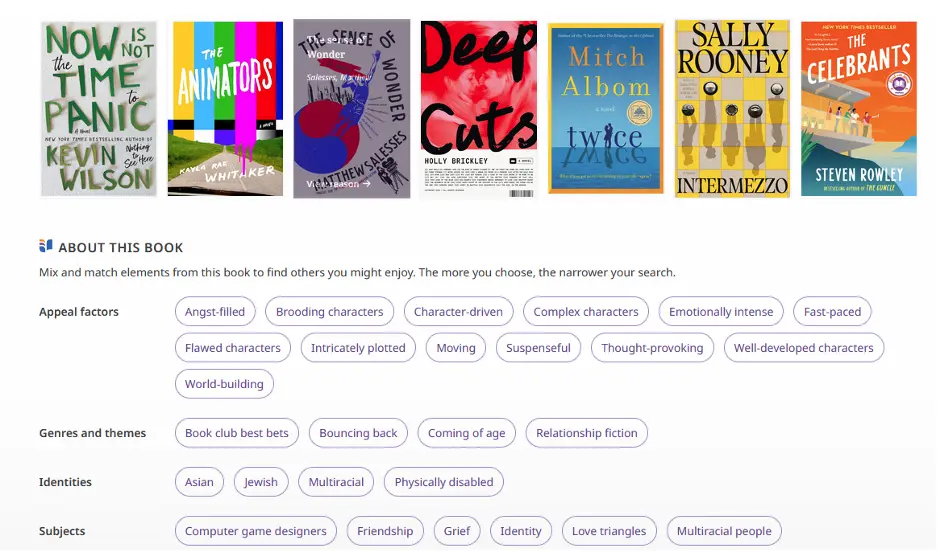
Librarians approach book discovery through structured reference interviews, asking targeted questions about preferred pacing, emotional tone, and thematic depth. When advising patrons looking for unfamiliar genres, they utilize powerful research databases such as NoveList, which analyzes books not just by subject headings, but by "appeal factors"—pacing, storyline type, tone, and writing style.
While a library patron can check out five wildly different books on a whim and simply return the ones they dislike, an author does not have that luxury in the submission trenches. Every word in a query pitch is precious real estate. Incorrect comps immediately signal to an agent that the author does not understand their own book or the current marketplace.
The Metadata Matrix: Amazon vs. BISAC
Industry professionals rely heavily on metadata to track market movements. Book Industry Standards and Communications (BISAC) codes provide standard categorization for the book trade, but they can be frustratingly broad.
As market analysts note, digital storefronts like Amazon provide infinitely more granular behavioral categorization. By examining how niche sub-genres cluster on retail platforms, authors can pinpoint micro-communities of readers. For example, knowing that a book ranks well in "Quirky Technological Fiction" rather than the monolithic "General Fiction" category provides actionable data that can radically sharpen a pitch.
The AI Wildcard: Friend or Foe?
In the modern landscape, authors increasingly turn to artificial intelligence and search engine algorithms to generate ideas. While typing keywords into Google or AI chatbots can surface interesting titles, this methodology carries severe risks.
- The Hallucination Hazard: Generative AI tools are notorious for inventing entirely fictional books that sound plausible based on keyword trends. An author who pitches a hallucinated comp to a literary agent destroys their credibility instantly.
- The Verification Mandate: AI can serve as an early, casual brainstorming partner, but every single suggestion must be meticulously verified across real-world databases (Goodreads, Amazon, publisher catalogs) and, ideally, read in full to ensure absolute accuracy.
Official Industry Perspectives
Industry veterans emphasize that while comps are indispensable marketing tools, they must be handled with nuance and psychological self-awareness.
Julia Park Tracey, Acquisitions Editor and Founding Editor of Sibylline Press, highlights the delicate balance between creative positioning and commercial realism:
"Your MC is like Mr. Darcy, even though he’s a skater dude or a mild-mannered reporter? Cool! The book ‘feels like’ a Nancy Drew mystery for grownups? I’m in! But the story has to stand on its own merit. The comps are for marketing… helping us answer the question: Can we sell this?"
Tracey’s insight underscores a fundamental truth: editors do not buy comps; they buy original manuscripts. Comps are merely the translation layer that converts an author’s artistic vision into the language of commerce.
Furthermore, industry experts regularly remind writers that the search for comps often founders on the rock of authorial bias. Writers are intimately connected to the nuances of their own creations, making it psychologically difficult to accept that another book could bear meaningful similarities. Conquering this bias requires stepping back to view the manuscript through the cold, clear lens of reader expectations rather than authorial intent.
Future Outlook: Navigating the Evolving Marketplace
As the publishing ecosystem continues to evolve under the pressures of algorithmic discovery, shifting consumer habits, and digital-first reading platforms, the strategy surrounding book comps will only grow more sophisticated.
The Rise of Hyper-Niche Communities
With platforms like BookTok (TikTok), Bookstagram, and specialized digital reading communities driving breakout hits based on hyper-specific tropes rather than traditional macro-genres, future comps will likely lean away from broad stylistic comparisons and move toward precise, trope-driven benchmarks. Authors will need to identify not just the author or genre of their comp, but the specific emotional payoff—the "trope intersection"—that modern readers actively hunt for.
The Integration of Advanced Discovery Tools
As databases like StoryGraph and NoveList continue to refine their machine-learning appeal algorithms, authors will have access to deeper, data-driven insights regarding reader psychology. Writers who learn to harness these tools—treating metadata as a creative canvas rather than a dry administrative chore—will hold a distinct competitive advantage in the query trenches.
A Final Word of Encouragement
Finding comps is, and always will be, an imperfect, iterative art. As demonstrated by seasoned authors who have spent years navigating the winding path to publication—such as Kathleen Reidy, author of the debut novel Engineering a Love Story—it is entirely normal to cycle through multiple comps across romance, upmarket, and women’s fiction before finding the precise combination that unlocks a publisher’s interest.
Engineering a Love Story ultimately found its home in the market by bridging disparate touchpoints—appealing to fans of character-driven contemporary fiction like Jennifer Weiner and Linda Holmes, while simultaneously capturing the quirky, turn-of-the-century tech subculture seen in Gabrielle Zevin’s massive bestseller, Tomorrow, and Tomorrow, and Tomorrow.
The lesson for every writer standing at the edge of submission is clear: start early, read widely, build a comp list larger than you think you need, and never hesitate to lean on your local librarian. The right match is out there, waiting in the stacks and the data streams to help your book find the audience it deserves.


Comments
Facebook App ID not configured. Please add it in the Customizer.