
The literary landscape of October 2026 brings an extraordinary wave of international literature, poetry, and nonfiction to English-language readers, highlighting works that bridge deep historical trauma with urgent contemporary anxieties. Curated across premier independent presses—including New Directions, Liveright, Comma Press, Feminist Press, Zephyr Press, and Charco Press—this month’s watchlist demonstrates the ongoing vitality of global translation.
From the devotional yet fiercely defiant poetry of sixteenth-century India to contemporary memoirs reckoning with the lingering scars of South American dictatorships, the featured texts share a common thread: they refuse to let history, memory, and systemic injustice be easily categorized or forgotten.
This comprehensive review examines six standout titles arriving this publishing season. Each work serves as a testament to the power of cross-cultural translation, offering readers profound insights into the resilience of the human spirit, the mechanics of state-sponsored oppression, the terrifying possibilities of the near-future, and the enduring necessity of art in dark times.
Read Also
Detailed Chronology & Book Profiles
1. Blue Like My Beloved by Mirabai (Translated from the Braj Bhasha by Chloe Martinez)
- Publisher: New Directions
- Format: Poetry | 96 pages | ISBN: 9780811240437 | Price: US$16.95
Opening the October 2026 watchlist is New Directions’ publication of Blue Like My Beloved, a remarkable collection of poetry by the legendary sixteenth-century mystic Mirabai, rendered into English by poet-translator and scholar Chloe Martinez. Having spent decades studying and absorbing Mirabai’s corpus, Martinez has curated a definitive volume that juxtaposes the poet’s most celebrated pieces with lesser-known works.

Mirabai’s verse is characterized by a vibrant intimacy and visionary perception. As the publisher notes, her emotional and thematic range burns with a lasting brilliance comparable to Rumi or Sor Juana Inés de la Cruz. Yet, translating Mira presents distinct challenges. As Martinez explains, the poet’s language often appears deceptively simple or folksy on the surface, but is actually dense with polyvalent vocabulary, complex sonic and metrical effects, and mythic codes deeply rooted in Krishna devotion.
The collection effortlessly bridges classical devotional poetry with the raw, emotional immediacy of modern lyricism. Lines such as "Mira’s sold into the Mountain Lifter’s hands. / People say she’s ruined" (from "Mira’s Hooked") pulse with stylistic defiance. These poems trace the shifting dynamics of a relationship defined by radical love and nonconformity, where the object of the speaker’s affection—a divine presence—remains a towering, immovable force.
2. The Man with Many Names by Georgi Gospodinov (Translated from the Bulgarian by Angela Rodel)
- Publisher: Liveright
- Format: Fiction | 240 pages | ISBN: 9781324097310 | Price: US$27.99
Following his historic International Booker Prize win for Time Shelter, Bulgarian author Georgi Gospodinov returns with The Man with Many Names, published by Liveright. Translated by Angela Rodel, this volume gathers forty of Gospodinov’s finest short stories written over a three-decade span.
While some readers familiar with Gospodinov’s work may recognize select pieces from earlier translations by Alexis Levitin and Magdalena Levy, Rodel’s new collection unifies disparate threads of his career. The book showcases his mastery of punchy, noir-influenced narratives that stretch the boundaries of identity, memory, and mortality. Ranging across urban and rural landscapes in and around Bulgaria, the stories explore mundane details—toilets, train stations, and linguistic idiosyncrasies—against a backdrop of a fading modern world.

As the narrator of "A Miracle Story" observes, "A miracle is a very personal thing"—a sentiment that echoes throughout the entire collection. Rodel’s translation captures Gospodinov’s signature blend of playfulness, philosophical depth, and affection for his compatriots.
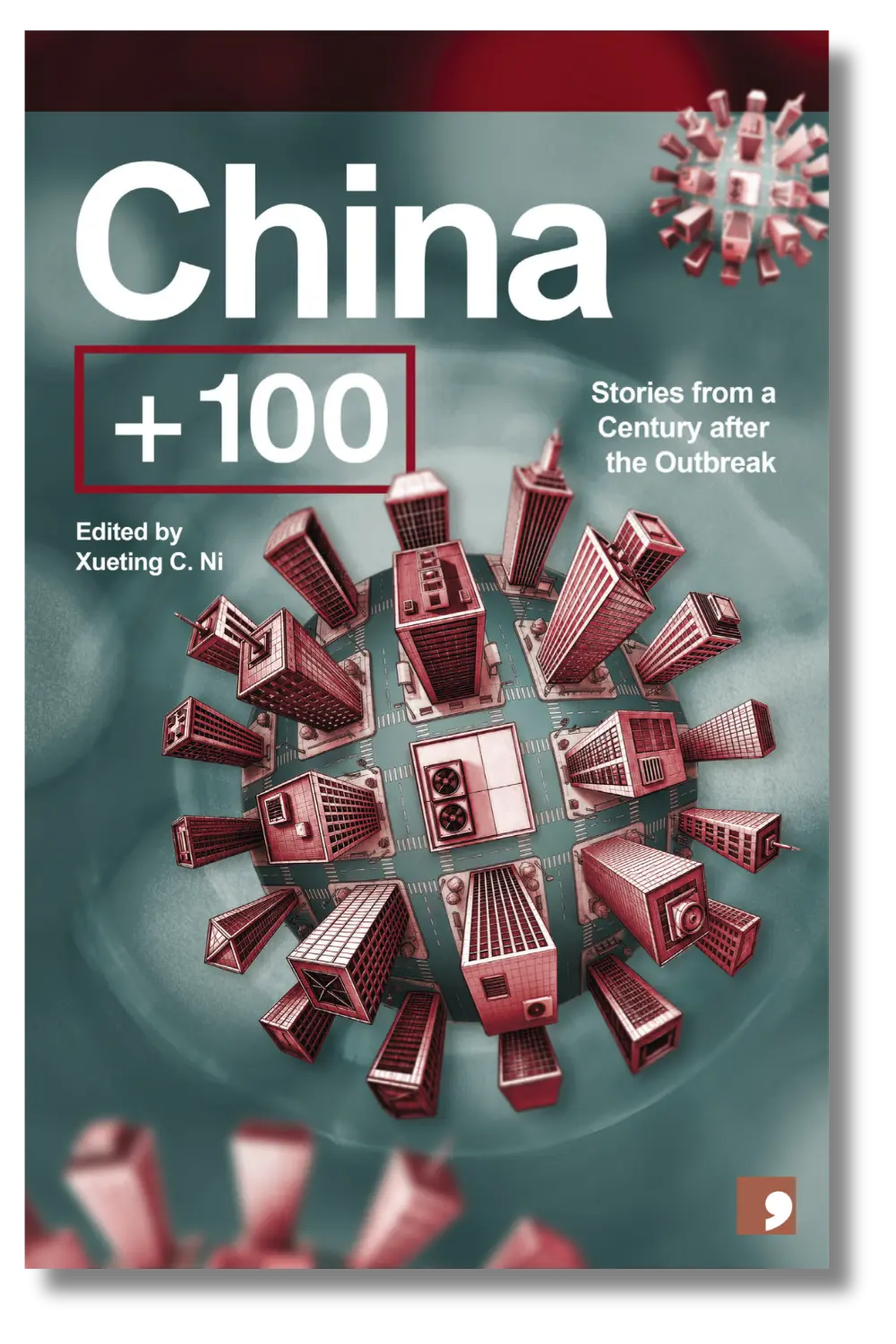
3. China +100 Edited by Xueting C. Ni (Translated by Xueting C. Ni, Jack Hargreaves, Yahia Ma, Gigi Chang, Christopher MacDonald, Judith Huang, Andrew Rule, and Mel Etvolare Lee)
- Publisher: Comma Press
- Format: Fiction | 192 pages | ISBN: 9781917093217 | Price: US$20.95
Part of Comma Press’s acclaimed +100 speculative fiction series, China +100 offers a kaleidoscopic view of futures born out of the intergenerational repercussions of the 2019 global outbreak and imagined subsequent pandemic scenarios. Edited and co-translated by Xueting C. Ni, the anthology features a powerhouse team of translators bringing together visions of tomorrow that span transhumanist performance art and lawless, dystopian landscapes.
The stories traverse immense stylistic and tonal ground while maintaining a visceral focus on infection, contagion, immunity, and societal fracture. Authors envision profound biological and sociological shifts over the coming decades, tackling post-pandemic urban realities, climate collapse, and reimagined gender dynamics. Standout imagery leaps from the page, such as the surreal field of artificial flowers in Dan Shi’s "Fire" (translated by Yahia Zhengtang Ma) and the unsettling visibility of airborne pathogens in Anna Wu’s "Archaic Dust" (translated by Christopher MacDonald).
4. Visceral by María Fernanda Ampuero (Translated from the Spanish by Frances Riddle)
- Publisher: Feminist Press
- Format: Nonfiction | 184 pages | ISBN: 9781558613737 | Price: US$17.95
Ecuadorian writer María Fernanda Ampuero, a leading voice in contemporary Latin American gothic fiction, makes a powerful nonfictional statement with Visceral, published by Feminist Press and translated by Frances Riddle. Part personal essay, part confessional, and part horror anthology, the collection investigates what it means to navigate a violently misogynistic world inside a woman’s body.

Opening with a meditation on global far-right attacks on women’s rights, Ampuero writes, "As always, when I can’t understand, when my insides twist with rage over injustice to the point I feel I might faint, I turn to literature." Drawing inspiration from horror writers ranging from Mary Shelley to Mariana Enríquez, Ampuero interrogates both timeless fears and modern political terrors.
In essays like "Asphyxiation," Ampuero sets a blistering, uncompromising tone: "Every time I hear about the triumph of the far-right parties, I think of how the race to the top of the pyramid of democracy is, in fact, a boot stomping on our wombs, our loins, our minds." Confronting the lingering ghosts of colonialism, patriarchy, and the psychic violence of unrealistic beauty standards, Visceral stands as an urgent manifesto against institutional and cultural complacency.
5. Kaddish by Radu Vancu (Translated from the Romanian by Sean Cotter)
- Publisher: Zephyr Press
- Format: Poetry | 176 pages | ISBN: 9781938890406 | Price: US$19.00
Zephyr Press presents Kaddish by prominent Romanian poet Radu Vancu, brilliantly translated by Sean Cotter. The collection adopts the poetic persona of Miklós Radnóti, the Hungarian Jewish poet murdered by the Nazis during a forced march in May 1944 and tossed into a mass grave. Radnóti’s body was exhumed in 1946, alongside a waterproof notebook containing his final, heartbreaking poems.
Throughout Kaddish, a haunting refrain echoes like a heartbeat: (Just because I write these poems / doesn’t mean I am alive). Vancu uses this artistic ventriloquism to meditate deeply on war, mortality, artistic endurance, and historical tragedy. As translator Sean Cotter emphasizes, Vancu’s book serves as an uncompromising demand that culture reckon directly with fascism, murder, and systematic inhumanity—a message that carries chilling urgency in the modern political climate.

6. I’m Still Here by Marcelo Rubens Paiva (Translated from the Portuguese by Alison Entrekin and Daniel Hahn)
- Publisher: Charco Press
- Format: Nonfiction | 272 pages | ISBN: 9781917260305 | Price: US$17.95
Rounding out the October releases is Charco Press’s publication of I’m Still Here by acclaimed Brazilian author Marcelo Rubens Paiva, translated by Alison Entrekin and Daniel Hahn. When Paiva was eleven years old, his father—a former politician—was abducted and tortured to death by the Brazilian military dictatorship. Twenty-five years later, his mother, Eunice, successfully spearheaded legal reforms allowing families of the regime’s victims to officially register deaths and seek state compensation.
Originally published in Portuguese as Ainda Estou Aqui, Paiva began writing the memoir in 2015 to preserve his family’s history as Eunice descended into Alzheimer’s disease, slowly erasing her memories of a storied life as a human rights lawyer and activist. The memoir moves fluidly between the terror of daily life under military rule and the personal tragedy of cognitive decline. Paiva’s writing bristles with jarring paradoxes, noting at one point: "I must express my gratitude to the Brazilian military: thank you for not having killed my mother." Through these intimate recollections, I’m Still Here elevates a family’s grief into a universal inquiry into memory, state violence, and societal accountability.
Supporting Context & Metrics
The October 2026 publishing slate underscores several shifting paradigms in the independent literary and translation sectors:
- Geographic & Linguistic Diversity: The featured texts represent works translated from Braj Bhasha, Bulgarian, Chinese, Spanish, Romanian, and Portuguese, reflecting an expansive global scope across South Asia, Eastern Europe, East Asia, Latin America, and Southern Europe.
- Genre Distribution: Nonfiction and essayistic memoirs dominate discussions around state violence and human rights (Ampuero, Paiva), while poetry tackles historical memory and divine devotion (Mirabai, Vancu). Fiction explores the boundaries of human consciousness through speculative short stories and magical realism (Gospodinov, Ni).
- Price Point Accessibility: US retail pricing across these independent press titles ranges competitively from $16.95 to $27.99, making world literature accessible to specialized readers and academic institutions alike.
Official Statements & Publisher Insights
Publishers and translators have emphasized the urgent, cross-temporal resonance of these works:

- New Directions highlights Chloe Martinez’s decades-long dedication to Mirabai, framing the collection as a bridge between classical mystical yearning and enduring poetic brilliance.
- Feminist Press positions María Fernanda Ampuero’s Visceral as a definitive text for navigating bodily autonomy and political rage in an era of resurgent global authoritarianism.
- Comma Press emphasizes how China +100 uses the speculative future to process the collective trauma of recent global health crises, merging hard science fiction with social commentary.
Future Outlook
As these six titles enter the global literary ecosystem in October 2026, their reception will likely shape ongoing conversations around translation ethics, historical memory, and political resistance.
In an era marked by democratic backsliding, the rise of authoritarian political movements, and lingering societal anxieties surrounding health and surveillance, translated literature continues to serve as an essential mirror and compass. Publishers like Charco Press, Zephyr Press, Feminist Press, Comma Press, Liveright, and New Directions are proving that stories rooted in specific geographic traumas—whether sixteenth-century Indian devotion or twentieth-century South American dictatorships—possess universal resonance. Readers and critics alike can anticipate these works to feature prominently in upcoming literary prize cycles and academic discourse throughout the remainder of 2026 and beyond.




Comments
Facebook App ID not configured. Please add it in the Customizer.