
Executive Overview
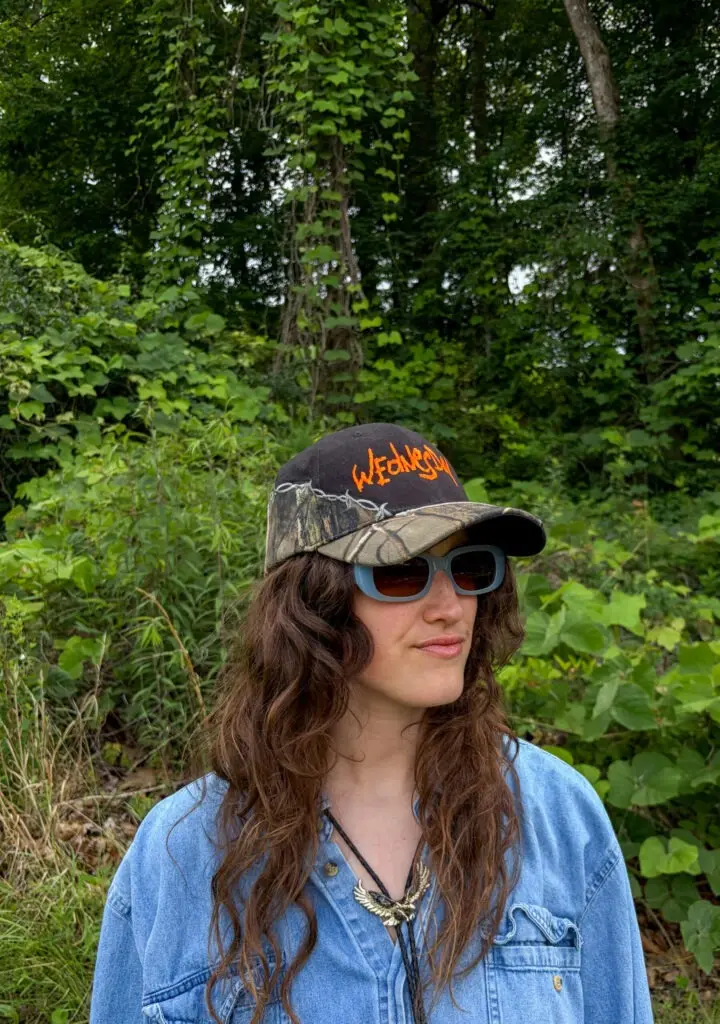
In contemporary American poetry, the intersections of domestic expectation, ecological observation, and gender nonconformity rarely collide with the raw, unsettling intimacy found in Anna Drasko’s work. Selected as the Missouri Review’s Poem of the Week, Drasko’s latest piece, "Maker," confronts the inherent violence of traditional categorization—both in the kitchen and in the lexicon. Operating from East Tennessee, Drasko—an alumnus of the University of Pennsylvania and Penn State whose work has recently appeared in Chestnut Review, phoebe, and Good River Review—uses "Maker" to investigate how identity is perpetually baked, spoiled, rewritten, and discarded.
The poem moves effortlessly between the gritty realities of rural Appalachian backyards—where invasive kudzu swallows native flora and neighborly dogs chase wild turkeys into the canopy—and the quiet, internal revolutions of stepping away from assigned gender roles. Through a brilliant interplay of culinary metaphor, linguistic self-correction, and sharp environmental vignettes, Drasko positions "Maker" as both an ars poetica and a manifesto for those who refuse to be "solved" by language. This article explores the anatomy of Drasko’s poem, contextualizing its creation within the framework of modern Appalachian literature, queer phenomenology, and the broader cultural conversation surrounding art, identity, and domestic labor.
Detailed Chronology: The Evolution of "Maker" from Backyard to Page
To understand the architecture of "Maker," one must trace the precise ecosystem from which it emerged. The genesis of the poem is rooted in the domestic rhythms and ecological friction of Drasko’s East Tennessee backyard, a space defined by proximity to both human infrastructure and relentless wilderness.
Read Also
[Backyard Ecosystem: Highway & Kudzu]
       │
       ▼
[Ecological Disruption: Dolly chases Turkeys]
       │
       ▼
[Domestic Rupture: Rotting Sourdough in the Fridge]
       │
       ▼
[Identity Shift: Abandonment of Womanhood]
       │
       ▼
[Poetic Crystallization: "Maker" Published & Recognized]
Phase One: The Ecology of the Edge
Drasko’s creative process frequently begins in the liminal spaces where civilization brushes against untamed nature. Sharing a guardrail with a busy highway, the poet’s backyard is a theater of survival. By June of every year, the invasive kudzu vine—a symbol of unchecked, strangling growth—suffocates native plants, turning the landscape into a wave of green concealment. Yet, amid the relentless blur of passing cars and environmental pollution, life persists. Night after night, Drasko observes a revolving cast of regional wildlife: cats, hawks, groundhogs, the occasional deer, and an assortment of loose neighborhood dogs.
Phase Two: The Catalyst of Flight and Rot
Two distinct, seemingly disconnected domestic and natural events served as the immediate catalysts for "Maker." The first was witnessing an unexpected spectacle of avian capability: seeing a wild turkey, chased by a neighbor’s dog named Dolly, successfully launch itself high into the branches of a tree. Turkeys, traditionally viewed as ground-bound, clumsy farm animals, possessed a hidden, aerodynamic grace.
Simultaneously, inside the house, a long-neglected sourdough starter sat rotting in the refrigerator. Abandoned months prior, the starter had developed vivid, toxic layers of pink, black, and green mold. Rather than cleaning it out immediately, Drasko found a strange, morbid fascination in watching the fungal colonies multiply and shift colors week after week.
Phase Three: The Pivot Away from Womanhood
This domestic dereliction—the rotting starter—coincided precisely with a major biographical turning point: Drasko’s departure from womanhood. The societal expectation placed upon female-assigned bodies to nurture, bake, and feed others ("They like it when a woman / makes something they can eat") became an untenable mold. As Drasko stepped away from being categorized as a "woman," the ritual of baking bread dissolved. The rotting starter in the fridge became a physical manifestation of abandoned domesticity—a failed creation that paradoxically opened the door to truer, more complex forms of self-making.
Phase Four: Publication and Critical Acclaim
The resulting poem, "Maker," captures these converging narratives. Selected by the Missouri Review as its Poem of the Week, the work has garnered widespread attention for its unflinching lyricism. It stands alongside Drasko’s broader portfolio, cementing their reputation as a vital voice emerging from the American South that challenges conventional poetic boundaries.
Supporting Context & Metrics: Thematic Pillars of the Poem
To fully appreciate the weight of "Maker," it is necessary to examine the primary thematic vehicles Drasko employs: culinary deception, rural Appalachian imagery, and the mechanics of linguistic failure.
┌────────────────────────────────────────────────────────┐
│                    "MAKER" PILLARS                     │
├──────────────────────────┬─────────────────────────────┤
│ Thematic Element         │ Literary & Cultural Anchor  │
├──────────────────────────┼─────────────────────────────┤
│ Culinary Subversion      │ Sourdough, stale peanuts,   │
│                          │ and the rejection of        │
│                          │ domestic servitude.         │
├──────────────────────────┼─────────────────────────────┤
│ Appalachian Realism      │ Kudzu vines, highway        │
│                          │ guardrails, wild garlic,    │
│                          │ and loose dogs (Dolly).     │
├──────────────────────────┼─────────────────────────────┤
│ Queer Phenomenology      │ The refusal of binary       │
│                          │ categorization and the      │
│                          │ un-solving of the body.     │
└──────────────────────────┴─────────────────────────────┘
The Subversion of Domestic Labor
Historically, bread-making has been romanticized in literature as a sacred act of creation, warmth, and maternal sustenance. Drasko shatters this pastoral myth in the poem’s opening lines:
My mouth is a basket of tricks, I’ll chew
& spit before thinking better of it.
Instead of nurturing nourishment, the mouth becomes a site of rejection. The speaker remembers pressing dough beneath fingernails—"just to hear the clustered bubbles of crust / tell me what they know"—only to realize the hollow nature of this performance. Society demands palatable outputs from women; the smiling digital shorthand (She : ) is such : ) a great : ) baker 🙂) highlights the grotesque mechanization of expected femininity. When the speaker stops baking, the sourdough rots. The act of creation shifts from feeding others to confronting internal decay.
Rural Realism and Wilderness
The setting of East Tennessee in Drasko’s work is not a postcard-perfect Appalachia, but a complex ecosystem scarred by human impact and reclaimed by invasive species. The kudzu vine, the highway guardrail, and the blooming wild garlic create a sensory landscape where survival is adaptive rather than picturesque. The turkeys hiding in the branches and Dolly the dog wandering off on nice days serve as metaphors for autonomy. Dolly takes her time coming home; she refuses to be rushed. Similarly, the speaker carves out space to exist within the glass-tipped leaves, observing life that refuses to adhere to human timelines or demands.
The Queer Body and Linguistic Limits
Perhaps the most striking movement in "Maker" occurs toward the end, where Drasko directly confronts gender identity and the inadequacy of grammar:
I have yet to solve
my body. No, it’s not solved,
- they’re not solved,
but magnified. Language is still
in the making, usually saying
more & less than its meaning.
This self-correction on the page—shifting from singular possessives to plural pronouns (it’s to they’re)—enacts the fluidity of gender in real time. The body is not a puzzle to be "solved" or fixed into a permanent binary solution; rather, it is magnified, complex, and constantly under revision. Drasko exposes the limitations of language, noting that words simultaneously reveal and obscure our deepest truths.
Official Statements and Authorial Insights
In an exclusive author’s note provided alongside the publication of "Maker," Anna Drasko elaborated on the deep connections between their physical environment and their artistic philosophy.
Discussing the literal landscape of their East Tennessee home, Drasko explained:
"This poem began in my backyard, where we share a guardrail with the highway, and the invasive kudzu vine suffocates every native plant by June. Amid the cars blurring by, I spend nights watching the turkeys, cats, hawks, groundhogs, the occasional deer, and my neighbors’ loose dogs. Despite the pollution, everything is so alive. No matter what the conditions, life still unfolds."
Addressing the intersection of rural observation and personal transformation, Drasko shed light on the dual imagery of the flying turkey and the rotting starter:
"I didn’t know turkeys could fly until I saw Dolly chase one up into that tree, and that same day, I checked on my sourdough starter with its layers of pink and black and green that had been rotting in my fridge for months. I enjoyed watching the mold multiply week after week in new colors as I stopped making bread around the same time I left being a ‘woman’ behind. It was an abandonment that felt right."
Finally, Drasko reflected on the poem’s evolution into an ars poetica—a meditation on the craft of writing itself when confronted with the boundaries of selfhood:
"This poem turned toward Ars Poetica as I pressed up against the limits of language, which happens often when I try to put words to my experiences of gender, or to anything."
Future Outlook: The Expanding Horizon of Drasko’s Work
The publication of "Maker" as the Missouri Review’s Poem of the Week marks a significant milestone in Anna Drasko’s growing literary trajectory. As an emerging voice holding degrees from the University of Pennsylvania and Penn State, Drasko is charting new territory in contemporary poetry by bridging the gap between ecological realism and queer liberation.
What Lies Ahead for the Poet
- Exploration of Liminal Forms: With forthcoming and published works in journals such as Chestnut Review, phoebe, and Good River Review, Drasko is establishing a distinct poetic voice that resists easy classification. Readers can anticipate further explorations into how regional geography shapes nonbinary identity.
- The Evolution of Queer Appalachian Literature: Drasko’s work contributes to a vital, expanding canon of Appalachian literature that moves beyond traditional folklore to address contemporary queer and trans experiences within rural spaces.
- Linguistic Innovation: As Drasko continues to test the boundaries of grammar, self-correction, and syntax on the page, future collections will undoubtedly push further into the spaces where language fails, heals, and reconstructs the body.
In "Maker," Anna Drasko has not only offered a brilliant meditation on the decay of domestic expectations and the resilience of rural life; they have provided a blueprint for anyone attempting to articulate a self that refuses to be solved. As language continues "in the making," Drasko stands at the forefront of poets redefining what it means to create, to unmake, and to finally live in the open air.

Comments
Facebook App ID not configured. Please add it in the Customizer.