
Executive Overview
In the winter of 2014, acclaimed screenwriter and playwright Aaron Sorkin published a definitive op-ed in The New York Times, passionately arguing that journalists bore a strict moral obligation to reject private information leaked during the infamous Sony Pictures cyberattack. Sorkin, himself a victim whose embarrassing correspondence was splashed across tabloids, asserted that the press must refrain from publishing illegally obtained materials that bore no genuine weight on the public interest. Yet, notably, Sorkin drew a sharp line: he did not call for the heavy hand of the state. He did not advocate for federal marshals to raid the offices of industry publications to confiscate draft scripts or corporate emails.
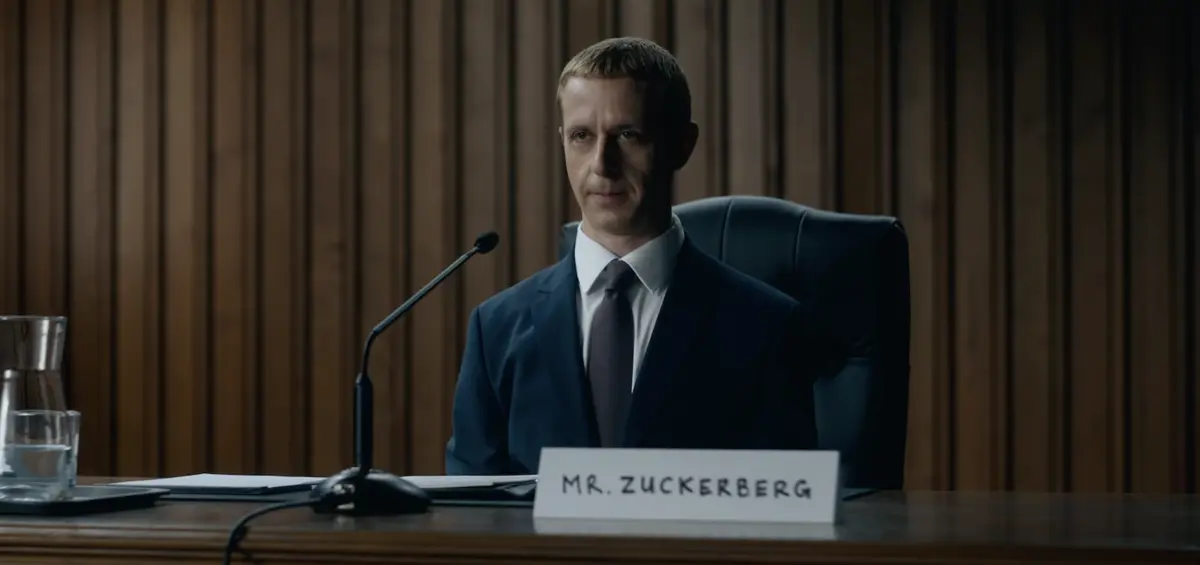
Nearly a decade later, this foundational tension—the hazy, often contradictory boundary between corporate self-governance, editorial discretion, and state-sanctioned censorship—sits at the heart of Sorkin’s latest cinematic venture, The Social Reckoning. Written and directed by Sorkin, the film attempts to dramatize the high-stakes internal battles at Facebook, drawing heavily from Wall Street Journal reporter Jeff Horwitz’s book, Broken Code: Inside Facebook and the Fight to Expose Its Harmful Secrets.
Yet, the film has proven to be a stunning box-office disaster, pulled from over 2,000 theaters by Sony Pictures after a meager three-week run, leaving the studio staring down tens of millions of dollars in losses. The artistic and commercial failure of The Social Reckoning is not merely a miscalculation in narrative pacing or casting; it is the inevitable casualty of a foundational ideological muddle. By framing the cultural and political wars over Silicon Valley through a lens of naive corporate idealism, Sorkin’s film fails to answer the central question of our digital age: When a technology titan suppresses speech, is it an exercise of corporate responsibility or a systemic assault on free expression? The answer, as the film inadvertently demonstrates, has never truly been about protecting the vulnerable. It has always been about power.
Read Also
Detailed Chronology: From Leaked Emails to the Whistleblower Era
To understand the conceptual architecture of The Social Reckoning, one must trace the evolution of media accountability and corporate whistleblowing over the past decade.
- December 2014: Aaron Sorkin publishes his New York Times plea against publishing Sony hack materials, setting an early standard for his view that institutional privacy and moral boundaries should supersede sensationalist journalism.
- 2018–2020: Against the backdrop of escalating global debates over platform governance, former Facebook content moderator Ryan Hartwig serves on the front lines of the platform’s burgeoning moderation apparatus, later documenting his experiences regarding ideological filtering of pro-life and lockdown-skeptical content.
- Late 2021: Whistleblower Frances Haugen steps forward, leaking internal documents—subsequently dubbed the "Facebook Files"—to the Wall Street Journal. Haugen’s disclosures spark global outrage, alleging that Meta knowingly prioritized engagement-driven algorithms that fostered teen mental health crises and amplified political extremism.
- Late Summer 2024: Meta announces a landmark $17.1 billion multi-state settlement involving forty-eight state attorneys general regarding allegations surrounding the platform’s impact on adolescent mental health.
- Fall 2024: The Social Reckoning premieres in theaters, starring Jeremy Allen White as reporter Jeff Horwitz and Mikey Madison as Frances Haugen. Despite riding the coattails of major regulatory headlines, the film craters at the box office, prompting rapid theater pulls by Sony Pictures.
The narrative arc of The Social Reckoning follows the classic Sorkin formula: a plucky, dedicated journalist partnering with a courageous whistleblower to take down an opaque, indifferent corporate empire. In the film, Jeremy Allen White portrays Horwitz as a tireless crusader, while Madison brings vulnerability and resolve to the role of Haugen. They expose how Facebook’s algorithmic engine allegedly engineered division, steering conservative users toward radicalizing echo chambers while trapping vulnerable teenage girls in loops of harmful self-image content.
However, the cinematic translation of these real-world events fell flat with audiences who perceived a deep disconnect between Hollywood’s moralizing and the gritty, polarized realities of modern media consumption. The film’s abrupt commercial collapse mirrors Sorkin’s infamous 2006 television flop, Studio 60 on the Sunset Strip, which was canceled after a single season. In both instances, Sorkin’s signature high-flown, articulate monologues—normally reserved for the corridors of White House power—felt out of place when grafted onto the operations of late-night comedy writers or Silicon Valley executives. Sorkin operates from a persistent worldview that television and media are just as consequential as traditional politics, if not more so, due to their pervasive cultural reach. Yet, in an era where Silicon Valley elites routinely cloak their business models in the language of civic duty, audiences have grown acutely cynical of such moral grandstanding.
Supporting Context & Metrics: The Mechanics of Content Moderation
The foundational premise of The Social Reckoning relies on the assertion that Facebook, under Mark Zuckerberg (portrayed by Jeremy Strong), willfully neglected its moral responsibilities by refusing to aggressively fact-check and police content. In the film, a character played by comedian Bill Burr serves as a persistent thorn in Zuckerberg’s side, berating leadership for an alleged "anything goes" approach to digital discourse.
Yet, this cinematic portrayal starkly contrasts with the sprawling corporate apparatus Meta constructed to manage online speech. By 2020, Meta was deploying staggering resources to police its platforms:
- Personnel Scale: More than 35,000 personnel were directly employed or contracted in content moderation roles worldwide.
- Financial Investment: The annual expenditure dedicated strictly to trust, safety, and content moderation exceeded $3 billion.
- Regulatory Settlements: The culmination of years of state-level investigations resulted in a historic $17.1 billion multi-state settlement involving 48 state attorneys general, directly referencing metrics and internal findings brought to light by whistleblower disclosures.
Critics and alternative perspectives paint a picture vastly different from the one presented in Sorkin’s script. Former content moderators like Ryan Hartwig, who detailed his tenure between 2018 and 2020 in his book Behind the Mask of Facebook: A Whistleblower’s Guide to Silicon Valley’s Censorship, argued that the platform’s moderation enforcement was rarely neutral. According to internal testimonies and whistleblowers outside the Haugen circle, moderation filters frequently targeted specific ideological demographics—suppressing pro-life advocacy and unorthodox scientific viewpoints surrounding pandemic-era lockdowns.
This historical lineage of institutional censorship is not a modern invention born in Silicon Valley. The DNA of corporate content policing traces back nearly a century. Stockton Helffrich, widely recognized as the television industry’s first formal censor, managed standards at the National Broadcasting Company (NBC) from 1933 to 1960. Ironically, Helffrich was a progressive and a former member of the Communist Party. Beyond traditional profanity, NBC’s early censors maintained an expansive list of forbidden phrases, banning colloquialisms such as "he’s off his rocker," "put him in the nuthouse," or "he’s got loose marbles." Furthermore, NBC barred commercial advertising for an eclectic array of services, including wines, firearms, matrimonial agencies, lawyers, chiropractors, casket makers, and mortuaries.
While Helffrich’s restrictions were often paternalistic or pedantic, they operated within a framework of perceived civic responsibility—an effort to render public broadcasting wholesome and educational. However, the scope of NBC’s regulatory power pales in comparison to the digital monopolies of the twenty-first century. When NBC rejected an advertisement from a local mortuary, it did not threaten the funeral industry’s existence. When modern social media platforms alter algorithmic visibility or update terms of service to ban specific viewpoints, the impacted entities or individuals are effectively erased from the public square overnight.
Official Statements and Industry Reactions
The commercial failure of The Social Reckoning has sparked a broader debate within Hollywood and media circles regarding the viability of political message-driven cinema in a fractured cultural landscape.
While executives at Sony Pictures declined to comment on the financial write-downs associated with pulling the film from thousands of screens, industry analysts have been unsparing. Box office trackers noted that the film suffered from a fatal paradox: it arrived mere weeks after Meta finalized its massive $17.1 billion multi-state settlement—an event explicitly referenced in the film’s end credits. Ideally, such headline alignment should have acted as a powerful marketing tailwind. Instead, the promotional push fell entirely flat.
Cultural critics have pointed out that the public’s apathy toward the film stems from a growing fatigue with Hollywood’s attempts to narrate complex technological and political shifts through a partisan moral binary. The central tension of the film—framed around adolescent mental health—ultimately felt like a proxy war for deeper, unacknowledged grievances.
Observers across the political spectrum have noted that the intense regulatory and media scrutiny directed at Facebook following the 2016 presidential election was less about the welfare of teenagers and more about the disruption of traditional political authority. When social media platforms resisted early calls for sweeping informational controls, they became targets of intense political pressure. As the political pendulum has swung, the designated villain of the tech ecosystem has shifted—most notably toward Elon Musk and the platform formerly known as Twitter (now X), as it resists modern paradigms of liberal content moderation.
Future Outlook: The Ongoing Battle Over Digital Speech
As The Social Reckoning exits theaters as a cautionary financial tale, the broader war over internet governance, free expression, and corporate responsibility enters a new phase.
The political alignment surrounding digital platforms remains volatile. Throughout the 2016–2024 political cycle, various non-governmental organizations and institutional actors elevated "misinformation" to the status of a global security threat, driving aggressive multi-agency efforts to curb dissenting online narratives. While the momentum behind the so-called "Closure of the Internet" has faced headwinds—particularly with the shifting landscape of political leadership in Washington—the underlying institutional infrastructure remains intact.
The fundamental questions that Aaron Sorkin’s film failed to resolve will continue to dominate the technological and legal horizon:
- The Limits of Corporate Governance: As artificial intelligence accelerates the volume of digital content, platforms will face insurmountable pressures to automate truth, raising questions about whether private corporations should hold de facto veto power over human discourse.
- Regulatory Overreach vs. Protection: Lawmakers across democratic nations will continue to grapple with how to legislate harms—such as adolescent mental health vulnerabilities—without inadvertently codifying state-aligned censorship mechanisms.
- The Decentralization of Resistance: With platforms splitting along ideological lines regarding content moderation policies, users are increasingly migrating to decentralized or alternative networks, fracturing the modern public square into ideologically sealed ecosystems.
Ultimately, The Social Reckoning serves as a mirror reflecting Hollywood’s own confusion regarding the digital age. By attempting to package a complex, politically fraught regulatory battle into a triumphant underdog narrative where the "good guys" fight for corporate accountability, the film missed the reality of the modern attention economy. Sorkin discovered what the modern media landscape has long feared: when art sacrifices genuine complexity for partisan sermonizing, audiences simply change the channel.



Comments
Facebook App ID not configured. Please add it in the Customizer.