
Executive Overview
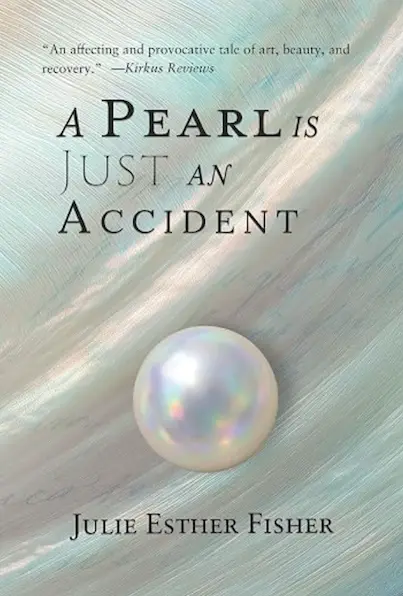
In the contemporary literary marketplace, the structural anatomy of a novel is often subject to rigid expectations. The standard continuous narrative—driven by a linear arc, seamless connective tissue, and neatly resolved subplots—reigns supreme as the commercial ideal. When an author departs from this familiar blueprint, they frequently face a barrage of well-meaning, highly professional pressure to conform. Few contemporary accounts capture this tension as acutely as the creative odyssey of author Julie Esther Fisher during the drafting of her novel-in-stories, A Pearl Is Just an Accident.
For years, Fisher wrestled with a manuscript that defied conventional packaging. Encouraged by gifted developmental editors, she systematically tried to force a collection of discrete, temporally fragmented stories into the linear confines of a traditional novel. The result was a debilitating creative paralysis: three years of total silence, a pervasive crisis of confidence, and a growing fear that her deepest narrative instincts were inherently flawed.
However, Fisher’s eventual breakthrough—sparked by an unexpected parallel between her own revision process and the meticulous work of art conservation—offers a profound masterclass in creative autonomy. By learning to distinguish between constructive editorial critique that clarifies a work and prescriptive advice that alters its fundamental nature, Fisher preserved the integrity of her book. A Pearl Is Just an Accident ultimately emerged not as a failed conventional novel, but as a triumphant, resonant novel-in-stories. This case study examines the arduous trajectory of Fisher’s writing process, the psychological toll of creative friction, and the ultimate realization that every manuscript demands its own unique structural architecture.
Read Also
Detailed Chronology: The Long Road to A Pearl Is Just an Accident
The genesis of A Pearl Is Just an Accident spans years of trial, error, psychological struggle, and ultimate revelation. To trace the biography of this book is to witness a writer locked in a protracted tug-of-war between commercial expectations and her own internal storytelling compass.
Phase One: The Illusion of the Proper Shape
Like many emerging and mid-career writers, Fisher initially operated under the assumption that there was a singular, correct architectural shape for a novel. The foundational pieces of A Pearl Is Just an Accident—stories written across a lifetime, capturing characters in fleeting, impactful breaths rather than continuous motion—were initially viewed by the author as raw material awaiting a proper framework.
Believing these pieces were simply chapters-in-waiting, Fisher spent years weaving them into various conventional manuscript versions. Her primary objective during this phase was structural compliance: finding the right transitions, smoothing out narrative joins, and building the connective tissue necessary to transform a series of episodes into a continuous narrative arc.
Phase Two: The Editorial Labyrinth and the Onset of Panic
In pursuit of this conventional ideal, Fisher enlisted the help of several gifted developmental editors. Their feedback arrived in the form of intelligent, generous, and meticulously reasoned reports, accompanied by manuscripts dense with margin notes:
- Build more connective tissue.
- Clarify complex relationships.
- Answer questions the reader is likely to ask.
- Strengthen transitions to demonstrate how one section leads logically to the next.
Every suggestion made objective sense, which compounded the author’s internal conflict. Respectful of her editors and desperate to learn from them, Fisher consumed their reports hungrily. Yet, almost immediately, a profound sense of panic and despair took hold.
The angst did not stem from a belief that the editors were wrong; indeed, their observations were often precisely those Fisher would have made about another writer’s work. Rather, the terror arose from an inarticulable realization: she could not execute their structural demands and still end up with her book.
Phase Three: The Slippery Slope of Over-Revision
Mistaking her emotional overwhelm for literary inadequacy, Fisher pressed forward. She revised, and then revised again:
- She added explicit explanations where there had previously been resonant silence.
- She built artificial bridges between stories that had originally relied on the reader’s imaginative participation to make the crossing.
- She tightened continuity and definitively answered questions that had been deliberately left open to honor the complexity of human memory and experience.
Draft after draft grew increasingly orderly and conventional. Concurrently, however, the prose became flatter and less vital. The more conscientiously Fisher revised according to external blueprints, the further she drifted from the authentic voice that had first compelled her to write.
Phase Four: The Three-Year Silence
Eventually, creative exhaustion and defeat culminated in a total stoppage. For three years, Fisher did not write.
Contrary to the popular misconception that writers abandon projects simply because they run out of ideas, Fisher’s silence was born of a crisis of trust. The stories themselves had not vanished, but her confidence in her ability to convey them had evaporated. Every instinct that once felt reliable now seemed suspect. Having watched her deepest creative impulses repeatedly clash with experienced editorial advice, she concluded that her instincts were the source of the malfunction.
Phase Five: The Epiphany of Art Conservation
The turning point arrived when Fisher abandoned the search for a better outline and turned instead to the thematic heart of her own fiction. The central character of A Pearl Is Just an Accident is Eliza James, an art conservator whose professional life is defined by the patient removal of grime, varnish, and overpainting from damaged masterpieces.
Eliza’s objective is never to improve or alter a work of art, but rather to recover it. Conservation demands extraordinary restraint; its true discipline lies in knowing precisely what must remain untouched.
Reflecting on her protagonist’s labor, Fisher realized she had unknowingly begun to revise her manuscript as Eliza restores paintings. Instead of perpetually asking what needed to be added, she began asking what no longer belonged.
As unnecessary explanations fell away, the prose began to breathe again. Fragile images recovered their strength when left unburdened by exposition. The deliberate silences transformed from structural problems into invitations for the reader. The material returned to its original, unvarnished state, allowing Fisher to finally separate the disparate stories from the failed conventional novel. Released from their forced marriage, the individual pieces were quickly accepted and published in prestigious literary journals, validating her true artistic instincts.
Supporting Context & Metrics: The Anatomy of Literary Revision
To fully understand Fisher’s breakthrough, it is necessary to examine the broader landscape of creative writing pedagogy, developmental editing, and the mechanics of narrative structure.
The Conventional Novel vs. The Novel-in-Stories
The novel-in-stories (sometimes referred to as a connected short story cycle) occupies a unique and often misunderstood space in contemporary publishing. While traditional novels rely on continuous chronological progression and a centralized plot, the novel-in-stories leverages temporal gaps, shifting perspectives, and thematic resonance.
| Feature | Traditional Novel | Novel-in-Stories |
|---|---|---|
| Primary Driver | Continuous plot and chronological momentum | Thematic resonance and character evolution across time |
| Use of Space | Explains connections; bridges narrative gaps | Relies on silences, ellipses, and reader participation |
| Structural Integrity | Maintained via seamless transitions and clear cause-and-effect | Maintained via motifs, recurring characters, and emotional echo |
| Editorial Vulnerability | Often pressures authors to smooth out irregularities | Often risks being misread as "incomplete" or fragmented |
Fisher’s initial error lay in attempting to force the second model into the structural metrics of the first. By treating the temporal chasms between her stories as structural flaws rather than intentional aesthetic choices, she diluted the very power that made the material compelling.
The Duality of the Creative Mind
Fisher’s ultimate reconciliation with her work led to a sophisticated re-evaluation of the dual roles every author must inhabit: the Storyteller and the Editor.
- The Storyteller: Operates through intuition, rhythm, and imagery. She writes quickly in physical notebooks, trusting that meaning will emerge through momentum rather than premeditated logic. She embraces the unknown and leaves space for ambiguity.
- The Editor: Operates through precision, economy, and critical analysis. He evaluates pacing, prunes self-indulgent prose, and ensures that metaphors carry maximum emotional weight.
For years, Fisher viewed these two faculties as adversaries. Only through her protracted struggle did she understand that their responsibilities are merely distinct. The storyteller discovers; the editor clarifies. Misery occurs only when an author forces one to perform the labor of the other.
Official Perspectives and Authorial Insights
Reflecting on her journey, Julie Esther Fisher offers profound insights regarding the nature of craft, critique, and creative resilience. Her evolution highlights critical takeaways for writers navigating the treacherous waters of revision.
On the Value of Rigorous Criticism
Fisher is careful not to dismiss the role of developmental editing in creative growth. Far from harboring bitterness, she maintains a deep gratitude for the editors who challenged her.
"They taught me indispensable lessons: discipline, economy, and the courage to question every sentence. They made me a better writer," Fisher notes.
Through their guidance, she learned to prune beloved passages that drew too much attention to themselves, discovered that a single meticulously chosen metaphor outweighs three redundant ones, and mastered the art of revising by ear. These lessons, many inspired by a return to poetry, enhanced her prose without altering its fundamental identity.
On the Danger of Prescriptive Metanarratives
The friction arose not when editors corrected technical errors, but when they attempted to force the manuscript to inhabit a shape that actively resisted it. Fisher’s retrospective analysis yields a vital distinction:
"They weren’t wrong. They simply belonged to a different novel. Learning to recognize that difference took me decades."
This realization dismantles the unwritten industry dogma that all editorial notes are universally applicable. It refutes the notion that resistance to critique is always a symptom of amateurism or stubborn vanity. Sometimes, resistance is the psychological immune system of the book itself, fighting off an organ transplant that the body cannot accept.
Future Outlook: Redefining the Parameters of Literary Craft
The publication and reception of A Pearl Is Just an Accident signal a broader, highly encouraging trend in contemporary publishing: an increasing appreciation for hybrid forms that refuse to bow to rigid categorization. As readers and critics become more receptive to fragmented narratives, lyrical ellipses, and structurally daring works, authors are increasingly empowered to trust their unique internal compasses.
Implications for Emerging Writers
Fisher’s journey serves as a cautionary tale and an inspiring roadmap for the next generation of authors. Key takeaways for navigating the modern editorial landscape include:
- Diagnostic Discernment: Writers must learn to differentiate between technical critique (which improves sentence-level execution, clarity, and pacing) and structural critique (which attempts to alter the fundamental genre or form of the work).
- Honoring the Ellipsis: Gaps in a narrative are not always defects to be bridged; they can be deliberate aesthetic choices that invite the reader into co-creation.
- The Courage to Silence: True editorial health requires the courage to say "no" to well-intentioned advice when it threatens the authentic voice of the manuscript.
Conclusion
Ultimately, A Pearl Is Just an Accident stands as a testament to the fact that every manuscript demands a bespoke methodology. There is no universal template for artistic creation, and no single set of editorial answers can serve every literary endeavor.
As Fisher ultimately discovered, craft matters enormously; writers should seek wise mentors, welcome rigorous criticism, and absorb all available knowledge. Yet, an immutable threshold arrives where the author must decide whether an external suggestion helps the work become more fully itself, or whether it demands that the work become something else entirely.
Navigating that threshold requires profound listening—not merely to the advice of the marketplace or the wisdom of editors, but to the quiet, persistent voice of the book itself, waiting patiently for its creator to finally understand the language it has been speaking all along.



Comments
Facebook App ID not configured. Please add it in the Customizer.